

E-Business
Applied Computing Emerging Trends Resonate @ Ogun NCS Conference

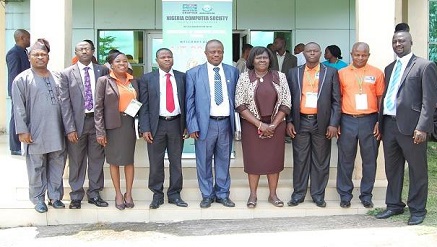
Information Technology (IT) experts who gathered at a three-day Applied Information Technology (AIT) Conference 2015 have called for increased awareness on the emerging trends in the applied computing ecosystem as catalysts for National Development.
The experts comprising Government officials, educationalists, and private IT practitioners gathered at the Conference organised by the Ogun State Chapter of the Nigeria Computer Society (NCS) in collaboration with the Department of Computer Science, Federal University of Agriculture, Abeokuta (FUNAAB), Ogun State during the week.
They were unanimous in a view for improved collaborations between the educational institutions and the Government in developing technological competences to address multifaceted challenges facing the society.
According to participants , Nigeria would remain on the outskirts of applied computing unless professionals are accorded vintage positions to contribute towards government programmes.
However, Senator Ibikunle Amosun, Ogun State Governor and special guest at the occasion, said that the State has demonstrated an understanding on the impetus technology adds to every economy with its recent IT exploits.
The Governor represented by Engineer Ayodele Jolaoso, permanent secretary, Ministry of Special Duties, disclosed that they have gone ahead to implement a Geographic Information System (GIS) for the administration of land processing across the State.
This project according to him, will improve the overall performance of government by building a robust platform to centrally manage land and all related activities.
“It will eliminate all sorts of bottlenecks been experienced in the land matters in our dear State,” he added.
Also, Professor Adesola Aderounmu, president, Nigeria Computer Society (NCS), extolled the Ogun State Chapter for the visionary conference tagged, ‘Emerging Trends in Applied Computing,’ maintaining that the growth of every nation nowadays is measured by the by the level of technological preparedness.
He pledged NCS unwavering stand on the cause for the government to incorporate professionals in the execution of IT related projects.
According to him, “The Federal Government must speed up measures to deepen Information Technology growth in the country, as all over the world, IT is a major driver of the major economies and deserves to be accorded every seriousness.”
Speaking to Nigeria CommunicationsWeek, Dr. Bukola Onashoga (Mrs), chairperson, Ogun State Chapter of NCS, said that the Conference’s focus on Cryptography and Information Security, Intelligent Information Systems and Big Data Computing was aimed at emphasising the need for knowledge sharing among the academic community, the government and organizations to leverage applied computing ecosystem to better the worth of Nigerians.
Other topic discussed at the conference include, Cloud Computing, Mobile Communications and Networking, e-Health/e-Banking/e-Agriculture/e-Commerce/ e-Government, Bio-Informatics, Learning and Education Technologies and Computer Aided Designs.
“It’s important to emphasise that education is key in making these happen. Any nation that does not take its educational sector very serious will not do well in the ICT space too. Experts at this conference have re-echoed this as well. Therefore, we need to make hay while the sun shines.”
She added that technologies have no doubt evolved greatly over time and “now into a world full of smart machines, equipment and inventions which are continuously changing our lives,we even need smarter graduates to take the advantages.
“To me, the educational system should be overhauled, with the curriculum reviewed to reflect the nitty-gritty of today’s working tool. In an era of the Internet of Things (IoTs) we should not be talking about ‘handouts’, rather, ‘handson’; practical knowledge transfer is urgently needed in our educations system which is one of the points raised in this conference’.
Also speaking, Professor Adio Akinwale, chairman of the local organizing committee, said as the world is now a global village, largely for the innovations in technology and power of creativity in the form of human resources, the likes of the early fathers of computer, Pascal Blaise, Charles Babbage and more recently, Microsoft Founder, Bill Gates; Dell Founder, Michael Dell; Apple cofounder, late Steve Jobs and many more have revolutionize the way the world communicates and exchanges information.
He recalled that from the era of giant computer which occupies a whole room, generating excessive heat to the present world where a micro-computer (smartphone) now fits into a pocket and performs even better functions.
“From desktop computers with CPU, keyboards and mouse to portable laptops and netbook, one can access the internet and exchange information and date with a click. New inventions of computers include changes to their different screens and touch screen enabled configurations.
“Our communication systems like telephones have also changed. Bulky analogs characterised with broken network signals have now been transformed into small and handy mobile phones. The fax machine, Internet for chat and emails keep our communication with our loved ones and people around us, easy and fast”.
Akinwale added that the availability of information through innovations in ICT has made the world a better place. All thanks to the British computer scientist, Tim Berners-Lee who created the World Wide Web (w3).
“With the click of a link on the internet, you are guaranteed of host of information and more recently the power of social media, the world is now truly a global village. Facebook, twitter, hi5, skype, myspace and google+ just to mention a few have intertwined the world and make communication even better.
Speaking further on the on the conference Olatunde Tijani, LOC Secretary, AIT 2015 said, said the aimed has been achieved following discussions and exchange of knowledge on all disciplines of Information Technology (IT).
He said that AIT 2015 will provided a key forum for researchers and industry practitioners to exchange information regarding advancements in the state-of-art and practice of applications of Information Technology.
Tijani, said the conference, apart from meeting the international standard, it produced useful scholarly works, while offering participants the platform to network and share ideas on the information technology and computing world which is expected to give rise to a new technological innovation in the country that the world will be proud of.



Microsoft is stepping up its push to expand artificial-intelligence adoption across Africa as competition intensifies with Chinas DeepSeek for influence in one of the worlds youngest and fastest-growing digital markets.

The company plans to train 3 million Africans on its AI technologies this year through partnerships with schools, universities and other institutions, with a focus on South Africa, Kenya, Nigeria and Morocco.
The effort reflects Microsofts broader attempt to accelerate adoption of its AI ecosystem across emerging markets where developers and enterprises are increasingly experimenting with generative AI tools.
Alongside the training initiative, Microsoft is working with MTN Group (MTNOY), Africas largest telecommunications company, to distribute Microsoft 365 and its Copilot digital assistant to about 300 million subscribers.
The Elevate program is designed to expand AI literacy and reduce cost barriers that might otherwise limit adoption, according to regional leadership.
The push comes as Chinese technology firms expand their footprint across the continent, with DeepSeeks open-source models accounting for roughly 11% to 14% of chatbot use in several African markets and reaching about 20% in countries such as Ethiopia and Zimbabwe following investments tied to digital infrastructure and telecom networks.
Microsoft is also increasing its infrastructure investment in the region.
In South Africa, the company plans to invest 5.4 billion rand, or about $330 million, to expand its cloud and AI capacity by the end of next year, while it is also exploring plans for a geothermal-powered data center in Kenya.
Early corporate adoption is emerging across the continent, with South African grocer Spar Group using Copilot in ways that save more than 700 employee hours annually and Nigerias Access Holdings integrating AI into daily workflows.
Regional leadership has suggested broader AI adoption could potentially contribute up to $1.5 trillion to Africas gross domestic product by 2030 if governments and businesses continue investing in digital infrastructure and AI skills.


Kaspersky Global Research and Analysis Team (GReAT) has uncovered a new Android malware campaign in which cybercriminals distributed the BeatBanker Trojan under the guise of the Starlink application for Android.

Threat actors primarily target users from Brazil; nevertheless, Kaspersky experts don’t rule out that users from other countries may also face this threat.
The Trojan employs a Monero cryptocurrency miner and additionally installs a BTMOB remote administration tool (RAT) on the infected devices. To maintain its persistence, BeatBanker uses an uncommon mechanism involving a nearly inaudible looped audio file.
“At first we saw BeatBanker being distributed under the guise of a public services app; it installed a banking Trojan in addition to a cryptocurrency miner. However, our recent detection efforts uncovered a new campaign with another BeatBanker variant that deploys the BTMOB RAT instead of the banker module.
The attackers appear to be using a fresh lure with the Starlink app to reach more victims from different countries. Therefore, it is important for users to stay vigilant and use advanced solutions to protect their smartphones,” comments Fabio Assolini, Head of the Americas & Europe units at Kaspersky GReAT.
Initial vector of infection
Kaspersky experts believe that cybercriminals distribute a fake Starlink application containing the BeatBanker Trojan through phishing pages that mimic the Google Play Store. After execution on a compromised device, the Trojan displays a user interface that also mimics Google Play. Cybercriminals trick victims into granting installation permissions, thus allowing the download of additional hidden malicious payloads.
Crypto mining and BTMOB RAT module
When a user clicks UPDATE on the fake Google Play page, a Monero cryptocurrency miner deploys. BeatBanker monitors battery percentage and the temperature of an infected smartphone, as well as user activity after which a hidden cryptocurrency miner is started or stopped.
The Android Trojan also installs a BTMOB RAT on the compromised device. BTMOB enables full remote control and is sold as Malware-as-a-Service.
It is capable of automatic granting of permissions, hide system notifications and has mechanisms designed to capture screen lock credentials, including PINs, patterns and passwords on compromised devices. The malware also gives cybercriminals access to the front and rear cameras, GPS location monitoring and constant collection of sensitive data.
To ensure persistence and hinder uninstallation, BeatBanker maintains a fixed notification in the foreground and activates a foreground service with silent media playback. This tactic is designed to prevent the operating system from removing the malicious process.
Kaspersky’s products detect this threat as HEUR:Trojan-Dropper.AndroidOS.BeatBanker and HEUR:Trojan-Dropper.AndroidOS.Banker.*.

By Shameel Joosub
For centuries, Africa has powered global economic growth through its resources, labour, and human potential, yet too little of that prosperity has been realised on the continent itself. Today, artificial intelligence presents a rare opportunity to change that trajectory.

As the global economic order undergoes its most significant transformation since the end of the Second World War, Africa stands at a decisive inflection point.
With the world’s youngest population, rapidly expanding digital adoption, and vast untapped potential, Africa is uniquely positioned not just to participate in the AI era, but to help shape it.
Realising this opportunity, however, will require deliberate investment, enabling regulation, and a commitment to ensuring that the benefits of AI reach all 1.5 billion people across the continent.
When I reflect on AI, what strikes me most is that it is enabled by humanity.
Intelligence is fundamentally human, and AI is an extraordinary amplifier of human creativity and capability.
It is not about replacing people. It is about empowering them to do more, faster, and better.
While this progress is remarkable, our responsibility as African businesses is to extend these capabilities beyond our corporate walls so that AI can unlock Africa’s underutilised potential and drive inclusive growth.
Unlocking Africa’s Potential Across Industries
As a purpose-led African connectivity and digital services company serving 223.2 million customers across South Africa, the DRC, Egypt, Ethiopia, Kenya, Lesotho, Mozambique, and Tanzania, Vodacom has invested strategically in AI across multiple sectors.
Our mobile networks reach a population of 588 million people. That reach must translate into opportunity.
Consider agriculture. One of our subsidiary companies, Mezzanine, leverages AI to unlock previously invisible insights into soil composition, empowering farmers to make data-driven decisions that improve crop yields and profitability.
When farmers thrive, food security strengthens and rural communities prosper. That is inclusive growth in action.
In financial services, AI is strengthening trust and security. In Kenya, Graph Network Analytics enhances M-Pesa fraud detection by mapping money movements in real time, helping protect more than 37 million customers who rely on the service in their daily lives.
As criminals target digital payment platforms, AI helps predict and prevent fraud scenarios, including SIM swap fraud and identity theft.
AI is also supporting national infrastructure. In South Africa, connectivity and IoT solutions monitor coal transport in real time from pit to port to power station.
This improves operational efficiency and supports energy security, addressing critical infrastructure challenges that have constrained economic growth.
These are not isolated examples. They represent a broader truth. Technology delivers its greatest value when it solves real problems for real people.
The Infrastructure Imperative: Modernising Regulation
Yet none of this is possible without one fundamental prerequisite: connectivity. Connectivity requires sustained investment in infrastructure, supportive policy environments, and regulatory frameworks that enable innovation.
If Africa is serious about universal access, modern and enabling regulation is essential. Spectrum licensing must be efficient and predictable. Infrastructure sharing must be supported. Universal service funds must be effectively deployed. Administrative barriers to infrastructure rollout must be reduced. Cloud and data platforms, which power AI capabilities, must be supported through enabling policy environments. These are not peripheral issues. They are fundamental to accelerating Africa’s digital and economic transformation.
These challenges represent only a portion of the regulatory barriers that must be addressed to deliver affordable, reliable connectivity to all Africans.
Pan-African Coordination: Our Collective Responsibility
Africa’s greatest advantage is its youth, but demographics alone will not deliver growth. To realise this potential, we must actively skill up young people in our schools and universities so they can take full advantage of an AI-driven future.
That requires modernising education curricula to embed AI literacy, data capability and practical problem-solving at scale. Companies like Vodacom are investing in digital skills development, but unlocking Africa’s potential will require coordinated action across government, academia and industry.
This is why governments and intergovernmental institutions such as the African Development Bank Group, the African Union, SADC, ECOWAS, and other regional bodies play a critical role in harmonising regulatory frameworks across the continent. Greater coordination can accelerate investment, enable scale, and support the development of an integrated digital economy.
Pan-African alignment of telecommunications regulation is not merely a technical objective. It is essential to unlocking inclusive growth and ensuring that Africa can compete effectively in the global digital economy.
Our Moment
Africa has long contributed to global progress. In the AI era, it has the opportunity to define its own future as a creator of innovation, productivity, and inclusive growth. The foundations are already in place. Our young population, expanding connectivity, and accelerating digital adoption position the continent to lead in ways that were not previously possible.
But this outcome is not guaranteed. It depends on the choices we make now. By modernising regulation, investing in connectivity as foundational infrastructure, and ensuring that AI empowers individuals, businesses, and communities, Africa can secure its place as a central force in the global digital economy.
That is the Africa I believe in. That is the Africa we are building at Vodacom, connecting people, enabling opportunity, and ensuring that technology serves the progress of society as a whole
Shameel Joosub, is group Chief Executive Officer, Vodacom Group
Source: Tech Africa News

Court Freezes Bank Accounts of Petrocam, Founder over Alleged N9Bn Zenith Bank Debt

FG Approves First National Policy on Cosmetic Safety, Health

FCCPC Says Telcos, Energy Firms Lead Consumer Complaints in Nigeria

Microsoft Expands Africa AI Push while DeepSeek Gains Users

Mobile Phones Used by Food Vendors Could Spread Infections- Experts

Dr. Cairo Ojougboh Foundation Bolsters Nigeria’s Education Drive with ₦2.7m Student Support

Kaspersky Brings more Transparency to Threat Detection with New Hunt Hub

Kaspersky Discovers New Phishing Campaign Exploiting Google Tasks Notifications to Steal Corporate Credentials

esentry 2025 Report Shows Healthcare, Financial Services and Telecoms as Staging Grounds for Increased Cyberattacks in Africa

AfDB, UNDP Launch $10Bn AI Initiative for Africa




 Telecom2 days ago
US Court Dismisses All Claims Against Binance in Major Anti-Terrorism Lawsuit Victory

 Telecom2 days ago
China Threatens to Shut Nigeria’s Satellite Over $11.44m Unpaid Debt

 Telecom2 days ago
TikTok Pumps $200k into AI Media Literacy for Sub-Saharan Africa at Nairobi Summit

 General News2 days ago
More Nigerians Emerge Millionaires in Week 9 of NIVEA’s Consumer Campaign

 E-Business2 days ago
NITDA, Nkenne AI Seek to Localise AI for Nigerians

 E-Business1 day ago
FG Moves to Strengthen Children’s Online Safety

 Telecom2 days ago
NCC Orders Telcos to Report Cyberattacks Within 4 Hours from 2027

 E-Business2 days ago
Meta to Charge Location Fees on Ads to Six Countries from July 1, 2026