

News
Autochek Secures $3.4M Pre-seed Funding to Deliver Technology for African Automotive Industry


Autochek, the automotive technology company that aims to build solutions for the African market, has raised $3.4 million in a pre-seed funding round, co-led by TLcom Capital and 4DX Ventures with inclusion from Golden Palm Investments, Lateral Capital, Kepple Africa Ventures, MSA Capital and a number of local angel/seed investors.

The start-up will use the investment to grow its Nigeria and Ghana markets and will see further investment in technology and growing its teams.
The pre-seed investment announced follows Autochek’s acquisition of the Cheki Nigeria and Cheki Ghana brands in September 2020.
Combining technology and data to power every process of the automotive transactional ecosystem for millions of people, Autochek will transform the automotive buying and selling experience for African consumers, by creating a single marketplace for all automotive needs.
This will include everything from sourcing and financing transactions to after sales support and warranties.
Through the acquisition of Cheki Nigeria and Cheki Ghana, Autochek already has more than 20,000 unique vehicles listed on its platform, and more than 12,000 dealers and private sellers, as well as a range of corporate partners and customers.
Leveraging its extensive on-the-ground network of dealers and an experienced leadership team, the new platform and mobile app has been designed to address the pain points of buying, selling and repairing cars in Africa such as access to finance (for both consumers and dealers), maintenance and insurance, and bring greater value to car dealerships by enabling and enhancing automotive commerce across the continent.
Autochek will also facilitate cheaper and more effective transactions for dealers and corporate partners, leveraging its industry relationships to buy and sell vehicles on behalf of the customer for the best price and ensuring value for money.
Via the Autochek mobile app (Android app now available. iOS app coming soon), car owners and potential owners will have access to loans, auctions, trade-ins and maintenance.
Automotive dealers will have access to real time car auctions, fleet management, marketing support and standardised reports on car conditions and market value, as well as inventory management, CRM for lead management and garage management systems for car workshops.
Financial institutions like banks and fintechs will also have access to a credit management dashboard that will make it easier for them to access customers. By focussing on the demands of both customers and dealers, Autochek is building an ecosystem of solutions specifically designed to deliver an unrivalled customer experience for the African automotive market.
Etop Ikpe, Founder and CEO of Autochek, said, “This early stage investment allows us to get started with the work of developing technology products and services that will transform automotive trade on the continent, whereby we significantly improve transactions and after care support for car owners, dealers and other stakeholders across the African automotive industry.
“Building on the solid work that the Cheki Nigeria and Ghana teams have done over the last ten years, we are already dispersed across multiple locations and applying the technology built and developed by our Autochek auto-tech experts, we are well positioned to scale quickly, as demand for reliable and well priced cars on the continent grow. With this pre-seed round and our seasoned strategic investors on board, we are working to transform the automotive sector on the continent”
Andreata Muforo, partner at TLcom said, “Autochek is radically improving customer experience and dealer economics in an industry that creates value and jobs across the continent and we are excited to be part of that journey. The founding team has a clear plan for what they want to achieve and we look forward to working with them as they execute on their vision.”
Walter Baddoo, Managing Partner at 4DX Ventures said, “We are proud to enter this partnership with Autochek as the company embarks on its mission to transform Africa’s automotive industry.
By providing access to a new range of products and services, the company will dramatically enhance the automotive transacting experience for dealers and the ownership experience for consumers across the continent. Autochek is helping to unlock massive opportunities in Africa’s auto sector and we are pleased to be supporting that mission”.
Africa is widely regarded as the final frontier for the global automotive industry, with high growth prospects over the next decade. Despite the impact of COVID-19, car sales are expected to grow across the continent, with a corresponding rise in demand for support services.
However, a range of existing challenges, including limited access to finance and an opaque and fragmented marketplace means car owners and dealers do not always enjoy the best experience.


News
Moniepoint Launches Second Cohort of DreamDevs Initiative to Double Down on Africa’s Tech Talent Pipeline
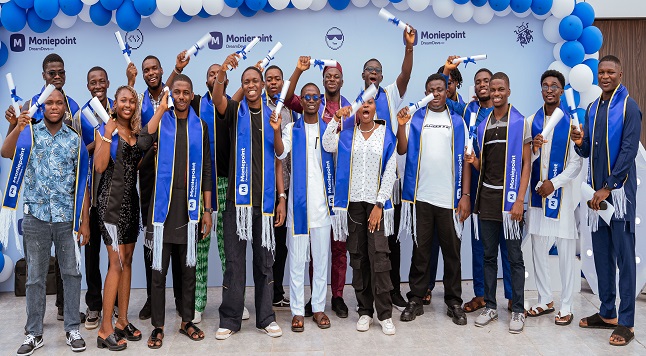
Moniepoint Inc, Africa’s leading digital financial services provider, has announced the opening of applications for the second cohort of its flagship DreamDevs initiative, a transformative program designed to bridge the tech talent gap in Africa by equipping recent graduates with industry-ready skills and real-world experience.

With applications open to graduates across Nigeria, DreamDevs is designed as a national talent search for the next generation of world-class engineers. Each year, just 20 high-potential candidates are selected into an intensive bootcamp, with the strongest performers progressing into internship and full-time roles at Moniepoint. Last year’s cohort delivered four hires – three interns and one full-time engineer – validating the programme’s role as a high-impact talent pipeline.
Targeting graduates from technology, computer science, engineering, and related fields with foundational programming knowledge in HTML, CSS, and JavaScript, DreamDevs offers a rigorous nine-week boot camp that immerses participants via hands-on training from leading software engineers. Standout performers will secure six-month internship placements at Moniepoint, with potential progression to full-time employment based on performance.
“The results from our first cohort validated our belief that with the right training and support, Africa’s young tech talent can compete globally,” says Felix Ike, Co-Founder and Chief Technology Officer at Moniepoint Inc. “This year, we’re doubling down on our commitment by aiming to convert half of our participants into full-time employees. For us, DreamDevs is all about creating sustainable career pathways that drive Africa’s digital economy forward.”
The initiative aligns with Moniepoint’s broader vision of using technology to power the dreams of millions and engineer financial happiness across Africa. It complements the company’s existing talent development programs, including HatchDev – a collaboration with NITHub Unilag that produces 500 specialised developers annually across software engineering, intelligent systems, and IoT/embedded systems as well as its hugely popular, Women-in-Tech which is now in its fifth year.
The initiative is also in tandem with the Federal Government’s 3 Million Technical Talent (3MTT) programme, for which Moniepoint serves as a key sponsor. While the 3MTT programme focuses on mass technical skills training across Nigeria, DreamDevs provides a specialised pathway that takes graduates from foundational training through to employment, creating a complete talent development ecosystem.
“We’re proud to support the government’s vision of building three million technical talents while also creating direct employment opportunities through initiatives like DreamDevs. This multi-faceted approach ensures we’re contributing to national goals while simultaneously addressing our industry’s immediate talent needs.
“By investing in young people and providing them with practical experience, startup incubation support, and product development opportunities, we are not only creating high-impact jobs and driving sustainable economic growth across the continent,” Ike said.
For Victor Adepoju, a member of the first cohort and now a Backend Engineer at Moniepoint, “The organisation of the program was top-notch. The training covered a wide range of topics and provided a solid foundation I could continue to build on. I learned a great deal about cloud technologies, particularly Google Cloud Platform. The program also emphasised valuable soft skills, including planning, organisation, and prioritisation, which have been very useful in my day-to-day work.”
Selection will be based on technical aptitude, learning potential, and alignment with Moniepoint’s values of innovation and excellence. Interested and qualified recent graduates are encouraged to apply before the January 20th deadline via the official portal at dreamdevs.moniepoint.com.

Nigeria and other Sub-Saharan Africa countries rank ninth out of nine global regions as Egypt has emerged as Africa’s leading country in artificial intelligence readiness, ranking first on the continent and 51st globally in the 2025 Government AI Readiness Index published by Oxford Insights.

The impressive ranking has been lauded as underscoring North Africa’s growing influence in the global AI race.
According to Egypt’s Ministry of Communications and Information Technology (MCIT), the country scored 57.5 points out of 100, climbing 14 places from 65th in 2024.
The Nile nation also ranked fourth in the Middle East and North Africa (MENA) region, behind Saudi Arabia, Israel and the United Arab Emirates.
The Oxford Insights index assesses 195 governments using 69 indicators across six pillars, including policy capacity, governance, AI infrastructure, public sector adoption, development and diffusion, and resilience.
Egypt topped the Policy Capacity pillar globally with a perfect score of 100, tying with the UK, Serbia and Australia, an indicator of strong national AI policymaking and institutional readiness.
Oxford Insights noted that countries such as Egypt are “expanding the use of AI across national priorities while shaping policies to strengthen domestic AI ecosystems,” although gaps in infrastructure and talent development remain in some contexts.
MCIT minister Amr Talaat attributed Egypt’s strong performance to deliberate government action.
“This achievement reflects our efforts to integrate artificial intelligence into public services and accelerate digital transformation through Egypt’s second National AI Strategy. We are positioning Egypt as a regional AI hub while ensuring AI delivers real economic and social value,” he said.
Launched for 2025–2030, Egypt’s National AI Strategy targets sectors such as healthcare, justice and public administration, while aiming to train 30 000 AI specialists by 2030 and raise AI’s contribution to GDP to 7.7%.
Talaat also highlighted Egypt’s cybersecurity credentials when he highlighted that the country ranked among the top 12 globally in the ITU’s Global Cyber security Index.
Regionally, the results expose sharp contrasts across Africa. Sub-Saharan Africa ranks ninth out of nine global regions, with an average score of 28.04, reflecting persistent gaps in AI infrastructure and public sector adoption.
However, countries such as Kenya, South Africa, Mauritius and Nigeria lead the sub-region, while Rwanda and Ethiopia are gaining momentum through innovation hubs and policy reforms.
In contrast, the MENA region ranks fifth globally, buoyed by significant investment in AI infrastructure and policy capacity, particularly in Gulf states.


Socio-Economic Rights and Accountability Project (SERAP) has dragged the Independent National Electoral Commission (INEC) to court over the alleged failure to account for ₦55.9 billion reportedly meant for the procurement of election materials for the 2019 general elections.

The grave allegations are documented in the latest annual report published by the Auditor-General on 9 September 2025.
In the suit number FHC/ABJ/CS/38/2026 filed last Friday at the Federal High Court in Abuja, SERAP is seeking: “an order of mandamus to direct and compel INEC to account for the missing or diverted N55.9 billion meant to buy smart card readers, ballot papers, and other election materials for the 2019 general elections.”
SERAP is also seeking: “an order of mandamus to direct and compel INEC to disclose the names of all contractors paid the N55.9 billion for the procurement of smart card readers, ballot papers, result sheets, and other election materials for the 2019 general elections, including the names of their directors and shareholders.”
In the suit, SERAP is arguing that: “INEC must operate without corruption if the commission is to ensure free and fair elections in the country and uphold Nigerians’ right to participation.”
SERAP is also arguing that, “INEC cannot ensure impartial administration of future elections if these allegations are not satisfactorily addressed, perpetrators including the contractors involved are not prosecuted and the proceeds of corruption are not fully recovered.”
According to SERAP, “INEC cannot properly carry out its constitutional and statutory responsibilities to conduct free and fair elections in the country if it continues to fail to uphold the basic principles of transparency, accountability and the rule of law.”
SERAP is also arguing that, “These allegations also constitute abuse of public office and show the urgent need by INEC to commit to transparency, accountability, clean governance and the rule of law.”
SERAP also said, “Allegations of corruption in the supply of smart card readers, ballot papers, result sheets and other election materials directly undermine Nigerians’ right to participate in elections that are free, fair, transparent, and credible.”
The lawsuit filed on behalf of SERAP by its lawyers, Kolawole Oluwadare, Kehinde Oyewumi, and Andrew Nwankwo, read in part: “These grim allegations by the Auditor-General suggest a grave violation of the public trust, the Nigerian Constitution 1999 [as amended] and international anticorruption standards.”
“According to the recently published 2022 audited report by the Auditor General of the Federation (AGF), the Independent National Electoral Commission (INEC) ‘irregularly paid’ over N5.3 billion [N5,312,238,499.39] ‘to a contractor for the supply of Smart Card Readers for the 2019 general elections’.
“The contract was awarded without prior approval from the Bureau of Public Procurement (BPP) and the Federal Executive Council. The payment was also ‘made without any document. There was no evidence of supplies to the commission.’”

Angst as FG Demands 7.5 Percent VAT on Mobile Bank Transfers, USSD

Glo Unveils Immersive Gaming Experience, Travel Saga

Half of Global Companies Build SOCs to Enhance Cybersecurity, with a Focus on Human Expertise

Moniepoint Launches Second Cohort of DreamDevs Initiative to Double Down on Africa’s Tech Talent Pipeline

NITDA DG Reaffirms Nigeria–U.S. Partnership on Data Privacy, AI and Cybersecurity

Banks quietly move to enforce new ₦50 transfer levy from Jan. 1

FIRS says NIN, CAC Numbers to Serve as Tax IDs from 2026

Nigeria Takes the Lead in the Global WSIS+20 Digital Agenda

Nigeria Police Arrest Okitipi, Nigerian Allegedly Linked to Microsoft 365 Hack

PalmPay Launches N400 Million World Travel Carnival, Rewarding Users with Free Global Trips




 E-Financial2 days ago
Wema Bank Upgrades ALAT Banking App

 General News2 days ago
Firm Launches AI-powered Platform to Simplify New Tax Laws

 Telecom2 days ago
X Suspends Twitter Account for Rules Violation

 E-Business2 days ago
Study Reveals 88.5% of Phishing Attacks Focus on Stealing Account Credentials

 News2 days ago
Nigeria, Others Lag Behind as Egypt Tops Africa in AI Readiness

 General News1 day ago
PalmPay, Premier Cool to Reward 10,000 Nigerians with ₦100m in “10k for 10k Campaign”

 E-Financial1 day ago
Ecobank Joins Trillion-naira Club for the First Time in 20 Years

 E-Business1 day ago
Kaspersky Warns Telecom Threats from 2025 will Carry into 2026 as New Technology Adds New Risk