

E-Financial
AVPA, UNDP Partner to Grow Sustainable Finance in Africa

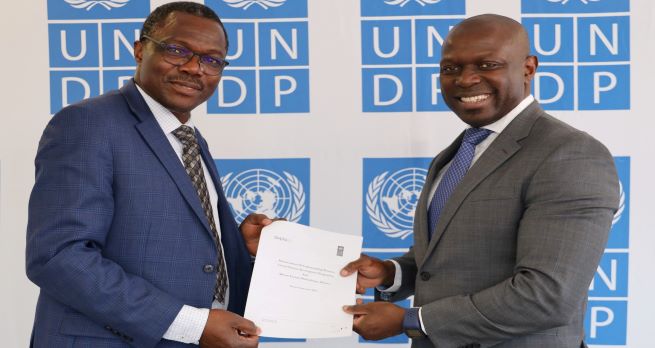
The African Venture Philanthropy Alliance (AVPA), a Pan-African network of social investors collaborating to mobilise and deploy capital for impact and the United Nations Development Programme (UNDP), through its Africa Sustainable Finance Hub (ASFH) and the flagship initiative SDG Impact, have partnered to promote sustainable finance in Africa.

The collaboration will support the African private sector to contribute to the Sustainable Development Goals (SDGs) and the African Union (AU) Agenda 2063. The collaboration kicks off with an SDG Impact Standards User Training for African Corporates.
The impact of the COVID-19 pandemic is felt hard in Africa: the continent’s GDP has declined by 2.1% per capita leading to the worst recession in 50 years. An estimated 20 million jobs were lost in 2020 alone, pushing up to 40 million people into extreme poverty.
This is over and above the pre-COVID-19 annual SDG financing gap estimated at between $500 billion – $1.2 trillion. In Africa, COVID-19 recovery is estimated to cost USD 153 billion. Currently, these financing needs cannot be met as the continent’s traditional sources of social investments, aid and government funding, are declining and under pressure.
This calls for us to broaden the funding base to include private financial and capital markets in a way that fosters the growth of fair, inclusive, and sustainable economies.
A shift of only 3.7% of the USD 100 trillion of assets held globally by institutional investors towards sustainable activities in developing countries would be sufficient to fill the USD 3.7 trillion annual global SDG financing gap.
“The AVPA-UNDP partnership engages corporate and industry leaders to raise awareness and facilitate understanding and practical skills about managing for impact and integrating sustainability at the core of decision-making practices through a common language.
This will address a systemic gap in the market that hampers impact measurement and management practices from going beyond reporting to decision making and recognizing the business case for the SDGs adoption amongst African corporates,” said Dr Frank Aswani, CEO of AVPA.
Dr Ayodele Odusola, Manager of the UNDP Africa Sustainable Finance Hub and Resident Representative for UNDP South Africa, added: “UNDP’s SDG Impact Standards are a ‘best practice’ guide for enterprises and investors to operate more sustainably and optimise their contribution to the SDGs.
“Our partnership with AVPA will provide the African private sector with a framework for integrating responsible business and impact management practices into their strategy, organisational systems and internal decision-making to optimise interrelated economic, social and environmental impacts”.
AVPA and UNDP will also leverage the UNDP’s SDG Investor Maps to showcase and analyse African SDG investment opportunities that will help shift the assets of corporate and private investors into SDGs.
The UNDP’s SDG Investor Maps is a market intelligence tool which aims to direct capital to the emerging markets where SDG priorities, government policy and market opportunity converge.
The SDG Investor Maps are housed digitally on the SDG Investor Platform, and also serve as the foundation to engage policymakers to support an enabling environment for SDG Investment across Africa.



Ecobank Nigeria Limited has fully repaid bondholders who validly tendered their notes ahead of the February 2026 maturity date.

The bank announced the successful completion of its tender offer, under which it prepaid approximately $245 million of its $300 million Eurobond, representing more than 80 per cent of the total issuance.
According to a statement, the transaction relates to the 7.125 per cent Senior Note Participation Notes due February 2026.
Ecobank Nigeria Limited said it launched a tender offer to eligible noteholders in respect of the outstanding $150 million on the bond on November 27, 2025, providing them with an opportunity to redeem their holdings ahead of the original maturity date of 16 February 2026.
It stated that the early and late tender participation deadlines were 11 December 2025 and 29 December 2025, respectively.
According to the bank, holders of notes validly tendered and accepted received a cash consideration of $1,000 per $1,000 in principal amount, in addition to accrued interest from the last interest payment date up to, but excluding, the final settlement date of 31 December 2025.
Following completion of the offer, the bank said the outstanding principal amount of the notes has been reduced to approximately $55.092 million.
The bank also stated that the initiative reflects Ecobank Nigeria’s proactive approach to liability management and prudent balance sheet optimisation.
The tender offer was conducted with Renaissance Capital Africa (Renaissance Securities Nigeria Limited) acting as financial adviser and dealer manager, while Sodali & Co Limited served as tender agent.
The notes were originally issued by EBN Finance Company B.V., with limited recourse to the issuer, for the sole purpose of financing the purchase of the $300 million 7.125 per cent Senior Note due 2026 issued by Ecobank Nigeria Limited.

GTBank has reminded customers of the new stamp duty rules under the Nigeria Tax Act 2025, which take effect from January 1, 2026.

According to an email received by a GT Bank customer on Tuesday, under the new regulation, the ₦50 stamp duty on electronic transfers of ₦10,000 or more will now be paid by the sender, not the recipient.
GTBank clarified that certain transactions will remain exempt from the charge.
“Please be reminded that, in line with the Nigeria Tax Act 2025, which took effect from January 1, 2026, the ₦50 stamp duty on electronic bank transfers of ₦10,000 and above is paid by the sender of the transaction and not the receiver.
“These include transfers below ₦10,000, salary payments, and transfers between a customer’s own GTBank accounts,” the message read.
The bank also noted that the stamp duty is separate from regular transfer fees and will be clearly displayed before completing any transaction, ensuring transparency for customers.
GTBank encouraged customers to review their transfers carefully and plan accordingly, as the update is part of nationwide efforts to streamline compliance with the Nigeria Tax Act 2025.

Nigeria Revenue Service (NRS) says its replacement with the defunct Federal Inland Revenue Service (FIRS) will overhaul the architecture of the country’s revenue administration.

Dr Zacch Adedeji, the executive chairman of NRS, said this in a television interview monitored from Abuja.
The News Agency of Nigeria (NAN) reports that the provision of the recently enacted tax reform laws changes the nomenclature of the country’s apex tax authority from FIRS to NRS.
According to Adedeji, NRS is not branding. It is a total institutional upgrade moving from fragmented revenue administration to a modern, digitalised, centralised and intelligence-driven system.
He said that under the new framework, multiple tax and revenue-related functions previously spread across agencies have been consolidated, with a stronger emphasis on data integration, automation, and reduced human discretion.
He dismissed allegations that the country’s newly enacted tax reform laws were altered after passage by the National Assembly.
“Only the officially gazetted Acts carry legal authority and are binding on taxpayers and administrators,” he said.
The NRS boss said that an Act of the National Assembly only became effective after Presidential assent and official gazetting, with the gazetted version constituting the authoritative text in the event of disputes.
“Revenue agencies, courts, and taxpayers are therefore guided solely by the gazetted law, not draft bills, committee reports or chamber debates.
“Neither the executive nor the revenue authority has any incentive or legal capacity to alter the law after passage,” he said.
Adedeji said that the overhaul of the NRS is also designed to support the Federal Government’s broader fiscal objectives.
According to him, Nigeria’s tax-to-GDP ratio has improved in recent years, rising to about 13.5 per cent as at October 2025.
“But it remains below the African average and well short of levels seen in peer emerging markets,” he said.
Adedeji said that the overall aim is on taxing profits and returns rather than capital or investment.
“We are not going to tax poverty; we want to tax prosperity,” he said.

NAHCO Signs New Ground Handling Deals

Firm Identifies Global Scam Activity Linked to the Release of Avatar 3

Showmax Unlocks Easier Payments for Nigerian Subscribers via Baxi

Mandatory Biometric Verification for Starlink Users in Nigeria Begins

Ecobank Offsets Repayment of $300m Eurobond Notes

Banks quietly move to enforce new ₦50 transfer levy from Jan. 1

FIRS says NIN, CAC Numbers to Serve as Tax IDs from 2026

Financial Sector Faced AI, Blockchain and Organised Crime Threats in 2025 – Report

PalmPay Launches N400 Million World Travel Carnival, Rewarding Users with Free Global Trips

Minister Claims Bandits Exploit Poor Network, Bounce Calls Off Multiple Towers




 News2 days ago
Court Sends Faleti, Ex-Lagos Director to Jail for Stealing ₦48.9m from Access Bank

 E-Financial2 days ago
Remita Powers over ₦100 Trillion in Payments as Nigeria’s Digital Economy Expands

 News3 days ago
974 Nigerians Face Imminent Deportation from Canada Amid Enforcement Surge

 General News3 days ago
House of Reps Releases Certified Copies of Tax Reform Acts amid Gazette Discrepancy Claims

 E-Financial2 days ago
Why 2026 Must Be the Year Nigeria’s Economy Works for All

 E-Financial2 days ago
Flutterwave Acquires Nigeria’s Mono in $25m-$40m All-Stock Deal

 E-Financial2 days ago
2026: SEC to Review Rules to Incentivise SME Listings

 General News2 days ago
Nigeria Targets Satellite-to-Mobile Services in Draft Spectrum Roadmap