

General News
Banks Should not Manage Risks Alone – Agu

Mr. George Agu is chief executive officer of ActivEdge Technologies Limited, a Pan African Information Technology Company, focused in development, Integration and Support of a wide range of Strategic and Transformational IT solution for the public and private sector. Prior to founding ActivEdge Technologies in Nigeria, George was the managing director of Neptune Software in the West African where he achieved remarkable success in over 2 years. He spoke to chike onwuegbuchi on the drive for the company and other issues.
IT Capacity
Nigeria is our country and we all share a responsibility of giving it the best possible. It is not a dumping ground and we must all wake up from our slumber to attend to issues bothering on value realization and optimization from every investment and spending particularly IT investments. Government is investing in IT, the private sector is investing in IT, each of these parties are investing with a mindset that certain set of values and objectives will be achieved. Our portion in the entire equation is to ensure that values are realized and optimized out of every cent spent by the stakeholders on projects. We must move from an environment where everyone can play to an environment where only well qualified and vetted experts can play which is why we would rather start by representing industry leaders and ultimately learning from it to built world class products.
If you look at the list of our partners which include ContinutySA, Avalon Biometrics, Experian, Mincom, Shaya Infosec, you would have formed a certain picture of reputation and quality in your mind, picture of achievements and authorities in various areas. The various partner companies are authorities in their own fields and there is only one reason for that: Projects are meant to succeed and they are not meant to be used as a learning ground.
These partners have made tremendous success in their various fields of specialization. ContinuitySA with over 21 years of leadership in BCM is the largest and foremost Business Continuity Management Company in Africa and to date, the only African based company who Exco sits on the board of BCI in the UK; Experian Decision Analytics with over 30 years of operations has over 20 credit bureaux globally, over 2000 customers, assist over 2 billion credit decisions yearly. Similarly, Avalon Biometrics are behind many voter registration projects, a simple example will include their projects in Philippines, Bangladesh and several others handled for the UNDP, the EU, and so on. We have chosen to operate this way because if it works out well in Nigeria, we are an immediate beneficiary in every way.
We want to leverage on the pedigree, the proven skill set, the capabilities, and the track record of those who have tried it and succeeded many times in delivering certain IT projects. We do not want to experiment with projects because projects are not toys, it must succeed. The purpose of projects, particularly government or private projects is economic development. In other words, success must rob off on the investment made and touch the lives of people for whom these investments have been made.
The success of projects must be felt by the stakeholders above and beyond reports and sign offs by the vendors and stakeholders; it must be felt. If the results are not felt, then you cannot really say that there is project success’.
Use of Biometrics
Biometrics has a wide range of uses and applications from homes, medicals, schools, telecoms, elections to anything because you cannot beat what it brings if well applied. Biometrics also comes in different forms, be it fingerprints, finger vein, palm vein, iris, thumbprints, retina scan, DNA, typing patterns, hand geometry, among others. Many countries have for example attained credible elections in recent times, thanks to Biometrics technology. According to Bruce Schneider, ‘Biometrics is seductive. Your voiceprint unlocks the door of your house. Your iris scan lets you into the corporate offices. You are your own key. Unfortunately, the reality isn’t that simple. Biometrics is hard to forge: it’s hard to put a false fingerprint on your finger, or make your iris look like someone else’s. Some people can mimic others’ voices, and
Hollywood can make people’s faces look like someone else, but these are specialized or expensive skills. When you see someone sign his name, you generally know it is he and not someone else’.
Focus of the Company
Active Edge Technologies is a is a multi faceted, multi expert IT company that is specialized in a wide range of solutions including Business Continuity Management, Risk Assessment and Analytics, Managed Security Services and Patch Management, Business Process Management and Biometrics.
Our role in this economy can be considered transformational. In business continuity management for instance, we have developed a short term, medium term and long term strategic plan aligned with goals for addressing BCM requirements of medium to large sized organizations. Failure to implement BCM by organizations can amount to reputation loss, increased operational costs and values; these are the issues that we intend to address. We are currently engaging organizations to provide information on the benefit of this exercise. I need to clarify that BCM and Basel2 share some common characteristics both in gain and deployment models. I say this because in most cases organizations embark on the two exercises due to regulation. In the same way, implementing BCM with a mindset of leveraging its benefits gives you a different result from implementing it because the regulatory authority has issued an order that compels organizations to do so.
So, we are engaging several organizations, banks, insurance companies, etc and providing them with as much information as we possibly can. We also use the same opportunity to know their various stages of implementation of BCM and where we can be of help. This will be followed by a training program which will be driven mainly by ContinuitySA. They will also be providing advisory, consulting and training services to individual organization based on request.
Our long term plan which we share with ContinuitySA is to build a world class business continuity management facility in Nigeria capable of hosting as many as 15 to 20 banks together should a disaster incidence occur. In the event of such an incident, we should be able to take host of these clients to the tune of 3,000 staff in a place. This facility once built should be able to have conference centres, contact centres, IT recovery centres, work areas recovery centres and so on. When you bring banks together and make them share a common business continuity management facility, what you have done is to save them from individually investing in houses, generators and people. This simply reduces their overall operational cost. This plan is a replica of a similar facility built by ContinuitySA in South Africa and a few other countries. They have operated it for several years now and they have the requisite skills to replicate the same facility here. We are very confident to work with ContinuitySA because they are the largest in that space in Africa today and they well understand some sensitive issues integrity and confidentiality of customer information mean.
Risk Analytic and Assessment System
Experian is the leading global information services company, providing data and analytical tools to clients in more than 65 countries. The company helps businesses to manage credit risk, prevent fraud, target marketing offers and automate decision making. Experian also helps individuals to check their credit report and credit score, and protect against identity theft. With over 30 years, Experian has developed its best practice analytical, consulting and product capabilities to support organizations to manage and optimize risk; prevent, detect and reduce fraud; reduce debt; meet regulatory obligations; and gain operational efficiencies throughout the customer relationship. We are working with Experian purely on account of our evaluation and assessment of the value that they can bring to the financial institutions in particular at this crucial time.
The work performed by most Risk Managers entails managing existing Risks. In that situation, less effort is invested in predictive Risk Assessment and Analytics, which ensures that new risks are detected and prevented from onset. A unique offering from Experian us is to give banks and other organization that grant any form of credit: Telcos, Insurance, etc a solution that ensures that they are able to detect and prevent risks even before it becomes part of the organizations and if they must allow it, they will have controls in place to be able to manage and control it. This is simply the strength of Experian’s Decision Analytics.
Vision for ActiveEdge Technologies
We want to be a recognized IT leader in Africa and beyond, an industry leader that delivers quality services and result to its customers. We want to be a choice organization for both customers and employees. A company that advances the capabilities, skills and employability of its staff, a company that benefits the social society, which is a dream that we have and where we are headed. We want to start from the point of representing industry leaders to innovating our own solutions and services. A few years from now, we are looking at having some unique products that will be patented on the African continent and globally. We want to look back and see real automation done in Nigerian, not just computerization. We would like to see more automation in the payment space, in the invoicing space, in the biometrics and identification space, in the banking space, in the finance and insurance space and the infrastructure space. These are our aspirations.



The International Monetary Fund (IMF) has recommended introducing taxes on fuel products and telecommunications services in Nigeria.

According to the IMF, this is part of broader measures to increase government revenue and create fiscal space for development spending and social interventions.
The international financial organization argued that stronger revenue mobilisation had become increasingly important as Nigeria’s fiscal position remained under pressure despite recent reforms.
This comes as Nigerians are protesting against worsening standard of living made worse by widespread insurgency.
The recommendation was contained in the IMF’s 2026 Article IV Consultation report on Nigeria, where the Fund argued that additional tax measures would be needed over the medium term despite the recent overhaul of the country’s tax system.
“Further tax policy changes will likely be needed—such as increasing the VAT rate, extending VAT to fuel products, rationalising tax expenditures in particular VAT exemptions on extractive industries and some customs duties, and introducing telecom excises—to complement administrative gains,” the IMF said.
The institution, however, cautioned that the timing of any new taxes must take into account Nigeria’s rising poverty levels and worsening food insecurity.
“The timing of reforms must consider the poverty and food insecurity situation and ensure that the cash transfer system is in place and funded,” the Fund added.
A previous attempt by the Federal Government to impose a five per cent excise duty on telecom services met strong resistance from operators, subscribers and consumer advocacy groups before it was suspended and eventually scrapped.
Telecommunications firms had maintained that the industry was already weighed down by multiple taxes, rising energy costs, foreign exchange challenges and infrastructure constraints.
They warned that any additional levy would likely be transferred to consumers through higher call and data tariffs.
Similarly, proposals to tax fuel products have faced opposition from labour unions and private sector organisations amid concerns over the rising cost of living following the removal of petrol subsidies and increases in transport and food prices.
The IMF’s latest recommendation comes as the Fund projects that Nigeria will require stronger revenue mobilisation efforts to sustain planned increases in public spending and provide support for vulnerable households.
According to the report, revenue-enhancing tax policies could generate additional revenue equivalent to 3.9 per cent of Gross Domestic Product within three years of implementation.
The Fund identified a two-percentage-point increase in the Value Added Tax rate as the largest contributor, with a projected revenue gain of 0.8 per cent of GDP.
The report also projected that removing pioneer status incentives and revising free zone regulations would generate an additional 0.7 per cent of GDP.
Reforms to capital gains taxation and adjustments to personal income tax bands, allowances and rates were each estimated to contribute 0.6 per cent of GDP.
The IMF further estimated that a top-up tax on multinationals and large firms could raise 0.5 per cent of GDP, while rationalising investment allowances would contribute another 0.4 per cent.
Notably, the category labelled “others”, which includes telecom excise duties and measures such as a carbon tax on fuel, was projected to generate an additional 0.4 per cent of GDP in revenue.
Beyond new tax measures, the Fund said Nigeria could achieve even greater gains through improved tax administration.
It projected that administrative reforms would generate an additional 3.1 per cent of GDP through better compliance, stronger enforcement and efforts to reduce informality in the economy.
According to the report, measures such as fiscalisation, electronic invoicing and cross-validation of tax deductions could generate 1.5 per cent of GDP, while expanded tax identification registration and consolidation of taxpayer databases could contribute a further 1.6 per cent of GDP.
The IMF acknowledged that some of Nigeria’s recently enacted tax reforms would reduce government revenue in the short term because they were designed to support households and small businesses.
It estimated that revenue-reducing measures would lower revenues by 2.4 per cent of GDP.
Expanded VAT input credits, additional zero-rated items and broader exemptions on basic consumption goods were projected to account for 1.7 percentage points of the decline.
Lower corporate income tax obligations for smaller firms would reduce revenues by 0.4 per cent of GDP, while lower personal income tax rates and expanded exemptions for low-income earners would account for another 0.3 percentage-point reduction.
Overall, the IMF projected that the combined impact of revenue-enhancing measures, administrative reforms and revenue-reducing policies would result in a net increase in government revenue equivalent to 4.6 per cent of GDP over the medium term.Nigerian investment opportunities

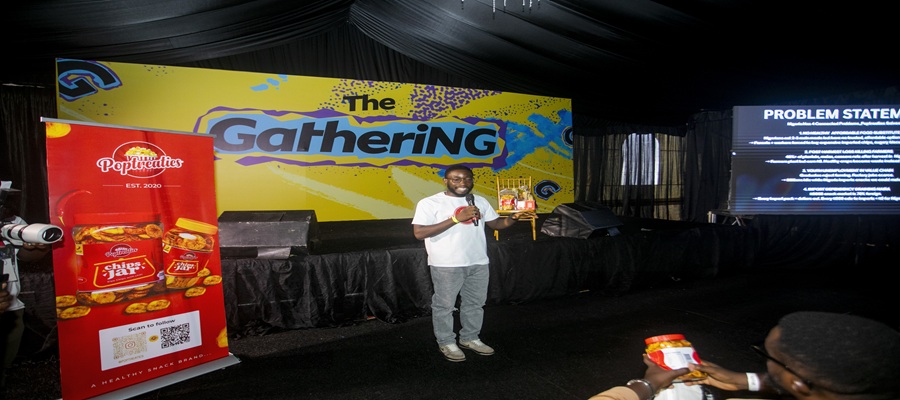
MTN Nigeria, through The Gathering on 100, has officially unveiled the next chapter of its youth cultural and creative movement in Aba, the home of entrepreneurship and innovation in Eastern Nigeria.

The initiative transformed the Prime Time Event Centre in Osisioma into a vibrant hub of innovation, culture, lifestyle, and entertainment.
As the second major activation of MTN’s ‘Live It 100’ campaign, this event underscores a bold commitment to encouraging young Nigerians to live life to the fullest of their potential, whether in business, tech, culture, or entertainment.
Central to this immersive experience is the highly anticipated Pitchathon, where 10 standout startups are vying for a total prize pool of ₦5 million.
The participating startups represent a cross-section of Aba’s burgeoning innovation ecosystem, tackling challenges ranging from logistics to artisanal tech.
Among them are Trashverse Recycling Technology Limited, a climate-first recycling solution founded by Charles Ikechukwu; SkillsCircle by Together, an ed-tech platform championed by Ijeoma Irene to empower young professionals in Nigeria; and Poptreaties, a healthy snack alternative founded by Ifeanyichukwu Dominion to curb junk food consumption.
These founders and their peers are showcasing solutions that blend local ingenuity with scalable technological frameworks, highlighting the immense potential of the region’s entrepreneurial spirit.
The pitchathon is judged by three esteemed figures in the African innovation ecosystem: Chiemela Anosike (Founder, Solaris GreenTech Hub), Dr. Chime Chimezie-Uche (Founder, Abia Startup Limited), and Justina Nwokedi (Digital Transformation Specialist).
This competition is designed to spotlight and empower early-stage founders in the city, providing them with a platform to validate their business ideas before investors, consumers, and industry stakeholders.
The prize structure offers ₦2.5 million to the winning startup, ₦1.5 million for the first runner-up, and ₦1 million for the third-place winner.
This Aba edition builds on the success of the Lagos edition, which took place from April 22 to 26 at the National Stadium, Surulere. There, eight startups received a collective ₦45 million in seed funding for solutions ranging from fintech to creative technology.
By bringing this platform to Aba, a city renowned for its industrial and entrepreneurial spirit, organizers aim to deepen access to opportunity and support the next generation of business leaders.
For these 10 startups, the Pitchathon is a vital opportunity to gain visibility, engage with potential partners, and accelerate their growth within a high-density environment of innovation.

Central Bank of Nigeria (CBN) has proposed new guidelines aimed at separating the operations of banks and other closely linked financial entities, including financial technology (fintech) companies, to strengthen consumer protection and safeguard financial stability.

CBN
The proposal is contained in a circular dated June 10 and titled, “Exposure of the Draft Guidelines on Ring-Fencing Operations of Closely Linked Entities in the Nigerian Financial System.”
According to the apex bank, the proposed framework is designed to establish clear operational and functional boundaries among related entities while addressing regulatory arbitrage arising from the commingling of activities across different licence categories.
The CBN said the guidelines would cover governance, intra-group transactions, segregation of customer funds and data, operational independence, recovery and resolution planning, as well as consolidated supervision.
“The Guidelines is intended to strengthen consumer protection, enhance transparency and accountability, mitigate contagion risks among closely linked entities, and preserve financial stability while supporting innovation and fair competition within the financial services sector,” the bank stated.
The apex bank explained that a closely linked entity refers to any organisation that directly or indirectly controls, is controlled by, or is under common control with another entity through ownership, voting rights, common directors or senior management, shared systems or branding, or contractual dependence.
Under the proposed framework, such entities would be required to operate independently, maintain separate governance and risk management structures, and individually meet capital adequacy and liquidity requirements regardless of group-level resources.
The CBN also proposed stricter controls on transactions between related entities.
It stated that no closely linked entity would be permitted to extend loans to or guarantee the obligations of another related entity without prior written approval from the regulator.
According to the draft, all intra-group exposures must be conducted on an arm’s-length basis and reported to the CBN on a quarterly basis.
The proposed guidelines further seek to strengthen consumer rights by requiring financial institutions to obtain customers’ express consent before onboarding them onto products or services offered by related entities.
The regulator said institutions would also be required to clearly disclose such arrangements in simple language and provide customers with alternative options where available.
To protect depositors and consumers, the CBN proposed that customer funds must not be used for intra-group lending, proprietary trading, servicing group debts or covering the operational expenses of affiliated companies.
The draft also includes provisions for enhanced data protection, requiring customer information to be stored independently from the systems of related entities to prevent unauthorised access or commingling.
In addition, promoters of closely linked entities would be required to establish non-operating holding companies to oversee their businesses.
However, shareholders unwilling to adopt the structure may opt to merge their operations and surrender excess licences.
The CBN said the draft guidelines had been released for stakeholder consultation and public review.
It invited comments and recommendations from stakeholders, noting that submissions must be made on or before July 9.
The proposal follows another draft guideline on financial holding companies issued by the apex bank on June 10, which seeks tighter ownership requirements, including a minimum 51 per cent stake in subsidiaries.
The CBN said the reforms were part of ongoing efforts to strengthen regulatory oversight and ensure the resilience of Nigeria’s financial system.

IMF Urges FG to Introduce Fuel, Telecom Taxes

CBN to Expand eNaira for Salaries, Pensions and Welfare Payments

CSOs Raise Alarm over Nigeria’s Data Protection Crisis

CBN to Bar HoldCos from Influencing Banks’ Lending Decisions

₦5m up for Grabs as 10 Startups Clash at the Gathering on 100 Pitchathon Aba

CBN Extends PoS Geo-Fencing Enforcement Deadline to August 2026

NCC Drafts New Rules for Virtual Mobile Operators

TD Africa, HPE Drive Conversations on the Future of Intelligent Networking

Anthropic Raises $65 Bn to Expand AI Research, Innovation

Easybuy Partners WAWUAfrica to Upskill 10 Million Youths and Women, Boosting Nigeria’s Economic and Financial Inclusion




 News2 days ago
UK, Nigeria Launch £15m Growth Programme to Accelerate Economic Transformation

 General News2 days ago
Haleon Introduces New Corporate Identity in Nigeria

 Telecom2 days ago
NITDA Unveils Ambitious Strategy to Turn Southwest into Nigeria’s Next Innovation Powerhouse

 General News2 days ago
Elon Musk Makes History as the World’s First Trillionaire
 General News4 hours ago
₦5m up for Grabs as 10 Startups Clash at the Gathering on 100 Pitchathon Aba
 E-Financial4 hours ago
CBN to Expand eNaira for Salaries, Pensions and Welfare Payments
 E-Business4 hours ago
CSOs Raise Alarm over Nigeria’s Data Protection Crisis

 Telecom4 hours ago
NASENI Unveils Ambitious Plan to Produce 600 Million Diagnostic Kits Annually