

Broadcasting
BBA 4: A Revolution in Reality TV Hits Screen

“Everyone who passes through this door brings happiness, some by entering, some by leaving.” (Words on the door of the Big Brother house).
The long awaited ‘Big Brother Africa 4: The Revolution’ hit the screen on Sunday September 6, and was welcome with excitement across the continent and beyond. This time it has taken various dimensions and twists, leaving viewers on edge while they yearn for more drama and intrigue on the show which can well be classified as a thriller!
The revolution has taken a course, manifesting on September 6th when the Big Brother house was unveiled and the housemates admitted. The house is an architectural masterpiece on the cutting-edge of avant garde; a technological accomplishment which includes over 14,000 metres of cabling – renovating and rebuilding the existing structure took 70,000 bricks, 6 tonnes of cement and 4 tonnes of structural and reinforcing steel!
Polished stainless steel elements sit alongside warm wood tones and rugged stone, whilst canvas drawn paintings share space comfortably with unique graffiti artwork. Bold colours against a backdrop of neutrals provide key focal points throughout the house while wide open spaces allow for a feeling of space and tranquility. Add one gleaming kitchen which could be termed a chef’s dream, with all the modern conveniences, plus an open plan lounge accentuated in leather and luxurious throws, and the house fuses classic design ethics with a fun, easygoing twist.
Other rooms include an elegant bathroom, dormitory styled bedroom, polished dark wood dining area, and the always powerful diary room, which hovers between stern and soothing – the feathery cover of the “hot seat” makes you want to sink further but the framework allows no room for comfort. Meanwhile outside, a decked patio offers cool comfort while the lush garden is offset by the sparkling plunge pool, which is every good diver’s delight (from first-hand experience).
According to Biola Alabi, managing director, M-Net Africa, “whilst this is the Big Brother house, we understand that it’s also home to our housemates so we wanted a space where they would feel welcome, relaxed and at ease. It’s challenging to be in the Big Brother house and the aim with this season was to provide an oasis, to make the house as pleasant on the eye and as accessible as possible. The vision of the show’s design team was clear from the start and, with their creativity and passion, they have made it reality.”
In this revolutionary season of Big Brother Africa, there are 100 microphones and 40 cameras, including manned, remote and miniature ‘lipstick’ cameras, at work.
At the inauguration of BBA 4: The Revolution, DStv viewers across Africa witnessed curious happenings in the Big Brother house. First was the admittance of four ‘mystery guests’ who got viewers thinking the real housemates had arrived. Then came a bout of shock – only male contestants were going to be in the house! Just when everyone was grumbling about the lack of female presence, the host IK Osakioduwa announced that the female housemates were going to be joining them the upper week, much to the relief of the viewers who could not imagine a groovy Big Brother house without African beauties.
Another twist in the entire ‘maze’ was the presentation of two identical twin brothers, Edward and Erastus Mongoo from Namibia, as housemates. But their identities were going to be hidden in the house, and both stand to be evicted should their cover be blown by three housemates. In other words, they both will be existing as an individual, at least from the housemates’ perception.
Within the first 24 hours, the wind of eviction had begun to blow. Big Brother told the housemates in the Diary Room that they had to nominate people for eviction, much to everyone’s surprise. When the confusion had cleared up, Edward had received the most nominations – 6, followed by Hannington and Kaone with 5 apiece. The housemates struggled to recall everyone’s names as they stumbled through the nomination process, shocked at the prospect of losing their newfound friends so soon. The nominations also brought discussions of alliances to the fore, with conspiracy allowed for the first time in the Big Brother competition.
The general format of Big Brother provides interesting demographic and sociological perspectives on human behaviour. Confining 14 people from different backgrounds and countries, with the only connection being the English language, to a house for three months, they are forced to interact with one another. Living together under continuous observation, the programme relies on four basic props for providing these perspectives: the stripped-bare back-to-basics environment in which they live; the evictions; the weekly tasks set by Big Brother and the Diary Room in which the housemates individually convey their thoughts, feelings, frustrations and of course their nominees for eviction. Forced to live with total strangers for three months, Big Brother helps viewers see how people react when they are removed from their usual environment and placed among total strangers. Without the aid of cameras and microphones and the television and the internet, it is not normally possibly to observe such interactions vividly. But with the aid of technology, insights are gained into the motivations and actions of people when removed from their comfort zones and forced to put up with strangers for a lengthy period of time.
BBA housemates this season are drawn from Nigeria, Angola, Botswana, Ghana, Kenya, Malawi, Namibia, South Africa, Tanzania, Uganda, Zambia, Zimbabwe, Mozambique and Ethiopia – a collection of diverse people from countries with different cultures, creating a melting pot of personalities, tempers, and ambitions.
This time you vote to keep your favourite contestants in the house, and not otherwise as in previous seasons. You can do this via www.mnetafrica.com/bigbrother, via the www.mnetafrica.com/bigbrother WAP site on your WAP-enabled phone or via MXIT; and also by texting your favourite housemate’s name to the appropriate number. To vote via text message, send the word ‘Vote ‘followed by the name of your favourite housemate to 34350 for MTN, 34350 for Zain, 34701 for ZOOMmobile, 3435 and 34701 for Glo. Each SMS costs N75, and you can vote 100 times by text per mobile number during each voting period.



In a landmark educational innovation, New Horizons Nigeria has become the first institution to integrate the Chinese (Mandarin) language into its ICT curricular as an elective, thereby positioning Nigerian students for relevance in the rapidly changing world order.

Mr. Tim Akano, Managing Director and CEO of New Horizons Systems Solutions Limited
New Horizons Nigeria is a leading ICT training and solutions provider committed to provide individuals and institutions with future-ready skills. Through innovative program, global partnerships, and strategic foresight, the organization continues to redefine education, workforce development, and global competitiveness.
With over 80% of global consumer products manufactured in China and China’s growing dominance in global supply chains and labour markets, New Horizons Nigeria recognizes the urgent need for the current generation to understand, speak, and engage with the Chinese language and culture. As global economic power dynamics evolve, the labour market is increasingly tilting towards China, making Mandarin proficiency a critical competitive advantage.
According to Mr. Tim Akano, Managing Director and CEO of New Horizons Systems Solutions Limited, Nigeria, the program represents far more than a language course.
He asserted that very soon, the global labour market is likely to increasingly reflect China’s influence rather than the predominantly western orientation it currently exhibits. Language will be a major differentiator and the first Chinese-speaking technology experts in Nigeria will have a significant advantage, especially in integration into Chinese companies operating locally and globally.
Therefore, New Horizons Nigeria has officially launched a Mandarin Scholarship Program with China Advancement Opportunity, selecting 100 outstanding students from five prominent Nigerian secondary schools. This initiative marks a major milestone in Nigeria–China educational cooperation and reflects a forward-thinking response to shifting global economic realities.
Furthermore, the scholarship program has commenced with an intensive three-month online Mandarin training and at the end of the program, the top-performing students will be selected strictly on merit. 20 outstanding students will receive an additional scholarship valued at $2,500 per students to participate in a one-year pre-degree Mandarin and cultural immersion program in China. From this group, the best candidates will progress to fully funded admission scholarships into top universities in China. This initiative is designed not only to build language proficiency but also to enhance global competence, international exposure, and cultural intelligence among Nigerian students.
Also, to maintain international academic standards, participating schools are required to comply with strict guidelines. They will be obligated to join the online classes ten minutes earlier, they must have a minimum of 85% attendance throughout the program, and must ensure they have a stable internet connectivity, reliable power supply and a conducive learning environment.
Therefore, School owners and administrators have been formally congratulated and strongly encouraged to nominate their most disciplined, and committed students, as advancement to the China program will be strictly merit-based.
However, apart from students, internation business men are equally encouraged to attend New Horizon’s Mandarin executive lessons which will equip them with basic Chinese language to enhance their business communications.
Additionally, while the pilot phase begins with selected secondary schools which includes Startrite School, Lightway School, British Nigerian Academy School, Honeyland Schools and Great Heights School, the Mandarin program will be available as an elective ICT course at all New Horizons retail centers.
This is done to extend access to students and learners beyond its partner schools and within one year, committed learners will be able to communicate effectively in Mandarin, which will open doors to global employment, trade, and cultural exchange.
In conclusion, a Mandarin Cultural Fiesta will be hosted, bringing together educators, students, institutional partners, and distinguished guests from China and Nigeria. The event will celebrate outstanding performance, cross-cultural exchange, and the strengthening of bilateral educational ties.
For enquiries and participation details, interested individuals are encouraged to contact New Horizons Nigeria via 08125541750

By Moliehi Molekoa, Managing Director of Magna Carta Reputation Management Consultants and PRISA Board Member
The start of a new year often brings optimism, new strategies, and renewed ambition. However, for the public relations and reputation management industry, the past year ended not only with optimism but also with hard-earned clarity.

Moliehi Molekoa
2025 was more than a challenging year. It was a reckoning and a stress test for operating models, procurement practices, and, most importantly, the foundation of client–agency partnerships. For the C-suite, this is not solely an agency issue.
The year revealed a more fundamental challenge: a partnership problem that, if left unaddressed, can easily erode the very reputations, trust, and resilience agencies are hired to protect. What has emerged is not disillusionment, but the need for a clearer understanding of where established ways of working no longer reflect the reality they are meant to support.
The uncomfortable truth we keep avoiding
Public relations agencies are businesses, not cost centres or expandable resources. They are not informal extensions of internal teams, lacking the protection, stability, or benefits those teams receive. They are businesses.
Yet, across markets, agencies are often expected to operate under conditions that would raise immediate concerns in any boardroom:
Unclear and constantly shifting scope
Short-term contracts paired with long-term expectations
Sixty-, ninety-, even 120-day payment terms
Procurement-led pricing pressure divorced from delivery realities
Pitch processes that consume months of senior talent time, often with no feedback, timelines, or accountability
If these conditions would concern you within your own organisation, they should also concern you regarding the partner responsible for your reputation.
Growth on paper, pressure in practice
On the surface, the industry appears healthy. Global market valuations continue to rise. Demand for reputation management, stakeholder engagement, crisis preparedness, and strategic counsel has never been higher.
However, beneath this top-line growth lies the uncomfortable reality: fewer than half of agencies expect meaningful profit growth, even as workloads increase and expectations rise.
This disconnect is significant. It indicates an industry being asked to deliver more across additional platforms, at greater speed, with deeper insight, and with higher risk exposure, all while absorbing increased commercial uncertainty.
For African agencies in particular, this pressure is intensified by factors such as volatile currencies, rising talent costs, fragile data infrastructure, and procurement models adopted from economies with fundamentally different conditions. This is not a complaint. It is reality.
This pressure is not one-sided. Many clients face constraints ranging from procurement mandates and short-term cost controls to internal capacity gaps, which increasingly shift responsibility outward. But pressure transfer is not the same as partnership, and left unmanaged, it creates long-term risk for both parties.
The pitching problem no one wants to own
Agencies are not anti-competition. Pitches sharpen thinking and drive excellence. What agencies increasingly challenge is how pitching is done.
Across markets, agencies participate in dozens of pitches each year, with success rates well below 20%. Senior leaders frequently invest unpaid hours, often with limited information, tight timelines, and evaluation criteria that prioritise cost over value.
And then, too often, dead silence, no feedback, no communication about delays, and a lack of decency in providing detailed feedback on the decision drivers.
In any other supplier relationship, this would not meet basic governance standards. In a profession built on intellectual capital, it suggests that expertise is undervalued.
This is also where independent pitch consultants become increasingly important and valuable if clients choose this route to help facilitate their pitch process. Their role in the process is not to advocate for agencies but to act as neutral custodians of fairness, realism, and governance. When used well, they help clients align ambition with timelines, scope, and budget, and ensure transparency and feedback that ultimately lead to better decision-making.
“More for less” is not a strategy
A particularly damaging expectation is the belief that agencies can sustainably deliver enterprise-level outcomes on limited budgets, often while dedicating nearly full-time senior resources. This is not efficiency. It is misalignment.
No executive would expect a business unit to thrive while under-resourced, overexposed, and cash-constrained. Yet agencies are often required to operate under these conditions while remaining accountable for outcomes that affect market confidence, stakeholder trust, and brand equity.
Here is a friendly reminder: reputation management is not a commodity. It is risk management.
It is value creation. It also requires investment that matches its significance.
A necessary reset
As leadership teams plan for growth, resilience, and relevance, there is both an opportunity and a responsibility to reset how agency partnerships are structured.
That reset looks like:
Contracts that balance flexibility and sustainability
Payment terms that reflect mutual dependency
Pitch processes that respect time, talent, and transparency for all parties
Scopes that align ambition with available budgets
Relationships based on professional parity rather than power imbalance
This reset also requires discipline on the agency side – clearer articulation of value, sharper scoping, and greater transparency about how senior expertise is deployed. Partnership is not protectionism; it is mutual accountability.
The Leadership Question That Matters
The question for the C-suite is quite simple:
If your agency mirrored your internal standards of governance, fairness, and accountability, would you still be comfortable with how the relationship is structured?
If the answer is no, then change is not only necessary but also strategic. Because strong brands are built on strong partnerships. Strong partnerships endure only when both sides are recognised, respected, and resourced as businesses in their own right.
The agencies that succeed and the brands that truly thrive will be those that recognise this early and act deliberately.

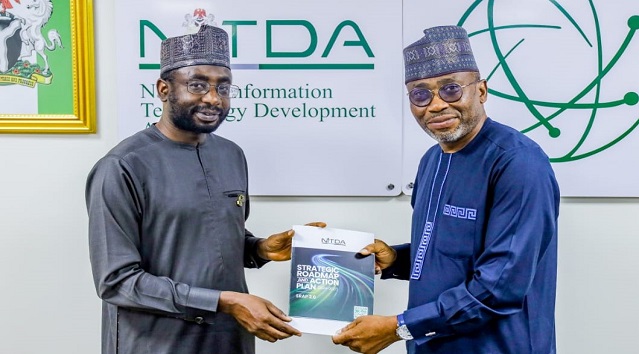
The Director General of the National Information Technology Development Agency (NITDA), Kashifu Inuwa CCIE, has reaffirmed the agency’s commitment to deepening inter-agency collaboration as he received the Director General of the National Broadcasting Commission (NBC), Mr Charles Ebuebu, on a courtesy visit aimed at exploring strategic partnerships in digital transformation and regulatory frameworks across Nigeria’s media and technology sectors.

Speaking during the meeting, Inuwa stated that digital transformation and regulation are inseparable in Nigeria’s rapidly evolving digital ecosystem. He also emphasised that digital transformation is not a one-off project but a continuous journey that requires constant improvement, periodic target-setting, and organisational adaptability to emerging realities.
According to the NITDA boss, the agency deliberately embarked on a transformational journey to reposition itself from a traditional civil service structure to a high-velocity, smart public sector organisation. He noted that when the agency began its transformation drive, a significant percentage of its workforce came from the mainstream civil service, bringing with it entrenched bureaucratic mindsets and rigid operational practices. This, he said, necessitated a conscious decision to change the narrative.
“More than 70 or 80% of our staff came from the mainstream public service, and we know the mindset of public servants, so we started changing that narrative by focusing on people, resetting mindsets, building capacity, and fostering a culture that supports innovation and accountability,” he noted.
Inuwa explained that NITDA’s approach to digital transformation was anchored on three core pillars: people, processes, and technology. He stressed that no matter how advanced technology may be, it cannot deliver value without the right people and efficient processes in place.
He further disclosed that the agency undertook a comprehensive cultural reorientation programme, supported by cultural audits and initiatives aimed at creating psychological safety within the organisation.
“This was critical to enabling staff at all levels to freely contribute ideas, challenge existing processes constructively, and engage in horizontal and vertical collaboration without fear of reprisal,” he stated.
He noted that culture remains the foundation upon which any successful strategy must stand, adding that “no matter how good a strategy is, without the right culture, execution will fail.”
Providing further insight into the transformation journey, he explained that NITDA adopted an integrated framework encompassing people, process, culture, content, and technology. Through this framework, the agency identified and addressed deeply rooted bureaucratic tendencies such as command-and-control structures, risk aversion, and excessive dependence on directives from senior leadership.
According to the DG, “these reforms paved the way for trust-based delegation, inter-departmental collaboration, and process optimisation”.
He further revealed that NITDA documented over 396 internal processes and subsequently streamlined them to eliminate inefficiencies and repetitive executive approvals. He cited examples where routine operational tasks that previously required multiple approvals at the Director General’s level were redesigned to empower departments as gatekeepers, allowing leadership to focus on strategic priorities.
This process optimisation, he said, also created the foundation for automation and the integration of digital tools.
On capacity building, the DG disclosed that all NITDA staff underwent mandatory artificial intelligence (AI) training, reinforcing the agency’s position that AI is a tool for enhancing productivity rather than replacing human capital.
He noted that staff across departments are now leveraging AI to improve workflows, generate ideas, and transition from manual administrative roles to AI-enabled system administration.
Inuwa added that technology deployment at NITDA is deliberately driven by business value rather than trend adoption, stressing that technology must support clearly defined processes and organisational objectives.
He announced that the agency has developed a comprehensive digital transformation playbook, capturing lessons learned from its journey, which it is willing to share with NBC and other government institutions.
To advance collaboration with NBC, Inuwa proposed concrete areas of partnership, including sharing the agency’s digital transformation playbook, delivering tailored training and capacity-building programmes, enrolling NBC staff in digital literacy initiatives developed with global technology partners such as Cisco, and providing technical support for modernising regulatory frameworks to align with the evolving digital and media ecosystem.
Earlier in this remark, Mr Ebuebu called for deeper collaboration between the NBC and NITDA, describing the partnership as long overdue in the face of rapid media and technology convergence.
He noted that although he has had several insightful interactions with the DG NITDA in the past, it was important to institutionalise cooperation between both agencies to address emerging developments in media, technology, data governance, and Nigeria’s digital future.
While calling for closer ties between the two agencies, he emphasised that a strategic partnership between NBC and NITDA is critical to effectively regulate the evolving media ecosystem, harness technology for content creation and distribution, promote the growth of local media, facilitate knowledge transfer, and protect Nigeria’s cultural and national interests.

EFInA Unveils Research Fellowship Programme to Deepen Financial Inclusion Impact

Indigenous Firm Deploys 400,000 Smart Electricity Meters in 2025

CBN Expresses Concern Over Foreign Investments in Nigeria Fintechs

UBA’s Easy and Instant Account Opening Thrills Returnee

NCC Committed to Regional Digital Integration – Maida

Firm Detected a Fivefold Surge in QR Code Phishing Attacks in the Second Half of 2025

US invests $115m in counter-drone tech for World Cup security

Nigerian Terra Industries Secures $11.8m for Expansion

Firm Detected a Scam Exploiting OpenAI’s Teamwork Features

Nigeria Targeted with 4,622 Cyber-attacks Per Week in December 2025




 General News3 days ago
Globacom Donates ₦1Bn to Lagos State Security Trust Fund

 Telecom3 days ago
Airtel Nigeria Commits to Upgrade of its Network Infrastructure for Improved Quality of Service

 E-Business3 days ago
PwC Reveals AI Scaling Gap Slows Africa’s Digital Transformation

 E-Financial3 days ago
Ecobank Profit Jumps 29 Percent to N950Bn

 News3 days ago
CIoD, NIPSS Partner to Deepen Governance, Leadership Standards

 News3 days ago
NRS Chairman Outlines Ways Nigeria can Move from Potential to Economic Prosperity

 General News3 days ago
WIEG to host Nigeria’s first International Investment Summit in Lagos

 News3 days ago
Orya, Ex-NEXIM MD Jailed 490 Years for N2.4Bn Fraud