

Broadcasting
BBA 4: A Revolution in Reality TV Hits Screen

“Everyone who passes through this door brings happiness, some by entering, some by leaving.” (Words on the door of the Big Brother house).
The long awaited ‘Big Brother Africa 4: The Revolution’ hit the screen on Sunday September 6, and was welcome with excitement across the continent and beyond. This time it has taken various dimensions and twists, leaving viewers on edge while they yearn for more drama and intrigue on the show which can well be classified as a thriller!
The revolution has taken a course, manifesting on September 6th when the Big Brother house was unveiled and the housemates admitted. The house is an architectural masterpiece on the cutting-edge of avant garde; a technological accomplishment which includes over 14,000 metres of cabling – renovating and rebuilding the existing structure took 70,000 bricks, 6 tonnes of cement and 4 tonnes of structural and reinforcing steel!
Polished stainless steel elements sit alongside warm wood tones and rugged stone, whilst canvas drawn paintings share space comfortably with unique graffiti artwork. Bold colours against a backdrop of neutrals provide key focal points throughout the house while wide open spaces allow for a feeling of space and tranquility. Add one gleaming kitchen which could be termed a chef’s dream, with all the modern conveniences, plus an open plan lounge accentuated in leather and luxurious throws, and the house fuses classic design ethics with a fun, easygoing twist.
Other rooms include an elegant bathroom, dormitory styled bedroom, polished dark wood dining area, and the always powerful diary room, which hovers between stern and soothing – the feathery cover of the “hot seat” makes you want to sink further but the framework allows no room for comfort. Meanwhile outside, a decked patio offers cool comfort while the lush garden is offset by the sparkling plunge pool, which is every good diver’s delight (from first-hand experience).
According to Biola Alabi, managing director, M-Net Africa, “whilst this is the Big Brother house, we understand that it’s also home to our housemates so we wanted a space where they would feel welcome, relaxed and at ease. It’s challenging to be in the Big Brother house and the aim with this season was to provide an oasis, to make the house as pleasant on the eye and as accessible as possible. The vision of the show’s design team was clear from the start and, with their creativity and passion, they have made it reality.”
In this revolutionary season of Big Brother Africa, there are 100 microphones and 40 cameras, including manned, remote and miniature ‘lipstick’ cameras, at work.
At the inauguration of BBA 4: The Revolution, DStv viewers across Africa witnessed curious happenings in the Big Brother house. First was the admittance of four ‘mystery guests’ who got viewers thinking the real housemates had arrived. Then came a bout of shock – only male contestants were going to be in the house! Just when everyone was grumbling about the lack of female presence, the host IK Osakioduwa announced that the female housemates were going to be joining them the upper week, much to the relief of the viewers who could not imagine a groovy Big Brother house without African beauties.
Another twist in the entire ‘maze’ was the presentation of two identical twin brothers, Edward and Erastus Mongoo from Namibia, as housemates. But their identities were going to be hidden in the house, and both stand to be evicted should their cover be blown by three housemates. In other words, they both will be existing as an individual, at least from the housemates’ perception.
Within the first 24 hours, the wind of eviction had begun to blow. Big Brother told the housemates in the Diary Room that they had to nominate people for eviction, much to everyone’s surprise. When the confusion had cleared up, Edward had received the most nominations – 6, followed by Hannington and Kaone with 5 apiece. The housemates struggled to recall everyone’s names as they stumbled through the nomination process, shocked at the prospect of losing their newfound friends so soon. The nominations also brought discussions of alliances to the fore, with conspiracy allowed for the first time in the Big Brother competition.
The general format of Big Brother provides interesting demographic and sociological perspectives on human behaviour. Confining 14 people from different backgrounds and countries, with the only connection being the English language, to a house for three months, they are forced to interact with one another. Living together under continuous observation, the programme relies on four basic props for providing these perspectives: the stripped-bare back-to-basics environment in which they live; the evictions; the weekly tasks set by Big Brother and the Diary Room in which the housemates individually convey their thoughts, feelings, frustrations and of course their nominees for eviction. Forced to live with total strangers for three months, Big Brother helps viewers see how people react when they are removed from their usual environment and placed among total strangers. Without the aid of cameras and microphones and the television and the internet, it is not normally possibly to observe such interactions vividly. But with the aid of technology, insights are gained into the motivations and actions of people when removed from their comfort zones and forced to put up with strangers for a lengthy period of time.
BBA housemates this season are drawn from Nigeria, Angola, Botswana, Ghana, Kenya, Malawi, Namibia, South Africa, Tanzania, Uganda, Zambia, Zimbabwe, Mozambique and Ethiopia – a collection of diverse people from countries with different cultures, creating a melting pot of personalities, tempers, and ambitions.
This time you vote to keep your favourite contestants in the house, and not otherwise as in previous seasons. You can do this via www.mnetafrica.com/bigbrother, via the www.mnetafrica.com/bigbrother WAP site on your WAP-enabled phone or via MXIT; and also by texting your favourite housemate’s name to the appropriate number. To vote via text message, send the word ‘Vote ‘followed by the name of your favourite housemate to 34350 for MTN, 34350 for Zain, 34701 for ZOOMmobile, 3435 and 34701 for Glo. Each SMS costs N75, and you can vote 100 times by text per mobile number during each voting period.



David Adedeji Adeleke, known professionally as Davido, has shared his past suicidal thoughts as he dropped Oriadé, his sixth studio album yesterday.

Davido
Davido said he chose the date on purpose as it marks exactly 15 years since he began his professional music career.
Oriadé is a Yoruba word combining “Ori,” meaning destiny, and “Adé,” meaning crown.
It translates to “the crowned head.” The album has 13 tracks and features Black Sherif, Aya Nakamura, Leon Thomas, Mayorkun, and Llona.
It follows his 2025 project, 5ive, which reached number two on the Billboard World Albums chart.
Davido also announced an international tour to support the new record.

In the days leading up to the release, Davido gave interviews that revealed personal details about his past and his current life.
Speaking to Vibe Magazine on Thursday, he described a 2014 incident in Ghana that left him feeling suicidal.
He said he invited a woman back to his hotel room after a show, and she later posted a photo of him sleeping online.
He said the fallout overwhelmed him.
“My daddy was calling me. My sisters were calling me. If I saw the balcony that day, I would have jumped,” he said.
He said he was young at the time and did not fully understand the consequences of his actions.
He described the experience as a turning point that changed how he thinks about privacy and fame.
In the same interview, he explained why he often dresses down in public despite his wealth.
He recalled a trip to the South of France where he went out in shorts and slippers without his watch.
“I’ve been on jets, I’ve been flying, I’ve been in all these places since I was a baby. I’ve been seeing money since I was a baby. So all these things don’t really excite me,” he said.
He added that he sometimes prefers to drive a Toyota to the supermarket in Atlanta instead of one of his luxury cars.
In a separate livestream with Davrel, Davido spoke about how his life has changed since marrying his wife, Chioma, and becoming a father.
He said his home no longer holds the large crowds it once did.
“I can no longer have 100 people in my house like before,” he said.
He said he speaks to Chioma every day regardless of his schedule.
He also disclosed that he spends between $200,000 and $300,000 a month on himself, not including costs for his wife, children, jewelry and cars.
He said the amount is lower when he is in the United States, where he described his lifestyle as quieter.

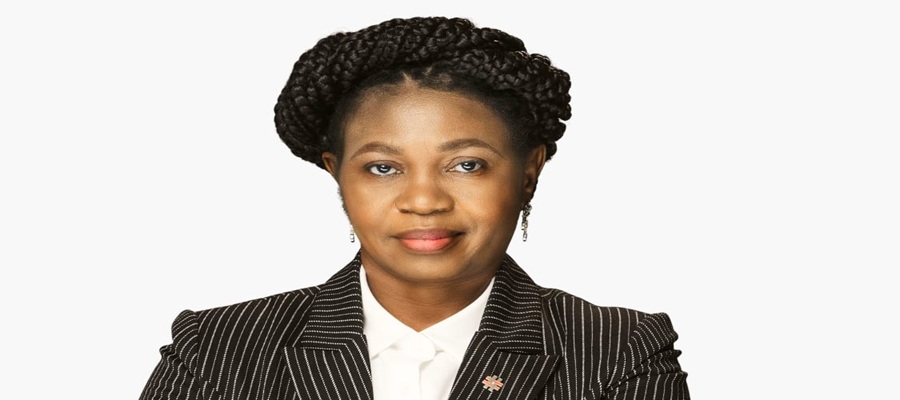
Africa Prudential Plc has reaffirmed its commitment to digital transformation, revenue diversification and sustainable growth after reporting a strong financial performance for the first half of 2026.

Dr Catherine Nwosu
The company made this known during its H1 2026 Investor Call, which brought together institutional investors, shareholders, investment analysts, regulators and other stakeholders to review its financial performance and strategic outlook.
Dr Catherine Nwosu, managing director and Chief Executive Officer of Africa Prudential, said the company’s performance reflected the resilience of its business model and the effectiveness of its long-term growth strategy despite prevailing macroeconomic challenges.
According to the company’s financial results, gross earnings rose by 27 per cent year-on-year to N4.28 billion, from N3.34 billion recorded in the corresponding period of 2025.
Profit before tax increased by 22 per cent to N2.41 billion, while profit after tax grew by 18 per cent to N1.59 billion.
The company also reported a 27 per cent rise in net operating income to N4.21 billion, while total assets increased by 13 per cent to N46.53 billion.
Shareholders’ funds equally rose by 13 per cent to N12.52 billion, reflecting continued financial strength.
Management attributed the performance to sustained growth in its core registrar business, increased corporate action activities in the Nigerian capital market, improved treasury earnings and rising adoption of its technology-driven solutions.
The company said it was steadily transforming from a traditional share registrar into a broader technology and business solutions provider serving Nigeria’s capital market ecosystem.
During the interactive session, investors sought clarification on the sustainability of earnings, particularly as interest rates are expected to moderate.
Responding, Nwosu said the company was deliberately expanding its recurring fee-based revenue streams to reduce dependence on treasury income.
“Interest rates influence our treasury income positively, but that is why we are deliberately diversifying our revenue streams.
“Our strategy is to grow recurring fee-based business lines such as our digital solutions, Know Your Customer (KYC) services, Annual General Meeting (AGM) technology, probate services and the SabiVest mobile app.
“Over time, this will reduce our reliance on interest income and create a more balanced and resilient earnings mix,” she said.
Nwosu noted that increasing capital market activities had created stronger demand for seamless digital investor experiences, improved operational efficiency and enhanced compliance solutions.
She said the company would continue investing in technology-enabled products capable of delivering long-term value to shareholders while strengthening its competitive position.
According to her, Africa Prudential has identified five strategic priorities for the second half of 2026.
The priorities include driving sustainable growth across its core registrar and emerging business lines, accelerating technology-led product innovation, strengthening brand leadership, investing in talent development and deepening corporate governance.
She said the investor engagement demonstrated the company’s commitment to transparency, accountability and regular engagement with shareholders and the investment community.
Africa Prudential reaffirmed its commitment to leveraging innovation, operational excellence and sound financial management to sustain growth and strengthen its leadership position in Nigeria’s capital market.


Gugu Gumede and S’Dumo Mtshali, the power couple in Netflix’s telenovela, The Polygamist, will be guest on this week’s edition of African Voices, which is sponsored by Globacom on Cable News Network (CNN).

The 22-episode sitcom focuses on the misadventures of an adulterous spouse who unknowingly entangles his family in the difficulties of polygamy.
The film depicts a series of intrigues, betrayals, and other events that shattered the harmony of a once-perfect marriage.
The fictional couple in Johannesburg are interviewed by the programme’s anchor, Larry Madowo, for a 30-minute show in which they discuss their personal experiences and the difficulties they have in the film industry, such as coping with popularity and typecasting and advocating for more actor protections.
Gumede, a 34-year-old South African who attended the American Academy of Dramatic Arts in Los Angeles to study acting, portrayed Joyce Gomora in the telenovela.
In addition to her part in The Polygamist, Gumede has portrayed Mamlambo, a prophetess on “Uzalo”, the most watched television program in South Africa, and Mandisa in “Generations”, one of the country’s most popular series.
Mtshali, a 43-year-old South African actor who portrayed Jonasi Gomora, gained notoriety in 2010 after competing in and winning the SABC1 reality program, “Class Act”. In the same year, he landed his first major part in the drama series “Intersexions” on SABC1.
Among other films, he has starred in “Inside Story” (2011), “Avenged” (2013), “iNumber Number: Jozi Gold” (2023), “Back of the Moon”, and “The Four of Us” (2025).
This special double-cast episode will feature on DSTV channel 401 on Saturday at 8a.m. It will be repeated same day at 11a.m., Sunday at 3.30a.m.,6p.m., Monday at 3a.m. and 5.45p.m. as well as on Tuesday,5.45p.m.
The repeats continue next week Saturday at 7.30a.m., 11a.m.;Sunday 3.30a.m., 6p.m.,and on Monday at 3a.m.

Police Uncover Fake Diplomatic Number Plate Syndicate in Abuja

Davido Shares Past Suicidal Thoughts, Drops Oriadé Album

Gavi Okays $500m for Vaccines, PHCs in Nigeria

82% of Organizations Concerned about AI Risks Even as Adoption Accelerates – Survey Reveals

The Journey to Financial Freedom: Priscilla, a PalmPay Agent Now Owns a Store

NRC, Ponzi Scheme Collapses Resulting Loss of Billions of Naira

EFCC Busts NIS Visa Overstay Racket, Uncovers N700m in an Account

From Scarcity to Scale: What Africa Can Learn from India’s Agricultural Transformation

Tokenization, Blockchain Technology will Transform Financial Institutions – IMF

BON Establishes Six Ad Hoc Committees to Modernize Broadcasting




 Telecom3 days ago
Clydestone Ghana Sues MTN Over Mobile Money

 News3 days ago
IHS Nigeria Donates Business-Support Equipment to Empower People with Disabilities in Abuja Community

 News3 days ago
Africa Prudential Unveils Digital Growth Strategy

 E-Business3 days ago
Kaspersky Uncovers New Mirage Kitten Malware Used in Cyber-espionage Campaign Across Africa, Others

 E-Financial3 days ago
CBN Fines Banks N430m for Ignoring Customers’ Complaints

 E-Financial3 days ago
Afreximbank Raises $1.5b in Largest-ever Bond Issuance

 E-Financial3 days ago
SEC Begins Full e-Registration for Capital Market Operators

 E-Financial3 days ago
Elon Musk Launches Invite-only X Money with Visa Debit Card