

E-Business
Bento Aims to Digitise HR, Payroll in 10 New African Markets in 2022


Bento, a pan-African digital payroll and HR Management (HRM) platform, has announced its launch into Ghana, Kenya and Rwanda to grow the company’s reach across the continent.

The company describes Africa’s payroll and HR Management market as “a huge untapped opportunity with over 400 million people in the labour force.”
According to Bento African businesses have remained largely analogue up until now, using spreadsheets and bulk upload on bank portals, bank transfers, cheques, and even cash.
Founded in Nigeria in 2019, cloud-based Bento focuses on addressing many of the challenges African businesses face by automating salary payments, tax, pensions and other statutory
Employees are given access to third-party services such as credit solutions – which include the ability to pay school fees and rent monthly rather than yearly – unemployment insurance, savings, investments and much more, all at no cost to employers.

Having obtained full operating licenses in each market, Bento said it is building local teams in Ghana, Kenya and Rwanda and will adapt its products for local cultural and financial nuances.
In Nigeria, Bento has stood at the forefront of payroll and HRM, serving over 900 active Nigerian businesses across all sectors, including some of the largest Healthcare and Financial Services companies in the country such as Hygeia and Tangerine Africa, as well as many Y Combinator-backed firms including Paystack, Kobo360, Branch, Helium Health, and LORI Systems.
The company is targeting further rapid growth across the continent, and will launch in Egypt, South Africa, Uganda, Tanzania, Angola and Senegal by the end of 2022.
”Seeing so many companies using analogue methods to manage their workforce is simultaneously frustrating and exciting for us. Employers don’t have access to locally customised, world-class payroll and HRM tools, and employees can’t easily access third-party services to help make life easier,” said Ebun Okubanjo, Co-Founder and CEO at Bento.
“When you think about it, your salary powers your life, so we’re building the operating system that will have a profound impact on the African continent for generations to come.”
While solving the missing piece of the B2B payroll and HRM puzzle, Bento is also enabling employees to access credit solutions and other third party products and services. Around 95% of African consumers have never had access to formal credit and rely on informal lenders and savings schemes.
To further illustrate this point, in Africa on average 4.5% of people have access to a credit card compared with 65% in the US. Bento’s proprietary credit engine, built in partnership with Tarya, Israel’s largest P2P lending firm, ensures the company can offer significantly better rates than traditional retail lenders and disburse within minutes rather than days.
Chidozie David Okonkwo, Co-Founder and COO at Bento, added, “We’re starting with payroll and HRM, but moving rapidly towards Salary 2.0, where we redefine the intersection of work and life and transform the way people earn, spend and borrow on the continent.
“Having successfully established product-market fit in Nigeria, one of the most difficult markets to penetrate in Africa, we’re excited to roll out across the continent and solve the real problems we know millions of employers and employees face on a daily basis.”



At the recent Cyber Security Weekend 2026 conference, Kaspersky shared the findings from its survey titled “Cybersecurity in the workplace: Employee knowledge and behaviour” which was conducted among employees from the Middle East, Turkiye and Africa (META) region.

The study highlights that everyday IT habits, including decluttering computers and reducing digital fatigue, can have a direct and often underestimated impact on an organisation’s cyber resilience.
The Kaspersky survey points to a growing challenge of digital fatigue in the workplace. 13.5% of employees surveyed in the META region confirmed that they made IT-related mistakes due to a lack of cybersecurity knowledge – a figure that shows the critical importance of continuous cybersecurity training and awareness programmes.
Among other reasons behind IT mistakes, respondents cited being in a hurry (30%), oversight (14%), being tired or stressed (12.9%) and having too many notifications (10%). The constant barrage of alerts, messages, and on-screen clutter is becoming an acute problem that can lead to costly IT errors, overlooked social engineering attacks, and even to cyber breaches.
The survey also examined employees’ digital workspace habits. An overwhelming 44.5% of respondents in the META region reported having between 10 and 20 icons on their desktop, while 30% admitted to having even more – with half to a full screen covered in them.
Meanwhile, 33% of respondents also keep more than 10 tabs open in their browser at any given time. Excessive icons and open tabs do more than distract attention and fuel procrastination – they can slow device performance and, in the case of unused applications, quietly collect data.
Interestingly, most employees regularly disinfect their keyboards and phone surfaces (21.5% have adopted this habit since the COVID pandemic). However, digital cleanliness has not kept pace: 55% of respondents remove needless files once a month or more often; the rest perform digital clean-ups far less frequently – once a quarter, or even once a year.
Managing digital noise is key to staying alert: only essential notifications should remain active, especially during periods of deep focus on critical project deliverables. Regular breaks are just as vital for maintaining both well-being and cyber vigilance.
According to the survey, 78% of respondents spend their work breaks eating or drinking, while 58% chat with friends and colleagues. However, stretching and physical exercise is a more effective way to relieve stress and recharge focus – a habit adopted by only 14% of employees.
“It is important to recognise that digital fatigue is a real and growing stress factor: the constant stream of notifications, cluttered screens, and information overload gradually erode focus and make employees far more susceptible to mistakes and social engineering attacks. Simplifying your digital environment is not just a productivity tip, it is a cybersecurity measure”, says Brandon Muller, senior security consultant for the META region at Kaspersky.

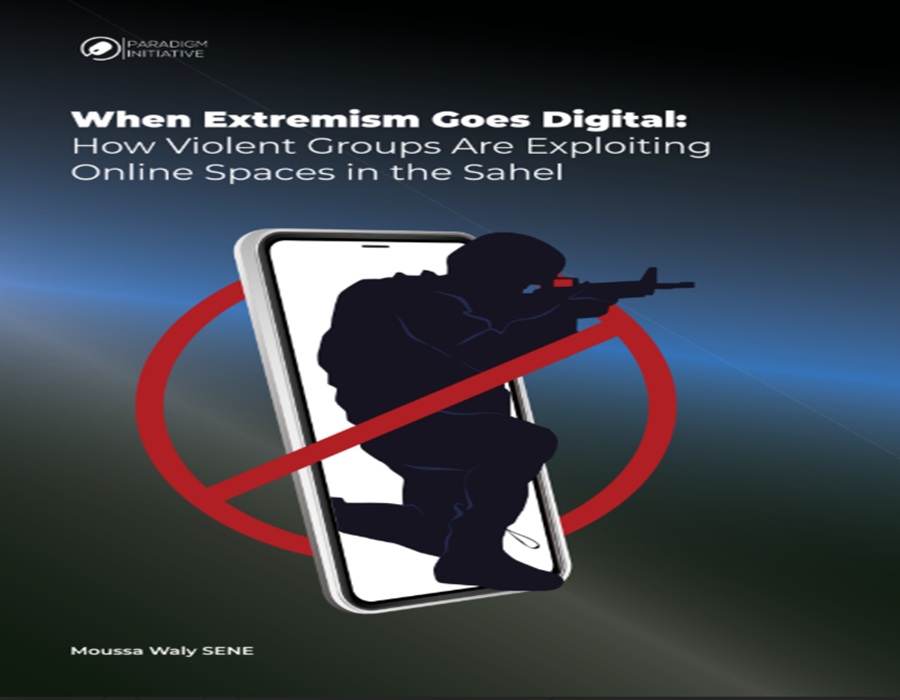
Pan-African digital rights organisation Paradigm Initiative (PIN) has warned that violent extremist groups are increasingly exploiting digital platforms to recruit, radicalise and manipulate young people across the Sahel region.

The organisation raised the concern in a new policy brief titled “Digital Frontlines: Countering Online Radicalisation and Violent Extremist Narratives in the Sahel.”
According to the publication, extremist groups are shifting from traditional recruitment methods to digital platforms, including social media, encrypted messaging applications, short-form video platforms and online financial incentives, to target vulnerable populations.
PIN noted that unemployed youths and people facing insecurity and limited economic opportunities are particularly susceptible to online recruitment campaigns.
The organisation said that although governments have intensified efforts to combat violent extremism, responses to the digital dimension of the threat have failed to keep pace with rapidly evolving online tactics.
It argued that addressing online radicalisation requires more than surveillance and restrictive measures, recommending investments in digital literacy, stronger community resilience, improved early-warning systems and credible counter-narratives.
PIN also urged governments to work closely with technology companies and civil society organisations to disrupt extremist recruitment while protecting citizens’ digital rights.
The report further highlighted the growing convergence between organised crime and violent extremist groups, noting that online propaganda increasingly promises financial rewards, belonging and purpose to vulnerable young people.
According to the organisation, this trend underscores the need for policymakers to prioritise prevention alongside conventional security responses.
Speaking on the findings, Moussa Waly SENE, Programmes Officer for Francophone Africa at Paradigm Initiative, described the digital space as a new frontline in the fight against violent extremism.
“As more young Africans come online, stakeholders must ensure that digital platforms remain spaces for opportunity, innovation and civic participation, not recruitment grounds for violent extremist groups. Protecting digital rights and protecting vulnerable communities should be mutually reinforcing objectives,” he said.
Among its recommendations, the policy brief called for stronger regional cooperation to tackle cross-border online extremist networks, rights-respecting content moderation and greater accountability by digital platforms.
It also advocated expanded digital literacy programmes to strengthen resilience against online manipulation and community-led initiatives that empower young people to identify and reject extremist narratives.
The organisation further urged policymakers to develop security measures that balance national security objectives with the protection of privacy, freedom of expression and access to information.
E-Business
Kaspersky Reveals a New Malicious Framework Targeting Cryptocurrency Users with the Use of OkoSpyware

At its recent annual Cyber Security Weekend for the Middle East, Turkiye and Africa (META) region, Kaspersky Global Research and Analysis Team (GReAT) shared insights about the new OkoBot campaign targeting cryptocurrency users.

The new sophisticated framework employs TookPS to exfiltrate seed phrases and uses a new OkoSpyware module to monitor Chromium-based browsers and deploy various malware strains, including the Rilide stealer.
It has already targeted hundreds of victims across over 25 countries, with the highest number of affected end users recorded in Brazil, Vietnam, Canada, Mexico and Turkiye. According to Kaspersky experts, the threat remains active and primarily poses a risk to cryptocurrency users.
In January 2026, experts from the Kaspersky Global Research and Analysis Team (GReAT) identified multiple attacks involving a previously unknown malware capable of capturing the contents of cryptocurrency wallet windows. Dubbed Okobot, the new sophisticated malware framework comprises more than 20 malicious payloads and implants designed to perform a wide range of functions, including collecting local files, executing remote commands, downloading arbitrary browser extensions, stealing cryptocurrency wallets, harvesting seed phrases and credentials, recording video and carrying out other malicious activities.
One of the new implants used in the campaign is a loader that modifies browser memory to load and hide malicious extensions. OkoBot also includes a new OkoSpyware module, which captures keystrokes and the video stream of a target application’s window.
Currently available information does not allow the campaign to be attributed to any known crimeware actor with high confidence. However, the techniques and infostealer involved are widely used by Russian-speaking threat actors, and technical analysis has also revealed code artifacts in Russian.
The initial infection typically occurs through two main vectors: ClickFix attacks, in which threat actors use social engineering to trick users into running malicious code, and malware distributed via GitHub under the guise of legitimate software. During the investigation, researchers identified one such case involving a fake installer for SQL Server Management Studio (SSMS), a widely used Microsoft database management tool.
The malicious framework includes SeedHunter, a malware component that monitors active system processes and injects an implant into Trezor Suite, Ledger Wallet, and Ledger Live, – official applications used to manage cryptocurrency assets. When it detects a connected Trezor or Ledger hardware wallet, it triggers the hooked functions to display a hard-coded phishing page aimed at stealing the user’s seed phrase, using a distinct layout for each wallet type.
“The OkoBot campaign has been active for more than a year and remained ongoing as of July 2026. The observed infection vectors strongly suggest that developers are among its primary targets. Of particular concern is the malware’s continued evolution, which indicates that the framework is being actively maintained. As distribution efforts persist, the campaign has the potential to reach more users and expand into additional countries in the near term,” says Dmitry Galov, Head of the Russia and CIS unit at Kaspersky Global Research and Analysis Team.

Glovo Pioneers AI Quick-Commerce

Fleeing Southeast Asia Scam Syndicates Find New Homes in Nigeria, Kenya- Report

DSS Arraigns Eze for Allegedly Hacking, Stealing N800m from SunTrust Bank

SEC Unveils Probate/Unclaimed Monies Clinic to Help Families Recover Inherited Investments

We have Multiple Layers of Protection for 281m Accounts in Nigeria – NDIC

From Scarcity to Scale: What Africa Can Learn from India’s Agricultural Transformation

BON Establishes Six Ad Hoc Committees to Modernize Broadcasting

EFCC Busts NIS Visa Overstay Racket, Uncovers N700m in an Account

How EFCC Turned Recovered Loot Into School Supplies for Thousands of Nigerian Students

BVN Enrollments Hit 69.55m- NIBSS




 E-Business3 days ago
Kaspersky Reveals a New Malicious Framework Targeting Cryptocurrency Users with the Use of OkoSpyware

 E-Business3 days ago
CMS T&M Launches TMO Rides to Enable a Faster & Cashless Transport Experience for CMS – Ajah Passengers

 E-Business3 days ago
Nigeria Tightens Data Privacy Compliance as FG Issues Directive to MDAs

 E-Business3 days ago
Firm to recruit over 100 professionals to boost NRS e-Invoicing compliance

 Telecom3 days ago
FG Commences 90,000km Fibre Optic Rollout within Weeks

 E-Financial2 days ago
Access Holdings Deepens Sustainable Finance Impact, Expanding Green Assets to ₦92.14 Billion

 Telecom3 days ago
Dimension Data to Channel Funds to Support Nigerian Fibre Expansion

 E-Financial3 days ago
Zenith Bank Confirms Cyberattack, Says Hackers Accessed Limited Customer Data