

Telecom
Beware Of Christmas Scams as Phone Thieves, Hackers On The Rise

For many, Christmas is a period of giving and celebrating with loved ones.

On the flip side, there is one group who are much more excited about these busy weeks than the celebration itself: beware to the fraudsters the run-up to Christmas is Christmas, TUNDE OGUNTOLA writes.
Phone theft in Nigeria appears to be on the rise, especially Androids and iPhones.
Perhaps, a more worrisome dimension is that some of the thieves are more interested in SIM cards than the phones.
Via access to SIM cards without SIM lock, they hack into the owner’s personal and confidential information such as BVN, and banking details and ultimately, end up defrauding them.

“I took my leave a few weeks ago and I decided to traveled to Lagos, to see my parents, though not my first time. With my back and overload of confidence as if my father is the governor of Lagos State or the popular Nigerian treasurer of the Nigerian Union of Road Transport Workers (NURTW) in Lagos State, MC Oluomo.
“Shortly after our plane landed at the domestic wing of Murtala Muhammed International Airport, I ordered a taxi to take me to Mile 12 Market to buy foodstuff for my parents. Everyone knows how Mile 12 Market can be very rowdy.
“Soon after buying the foodstuff. I was on my way to negotiate a taxi when a middle-aged man bumped into me, claiming he knows that I look like his cousin, and he instantly apologized for the mix-up.
“A moment later, I noticed he had stolen my phone already. I don’t like to talk about it. When I got home, I tried to log in to my email on another phone and all I saw was debit alerts. Till they emptied my account. It was indeed double jeopardy for me. I lost my phone and my account was emptied.
‘’I am still in doubt on how they easily got my pin or phone password. Sadly, I just received my salary and they withdrew all the cash in my account via a POS transaction,’’ said Zainab Hassan as she recalled her encounter with phone thieves in Lagos.
Hassan, who is an online vendor, said she lost N275,000 and her phone in just one night. She added that she did not enjoy her stay in Lagos as her mother and other family members were moody over the sad occurrence.
Unlike Hassan, a student Ms Christiana Adeyemo while narrating her ordeal to LEADERSHIP Weekend said her mother, a civil servant who retired in 2019 received a call from 0814635**** who claimed to be Mr Samuel a Custom Care Agent with Access Bank. She said her mother believed the person calling, thinking they were calling her to rectify her account to receive her pension money.
She, however, said the fraudster who claimed to be a banker asked her mother some questions after which she told her mother to call the number on her ATM and she did.
Luckily, Adeyemo said her mother withdrew the N480,000 out of the N480,600 in her account a day before she received the fraudulent call.
“Instantly they debited her N600. Apparently, the hackers have bought airtime with her money,’’ she said.
She said the hackers called her again asking for her Polaris Bank ATM details again, already there was a debited alert on her phone so she hung up on that person when she saw the debit alert, she ran to the bank to inform the customer care staff who told her that the call was not from them.
She said some bank customers waiting to be attended by the customer service staff were even laughing at her ignorant mother that she has been defrauded of N600.
‘’It is not funny, I don’t blame them,’’ she said.
She added that Nigerians need to be more cautious on Instagram and other social media handles, some criminals do claim that they are a philanthropist on Instagram. They make a post saying: “Drop your account for breakfast or follow this account and win N10, 000.”
In Iyanapaja, Adebanjo Usman learned not to leave his car window open while driving. He said his phone was picked via his window, adding that he became helpless to chase the thief. “I was driving down Iyanapaja. The sun was scorching and there was traffic so I turned the windows down. I dropped my phone on the passenger seat in front absent-mindedly. After a few minutes, a middle-aged man walked up to my side and tried to talk to me about a flat tire.
“Just within a jiffy, I can’t really remember what happened to be honest, all I observed was that my phone had been stolen.”
unwarranted access. He noted that crime in the bustling city of Lagos is something every resident learns to come to terms with.
Moye stressed that pedestrians should stop pressing their phones while walking on the street. He said surfing through social media while on Lagos roads, saying the street is so overridden with gangs.
He said, ‘’Within a twinkle of an eye your phone might be snatched forcefully from you, or even be a victim of an accident probably from a car or bus trying to avoid Lagos State Traffic Management Authority (LASTMA).
‘’Focus on where you are going and don’t get distracted. Phone snatching, burglary, petty theft, and instant scam; these threats follow you around the city.’’
He said getting by safely usually involves recognising the signs that you are in the wrong place at the wrong time.
‘’Receiving or calling someone requires your mental attention and this is because the city moves at a breakneck pace, most small crimes occur in a near-instant. The most frequent of these, understandably, is phone snatching,’’ he said.
He noted that the mode by which this happens varies, adding that sometimes, a motorcycle zooms past and grabs the phone out of their hands.
Moye stated that residents must learn to pick safe spots like restaurants, police stations and libraries which tend to be more suitable for meetings to avoid getting into dangerous situations.
When GSM was introduced in the country, Nigerians must have breathed a sigh of relief when Econet (now Airtel) and MTN Nigeria launched their GSM mobile services in 2001. Truth be told GSM has contributed positively in boosting economic activities in Nigeria sadly, it has led to the upsurge of high-level insecurity in the nation including insurgency, kidnapping and mobile banking fraud.
While kidnapping, insurgency, and SIM fraud loom, the Nigerian Communications Commission (NCC) identified Subscriber Identity Module (SIM) swaps and Unstructured Supplementary Service Data (USSD) e-payment frauds as some of the cyber threats confronting the telecom industry.
This is even as the commission disclosed that attackers target telecom networks with the intent of getting access to consumers’ information in the database of service providers.
The director, Consumer Affairs Bureau of NCC, Efosa Idehen stressed that fraudsters conduct SIM swaps of targeted individuals and then carry out USSD-based transactions to defraud citizens of their money.
Speaking at the maiden edition of a sensitisation programme tagged: “Shine your eyes, no fall mugu”, in Benin City Idehen who was represented by Clement Omife, a deputy director in his department, advised Nigerians to be careful when opening unfamiliar emails.
He also urged Nigerians to be careful while responding to unfamiliar inquiries so as not to fall prey to cybercriminals.
According to him, “These fraudsters do this by stealing victims’ identities- names, address, bank information and other information which they use in gaining access to their victim’s bank accounts.”
‘’They also use the stolen identities to defraud other people and even apply for loans or make online purchases, leaving the victims with debts.”
To empower telecom consumers with knowledge and inform them to be alert not to fall victim to fraudsters, Idehen said the enlightenment programme was organised by the commission in conjunction with the African Entrepreneurial and Human Development Initiatives.
He continued: “As the telecom industry evolves, there are growing concerns over the rising trend of fraud perpetrated on the platform (electronic fraud) across key sectors of the Nigerian economy.’’
Via e-banking, he said the menace, which follows wide acceptance of new methods of mobile money and electronic banking and payment systems, has been discovered to cost the country whooping sums of money.
“It is in view of this and in line with its consumer-centric posture that the commission with relevant advocacy groups, embarked on this sensitisation programme in locations across the country, starting with Benin City, Edo State.”
To tackle the menace of electronic fraud, he noted that effective collaboration between government agencies, private organisations and individuals is pivotal.
How they operate
When a syndicate described as ‘’Digital Thieves’’ led by one Muritala Mohammed alias (swallow) was paraded by the Police in Lagos.
Mohammed, who is a member of a six-man gang, said they are always two in number during operation and a motorcycle rider. The suspect explained that they get the phones via numerous means by tricking their unsuspecting victims. Mohammed said if they have the phone, they will quickly call a motorcycle rider Solomon Dike who is on standby to come around so that they can flee with the phone.
Having picked the phone, he said they hand it over to Muritala ‘’Swallow’’ whose interest is the SIM card, when he gets a hold of it, he sets out to hack the SIM card using a shortcode to check the victims BVN where he receives a message that tells if the SIM is enrolled to a bank account or not, then he proceeds with other hacking tricks using other computer applications.
Mohammed said once he confirms the funds, he sends the money to another suspect Ali Hassan whose job is to provide other account numbers for the transfer. He also explained that he can also get random account numbers from unsuspecting members of the public where he transfers the money into their account.
He said he has mastered how to hack data from Access Bank, UBA and GT Bank. He further said the computer application brings out the account number, Bank Verification Number (BVN), and account name of the SIM card in his possession.
Phone theft in Nigeria appears to be on the rise, especially Androids and iPhones. Perhaps, a more worrisome dimension is that some of the thieves are more interested in SIM cards than the phones. Via access to SIM cards without SIM lock, they hack into the owner’s personal and confidential information such as BVN, and banking details and ultimately, end up defrauding them.
“I took my leave a few weeks ago and I decided to traveled to Lagos, to see my parents, though not my first time. With my back and overload of confidence as if my father is the governor of Lagos State or the popular Nigerian treasurer of the Nigerian Union of Road Transport Workers (NURTW) in Lagos State, MC Oluomo.
“Shortly after our plane landed at the domestic wing of Murtala Muhammed International Airport, I ordered a taxi to take me to Mile 12 Market to buy foodstuff for my parents. Everyone knows how Mile 12 Market can be very rowdy.
“Soon after buying the foodstuff. I was on my way to negotiate a taxi when a middle-aged man bumped into me, claiming he knows that I look like his cousin, and he instantly apologized for the mix-up.
“A moment later, I noticed he had stolen my phone already. I don’t like to talk about it. When I got home, I tried to log in to my email on another phone and all I saw was debit alerts. Till they emptied my account. It was indeed double jeopardy for me. I lost my phone and my account was emptied.
‘’I am still in doubt on how they easily got my pin or phone password. Sadly, I just received my salary and they withdrew all the cash in my account via a POS transaction,’’ said Zainab Hassan as she recalled her encounter with phone thieves in Lagos.
Hassan, who is an online vendor, said she lost N275,000 and her phone in just one night. She added that she did not enjoy her stay in Lagos as her mother and other family members were moody over the sad occurrence.
Unlike Hassan, a student Ms Christiana Adeyemo while narrating her ordeal to LEADERSHIP Weekend said her mother, a civil servant who retired in 2019 received a call from 0814635**** who claimed to be Mr Samuel a Custom Care Agent with Access Bank. She said her mother believed the person calling, thinking they were calling her to rectify her account to receive her pension money.
She, however, said the fraudster who claimed to be a banker asked her mother some questions after which she told her mother to call the number on her ATM and she did.
Luckily, Adeyemo said her mother withdrew the N480,000 out of the N480,600 in her account a day before she received the fraudulent call.
“Instantly they debited her N600. Apparently, the hackers have bought airtime with her money,’’ she said.
She said the hackers called her again asking for her Polaris Bank ATM details again, already there was a debited alert on her phone so she hung up on that person when she saw the debit alert, she ran to the bank to inform the customer care staff who told her that the call was not from them.
She said some bank customers waiting to be attended by the customer service staff were even laughing at her ignorant mother that she has been defrauded of N600.
‘’It is not funny, I don’t blame them,’’ she said.
She added that Nigerians need to be more cautious on Instagram and other social media handles, some criminals do claim that they are a philanthropist on Instagram. They make a post saying: “Drop your account for breakfast or follow this account and win N10, 000.”
In Iyanapaja, Adebanjo Usman learned not to leave his car window open while driving. He said his phone was picked via his window, adding that he became helpless to chase the thief. “I was driving down Iyanapaja. The sun was scorching and there was traffic so I turned the windows down. I dropped my phone on the passenger seat in front absent-mindedly. After a few minutes, a middle-aged man walked up to my side and tried to talk to me about a flat tire.
“Just within a jiffy, I can’t really remember what happened to be honest, all I observed was that my phone had been stolen.”
unwarranted access. He noted that crime in the bustling city of Lagos is something every resident learns to come to terms with.
Moye stressed that pedestrians should stop pressing their phones while walking on the street. He said surfing through social media while on Lagos roads, saying the street is so overridden with gangs.
He said, ‘’Within a twinkle of an eye your phone might be snatched forcefully from you, or even be a victim of an accident probably from a car or bus trying to avoid Lagos State Traffic Management Authority (LASTMA).
‘’Focus on where you are going and don’t get distracted. Phone snatching, burglary, petty theft, and instant scam; these threats follow you around the city.’’
He said getting by safely usually involves recognising the signs that you are in the wrong place at the wrong time.
‘’Receiving or calling someone requires your mental attention and this is because the city moves at a breakneck pace, most small crimes occur in a near-instant. The most frequent of these, understandably, is phone snatching,’’ he said.
He noted that the mode by which this happens varies, adding that sometimes, a motorcycle zooms past and grabs the phone out of their hands.
Moye stated that residents must learn to pick safe spots like restaurants, police stations and libraries which tend to be more suitable for meetings to avoid getting into dangerous situations.
When GSM was introduced in the country, Nigerians must have breathed a sigh of relief when Econet (now Airtel) and MTN Nigeria launched their GSM mobile services in 2001. Truth be told GSM has contributed positively in boosting economic activities in Nigeria sadly, it has led to the upsurge of high-level insecurity in the nation including insurgency, kidnapping and mobile banking fraud.
While kidnapping, insurgency, and SIM fraud loom, the Nigerian Communications Commission (NCC) identified Subscriber Identity Module (SIM) swaps and Unstructured Supplementary Service Data (USSD) e-payment frauds as some of the cyber threats confronting the telecom industry.
This is even as the commission disclosed that attackers target telecom networks with the intent of getting access to consumers’ information in the database of service providers.
The director, Consumer Affairs Bureau of NCC, Efosa Idehen stressed that fraudsters conduct SIM swaps of targeted individuals and then carry out USSD-based transactions to defraud citizens of their money.
Speaking at the maiden edition of a sensitisation programme tagged: “Shine your eyes, no fall mugu”, in Benin City Idehen who was represented by Clement Omife, a deputy director in his department, advised Nigerians to be careful when opening unfamiliar emails.
He also urged Nigerians to be careful while responding to unfamiliar inquiries so as not to fall prey to cybercriminals.


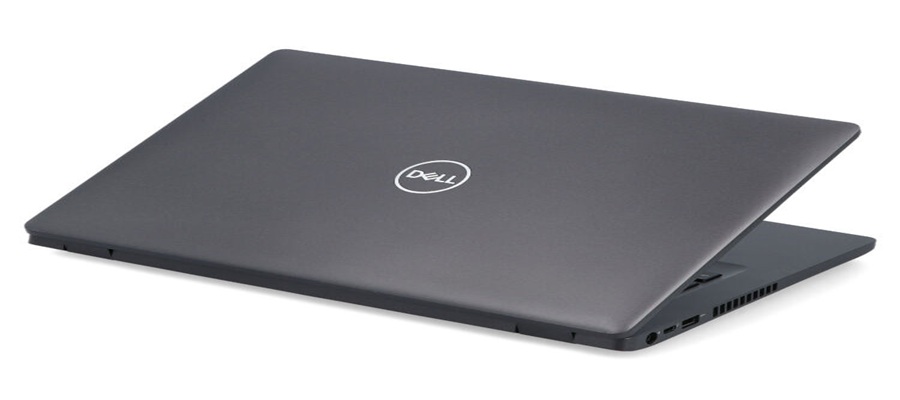
MENXTT TECH NG, a Lagos-based technology company, has launched an initiative to make quality Dell laptops more affordable for Nigerians through flexible payment plans and extended warranty support.

The company said the initiative was aimed at helping students, entrepreneurs, professionals and small businesses acquire reliable computing devices despite rising technology costs.
According to the company, customers can now purchase premium pre-owned Dell Latitude, Dell Precision and Dell Inspiron laptops at competitive prices, with selected models available under staggered payment arrangements.
The laptops, it said, are designed to meet the needs of users ranging from students and office workers to architects, engineers, software developers, graphic designers and video editors.
Speaking on the initiative, the Co-Founder of MENXTT TECH NG, Mr Anthony Emeka Nwosu, said access to quality technology should not be limited by financial constraints.
“A laptop is no longer a luxury; it is an essential tool for education, business and career development.
“Unfortunately, many people are forced to settle for unreliable devices because of the high cost of new laptops.
“At MENXTT TECH NG, we want to bridge that gap by providing durable Dell business laptops at affordable prices, backed by a full one-year warranty and flexible payment plans.
“We want every student, entrepreneur, freelancer and business owner to have access to technology that helps them succeed,” he said.
Nwosu explained that every laptop undergoes comprehensive testing before delivery and comes with a one-year warranty, an original charger, a complimentary laptop bag, Windows 11 operating system and Microsoft Office Suite pre-installed.
He added that the company, an authorised Bitdefender Antivirus reseller in Nigeria, also installs genuine Bitdefender security software on every system to protect customers against cyber threats.
According to him, customers requiring additional productivity tools can also have licensed Foxit PDF software installed on their devices.
Nwosu said the flexible payment option was introduced in response to prevailing economic realities, enabling customers to spread payments over an agreed period.
He noted that the arrangement would make it easier for students, startups and growing businesses to acquire quality computers without placing excessive pressure on their finances.
Beyond laptop sales, the company provides information technology consultancy, computer repairs, software licensing, cybersecurity solutions and digital transformation services to organisations across Nigeria.
He reaffirmed the company’s commitment to supporting Nigeria’s digital economy by making dependable computing devices and enterprise technology solutions more accessible to individuals and businesses.
According to him, the initiative reflects MENXTT TECH NG’s vision of combining affordability, quality products and professional after-sales support to help more Nigerians participate in the country’s expanding digital ecosystem. (NAN)
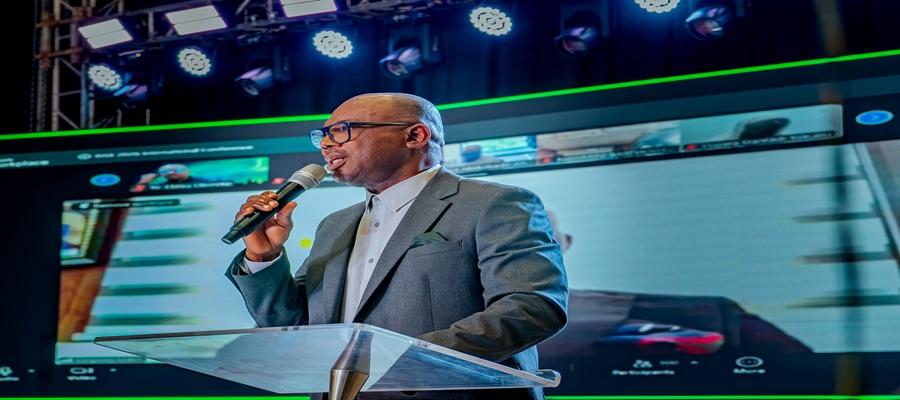
National Information Technology Development Agency (NITDA) has called for stronger collaboration among government, industry, academia and technology professionals to accelerate digital innovation and drive inclusive economic growth in Nigeria.

Dr. Aristotle Onumo, Director, Stakeholder Management and Partnerships, representing the Director General of NITDA, delivers a goodwill message at the 20th International Conference on Technology and Computing (RISE 2026) in Jos, reaffirming the Agency’s commitment to fostering digital innovation, strategic collaboration, and a technology-driven future for Nigeria.
The agency made the call at the 20th Nigeria Computer Society (NCS) International Conference 2026, held in Jos, Plateau State, where stakeholders examined strategies for leveraging emerging technologies to strengthen national development.
Speaking on behalf of the Director-General of NITDA, Mr Kashifu Inuwa, the agency’s Director of Stakeholders Management and Partnerships, Dr Aristotle Onumo, said Nigeria’s digital transformation would depend on sustained investment in innovation, digital skills, research and strategic partnerships.
According to him, collaboration across the public and private sectors is essential to translate emerging technologies into practical solutions capable of improving governance, creating jobs and enhancing the country’s global competitiveness.
Onumo said NITDA remained committed to implementing its Strategic Roadmap and Action Plan through initiatives that promote digital literacy, research and development, innovation ecosystems, cyber sovereignty and emerging technologies.
He added that the agency was expanding opportunities for innovators, entrepreneurs and startups through platforms designed to encourage collaboration, investment and technology-driven enterprise.
“We are transforming Digital Nigeria into the nation’s foremost innovation platform where policymakers, investors, startups, researchers and technology companies can collaborate to accelerate economic growth and digital transformation,” he said.
He urged innovators, startup founders and technology professionals to participate actively in the forthcoming Builders Summit by showcasing indigenous solutions capable of addressing Nigeria’s development challenges.
Declaring the conference open, the Governor of Plateau State, Mr Caleb Mutfwang, described digital technology as a critical driver of governance and economic development.
Mutfwang said his administration had adopted digital solutions to improve public service delivery, modernise government operations and enhance internally generated revenue.
He also identified technology as a key enabler for agricultural transformation, increased productivity and improved food security, urging participants to ensure that deliberations at the conference translate into practical outcomes for national development.
Earlier, the President of the Nigeria Computer Society (NCS), Prof. Muhammad Sirajo, said the conference was organised to strengthen collaboration among policymakers, researchers, regulators, technology professionals and industry leaders.
Sirajo said the conference, with the theme “Harnessing Digital Innovation and Emerging Technologies for Inclusive Growth and Economic Renaissance (RISE 2026),” focused on exploring how innovation could accelerate Nigeria’s socio-economic development.
He identified artificial intelligence, blockchain, cloud computing, cybersecurity and robotics as among the technologies shaping the future of economies across the world.
According to him, Nigeria’s youthful population and expanding digital ecosystem provide a strong foundation for building a globally competitive economy through sustained investment in digital infrastructure, innovation and skills development.
The conference attracted government officials, regulators, academics, development partners, technology professionals and private-sector stakeholders to deliberate on policies and innovations aimed at accelerating Nigeria’s digital transformation and inclusive economic renaissance.
Telecom
Hon. Minister Dr. Kingsley T. Udeh and ASUS To Unveil First of a Kind Flagship Store in West Africa


In a landmark moment for Nigeria’s technology retail sector, the Honourable Minister of Innovation, Science and Technology, Dr Kingsley Tochukwu Udeh SAN, will on Monday, August 3rd, commission a landmark ASUS Flagship Store in partnership with Nigeria’s leading e-commerce group Konga. The state-of-the-art facility is widely regarded as the first initiative of its kind in West Africa.

The commissioning will witness the visit of senior executives from the world-renowned technology brand to Nigeria, including EMEA General Manager, Mr. Aaron Tsai, alongside other. One of the purposes of their visit is to reinforce the strategic partnership with Konga and solidify the collaboration between both organisations, further demonstrating ASUS’ commitment to the Nigerian market.
The event is expected to also bring together key stakeholders from government, the technology industry, business community, and the media for what promises to be a defining moment in the evolution of technology retail in the region.
The development comes as Konga continues to accelerate its strategic partnerships with some of the world’s leading technology brands.
For years, Nigerian consumers have demanded more than just access to genuine technology products. They have increasingly sought immersive experiences, expert guidance, after-sales support, and greater confidence when making technology investments. The next chapter in this journey appears to address many of these expectations in a bold and innovative way.
The forthcoming announcement is expected to bring together global innovation in a manner that reflects the changing realities of today’s technology consumer. It also reinforces the growing confidence that leading international technology companies continue to place in Nigeria as one of Africa’s most strategic digital markets.
Industry analysts note that partnerships of this nature are becoming increasingly important as consumers place greater emphasis on authenticity, hands-on product experiences, technical support, and trusted purchase channels. Beyond selling devices, the future of technology retail lies in building complete customer experiences.
As anticipation builds for Monday, one thing is certain: the ASUS-Konga partnership promises to set new standards for tech retail in West Africa, elevating customer experience and reinforcing Nigeria’s digital transformation narrative.

Police Uncover Fake Diplomatic Number Plate Syndicate in Abuja

Davido Shares Past Suicidal Thoughts, Drops Oriadé Album

Gavi Okays $500m for Vaccines, PHCs in Nigeria

82% of Organizations Concerned about AI Risks Even as Adoption Accelerates – Survey Reveals

The Journey to Financial Freedom: Priscilla, a PalmPay Agent Now Owns a Store

NRC, Ponzi Scheme Collapses Resulting Loss of Billions of Naira

EFCC Busts NIS Visa Overstay Racket, Uncovers N700m in an Account

From Scarcity to Scale: What Africa Can Learn from India’s Agricultural Transformation

Tokenization, Blockchain Technology will Transform Financial Institutions – IMF

BON Establishes Six Ad Hoc Committees to Modernize Broadcasting




 Telecom3 days ago
Clydestone Ghana Sues MTN Over Mobile Money

 News3 days ago
IHS Nigeria Donates Business-Support Equipment to Empower People with Disabilities in Abuja Community

 News3 days ago
Africa Prudential Unveils Digital Growth Strategy

 E-Business3 days ago
Kaspersky Uncovers New Mirage Kitten Malware Used in Cyber-espionage Campaign Across Africa, Others

 E-Financial3 days ago
CBN Fines Banks N430m for Ignoring Customers’ Complaints

 E-Financial3 days ago
Afreximbank Raises $1.5b in Largest-ever Bond Issuance

 E-Financial3 days ago
SEC Begins Full e-Registration for Capital Market Operators

 E-Financial2 days ago
Access Bank Debunks Shutdown Report, Vows Action against Perpetrators