

Broadcasting
Big Brother Naija; Tobi Bakre, Cee-C, Uriel’s Journey To Stardom


Season 4 of the hugely popular Big Brother Naija reality TV show is due back on our screens this year according to organizers of the show, MultiChoice Nigeria.
In just three months since this was revealed, the show – and all that it represents – has generated a lot of excitement and frenzy among viewers who are anticipating the next stars that will emerge from this competition.
Speaking about stars: no matter what side of the divide you sit on, you will admit that BBNaija is a great talent factory where stars are made.
By just becoming one of the housemates on the show, you can be propelled to heights unimagined and unlock doors to many opportunities.
With the help of a ‘Big Brother’, ex-housemates achieve a boost in their career trajectories which would have hitherto taken years to achieve.

For instance, pre BBNaija season 3 Double Wahala, Tobi Bakre wasn’t a household name. It was in fact his older brother Femi Bakre, the founder of Kraks, a comedy brand with over 2 million followers across social media platforms, who had some level of popularity.
Tobi was a low-key guy who worked in a bank and took up photography as a ‘side hustle’.
He was about your average Nigerian youth who had dreams of making it big and making his mark in the creative industry.
Those hopes and dreams took a big leap when he went into the BBNaija house. Although he did not win, emerging second runner-up was in no way a small feat.
He has since risen to become one of the most liked personalities in the Nigerian social media space recording a spike in followership by 450% since the show ended, as he revealed in an interview with The Guardian.
In real life, his new-found fame fetched him some mouth-watering deals with big consumer brands including Unilever, Amstel Malta and Jumia.
He has also taken up some acting gigs and is currently the star of one of Africa Magic’s shows, Hustle.
Speaking on his time on Big Brother Naija, Tobi says it helped him discover some skills he was oblivious of such as being able to create things with his hands.
“It (BBNaija) helped me recognize some of my talents actually not just to myself, but to the ever-growing audience. That kind of sets you on the path already”, he was quoted to have said in an interview.
When Cynthia Nwadiora aka Cee-C stepped on stage and made her way into the BBNaija Double Wahala house, no one envisaged the firebrand she would be! Cee-C was unarguably the most controversial of the lot and she didn’t care whose ox was gored as she made known her views and opinions on subject matters – and fellow housemates.
After 85 eventful days in the house, she came in second place, missing the number one spot by a few votes. Cee-C, a lawyer, worked as an outdoor advertising practitioner and was relatively unknown before going into the BBNaija house.
Today, not only does she have 1.4million followers (and counting) on Instagram, she has become a fashion influencer and has worked with brands like Nairabet, Amstel Malta, Huawei Mobile and House of Lunettes.
She recently launched her sportswear line, Cegar, which has so far been a major hit among her fanbase.
Hate her or love her, you cannot deny her presence in the social media influencer space. She reportedly charges an average of N500,000 to advertise for brands on social media and her followers which she refers to as ‘spartans’ make a good study of celebrity fan love and loyalty.
She is forever grateful to the platform BBNaija presented because according to her, “I probably would have never gotten elsewhere!”
In 2017, Uriel Oputa was an upcoming musician who needed the big platform that Big Brother Naija presented. During her time in the BBNaija See Gobbe house, Uriel was popular for her melodramatic yet entertaining diary sessions.
After finishing in 9th position, Uriel bagged several endorsements and hosting gigs for some big brands such as Maggi, PayPorte, Pedini – Bosch Nigeria, Peak Milk etc.
She currently has over 800 thousand followers on Instagram, a thriving wig business and is still a force to be reckoned with in the entertainment industry.
Perhaps the most fascinating thing about these ex-housemates is that none took the prize money home.
They all dropped out of the competition at different stages and yet are celebrated successes in today’s pop culture.
It goes without saying that the BBNaija platform is one that offers a plethora of opportunities. How well you maximize it is entirely your call!


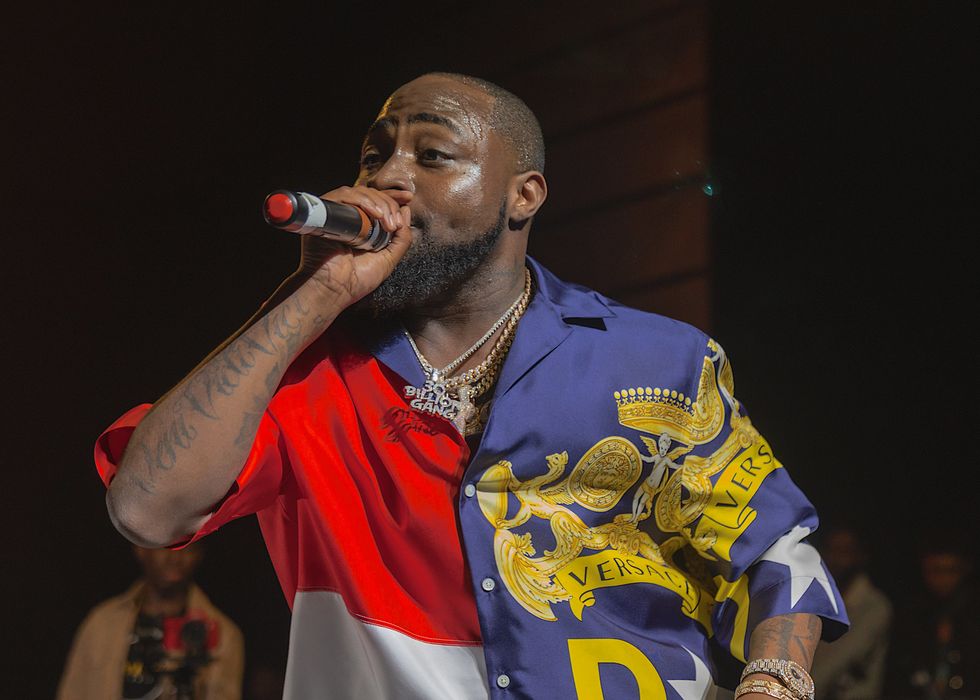
David Adeleke, popularly known as Davido, has declared that no Nigerian artiste has more hit songs than him, challenging his peers to a hit-for-hit contest with $1 million at stake.

The Afrobeats superstar, made the declaration during a recent online interaction with streamer Davrel, where he expressed confidence in the strength of his music catalogue.
Key Highlights:
- Davido says he is ready to stake $1 million in a hit-for-hit battle.
- The singer claims no Nigerian artiste has more hit songs than him.
- His challenge could reignite comparisons with Wizkid, Burna Boy and Olamide.
- No major artiste mentioned in the debate had accepted the challenge as of the time of filing.
“I will put up a $1M on the table. I will do it versus anybody. A million dollars cash, nobody has more hits than me,” Davido said.
The declaration is likely to renew the long-running debate among Afrobeats fans over which Nigerian artiste has the strongest catalogue of commercially successful songs.
Davido, whose career spans more than a decade, has recorded several commercially successful songs, including Fall, If, FIA, Risky, Blow My Mind, Unavailable, Assurance and Feel.
His claim could set up a potential catalogue battle with some of Nigeria’s biggest music stars, including Wizkid, Burna Boy, Olamide, Runtown and Tekno.
The statement also recalls the hit-for-hit debate involving Burna Boy during the COVID-19 lockdown in 2020.
Burna Boy had called for a competitive song battle, while former Mavin Records artiste Reekado Banks reportedly expressed interest. Burna Boy, however, rejected him as an opponent.
Six years later, Davido’s $1 million challenge has brought the idea back into the spotlight.
As of the time of filing, none of the major artistes indirectly referenced by Davido had publicly accepted the challenge.
Whether the proposed contest becomes reality remains uncertain.
For now, Davido has made his position clear and is willing to attach $1 million to his claim that no contemporary Nigerian artiste has a stronger catalogue of hit songs.
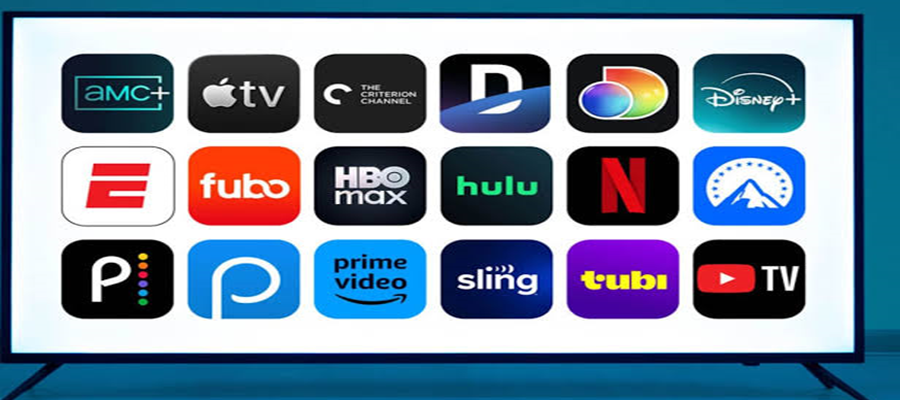
Nigeria’s pay-TV industry is facing one of its toughest periods in years as consumers increasingly migrate from conventional antenna and decoder-based television services to cheaper, more flexible and on-demand streaming platforms

The shift is putting pressure on established operators, such as MultiChoice, owners of DStv and GOtv; StarTimes and other traditional pay-TV providers, whose business models have long depended on recurring monthly subscriptions as per report by Business Hallmark.
According to Business Hallmark, the changing consumer behaviour is being driven by a combination of factors, including demographic transition, rising subscription costs, declining household purchasing power, improved internet access and the growing popularity of streaming services that allow viewers to pay for specific content or watch programmes at their convenience.
Streaming platforms are steadily expanding their appeal, offering consumers access to movies, sports (especially football matches and wrestling bouts), local content and international programs through smartphones, smart televisions and other internet-enabled devices.
Also, the proliferation of affordable data packages and connected devices has lowered the barrier to entry, allowing consumers to bypass traditional decoders altogether and consume content directly online.
Three of the major factors behind the changing behaviour of Nigerian television consumers are growing internet access, economic squeeze and changing demography.
Pay-TV subscriptions, once regarded by many households as a relatively affordable source of entertainment, are now competing with several other demands on disposable income.
For instance, entertainment spending are increasingly being subjected to tougher scrutiny with household budgets under pressure from food, tuition, transportation, electricity, housing and other essential costs.
Business Hallmark checks revealed that frequent price reviews by MultiChoice Nigeria’s have pushed the firm’s products beyond the reach of many Nigerians.
One of its products, GOtv, initially designed for average Nigerians, has six packages, namely GOtv Supa Plus, GOtv Supa, Gotv Max, GOtv Jolli, GOtv Jinja and GOtv Smallie.
GOtv Supa Plus with over 85+ channels currently goes for a monthly subscription fee of N16,800; GOtv Supa N11,400; Gotv Max N8,500; GOtv Jolli N5,800; GOtv Jinja N3,900, while GOtv Smallie subscribers choose between the N1,900/monthly, N5,100/quarterly and N15,000/annually options.
Similarly, following multiple tariff reviews, DStv Premium currently goes for N44,500 monthly; DStv Compact Plus N30,000; DStv Compact N19,000; DStv Confam N11,000; DStv Yanga N6,000 and DStv Padi N4,400.
On the other hand, StarTimes, which serves its customers through antenna signal transmission and satellite transmission, has only three bouquets, Nova, Basic, and Classic.
While Classic, the most expensive bouquet on the StarTimes’ shelf currently cost N6,000 monthly, Basic costs N4,000, while Nova costs N2,100.
While speaking to our correspondent on the major shift, some consumers explained that the choice is no longer between different pay-TV providers but between maintaining a television subscription and cancelling it altogether.
Eighty-two Nigerians, representing 68% of the 120 Pay-TV subscribers, who participated in an online survey conducted by Business Hallmark, said they opted for less expensive and more flexible alternatives, including YouTube and a growing range of streaming platforms, using smartphones, laptops, smart televisions and other internet-enabled devices to access entertainment.Geographic Reference
According to the respondents, the shift towards streaming lies partly in its flexibility. Instead of waiting for a program to be broadcast at a scheduled time, viewers now search for specific films, series, sporting events or other contents, which can be watched immediately, or downloaded to be watched or listened to later.
“I now watch contents when I want, across multiple devices, without necessarily being tied to the traditional channel and time-based television experience”, said Tolu Olamiti, an accountant in an audit firm in Lagos.
Another factor that is fueling the exodus from pay-TV model is the growing youth population. Checks revealed that online streaming is particularly attractive to phone-savvy younger viewers, whose television consumption habits are markedly different from those of previous generations.
While underage children watch cartoons and educational programs mostly from their parents or older siblings internet-enabled gadgets, teenagers and adults now watch news, sports programs and films through live streaming or download preferred programs to be watched later.
“With N200 data, I can download several new films to be watched at my convenience, instead of the old films, which providers always repeat on their channels. I also listen to music through out the day without worrying about electricity as my phone can go 2 days after full charge”, said Chukwuemeka Ibe, a student of Lagos State University (LASU).
In the same vein, access to fast and cheap internet plans is helping to drive the streaming surge. For instance, a subscriber can get a daily 1G data plan on the MTN Nigeria platform for just N200. This data plan can be used to download up to 1,000MB movies, or for streaming several hours of music online.
According to official statistics from the Nigerian Communications Commission (NCC), internet consumption in Nigeria reached 13.2 million terabytes in 2025, representing a 35 per cent increase from 2024, while average monthly data usage per active subscriber increased from 3.3 gigabytes in January 2023 to 7.4 gigabytes by May 2025.Geographic Reference
The NCC data indicates growing reliance on mobile internet services and digital platforms across the country with active internet subscriptions rising from 169.3 million in January 2025 to 182.2 million by January 2026.
Also, active internet subscriptions also surpassed 142 million.
Before the advent of internet, traditional pay-TV operators had ruled the television viewing industry largely through channel packages, exclusive content and decoder penetration. However, the rise of streaming has fundamentally altered the competitive landscape of Nigeria’s entertainment industry.
Fueled by the spread of smart devices and improved internet connectivity, streaming companies have been able to compete with traditional TV and radio providers through original programming, on-demand access, convenient timing and increased personalized viewing experiences.
A subscriber, who previously needed a satellite dish or digital terrestrial television decoder to access premium entertainment, can now use a smartphone or smart television and an internet connection.
The proliferation of affordable smartphones has further accelerated the process. Mobile phones have become entertainment devices for millions of Nigerians, particularly younger consumers, who spend more time watching short-form videos, movies and online programs than conventional television.
Also, social media platforms have become important competitors for consumers’ limited attention. YouTube, Facebook, Instagram, TikTok and other digital platforms provide enormous volumes of free or relatively inexpensive video content, forcing traditional broadcasters to compete not only for subscribers but also for viewers’ time.
Several pay-TV subscribers, who spoke to our correspondent on the matter, said providers can no longer justify the traditional model of paying a fixed monthly fee for hundreds of channels they rarely watch.
Awba-Ofemili Development Union (ADU) Health Committee has officially announced the launch of the Awba-Ofemili Health Awareness Campaign 2026, a community-wide initiative designed to promote preventive healthcare, disease awareness, early detection, health education, and healthy living across Awba-Ofemili.

Awba-Ofemili Health Awareness Campaign
The campaign, themed “Beyond Elu-Ulee (Buruli Ulcer): Building a Healthier Awba-Ofemili,” will be held on Thursday, 17 September 2026, at the Civic Centre, Awba-Ofemili, beginning at 9:00 a.m.
The programme builds on the success of the committee’s maiden Elu-Ulee (Buruli Ulcer) Awareness Campaign, which raised awareness on Buruli ulcer and strengthened community engagement on preventive healthcare.
According to the Chairman of the ADU Health Committee, Ogbuefi Remmy Nweke, KSM, the 2026 campaign represents a significant expansion of the committee’s health intervention agenda.
“This campaign is about moving beyond awareness to action. We want to deepen community health education, encourage early detection of preventable diseases, strengthen school health initiatives, promote First Aid awareness, and build sustainable partnerships that will improve the health and well-being of our people,” he said.
The 2026 campaign will feature community health education, free basic health screening, school health support, First Aid awareness programmes, and stakeholder engagement with healthcare professionals, development partners, and community organisations.
The committee has called on sons and daughters of Awba-Ofemili, residents, friends of the community, corporate organisations, philanthropic individuals, NGOs, healthcare institutions, and development partners to support the initiative through financial contributions and strategic partnerships.
To support the implementation of the campaign, the ADU Health Committee has opened a dedicated fundraising channel through Fidelity Bank Plc, with donations payable to Awba-Ofemili Education Volunteers (Account No. 6060490921).
The Committee appealed to all supporters to use “HEALTH FUND” as the transfer narration so that contributions can be properly recorded and accounted for under the ADU Health Committee Health Fund.
Secretary of the ADU Health Committee, Mr. Cornelius Nwakonobi, emphasized that every contribution would make a meaningful impact.
“No donation is too small. Every contribution will support community health education, medical outreach, school health programmes, First Aid support, and preventive healthcare initiatives. Together, we can build a healthier, stronger, and more resilient Awba-Ofemili,” he stated.
The ADU Health Committee reaffirmed its commitment to working with government agencies, healthcare professionals, development organisations, the Nigerian Red Cross, community stakeholders, and the Awba-Ofemili diaspora to advance sustainable health interventions in the community.
For partnership enquiries, sponsorship, or additional information, interested organisations and individuals are encouraged to contact the ADU Health Committee Secretariat.

Nigeria Not Making Progress in Fiscal Transparency –US

NCAA to Introduce RFID Technology to Tackle Missing Luggages

SEC Directs Operators to Subscribe to NigSac Alerts, Freeze Terrorists-Linked Funds

Davido Bets $1m in Hit-for-Hit Battle with Colleagues

GSMA Industry Services Unveils Circularity Services to Help Operators Reduce E-Waste and Unlock Value

EFCC Busts NIS Visa Overstay Racket, Uncovers N700m in an Account

Fact-Check: Elon Musk’s “Tesla Pi Phone” is Internet Rumor

NBC Tasks Broadcasting Stations over 2028 DSO Global Deadline

NBC Scraps Annual Digital Access Fee on DSO

Glo Sponsored African Voices to Feature Netflix’s “The Polygamist” Stars




 News2 days ago
Moove Achieves Unicorn Status With $250m Funding

 Telecom2 days ago
MTN Nigeria Clocks 25, Connects over 90m People

 E-Financial2 days ago
FG Suspends NAICOM’s N680m Insurance Recapitalisation Fees

 Telecom2 days ago
Subscribers to Seek Legal Redress if Poor Quality of Service Continue in September

 E-Business2 days ago
Microsoft to Unveil Next-generation AI Chip in September

 Broadcasting2 days ago
Affordable, Flexible Streaming Platforms May Kill PAYtv – Report

 E-Financial2 days ago
SEC Moves to Recover Unclaimed Dividends, Inherited Investments Nationwide

 Telecom2 days ago
ipNX Collaborates with ICT Stakeholders on the Future of Fibre-to-the-Home in Nigeria @ ATCON Forum