

General News
Biometrics: Technologies & Applications Are Not Equivalent – Sarrail


Greg Sarrail is vice president, Solutions Business Development at HID Biometrics. Sarrail also serves as Treasurer of Open Security Exchange; offering a fresh perspective, creative ideas and a strong desire to help drive innovation through the convergence of physical and IT security.
He also serves as Director of IT Channel at HID and offers IT-centric knowledge and experience gained from the IT industry.
He was previously employed by NEC, where he led sales and marketing for their Identity and Access Management business.
In this interview with peter ugwu, he spoke extensively on biometrics, and data security, and HID’s solutions to identified challenges in the sector.
HID Global and Its Place in IT security
HID Global enables our customers to create, manage and use secure identities around the world. Our products for the IT security industry range from strong authentication for logical access to transaction authentication via multiple methods including PKI, OTP and biometrics. Our physical security products protect access to datacentres, protected areas and server racks.
National Identity Number (NIN) Registration: Fingerprints & DNA Analytics
Fingerprint characteristics are not secrets. In fact we leave our fingerprints everywhere we go – on countertops, glasses at restaurants, even our phones.
One way to ensure that fingerprints are unusable by anyone but their legitimate owners is liveness detection — the real-time determination that the biometric characteristics presented are genuine and not fake.
The most effective liveness detection technology utilizes multispectral imaging which compares the complex optical characteristics of the material being presented against known characteristics of living skin. This ability of multispectral imaging to confirm that the finger is legitimate and alive allows organizations to use fingerprint authentication with confidence.
Of course, the best practice of combining an additional authentication factor with the fingerprint further secures the transaction as well as the individual’s identity.
Biometrics & Breach of Fingerprints ‘Passworded’ Smartphone
In biometrics, technologies and applications are not equivalent. There is a very large difference between the fingerprint technology that is used in a smartphone and commercial-grade fingerprint sensors that are used for identity verification at a bank.
Smartphone fingerprint sensors use very inexpensive components and do not provide advanced liveness detection capabilities to ensure that the data that is presented is a live fingerprint and not some fraudulent material.
Additionally, fingerprint enrolment on a smartphone generally takes place anonymously in a private setting, which means there may be no connection between the stored fingerprint template and the user’s real identity.
Commercial grade sensors use much more robust imaging. HID Global’s Lumidigm sensors use multispectral imaging which provides detailed information about the fingerprint image that is captured from multiple layers of skin.
This approach allows Lumidigm sensors to capture good fingerprint information regardless of the condition of the skin. Many of us have experienced the fact that a wet fingerprint does not function on a cell phone. The same is the case for dry, dirty or worn fingerprints. Lumidigm sensors are able to “see” through these issues to provide good fingerprint data every time.
How HID Global Devices ‘Liveness’ Detection Operates
With considerable effort, a criminal can conceivably “lift”a legitimate user’s fingerprint off of some surface such as a countertop and make what we in the industry call a ‘spoof’ — a fake finger — from materials such as latex or glue.
While this is fun to watch in movies, new commercial-grade biometric solutions have a technology known as liveness detection that uses several variables to instantly determine that the finger used to access the system is real — and still attached to a living human being.
HID Global’s multispectral imaging is a sophisticated technology specifically developed to overcome the fingerprint-capture problems that conventional imaging systems have in less-than-ideal conditions.
This more effective technology is based on the use of multiple spectrums of light and advanced polarization techniques to extract unique fingerprint characteristics from both the surface and subsurface of the skin.
Subsurface capability is important because the fingerprint ridges seen on the surface of the finger have their foundation beneath the surface of the skin, in the capillary beds and other sub-dermal structures.
Unlike surface fingerprint characteristics, which can be obscured during imaging by moisture, dirt or wear, the “inner fingerprint” lies undisturbed and unaltered beneath the surface.
When surface fingerprint information is combined with subsurface fingerprint information and reassembled in an intelligent and integrated manner a high quality fingerprint image is provided.
The sophisticated sub-surface capabilities of multispectral imaging are what make its liveness detection so effective.
The optical characteristics of living skin are very different from those of severed fingers or other non-human materials such as latex.
HID’s liveness detection is able to determine immediately if the fingerprint being presented to a sensor is real and legitimate.
How Fingerprint Images Should Be Stored, Particularly By the Security Agencies
The development of a back-end matching database for the process of identification is a long process that must take into account requirements such as transaction volume, accuracy and data security.
The matching system, typically called AFIS (Automated Fingerprint Information System,) stores biographic information for individuals and binds the biometric data to the record.
The biometric data can be in the form of a fingerprint image, but it is commonly a binary numerical template file that can either adhere to a standard or sit as a proprietary solution.
HID Biometrics utilises the standard ANSI 378 and ANSI 381 as our image quality is extremely high, allowing the technology to match better on a standard format rather than having a reliance on a proprietary one.
While access to a central database must always be kept secure from a breach, the consistent use of liveness detection renders stolen biometric data useless to criminals.
HID Biometrics offers a multifactor fingerprint reader that includes both a contactless card reader and a multispectral fingerprint sensor.
This new reader enables a use case whereby the biometric template can be stored on a card at enrolment and matched locally when a user presents his or her finger — no database query required!
The Best Approach to Recreating Them from Templates
Fingerprint images are nearly impossible to recreate from a template. A standard template is a binary code that contains information relating to the unique points of a person’s fingerprint image. HID Biometrics solutions do not recreate fingerprint images from templates.
Using Biometrics to Expedite Workflow, Authorise Electronic Prescriptions, and Curb Drug Diversion
Today, the most widespread use case for fingerprint biometrics in hospitals is to provide simple and secure access to electronic patient records and networks. When coupled with a single sign-on system, a fingerprint biometric provides a fast authentication method and an undeniable record of access.
Further, fingerprint biometric solutions are used to ensure efficient management of medical supplies and proper distribution of medications.
Controlling access to medication is crucial for patient safety, compliance with regulations regarding controlled substances, and inventory control.
With biometric authentication, only authorized users may gain access to the needed drugs and medications with a touch of a finger. Security is enhanced without compromising user convenience or workflow and an undeniable record of access is created which can curb drug diversion and abuse.
Using fingerprint sensors to authenticate an ePrescription is also gaining popularity for the simple reason that doctors need a fast way to authenticate using a two-factor approach – and biometrics offers the best solution available today. Access to and distribution of drugs can be properly tracked to avoid abuse and fraud.
Finance: ATM Integration, Security And Transaction-Based Authentication
A growing number of banks around the world are deploying biometric solutions as part of their next-generation ATM roll-outs.
As the world attempts to put an end to identity theft and to reduce waste, fraud and abuse, the banking sector is making a real commitment to biometric authentication and intelligent identity management.
Fingerprint biometrics is used at a number of ATMs across the world as a PIN replacement to improve access and authenticate transactions.
In some instances, traditional card plus PIN authentication has been replaced by a fingerprint and an account number, enabling true cardless transactions.
Fraud is commonly committed by the use of stolen PINs or cards. With the use of fingerprint biometrics, people can now keep their money safe and access their bank accounts with their fingers.
Biometrics does not discriminate by literacy, age, or ethnicity which has made this technology a good choice for financial inclusion programs.
Privacy and Data Interoperability
As stated above, fingerprints are not private. Thus, it is critical to ensure that the information provided during verification is presented from the same person that enrolled the information – hence the need for robust liveness detection.
Interoperability can be important for a biometric system. The use of a standard template that can be used across multiple systems allows for a single, ID-proofed biometric enrolment which can be leveraged at multiple points of verification.
The Potential to Pair Separate Credentials with User for One-To-One Match
The most effective method of identity verification uses some additional information in addition to a fingerprint to provide a one-to-one match, rather than requiring a back-end system to search through every record to provide a result within a given range of confidence of a match.
Something as simple as a name, an account number, a card number or a secondary credential stored on a card or phone can be paired with a fingerprint for a one-to-one match.
HID Global Mobile Student ID System Launch with WAEC In Nigeria
HID Global launched a mobile student ID system, in collaboration with Botosoft, to help the West African Examinations Council (WAEC) combat student identity fraud in Nigeria.
Every year, beginning in the spring, more than 2.2 million students will register online and receive machine-readable Genuine HID smart cards.
The use of handheld mobile readers eliminates identity fraud, and allows examiners to verify student attendance, and also enables them to manage challenges around examination rules violations in real-time.
The mobile reader application saves hundreds of hours of manual data entry and eliminates errors. The time saved allows the examiners to concentrate on the importance of the day as they can be confident that students are already authenticated for the exam in question.


General News
WEBINAR: Techeconomy Business Series Hosts Experts from MTN, Interswitch, BusinessPlus, others this Wednesday


Techeconomy, Africa’s leading technology, business and digital economy publication, has announced an upcoming edition of its Techeconomy Business Series, a virtual webinar.

Techeconomy
This month’s edition focused on “Navigating a Career in Tech Sales”, is scheduled for Wednesday, January 28, 2026, from 5:00 PM to 6:00 PM (WAT)
Register here: https://shorturl.at/mMvLu),
It will bring together seasoned professionals from across Africa’s technology ecosystem to share practical insights, real-life experiences, and career guidance for individuals looking to build or transition into successful careers in tech sales.
“As Africa’s digital economy continues to expand, tech sales has emerged as a critical growth driver, bridging innovation, customer adoption, and revenue generation,” said Joan Aimuengheuwa, managing editor at Techeconomy.
“The session is designed to equip professionals, young talents, and business leaders with a clearer understanding of the skills, mindset, and career pathways required to succeed in this fast-evolving field”, she added.
The panel features accomplished industry experts including, divisional head, Growth Marketing (Enterprise), Interswitch Group; Ekundayo Ayeni, co-founder, BusinessPlus; Adepeju Ajayi, manager, Mobile Advertising, MTN Nigeria; and Bukayo Ewuoso, Business Growth Consultant.
The session will be hosted by Imoh Anselem, an IT Project Manager and Customer Success Specialist.
Participants will gain insights into: Ogechi Okwechime
· Breaking into tech sales and identifying entry opportunities
· Key skills and competencies employers look for
· Career growth strategies within Africa’s digital economy
· Lessons from real-world sales and growth experiences
Webinar Details:
Date: Wednesday, January 28, 2026 | Time: 5:00 PM – 6:00 PM (WAT) | Format: Virtual (Zoom)
Registration/Access Link: https://shorturl.at/mMvLu
Attendance is free, but registration is required.
“The Techeconomy Business Series is part of Techeconomy’s ongoing commitment to fostering informed conversations, capacity building, and talent development across Africa’s technology and business landscape”, the managing editor added.
TAGS: #TechSales, #Techeconomy, #Techeconomy, #TechSales, #CareerInTech, #DigitalEconomy, #BusinessSeries, #AfricaTech, #TBS #TecheconomyBusinessSeries
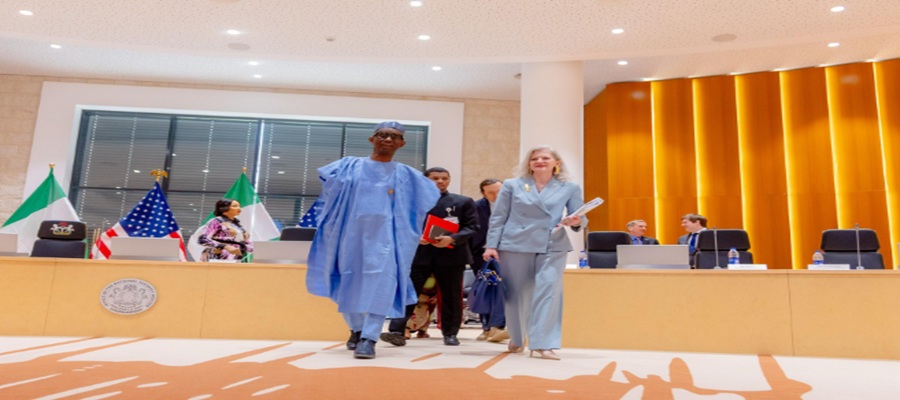
National Security Adviser Nuhu Ribadu has said the federal government considers religious violence an attack on the Nigerian state, stressing that the protection of all citizens, regardless of faith, is non-negotiable.

According to presidential spokesperson Bayo Onanuga, Ribadu made the remarks in Abuja at the close of a US–Nigeria Joint Working Group session.
“Nigeria is a deeply plural society, and the protection of all citizens, Christians, Muslims, and those of other beliefs, is non-negotiable,” Ribadu said.
“Violence framed along religious lines is treated as an attack on the Nigerian state itself.”
In a follow-up post on X, Ribadu said the joint working group has recorded “tangible operational gains” in the fight against terrorism.
The working group was set up following Nigeria’s designation as a Country of Particular Concern (CPC) by US President Donald Trump, a label that often triggers policy actions aimed at ending severe violations of religious freedom.
At the meeting, Ribadu led Nigeria’s delegation, which included representatives from 10 ministries and agencies, while the US delegation, made up of eight federal agencies, was led by Allison Hooker, US under-secretary of state.
Ribadu said Nigeria-US security cooperation has moved from dialogue to action, resulting in the disruption of terrorist networks and transnational criminal groups. He also praised the US for supplying drones, helicopters, platforms, spare parts, and other support systems over the past five years.
Speaking at the session, Hooker said the US was committed to expanding its partnership with Nigeria, particularly on deterring violence against Christian communities.
“Today, we are here to discuss how we can work together to deter violence against Christian communities, prioritising counter-terrorism, insecurity, investigation of attacks, and holding perpetrators accountable,” she said.
She added that efforts would focus on reducing killings, forced displacement, and abductions of Christians, especially in Nigeria’s north-central states


For many Nigerians, fintech apps are judged by one simple question: Can I trust the platform? For Happiness, a young Nigerian entrepreneur, the answer manifested in the most defining moments of her life.

Trust Built Through Everyday Use
In 2025, Happiness relied on PalmPay to run her business, from receiving customer payments, paying vendors, and managing daily transactions. During PalmPay’s Hustle Grant Campaign, she joined thousands of small business owners hoping to win the N500,000 funding.
While she didn’t make the shortlist, the campaign gave her business something just as valuable: visibility. New customers discovered her brand, enquiries increased, and sales followed.
PalmPay didn’t just host a campaign; it created an ecosystem where small businesses could be seen and supported.
Just days later, Happiness’ life changed. On August 30, 2025, she lost her father. With this loss came challenges, especially payments. They tried transferring money through regular banks but were met with declined transactions. Happiness suggested using her PalmPay account and it was successful.
In a moment defined by loss and urgency, PalmPay cut through the chaos, proving that reliability isn’t a feature, it’s a lifeline. Happiness’ relationship with PalmPay didn’t stop at transactions. Through other management tools on the app, she learned to build discipline around her finances.
More Than an App, a Financial Partner
Beyond transactions, PalmPay’s tools helped Happiness build better money habits and financial discipline. Today, the brand continues to reward reliability through initiatives like its ongoing Premier Cool campaign, reinforcing a simple message: consistency should come with value.
The idea is simple: Purchase a bar of soap and stand a chance to get ₦10,000cash and other cash benefits.
It’s PalmPay’s way of saying that smart money habits deserve real value in return.
Why PalmPay Earns Trust
Life doesn’t give warnings before it tests you. When it does, you need a platform that doesn’t just usually work but always works.
For many users, PalmPay proves to be more than a payment app. It is a trusted partner powering ambitions, supporting users through defining life moments, while helping them bank smartly.
When it mattered most, PalmPay worked. To watch the full testimonial visit: @palmpayapp_ng

Tech Executives Double Down on AI, Talent and Adaptive Strategies to Lead in the Intelligence Age

Firm Identifies AI as Common Denominator in Entertainment Industry’s 2026 Security Threats

NIBBS to Boost Financial Inclusion with Offline Payment Solutions

WEBINAR: Techeconomy Business Series Hosts Experts from MTN, Interswitch, BusinessPlus, others this Wednesday

LIRS to Invoke NTAA to Recover Unpaid Taxes from Bank Accounts, Others

19 Nigerian Banks Meet CBN Recapitalization Targets Ahead of March Deadline

Jumia CEO says Black Friday Signals Nigeria’s E-Commerce Maturity

Galaxy Backbone Celebrates the Federal Government’s Paperless Civil Service Milestone

DStv Offers Instant Package Upgrade for Customers from January to February

Banks to Impose N50 Stamp Duty on Transfers of N10,000 and Above from January 1




 News1 day ago
Anambra Cuts Monday Pay to Kill Sit-at-Home

 E-Financial1 day ago
First Asset Management Receives Upgraded Ratings from Agusto &Co and DataPro

 General News1 day ago
Nigeria Treats Religious Violence as Attack on State – NSA Ribadu

 E-Financial1 day ago
CBN Prepares Fresh Debit Card Rules to Improve ATM Services

 E-Financial1 day ago
NIBSS, Others Flag 13,417 Nigerian Fraudsters on Person of Interest Portal
 News1 day ago
LIRS to Invoke NTAA to Recover Unpaid Taxes from Bank Accounts, Others
 General News5 hours ago
WEBINAR: Techeconomy Business Series Hosts Experts from MTN, Interswitch, BusinessPlus, others this Wednesday
 E-Business5 hours ago
Firm Identifies AI as Common Denominator in Entertainment Industry’s 2026 Security Threats