

Telecom
Bracing up For Advancement in the Telecom Industry

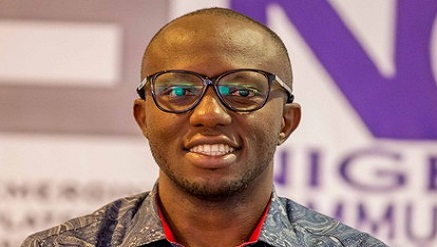
Ever since the telecommunications sector was liberalised by the government of former President Olusegun Obasanjo in his first tern as civilian President, the sector, and technology generally, has witnessed tremendous development.
The tech industry is, however, set to enter another phase of advancement which all stakeholders must prepare for. I recently had a chat with Ajovi Aror, the GMD of IPNX Nigeria Limited to examine what the stakeholders should be preparing for in order to succeed in the coming dispensation.
Ajovi Aror is a respected ICT expert with close to three decades industry experience.
Stating his overview of the current state of the ICT sector in Nigeria, Ajovi said that the ICT sector, like many other sectors in Nigeria today, is struggling under the weight of the current economic recession.
He, however, noted that a bigger challenge of the ICT industry is that Nigeria is mostly acting as distributor of ICT products and services of imported brands.
Another challenge he noticed is the general lack of support for local entrepreneurs, (Start-ups), who are struggling to provide products and services, especially, in the software environment.
Ajovi maintains that, for Nigeria to develop the ICT sector, it cannot remain as resellers, but move on to be producers of the products and services required to stimulate the sector, thus, adding more value.
This, he says, can be achieved if government has more belief in, and supports our Start-ups, as well as inject more investment in them.
Although, some stakeholders think that the bane of Nigeria’s progress in the sector is the fact that our policy does not enforce that Nigerians must be part of these foreign tech companies as is the case in Ghana, for instance, Ajovi thinks that this is not necessarily so because, the foreign enterprises such as Facebook, WhatsApp, Twitter, etc., are dominating the tech space all over the world.
What we should do, according to him, is to go the way if China by encouraging our local entrepreneurs too to develop equivalents of these behemoths, so, they too can thrive.
In China, for instance, they have Alibaba as an equivalent of Amazon, Baidu as equivalent of Google, etc., thus, enjoying the strategic intent of economic, security and development for their country.
Russia and India, Ajovi says, are already stepping up in this direction and we, in Nigeria, too must follow suit.
On the state of Nigeria with the Broadband to improve our service provision, Ajovi is of the opinion that, although, the will and intent are still there, the foreign exchange rate is not favourable.
He noted that investment in Broadband is hinged on a stable foreign exchange regime to enable investors plan and get return on investment.
He sees moving to 4G as the next step in the Broadband quest and this requires a lot if investment in fibre optics backbone.
Ajovi is on the view that right of way is still a local issue which the operstors and the government must resolve.
Many Nigerians are currently complaining about poor services in the telecom sector. On this, Ajovi says mobile services needs to be improved on by the networks.
He, however, said that, with Fixed networks, the quality of service is rising steadily as better ways and response time are now observed by them.
On his thought on Nigeria’s infrastructure capabilities to drive Cloud tech to cut cost, Ajovi cautioned that, Cloud has a potential to widen the gulf between service providers abroad and our local development because we are not in that field yet, hence, hosting with these foreign Cloud outfits, hence, Nigeria should develop this area too for our progress.
CFA is the Founder, www.CFAtech.ng & Co-producer/Presenter,Tech Trends on Channels Television


In the wake of increasing geopolitical tension, Cassava Technologies has unveiled its National Sovereign Cloud offering for African governments.

The solution, the company claims, will help the continent’s governments ensure data is kept on infrastructure that remains under local legal and operational jurisdiction.
According to the official announcement, made yesterday, the solution provides “secure, locally-governed digital infrastructure that enables the deployment of AI-enabled public services”.
The overarching solution encompasses cloud, cyber security, AI computing infrastructure, as well as local language AI models and skills support for governments.
The announcement comes amid increasing uncertainty over the hosting of sensitive national data on cloud services operated by foreign hyperscalers, which are subject to legal frameworks, such as the U.S. CLOUD Act. The CLOUD Act opens the door to allow American authorities to access data stored on the servers of US hyperscalers, wherever those servers are physically located.
Cassava has claimed separately that currently, “approximately 33% to 45% of the world’s data is hosted in the USA”.
The company added: “A sovereign cloud reduces exposure to extraterritorial laws, improves cyber resilience, and ensures that model weights and training data for public AI remain under national custody.”
The Africa Data Centres Association’s 2026 Economic Report states that “data sovereignty has evolved from a legal aspiration into a strategic policy lever”.
Ahmed El Beheiry, Group COO and Group Chief Technology and AI Officer, Cassava Technologies said: “Across Africa, governments are accelerating their digital transformation agendas and are increasingly focused on ensuring that data and digital infrastructure remain secure and sovereign.”
Announced at the Mobile Word Congress in Barcelona, this week, the Sovereign Cloud offering launch accompanied the launch of Cassava’s Cloud Partner programme.
The partner programme targets mobile network operators and system integrators across Africa to resell and distribute AI, cloud, and other digital services using Cassava’s infrastructure and technology platforms.
El Beheiry added: “We are expanding Africa’s sovereign AI ecosystem to build solutions that address the continent’s unique challenges while creating new opportunities for growth and digital inclusion.”
The programme offers partners access to NVIDIA Cloud Partner solutions, Cassava’s AI Factory, its own native AI solutions and its AI Multi-Model Exchange, which supports both Anthropic’s Claude and Google’s Gemini models.


Mazen Mroue, a non-executive director at MTN Nigeria Communications Plc, has resigned effective February 27, 2026, to prioritise other responsibilities within the MTN Group, the company announced in a Nigerian Exchange Limited (NGX) filing.

MTN Nigeria
The notice, signed by company secretary Uto Ukpanah, stated: “This is to enable Mr. Mroue to focus on other priorities within MTN Group Limited. The Board wishes to express its appreciation to Mr. Mroue for his immense service to MTN Nigeria and wishes him success in his future endeavours.”
Mroue joined MTN Nigeria’s board on June 1, 2022, bringing over 28 years of telecom experience. A veteran MTN executive, he previously served as CEO of MTN Uganda and MTN Liberia, non-executive director at MTN Cyprus, and held leadership roles at MTN Ghana.
Since February 2022, he has been MTN Group’s Chief Technology and Information Officer, overseeing technology strategy and governance. Earlier, as MTN Nigeria’s COO from August 2018 to January 2022, he also sat on the MTN Nigeria Foundation board.
The exit follows MTN Nigeria’s stellar 2025 results, posting a ₦1.70 trillion profit before tax—reversing a ₦550.3 billion loss in 2024 driven by forex woes—marking one of the telco’s strongest rebounds.

Google has rolled out support for Yorùbá and Hausa languages in its AI-powered Search features—AI Overviews and AI Mode—enabling millions of Nigerians to get quick answers, summaries, and conversational web exploration in their mother tongues.

The update forms part of Google’s push to cover 13 African languages, including Afrikaans, Akan, Amharic, Kinyarwanda, Afaan Oromoo, Somali, Sesotho, Kiswahili, Setswana, Wolof, and isiZulu, selected based on high search activity across the continent.
Now, a Kano student can ask complex questions in Hausa, while an Ibadan trader seeks business tips in Yorùbá—both receiving culturally nuanced AI responses via text or voice on Android, iOS, or web.
Taiwo Kola-Ogunlade, Google’s West Africa Communications Manager, said: “Building truly global Search requires nuanced local understanding. With Gemini-powered AI, we’ve made advanced capabilities relevant in Yorùbá and Hausa, so Nigerians converse naturally with Search in their mother tongues.”
To use: Open the Google app, tap AI Mode, and query in Hausa or Yorùbá for personalised guidance—breaking language barriers and making technology reflect Nigeria’s diverse identity.

Police Says Victims Enable Cyber Attacks Out of Ignorance

Bank Accuses Magistrate, Lawyer of Using Fake Order to Steal N3.5m from Account

FG Launches NERD to Combat Certificate Fraud

NCDC Issues Public Advisory on Cerebrospinal Meningitis

Goodnews Naija Launches ‘Building in Nigeria’ Series on Entrepreneurs, Real Sector Builders

Dr. Cairo Ojougboh Foundation Bolsters Nigeria’s Education Drive with ₦2.7m Student Support

Kaspersky Brings more Transparency to Threat Detection with New Hunt Hub

PwC Reveals AI Scaling Gap Slows Africa’s Digital Transformation

Kaspersky Discovers New Phishing Campaign Exploiting Google Tasks Notifications to Steal Corporate Credentials

esentry 2025 Report Shows Healthcare, Financial Services and Telecoms as Staging Grounds for Increased Cyberattacks in Africa




 E-Financial3 days ago
Nigeria’s VAT Jumps 34%, CIT Soars 48% to ₦14trn in 9M’25 – NBS

 Telecom3 days ago
FG Approves GIS-enabled Digital Postcode to Tackle Logistics Gaps, Boost E-commerce
 E-Business3 days ago
Firm Enhances its Security Awareness Platform with SCORM and PDF Support

 E-Financial2 days ago
Senate Targets Fintech Overreach, Vows Ponzi Crackdown After ₦1.3trn CBEX Scam

 E-Financial3 days ago
Binance Cuts Illicit Activity Exposure by 96%, Leads Global Crypto Compliance Push

 E-Financial3 days ago
NAICOM Signs MoU with BPP to Deepen Insurance Compliance in Public Procurement

 General News2 days ago
FCCPC Bans Lagos ‘No Refund’ Policy, Vows Fines and Shutdowns for Traders

 Telecom3 days ago
GSMA, African Operators, Others to Launch Low-cost 4G Devices