

News
Broadband Missing in FG’s $2Bn Stimulus Package


When do you think the Nigerian economy will improve?
The answers differ; to some the economy is already on the mend but others think it will take much longer. In all, there is no concrete sign to suggest early recovery for the Nigerian economy hobbled by reckless loose ranting and misplaced priorities.
For instance, the latest plan by the government to take $2billion from its oil windfall fund for an economic stimulus package is wrong.
The package is not focused enough to make an impact because while economic stimulus packages in other countries have targeted infrastructure projects, job creation, and tax cuts for small businesses, the federal government said it will spend half of her own package cash on clearing the debts of federal government contractors.
The rest of the money is to be handed out to states and local authorities, the same crop of politicians who are partly responsible for the present economic chaos because of their record of corruption and financial impropriety.
Removing money from the fund which currently holds about $9 billion and set up as a way to protect Nigeria’s economy from unpredictable movements in the oil price may also backfire if recovery in the global economy suffers a setback.
Like all governments of the world, the federal government should stimulate Nigeria’s economy through massive funding of broadband Internet or at least create the enabling environment.
Broadband is the lifeline of many businesses and it is the only uncharted arm of the country’s burgeoning telecommunications industry.
Nigeria should take a cue from the United States of America which has initiated a $7 billion stimulus programme to narrow the digital gap.
But that is not likely to happen here, no thanks to the claims and counter charges that greeted the initial attempt by the Nigeria Communications Commission (NCC) to license four players to operate on the 2.3GHz band.
The 2.3GHz band is considered very important in the race leading up to the broadband revolution because it helps operators to provide mobile Internet that is potentially more transformative than any lone technological item.
It is about a new age in entertainment and communications, as well as a major boost for e-commerce. Voice will only be a value added service as opposed to what currently obtains in the telecom industry.
The irony is that the same government which is pumping $2 billion to improve her comatose economy is sitting idly as more than $2 billion investment in telecommunications and chance to “cheetah pole-vault” her economy is slipping away because of personalities clashes.
The clash over the 2.3GHz licensing began since April this year and is costing Nigeria dearly. With N5.6 billion for all the four spectrums on offer and a minimum investment of $500 million from each of the companies in the medium to long term in their nationwide rollout, Nigeria would have been insulated from the effect of the global recession.
The licensing process was entangled in controversy at the close of the bid when three companies: Mobitel Limited, Spectranet and Galaxy Wireless were said to have met the obligations and later Nigerian Communications Commission (NCC) claimed that Galaxy Wireless did not pay up as at when due and allegedly attempted to replace them with Multilinks-Telkom.
Piqued by the torrents of the complaints, Dora Akunyili, minister of information and communications, cancelled the licenses citing improper bidding and auctioning process and ordered a fresh sale, a decision President Umaru Musa Yar’Adua upheld
While it lasted, the dispute threw up serious questions of fairness, accountability, transparency, due process and sad impression that public institutions cannot be trusted and that nothing is certain in official transactions.
And the immediate spin off of the web of confusion is the general lull in the telecom industry as investors watch with caution.
The general lull has also resulted in massive lay off of workers in the industry while vendors, suppliers and contractors bite their nails.



Microsoft has rolled out a new set of features for its Microsoft 365 Copilot platform, including tools for complex, multi-step work and deeper research tasks, as competition in workplace artificial intelligence (AI) intensifies.

The update introduces Copilot Cowork, a capability aimed at handling long-running tasks across Microsoft 365 applications.
The feature is being made available through the company’s Frontier programme, which typically gives early access to experimental tools.
Microsoft is also integrating technology linked to Claude – an AI model developed by Anthropic –into Copilot, signalling a broader shift toward using multiple AI systems within a single product rather than relying on a single model.
Jared Spataro, chief marketing officer for AI at Work at Microsoft, says the company is positioning Copilot as a system embedded directly into workplace software, rather than a standalone tool.
“Microsoft 365 Copilot is your AI for work,” he says, adding that it draws on multiple AI models and is integrated into existing workflows.
Alongside this, Microsoft has upgraded its Researcher feature, which is designed to analyse information from multiple sources and generate structured reports.
A new “Critique” function separates the drafting and review process between different AI models – one generates an initial response, while another evaluates and refines it.
The company says this approach improves output quality, with Researcher showing gains on its internal benchmark for accuracy, completeness and objectivity.
Another addition, called Model Council, allows users to compare outputs from different AI models side-by-side, highlighting differences in responses and reasoning.
The updates form part of what Microsoft calls “Wave 3” of Copilot, as it pushes to embed generative AI deeper into enterprise software. The move reflects a wider industry trend towards combining models from multiple providers, including OpenAI and Anthropic, to improve performance and reliability.

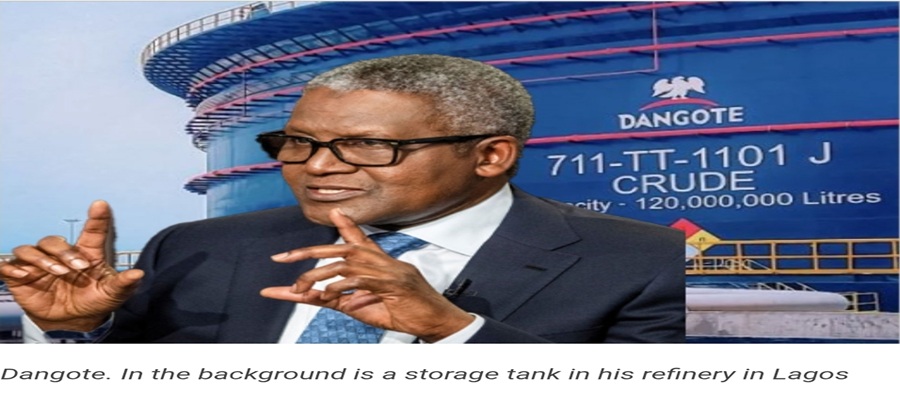
Dangote Petroleum Refinery and Petrochemicals (DPRP) has debunked recent circulation of unauthorised information regarding a potential Initial Public Offering (IPO).

In a statement, DPRP noted that several online platforms and unofficial sources have published unverified, and in some instances inaccurate, information relating to a potential offering.
“Such reports do not originate from DPRP and should be treated with caution. All official updates regarding any potential transaction will be communicated strictly through DPRP’s formal public disclosures and announcements issued by its appointed advisers, in line with applicable laws and regulatory requirements.
“Accordingly, the public, investors, and all market participants are strongly advised to disregard speculative commentary and rely solely on verified information formally issued by DPRP or its authorised representatives,” the statement said.
The firm assured stakeholders that, when appropriate, comprehensive, and accurate details regarding any proposed transaction will be made available through official channels, including regulatory filings, authorised press releases, and coordinated communications by the Enterprise and its appointed advisers.
News
Descasio Launches “Give to Gain” Leadership Insights Report, Hosts Executive Brunch for Women in Leadership

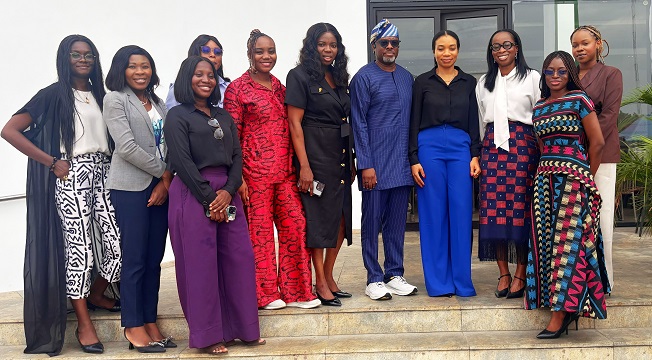
In celebration of International Women’s Day, Descasio hosted an intimate executive brunch bringing together distinguished women leaders from its customer community for a thoughtful conversation on leadership, partnership, and shared growth.

Centered around the 2026 International Women’s Day theme, “Give to Gain,” the gathering created space for accomplished women in enterprise leadership to reflect on mentorship, collaboration, and investing in people as key drivers of sustainable growth.
Held in Lagos, the event convened leaders from organizations including Honeywell Group Limited, Finchglow Travels, NGCOM, and Eroton Exploration & Production Company.
Guests were personally welcomed at the start of the gathering by Mr. Dele Nedd, CEO of Descasio; who greeted each of the women leaders and expressed his appreciation for their presence before leaving the session to allow the women lead the conversation among themselves.
The gesture reflected Descasio’s leadership culture; one where women are not only recognized, but actively supported and empowered. It also underscored the company’s belief that meaningful progress in leadership requires partnership and allyship across the organization.
Rather than a traditional panel discussion, the brunch was designed as a candid and reflective exchange among peers navigating leadership in complex industries. Throughout the conversation, participants shared perspectives shaped by experience, responsibility, and the realities of leading teams and organizations.
A recurring theme in the discussion was the role of execution and accountability in leadership. For many organizations, strategy alone is not enough; consistent delivery is what ultimately builds credibility and trust.
Reflecting on this, Josephine Adebola, Data Compliance & Process Automation Manager at Finchglow Travels, emphasized the importance of reliability in leadership and the discipline required to translate vision into results. “Get it done on time and in full.”
The conversation also explored the role of curiosity and continuous learning in shaping effective leaders. In rapidly evolving industries, the ability to ask questions, remain open to new perspectives, and keep learning is often what enables leaders to grow alongside their organizations.
Sharing her perspective, Tomi Otudeko, Chief Operating Officer at Honeywell Group Limited, reflected on how curiosity has shaped her leadership journey.
“Asking questions and continuously learning have always stood me in good stead as a leader.”
She also spoke about the importance of leading with empathy and understanding the people behind the roles within organizations.
“Everyone has multiple dimensions to who they are. Leadership has taught me to see people in their totality. That awareness doesn’t make a leader weak; it makes them more effective.”
Another important theme that emerged from the conversation was authenticity in leadership. In an environment where leaders often face pressure to conform to traditional expectations, remaining true to one’s identity while continuing to evolve is essential.
For Helen James-Eziashi, General Manager at NGCOM, authenticity and curiosity remain key guiding principles. “Be yourself, keep learning, and stay curious.”
The discussion also highlighted the role of self-awareness in sustaining leadership journeys, particularly in complex and high-responsibility environments. Understanding one’s values, motivations, and support systems often becomes the anchor that allows leaders to navigate uncertainty with confidence.
Reflecting on this, Ifeanyi Onyejekwe, IT Manager at Eroton, emphasized the importance of knowing what grounds a leader.
“Know who you are and understand what supports and sustains your leadership journey.”
According to Descasio, the event reflects its broader commitment to building strong partnerships and fostering meaningful leadership conversations across its enterprise customer community.
“For us, this was about more than marking International Women’s Day,” said Umama David-Ogebe, The HR Manager at Descasio. “It was about creating a space where leaders could learn from one another and reflect on the kind of leadership that builds strong organizations. The most meaningful partnerships grow from conversations like these.”
To extend the impact of the discussion, Descasio has published “The Give to Gain Leadership Report: Insights from Women Leading Enterprise Organizations,” a curated publication capturing key reflections and leadership lessons shared during the session.
The report highlights themes including:
- The role of curiosity and continuous learning in leadership
• Building stronger teams through empathy and accountability
• The importance of authenticity and self-awareness in navigating leadership journeys
• How investing in people drives stronger partnerships and resilient organizations
The Give to Gain Leadership Report is now available for download Here.

UBA Beefs Up Mobile App Security to Stop Fraudulent Debits, Withdrawals

Bharti Airtel Crosses 650m Users

FG Orders Installation of 5000 CCTV Cameras for Surveillance in Plateau

CBN Plans New Payment Systems Vision

Ghana Makes History as First African Country to Integrate Payment National Identity Card

Spotify’s Loud & Clear Report Reveals Over ₦60Bn Revenue for Nigerian Artists in 2025

Madonna University Taps Tech Guru Adote for Strategic Board Role

China Threatens to Shut Nigeria’s Satellite Over $11.44m Unpaid Debt

FCCPC Bans Lagos ‘No Refund’ Policy, Vows Fines and Shutdowns for Traders

Healthcare Under Attack: Why Cybersecurity is Now Critical Care




 News3 days ago
Microsoft Revamps Copilot in Workplace AI Push

 E-Business3 days ago
Kaspersky Warns of a New Phishing Technique Leveraging Bubble, a no-code AI Platform

 Telecom3 days ago
How Recycled SIM Card Linked to N50m Kidnapping Nearly Landed me in Jail – Businesswoman

 E-Financial3 days ago
CBN Directs Banks, Fintechs to Complete Cybersecurity Audit Tool

 Telecom3 days ago
Ouranos Technologies Strengthens Board with Key Leadership Appointments

 Telecom2 days ago
NCC Insists Telcos Must Compensate Subscribers for Poor Quality of Service

 E-Financial2 days ago
CBN Says 33 Banks Raise Fresh N4.65 Trillion in Recapitalisation Exercise

 General News3 days ago
Senate Gives Tinubu Nod to Borrow Fresh $6Bn