

General News
Broadband Scarcities Caused by Economics Factors -Teniola


Olusola Teniola, CEO, Internet Solutions Limited; is a highly experienced telecommunication Engineer with over 20 years hands on exposure in the African, European and American Telco markets.
IS, a major investor in the telecommunication sector in Nigeria, provides MPLS VPN, Cloud and Satellite based communication services over the West African region and is a member of the Dimension Data Group, South Africa.
Before coming on board with IS, he was the Chief Operating Officer [COO] & Director of Engineering for Phase3 Telecom.
He is currently the first Vice President of the Association of Telecommunications Companies of Nigeria (ATCON). Teniola spoke to peter ugwu on issues concerning Nigeria’s IT space.
Leveraging IT Ecosystem for Economic Growth
When you think of ICT’s contribution, mainly from the backdrop of GSM revolution in Nigeria, you will be talking about six to eight percent contributions to the GDP. Looking at the genesis of the investments-FDI, people were saying $32 billion till date; how about the capital out flow? Capital out flow, probably, exceeds $32 billion that was brought in. But you can’t have your egg without the chicken. We need to start investing in people. I was recently at the Dubai GITEX, where NITDA was representing Nigeria.
Well placed stands, opposite it were stands representing other countries. And you could see a lot of movements and activities. That was encouraging, because, I think if we had done such a thing5 years ago; it would have been a lonely place.
We need more advocacies to be sent to the youths, those in tertiary institutions, to consider that ICT is one of the biggest contributors to every economy across the world and not oil and gas. Extractive industries are good but they are like agriculture was before the industrial revolution in the advanced economies.
Skill sets are and is the new currency. Look at the richest Fortune Billionaires and the category they represent you will see software, telecoms, ICT, may be oil will come in at number nine. But you tend to find out that the capacity of the human brain to create wealth is through ICT.
Bill Gates is one of them; you can see a large pool of IT experts doing wonders across the globe.
ICT on its own didn’t exist 200 years ago, but extractive industry did exist. Maybe 200 years ago, it was the diamond, the oil barons, so, thinking that all we should do is run to the oil and gas sector waiting for contracts, it is not good use of the brain that God has given us. I appeal to the youths to look at the good examples.
There is a lot going on rather than Facebook, twitter, which are peripheries of the very large economic ecosystem called ICT. There are many aspects in engineering we need to promote more; we should get schools to teach engineering at the basic level.
Also, creativity must be emphasized at the basic level, because software engineering is the engine that drives the growth. Every industry has computers. There is no single sector not influenced by ICT.
Take for instance, the Indian model. Indians started to leapfrog info-technology back in 1991. They were given to in-source ICT in America; by implication, Indians were in America seating side-by-side with their counterparts developing software. Then it became outsourcing; when they are able to garnish enough information and knowledge to be able to sit in Delhi or Mumbai, they started replicating what they were doing with their colleagues.
With that brain-power they reformed what seemed to be nothing in 1991 to a $70 billion industry. There is no drop of oil.
We need to replicate that in Nigeria. Why? We speak English. We have very talented youths, entrepreneurial and quick at picking things up.
Even our Diaspora, there are many Nigerian in key positions. It needs government backing and time. Unfortunately, these things don’t happen overnight, but we need to start now and be determined to take it through until its rightful conclusion.
Challenges of ISPs and Opportunities
I want to say, categorically, the market has evolved. If we look at the early stages of telcoms, it was purely voice. So that left a positioning and space for just data-centric companies that ISPs are supposed to address.
The market has evolved now; the hype on voice is dropping. They are over 130 million subscribers. So, the market is getting close to saturation, which shows signs of maturity. Therefore, after 11 years of the MNO(s) pounding your streets for your SIM cards and recharge money, they are now focusing on trying to blend the ARPU rates with a new data contribution. So, it is only natural they will push into the mobile broadband space, which is a threat to an average ISP.
There may be avenues for ISPs, but they need to change their models to reflect the changes and evolution in the market space, because there is nothing stopping the MNO(s) being hyper or Super-ISPs, because of the sheer number of subscriptions they have.
It is natural to blend their data services to their subscription base.
For ISPs, there is ground for growing from the rural communities. Serving a hundred or a thousand customers is different model and will not be easy to evolve that into millions. It is different in the sense they need funding.
That is central to their transformation and we should not forget that our interest rates from the banks are not really helpful in that respect. So, access to reasonable price capital, having an environment that is enabling to the removal of multiple taxation, removal of multiple regulations and other aspects that are impinging large operators and that affect smaller operators. When the big operator catches the cold, it is more liable to kill the ISPs.
The big operator can recover, but if the ISP makes a mistake or wrong decisions it is likely to go out of business.
So, the environment coupled with the revolution in the market is creating a lot of consolidation and natural attrition. It is natural because technology is evolving and it requires a level of spending to make sure they keep in line with the trends of technology revolution and that is much better if you are a larger organization.
So, you have in respect, those ISPs that exist; they may call themselves virtual ISPs or micro ISPs, they will always remain, because are serving a very niche aspect that the bigger ISPs are not looking at.
Championing Broadband Penetration through Open Access Model
If you look back at why the Open Access Model was introduced around the world, you will tend to find that it is the definitive model to enable neutral access to infrastructure at a reasonable price.
Critical examination of any regime and jurisdiction, then it will be obvious that where an open access is in place; there are records of high prevalence of ubiquitous services. Ubiquitous service in this case is broadband, because you can have voice telephony as ubiquitous. But let us not stress the voice telephony at this moment, because we have seen the mobile revolution.
The market forces are doing the natural thing, which is predominantly, good quality service and price crashing down as opposed to high prices and bad quality of service.
The operators would want to improve the quality of service at the best price; so, the consumer benefits. When you flip that, and look at the broadband, that isn’t the case. Only 10 years ago, having a megabyte per second was almost at $10,000 per month.
Now, it is coming more to hundreds of dollars per month. If it has contention, you would probably get it at $100 or $50 per month, depending on where you are in the country.
If you are fortunate to be in Lagos where the cables are, it is probably lower; as you move to the hinter lands, it increases by factor of whatever we might agree. However, when you look at the fact that this is more of economics than technology that is at play, you will look at what is the intervention that the regulator can do, it Hoovers around an economic model.
And it defines that, really, when you have vertical integration in your organization, it is fair to actually go into a market and compete with someone who has one horizontal part, because, effectively you own the whole infrastructure.
While competing on that service space with an ISP who is going to win? Of course the person that is vertically integrated. Because the pricing internally will not reflect what is going on in the outside market. So, the direction of the regulator is the right approach.
There are many ways to introduce open access, but in the Nigerian aspect, we do not want litigations; you have actually licensed people to do what they are doing, you invited people to invest through the Foreign Direct Investment (FDI), and these licenses are still active; they are encouraged to operate through the existing infrastructure, now you are saying, ‘sorry, we do not like the way you are using it’; it is very dangerous. You have to be careful when in regulating the ICT industry.
In this case too, we have to give kudos to the regulators, they have analyzed the legal aspects and they thought that by introducing the open access model that is the best option for Nigeria at a stage of development, so that you can still encourage FDI.
It is not a panacea; but it is the best out of circumstances we are in. Therefore, open access model for an ISP or a retail service provider, is the best approach. If not, companies like ours; we would have to use our purchasing power and relationships to get the best price. Not everyone has that; you assume that everyone should have that. So it is unbalanced.
What I feel is the best is to create an environment that enforces the players the own infrastructure to fall in line, then as a new entrants like ISPs that cost is the significant determinant of your survivability, you will be able to gain access to affordable wholesale pricing. You can translate that to affordable consumer pricing.
Co-location Model
We have a very light-handed regulatory regime. It has caused us to have an exponential growth in telecoms market, making it the biggest in Africa. Although, one could argue about the North Africa, because Egypt is a very large market, but Sub-Saharan African, Nigeria is the place to be. That is largely due to the light-handed regulatory regime; if not, the market wouldn’t have been as it is.
The issues surrounding infrastructure sharing, lifting the cables from the sea shores to the towns, are all economics related. Again, someone invests in infrastructure; they are not a utility Company.
What I mean by not utility company is that you and I didn’t pay taxes to create that company, as we should have had with NITEL, because every other country around the world had an incumbent company, mostly, a government entity that was privatized.
It was tax payers’ money that created the infrastructure; whether it is copper, or other types of cable to the building, it was built using tax payers’ money.
So, if you remove that aspect, funding was done by the private funding, through the capital or stock exchange or whether it was as parent investing extra profit into a region called Nigeria. They were done through the FDI, except for Globacom.
So, that money has been invested, return-on-investment (RoI) is what they are asking for; they are given a period protected by licencing, given by the Federal Government of Nigeria through regulator to behave in a manner within the contract and licensing, to enable them get their RoI, which is legitimate. From a business perspective, they make decisions on whether they can go to certain parts of the country and get RoI. Going from Lagos to Abuja is guaranteed. Whether you co-locate, co-share you still make money. It is a business decision, hence you cannot force people to share rather you encourage it through incentives…
…Incentives like?
Incentives like grants; where if you go into a region that is deemed underserved, there is a support by the government to provide funding to subsidize the cost of providing and extending infrastructure to areas of low economic viability.
In areas of urban concentration like Lagos you can now intervene by enforcing to a degree; where you say that the first person to lay ducts allows spare for extra ducts for others to put their fiber, in a manner of encouraging. If do not have that, then it is behooves on them to say, ‘I can afford to lay my own ducts, I have the license and permission to do that’. But we need an arbitrary referee to ensure there isn’t fiber cut or someone isn’t destroying infrastructure as laid. Co-sharing is only now becoming a vogue in Nigeria because all the options of doing it on your own are no longer viable.
For instance, rates are dropping, while your costs are going higher; any business person would know that it is far cheaper not to replicate infrastructure rather than share.
That is why you now have many tower management companies consolidating infrastructure built by each operator. That will allow efficiency in the system due to dropped cost of delivery of the service. Again, the markets forces are forcing what you would think are normal legislation to now be applied, because it makes sense to do it.
Internet Solutions Evolution
We came into Nigeria in 2008 and acquired a Company called Accelon that had been providing ISP V-Sat services since 2004. So, the growth of IS Internet Solutions is just under a decade. We started live as V-Sat; we have now, obviously, evolved to fixed wireless providers. We also provide fiber connectivity. The evolution has been following the typical technology evolution. There are limitations with what you can do with V-Sat and Microwave wireless.
Obviously, fiber seems to be the new medium for high bandwidth requirements. We offer portfolio of fixed services; predominately, fiber in Nigeria, V-Sat and fixed wireless access to enterprises. Our approach to the market in each of them is such that could be found in the enterprise, which is stringent corporate governance.
The genesis of IS Internet Solutions is in business to business (B2B) and business to Government (B2G); we do not provide business to Consumers (B2C).
Although we feel that B2C is attractive with a lot players in there, but we are proud of ourselves because we offer business solutions to corporate. We also offer wide range of solutions that you will not find anywhere in Africa.
So, we are a Pan-African company; the creation of IS Internet Solutions is from South Africa. We have four regional offices outside South Africa and other small offices.
We are also a part of the Dimension Group; a global system integrator. It was recently acquired by the NTT Group. NTT itself, if not, the first, is the third largest telecommunications company in the world; not only in terms of revenue, but the subscriber base is huge. Therefore, we are very fortunate to have NTT with us.
That will allow us leverage on over $17billion of R&D spent a year. Of course, a lot of the solutions that we bring to the market, especially in Africa, are leading edge based on the leverage on a lot of things that are readily available.
The IS Internet Solutions Service Peculiarities
What we intend to concentrate on is reliability. What do I mean by that? It is our ability to give our clients 99.9% availability on our national internet MPLS network that covers over 17 points of presence and another 18 high sites.
We have built that on the back of companies that really have stringent (global) SLAs that are defined in the corridors of London, New York, Washington, Dubai and Singapore. So, we do not have the lottery to just put in a network that cannot achieve the purpose.
We are happy that we have been able to establish our presence in Nigeria; though the environment is challenging, we have been able to come up with superior engineering. That differentiates us, because we have access to 2,500 engineers who are Cisco certified.
We have access to another 11,000 employees that reach our offices anywhere in the world, solving day-to-day problems.
And we have been able to provide end-to-end solutions in collaboration with Dimension Data from a pre-source base to network post-process bases; the connectivity part of that global ecosystem we have achieved.
Solutions for Large Pool of SMEs in Nigeria
We have solutions for them too. And I like what you said that the SMEs are the engine of any economy. We cannot say that Nigeria is unique. We see this in other parts of Africa. SMEs are the bedrock.
Meanwhile, the large corporations have economics of scope and financial support to match the tool we are placing for them, SMEs with two or three employees cannot do that.
What we are looking at and that is where cloud speaks, is the ability to access same type of assets, but shared in a manner that is secured in a cloud space. So, we offer the hybrid and private cloud. Public is not really our frontier, because we feel that space is for the consumer and a kind of one man band operation.
You did quote there are about 17 million SMEs, right now we have offerings that from even as we are seated here they can have access to our products. These are products that have to do with rudimentary back up, cloud-web security or hosted exchange, they are available for SMEs. Now, why is the emphasis on large corporate?
That is where the innovation comes from and trickles down the system. At the end, the R&D has to be paid for; so, you tend to find out that where the complexities lie are in the large organizations and that is the aspect you feel that once it scales and is available at affordable price; we can give them to the SMEs.



Latest data report from the Nigeria Inter-Bank Settlement System (NIBSS) has pegged Nigeria’s Bank Verification Number (BVN) Database at 67.8 million registrations (27.97% of the country’s population) following a steady growth streak over the last five years.

NIBBS, which manages the BVN infrastructure for Nigeria’s financial ecosystem, revealed that BVN registrations jumped from 63.5 million in 2024 to 67.8 million by the end of 2025, representing a 4.3 million increase in a year.
The latest NIBBS data reveals a consistent upward trend across the last five years, supporting the rhetoric that the Bank Verification Number has become a major protocol for accessing financial services in the country. The enrollment figures over the last five years, according to NIBBS, are as follows.
The increase represents an estimated 6.8 per cent year-on-year growth between 2024 and 2025, one of the highest leaps over the last 5 years.
The Driving Force Behind the Increased BVN Enrollment
Analysts pinpoint the Central Bank of Nigeria’s policies and enforcement procedures as the primary driver of the five-year upward trend in BVN enrollment.
Some of the most efficient CBN policies behind the surge include the directive to restrict or freeze bank accounts lacking both a BVN and a National Identification Number (NIN), effective from April 2024.
The directive caused a stir, prompting many Nigerians to register for BVN to maintain uninterrupted financial services.
The introduction of the Non-Resident Bank Verification Number (NRBVN) initiative enabled Nigerians living abroad to obtain a BVN remotely, eliminating the need to be physically present in Nigeria.
The NRBVN programme was a game-changer, bringing the weight of the Nigerian diaspora to the fore. Its successful integration served as a significant milestone in efforts to deepen financial inclusion and formally integrate the Nigerian diaspora into the country’s financial ecosystem.

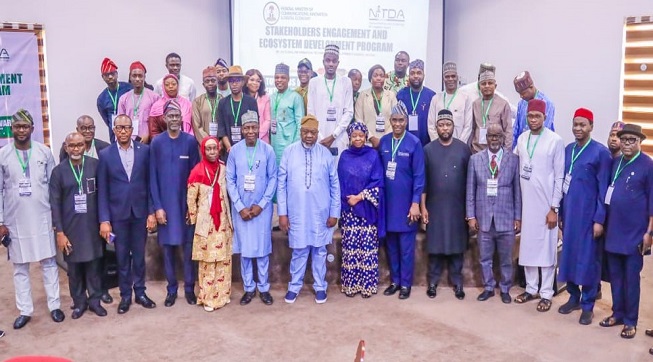
The Director General of the National Information Technology Development Agency (NITDA), Kashifu Inuwa, has called for stronger collaboration among stakeholders to unlock opportunities in Nigeria’s digital economy and accelerate national development.

Inuwa made the call at a NITDA-States IT Stakeholders’ Engagement and Ecosystem Development programme themed “Creating Opportunities, Breaking Boundaries: Towards Digitalization and Entrepreneurial Evolution.” in Abuja
Speaking at the event, the NITDA boss, represented by Mr Ajayi Babajide, Director Zonal Office Coordination, said Nigeria’s economy Africa’s largest by Gross Domestic Product (GDP) is at a critical juncture that requires urgent diversification, noting that the digital economy presents a strategic pathway to sustainable growth, job creation, and inclusive development.
He explained that in today’s interconnected world, digitalisation has become a key driver of economic transformation, offering unprecedented access to knowledge and creating opportunities for developing nations to compete globally.
According to him, the technology sector remains one of the fastest growing and most impactful segments of the global economy, stressing the need for Nigeria to position itself to fully harness its potential.
Inuwa reaffirmed NITDA’s mandate to drive and coordinate digital innovation across the country, adding that the agency is focused on creating an enabling environment that empowers all sectors, including underserved communities, to contribute meaningfully to the economy.
He highlighted the implementation of the agency’s Strategic Roadmap and Action Plan (SRAP 2.0), designed to deliver life-transforming opportunities and strengthen Nigeria’s digital ecosystem. He also pointed to the National Digital Literacy Framework (NDLF), which aims to equip citizens across various sectors with the digital skills required to thrive in a rapidly evolving economy.
The DG disclosed that NITDA has established over 100 IT centres nationwide and provided infrastructure to support digital learning and skills acquisition. However, he emphasised that sustaining and expanding these initiatives would require deeper collaboration with stakeholders.
He called for stronger partnerships among government at all levels, the private sector, academia, and civil society, noting that innovation thrives in an ecosystem supported by effective policies, access to funding, and enabling regulations.
Inuwa also stressed the importance of investing in innovation hubs and incubators to nurture startups from ideation to market readiness, enabling them to compete favourably on the global stage.
On entrepreneurship, he noted that NITDA has continued to support innovation through its special purpose vehicles, including the Office for Nigerian Digital Innovation (ONDI) and the National Centre for Artificial Intelligence and Robotics (NCAIR), which provide incubation, acceleration, and training programmes for startups and young innovators.
He observed that Nigeria’s innovation ecosystem has attracted significant investments and produced globally recognised startups, including unicorns, but said more efforts are needed to sustain the momentum.
Inuwa further noted that digitalisation holds immense potential for economic diversification, job creation, and inclusive growth, but warned that these opportunities must be deliberately harnessed through robust policies, legal frameworks, and strong institutional support.
He said the engagement provided a platform for stakeholders to exchange ideas, co-create solutions, and align strategies for the effective rollout of digital initiatives across states in line with SRAP 2.0.
The NITDA boss reiterated the agency’s commitment to fostering partnerships and providing the necessary support to drive Nigeria’s digital transformation, expressing confidence that collective efforts would deliver lasting impact.
He urged participants to remain committed to building a future where innovation thrives, opportunities are accessible, and Nigeria’s digital economy reaches its full potential.
In his earlier keynote address, the Permanent Secretary, Ministry of Innovation, Science and Technology Kogi State, Pharm. Eric Monday, explained that the state’s digital strategy is focused on applying technology to critical sectors, particularly healthcare, where efforts are underway to improve data management and expand service coverage. He added that similar interventions are being extended to works and environmental management.
He noted that outcomes from previous stakeholder engagements had helped shape actionable plans, stressing the importance of collaboration in achieving sustainable progress.
“Our goal is to learn from others while also sharing our experiences. The knowledge gained from engagements like this will help us strengthen our systems, create opportunities for our youth, and support skills development,” he said.
Highlighting ongoing projects, he disclosed that a skills acquisition centre, supported by development partners, is nearing completion and will soon be equipped to train young people in relevant digital skills.
Monday further revealed that the state is expanding its partnerships beyond Nigeria, including collaborations with Chinese organisations, to build a robust innovation ecosystem and open up new economic opportunities.
Describing Kogi as a “land of opportunity,” the official said the government is committed to leveraging its strategic position as the Confluence State to attract investment and promote growth.
Other dignitaries who delivered remarks at the event included the Permanent Secretary, Ministry of Science and Technology, Nasarawa State, Mr. Damina John, as well as the Executive Director, Commercial and Industry Development at the North Central Development Commission (NCDC), Mrs. Aisha Rufai.
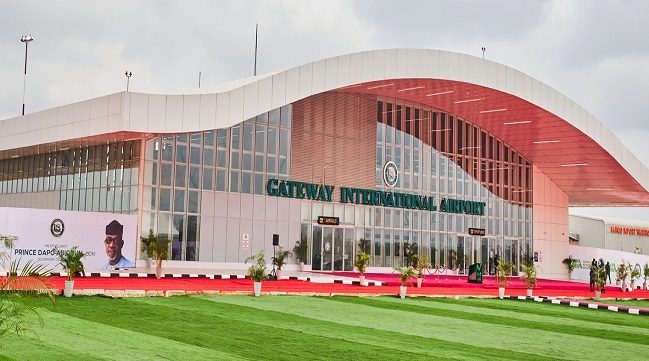
His Excellency Governor Dapo Abiodun, The Governor of Ogun State, has said that the state is on course to establish direct air links to the United Kingdom, following plans by Air Peace to commence flights from the Gateway International Airport to London this summer.

Abiodun, who spoke after an inspection of the airport alongside Air Peace Chairman, Allen Onyema, said the move reflects growing investor confidence in the state’s aviation infrastructure and economic direction.
According to him, the planned operations to Heathrow Airport and London Gatwick Airport will open up Ogun State to increased trade, tourism and business travel, while easing pressure on existing international gateways.
“This airport was conceived to serve our people and support economic growth. What we are seeing now is that vision taking shape,” the governor said.
He added that cargo activities had already commenced at the airport, with projections indicating up to 50 cargo flights between April and year-end, a development expected to support exporters and manufacturers within Ogun and neighbouring states.
The Governor the state noted that discussions with multiple international and regional operators were ongoing, positioning the airport as a viable alternative for passenger and cargo movement in the Southwest.
Onyema, in his remarks, said Air Peace decided to key into the project after assessing the quality of infrastructure at the facility.
“This is one of the best-equipped airports in Sub-Saharan Africa. We will deploy our Boeing 777 aircraft for the London route because the runway and facilities can support it,” he said.
The inspection followed the recent commissioning of the airport by President Bola Ahmed Tinubu. With the planned London operations and growing cargo traffic, Abiodun expressed confidence that Gateway International Airport would strengthen Ogun State’s position as a key economic hub in Nigeria.

NIBSS Says 28 Percent of Nigerians have Registered for BVN

NITDA DG Urges Stronger Collaboration to Drive Nigeria’s Digital Economy

Ogun Set for Direct London Flights as Gateway Airport Gains Momentum

Airtel Becomes World’s Second Largest Telco as Global Customer Base Surpasses 650 Million

Nigeria Cyberattacks: Stronger Collaboration as a Panacea

Spotify’s Loud & Clear Report Reveals Over ₦60Bn Revenue for Nigerian Artists in 2025

Madonna University Taps Tech Guru Adote for Strategic Board Role

China Threatens to Shut Nigeria’s Satellite Over $11.44m Unpaid Debt

Healthcare Under Attack: Why Cybersecurity is Now Critical Care

Why JustMarkets Is a Strong Choice for Gold Trading




 E-Financial3 days ago
N4.65 Trillion in the Vault, but is the Real Economy Locked Out?

 General News3 days ago
Union Bank Looted: How Former Directors Gambled with Billions and Nearly Destroyed a National Bank

 E-Business1 day ago
FG to Strengthen Cybersecurity Coordination as NDPC Probes Alleged Data Breach

 Telecom1 day ago
Compensation for Poor Service Quality is Automatic- NCC

 General News1 day ago
Tinubu Approves N3.3 Trillion Payment Plan to Boost Power Supply

 Telecom1 day ago
FG Moves to Strengthen Cybersecurity Coordination as NDPC Probes Alleged Data Breach

 E-Business1 day ago
Offset Communications Slams N50m Suit against Qore Technologies for Alleged Copyright Infringement

 News1 day ago
Beware of Fake Cerelac Products – NAFDAC