

E-Financial
Buhari Government Rakes in N11.5 Trillion from Firms as Taxes – Report


Federal government has raked in N11.5tn from taxes paid by business organisations under the administration of President Muhammadu Buhari, according to findings by The Punch Newspaper.

Data sourced from Company Income Tax reports published by the National Bureau of Statistics between 2015 and 2022 showed CIT collected by the Federal Inland Revenue Service stood at N1.3tn when the President assumed office in 2015 and dipped by 26 per cent to N1tn in 2016 when the country’s economy went into recession due a significant drop in oil prices.
It maintained an upward trajectory between 2017 and 2020, as the government generated a total of N5.3tn during this period.
Companies Income Tax is a tax on the profits of incorporated entities in Nigeria. It also includes the tax on the profits of non-resident companies carrying on business in Nigeria. The tax is paid by limited liability companies inclusive of the public limited liability companies. It is commonly referred to as a corporate tax.
According to the Punch, the CIT rate is 30 per cent for large companies (i.e. companies with gross turnover greater than NGN 100m), assessed on a preceding year basis (i.e. tax is charged on profits for the accounting year ending in the year preceding assessment).
The Federal Government earned N1.6tn from corporate tax in 2021 and made a record N2tn revenue from CIT in the three quarters of last year.
According to the data, the highest contributors to the CIT were the manufacturing, Information Communication Technology and financial services sectors.
Also a critical evaluation of 2022’s Company Income Tax records showed a significant hike in taxes paid by companies across the board.
For example, tax from firms in the information and communication sector rose by 158.51 per cent from N51.05bn in the third quarter of 2021 to N131.97bn in the corresponding period in 2022.
In the same vein, manufacturers paid the most taxes during the period in review, as the Federal Government increased the number of taxes collectable by the Federal Inland Revenue Services from 39 to 61 items.
Some of the new taxes as contained in the schedule to the taxes and levies (Approved list for collection) Act (Amendment Order), 2015, include “national information technology development levy, economic development levy, environmental (ecological) fee or levy; inter-state road taxes; mining, milling and quarrying fee; infrastructure maintenance charge; social services contribution tax, and wharf landing fee where applicable.
Others are entertainment tax, produce sales tax, property tax (where applicable); fire service charge; slaughter or abattoir fee, where state finance is involved, etc.”
In the same vein, checks by The Punch revealed that CIT paid by manufacturers increased by 52.3 per cent from N91.2bn paid in the third quarter of 2021 to N138.9bn in the corresponding quarter of 2022.
Speaking in an interview with The Punch, Michael Olawale-Cole, president of the Lagos Chamber of Commerce and Industry,, said the productive sector was being overburdened by taxes because of the government’s inability to widen the tax bracket and capture more taxpayers.
Olawale-Cole further advised the government to devise means of protecting its sources of revenue rather than resort to aggressive taxation whenever it encounters a revenue shortfall.
He said, “So, the government needs money, but what we are saying is that the government is just putting pressure on the same people as opposed to developing to bring more people into the tax bracket. That is the major issue. There are a lot of people who are not paying taxes but are making money in this country.
“So, the government should find a way of catching them. They are improving because now government banks are linked with tax authorities. So, if income comes into your account, they have a way of knowing. They should do more of that. “This could be done through electronic means.
“We are saying they should not increase the tax rates all the time for the same people who are paying when there are more people who are not paying because if you tax them to a point, they will not be able to pay.”
Industry experts in the ICT sector, which ranks amongst the highest contributors to the CIT, have also raised concerns that the sector was being overburdened by multiple taxes.
A report titled “Taxing Nigeria’s subnational economies to oblivion” by SBM Intelligence recently revealed that the industry suffered from over-taxation because of its sustained growth in the last 20 years.
It said, “At the federal level, telecommunications companies are expected to pay taxes such as Companies Income Tax, the Capital Gains Tax, Withholding Taxes, Stamp Duty, National Industrial Training Fund, Employees Compensation Scheme, the Tertiary Education Trust Fund, National Housing Fund contributions, Contributory Pension Schemes, and customs duties.
“These taxes are applicable to all incorporated companies in Nigeria. There are also sector-specific taxes and levies such as the Annual Operating Levy paid to the Nigerian Communications Commission by all holders of licences issued by the regulator, the National Cybersecurity Fund, the National Information Technology Development Fund Levy and Right of Way charges.”


MoneyMaster Payment Service Bank has introduced a refreshed mobile banking experience designed to make purchasing airtime and data more convenient and straightforward for customers.

As part of the rollout, customers will enjoy added value on their transactions. Airtime purchases on the Glo network come with a 100 percent bonus, while data purchases attract a 10 percent bonus, giving users amazing rewards on each purchase.
With this revamp, the app is now much easier to use, especially for airtime purchases. From selecting accounts to choosing amounts, the process is more seamless, with clearer options and fewer steps. Data plans are now neatly organized into categories such as daily, weekly, and monthly, making it easier for users to find what they need without endless scrolling.
Beyond the improved layout, customers now have more flexibility in how they recharge. Lower airtime denominations have been introduced, giving users the freedom to choose amounts that better suit their needs, while navigation has been adjusted to be quicker and more intuitive.
Speaking on the update, the bank’s Head of Business, Tajudeen Omokhide, explained that the goal is to make payments as simple and seamless as possible. According to him, customers expect speed, clarity, and affordability, and these improvements are part of the bank’s ongoing effort to meet those expectations. He also encouraged both existing and new users to get the latest version of the app.
These updates are a testament to MoneyMaster’s broader mission of developing practical, relevant products for everyday life. Promoted by Globacom and licensed by the Central Bank of Nigeria, the bank offers mobile wallets, savings accounts, individual current accounts, and business banking services.
MoneyMaster continues to position itself as a flexible, customer-centric platform, enabling over 4,000 individual and business billers to manage payments, access financial services, and stay connected with ease.

Central Bank of Nigeria (CBN) has directed all International Money Transfer Operators (IMTOs) operating in the country to open and maintain naira settlement accounts with authorised dealer banks, as part of efforts to tighten oversight of diaspora remittances and improve transparency in the foreign exchange market.

The directive was contained in a circular dated March 24, 2026, signed by Dr Musa Nakorji, director of the Trade and Exchange Department, and addressed to IMTOs, authorised dealer banks and the general public.
The circular was published on the apex bank’s website on Tuesday.
The CBN said the measure is aimed at “enhancing diaspora remittances, strengthening transparency, traceability, and effective monitoring of all transactions.”
It stated that “all IMTOs are hereby directed to open naira settlement accounts and ensure that all transactions are routed strictly through their designated settlement accounts, maintained with Authorised Dealer Banks in Nigeria.”
Under the new rule, all inflows, beneficiary payments and related settlements linked to international money transfers are to be processed solely through these accounts.
IMTOs may, however, operate multiple settlement accounts across different banks in line with their operational needs.
The circular also introduced tighter controls on how the accounts can be funded, stating that they “shall only be credited with remittance flows and proceeds of foreign exchange conversions by licensed IMTOs (or their agents)” within the Nigerian foreign exchange market.
Operators are required to clearly designate the accounts and submit the details to the CBN, with updates provided periodically where necessary.
To improve market operations, authorised dealer banks are permitted to process foreign currency transfers from IMTO settlement accounts to other banks and approved participants, including licensed Bureau De Change operators.
The apex bank further directed IMTOs to adopt market-reflective pricing by referencing the Bloomberg BMatch system. It said IMTOs “shall observe real-time market prices from the Bloomberg BMATCH and utilise this as guidance for pricing transactions with their customers and Authorised Dealers.”
According to the CBN, this approach is expected to “improve price discovery, reduce information asymmetry between IMTOs and banks, and encourage increased participation in the official FX market.”
The bank added that all operators must maintain proper transaction records for regulatory checks and comply fully with anti-money laundering, counter-terrorism financing and counter-proliferation financing rules.
“This directive takes effect from May 1, 2026. Please note and ensure compliance,” the circular stated.
The move shows the CBN’s push to channel remittance inflows through formal banking channels, boost liquidity in the official foreign exchange market and strengthen regulatory oversight of cross-border transactions.
E-Financial
DLM Capital Group’s AAA-Rated Sovereign Bond-Backed Composite Notes (“SBCNS”) Strengthens Investor Confidence with Successful First Principal & Interest Payment

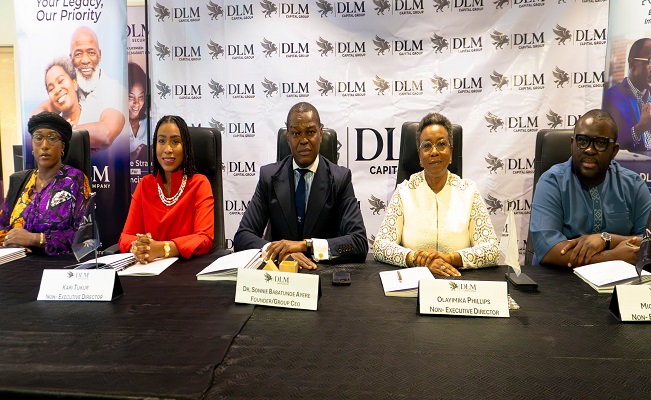
Foremost Development Investment Bank, DLM Capital Group has reinforced its position as a leader in innovative fixed income solutions with the successful payment of the first principal and interest (coupon) to investors under its Sovereign Bond-Backed Composite Notes (“SBCNs”) issuance.

This milestone, alongside the consistent delivery of quarterly performance reports, underscores the Group’s commitment to transparency, capital preservation, and investor confidence.
DLM SPV PLC’s 40.62% Hold-to-Maturity return ₦7.30 billion (Tranche A) and 19.07% ₦1.70 billion (Tranche B) Plain Vanilla Series 1 Notes, issued under its ₦30.00 billion Medium-Term Notes Programme and developed by Sonnie Babatunde Ayere, Group CEO of DLM Capital, was recently listed on the FMDQ Exchange with the Tranche A bond becoming the most valuable AAA-rated corporate bond on the market.
This represents a new class of structured debt instruments designed to meet both issuer funding needs and investor expectations. As a platform widely recognised for supporting innovative debt structures, FMDQ provides an enabling environment for instruments like DLM’s SBCNs to thrive.
At launch in July 2025, DLM SBCNs, which achieved a 9-notch upgrade from BBB- (GCR Sponsor ratings at issuance) without securitisation, entered the market with a healthy degree of skepticism, as is typical with pioneering financial instruments. However, after six months of post-issuance, DLM Funding SPV Plc has delivered on its promise by comfortably and successfully meeting its first principal and coupon obligations to its investors.
This performance milestone has significantly strengthened market confidence and validated the robustness of the structure. The notes are rated AAA by Global Credit Rating and AAA by DataPro Limited, reflecting their strong credit fundamentals and low-risk profile. Designed to prioritise capital preservation, liquidity, and above competitive market returns, the instrument stands out as one of the most compelling corporate fixed income offerings for institutional investors currently available in the market.
Investor response has been notably strong and institutional investors who are beginning to recognize the value of a well-structured de-risked, high-return and, high-quality fixed income investment backed by a credible issuer with a proven track record. The combination of timely coupon payments, high credit ratings, and ongoing transparency has positioned SBCNs as a preferred option for investors seeking stability and performance in today’s evolving financial landscape.
As investor interest continues to build towards Series 2, DLM SBCNs are not only demonstrating resilience but also setting a benchmark for innovation in Nigeria’s debt capital markets. In its role as a Development Investment Bank (“DIB”), DLM Capital Group remains committed to delivering structured solutions that align with investor needs whilst maintaining the highest standards of governance and execution.

Mobile Money Transactions Accounted for $2 trillion in 2025

MoneyMaster Enhances App, Rewards Users with Data and Airtime Bonuses

Nigeria, Finland Sign Cybersecurity Pact

Firm Shares Tips for Updating Your Digital Habits for an AI-driven World

EU Pumps €290m into Nigeria’s Digital, Health, Agri Sectors

Kaspersky Discovers New Phishing Campaign Exploiting Google Tasks Notifications to Steal Corporate Credentials

esentry 2025 Report Shows Healthcare, Financial Services and Telecoms as Staging Grounds for Increased Cyberattacks in Africa

AfDB, UNDP Launch $10Bn AI Initiative for Africa

MultiChoice Suspends Yearly DStv Price Hike as Canal+ Pushes Growth

Spotify’s Loud & Clear Report Reveals Over ₦60Bn Revenue for Nigerian Artists in 2025




 E-Financial3 days ago
DLM SPV PLC Lists ₦9.00bn AAA-Rated Medium-Term Notes on FMDQ Exchange, Sets Benchmark in Corporate Bond Market

 News3 days ago
Metaverse Collapses, Horizon Worlds Shuts Down on Quest

 E-Financial2 days ago
CBN Directs IMTOs to Open Naira Settlement Accounts

 Telecom3 days ago
Legend Internet, Spectranet in Merger Talks

 News3 days ago
NITDA Reaffirms Commitment to Advancing Creative Economy with Digital Initiatives

 Telecom2 days ago
Nigerians Lose N12.5Bn to AI-Driven Scams- PwC

 General News2 days ago
Court Remands Hacker for Allegedly Stealing N3.09Bn from FCMB

 E-Financial3 days ago
SEC Issues Six-Week Ultimatum to Market Operators to Submit Recapitalisation Plan