

News
Buhari Taps Aziz as New DG of NIMC

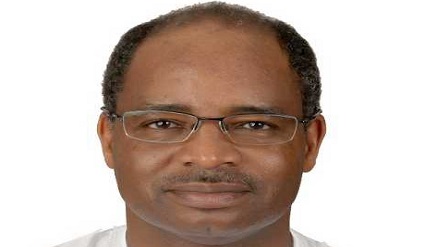
President Muhammadu Buhari may have approved the appointment of Engineer Aliyu Aziz Abubakar, as the new director general and chief executive officer of the National Identity Management Commission (NIMC).
The Presidency is yet to issue official statement on Aziz, but highly placed sources said that he is being touted as replacement for Barr. Chris Onyemenam, because of his knowledge and vast experience that will help harmonise the various databases domiciled in different government organisations.
He is also expected to successfully capture all eligible Nigerians and legal residents into the database for national planning and efficiency.
With more than thirty years’ of post qualification experience in Engineering & Information Technology, spanning both the private and public sectors, Engr. Aziz holds a B.Eng in Civil Engineering and M.Sc in Structural Engineering with Specialty in Computer Aided Design from the Ahmadu Bello University (ABU) Zaria.
Aziz was once the Information Technology Adviser to the Minister, Federal Capital Territory Administration, where he pioneered the implementation of the first e-government solution that won a Microsoft award in 2006.
He served as the Sub-committee Technical Chairman on the Presidential Committee on Harmonisation of ICT which resulted in the formation of Galaxy Backbone.
He was also a Deputy Director, Information Technology at the Bureau of Public Enterprises and the Principal Consultant, Management Information System (MIS) Department, Afri-Projects Consortium.
He was a director at the Secretariat of the Presidential Implementation Committee in the SGF’s office saddled with the responsibilities for the Implementation of Government Decisions on Consumer Credit System, National Outsourcing Initiative and Harmonization of Identification Schemes in Nigeria.
The committee oversaw the setting up of the National Identity Management Commission in 2007.
In his professional career, he designed and supervised several landmark structures in Kaduna and Abuja, including the National Universities Commission (NUC) Secretariat, Power Holding Company of Nigeria (PHCN) Headquarters, African Petroleum (AP) Plaza, Nigeria Agricultural and Cooperative Bank (NACB) Office block and several others.
He is a member of several professional bodies, including the Nigerian Society of Engineers (NSE), American Society of Mechanical Engineers (ASME) and the Nigerian Institution of Structural Engineers (NIStructE) where he is the current Vice President.
He is also a member of the Computer Association of Nigeria (COAN) now Nigeria Computer Society (NCS) and the Internet Society (ISOC).
He is widely travelled and an alumnus of Harvard, Stanford, IMD and Lagos Business School.



EFCC


The African Development Bank Group last week approved an investment of €6.5 million in the Saviu II fund in order to support technology start-ups through their seed phase and first institutional fundraising, mainly in French-speaking Central and West Africa.

The Bank will invest €4.5 million as equity and €2 million as a first-loss hedging tranche on behalf of the European Commission, under the Boost Africa Programme.
This participation of the Bank Group will enable the Saviu II fund to give priority to companies with a strong technological or digital component.
Saviu II, the second investment vehicle of Saviu Partners, plans to invest between €500,000 and €3 million in about 20 technology or technology-oriented business-to-business start-ups in the seed phase or carrying out first institutional fundraising.
The Saviu II venture capital fund aims to make at least 60% of its commitments in the French-speaking countries of West and Central Africa: Côte d ‘Ivoire, Cameroon, Benin, Senegal, Togo, Burkina Faso and Mali.
The fund can also co-invest in promising technology companies in East Africa that have a strong team and business model, and whose strategy includes entering the market in French-speaking West African countries and establishing a strong presence there.
In addition, the fund will devote a dedicated envelope to pre-seed investments, focusing on minority equity investments, usually in co-investment with studios, incubators or other ecosystem partners.
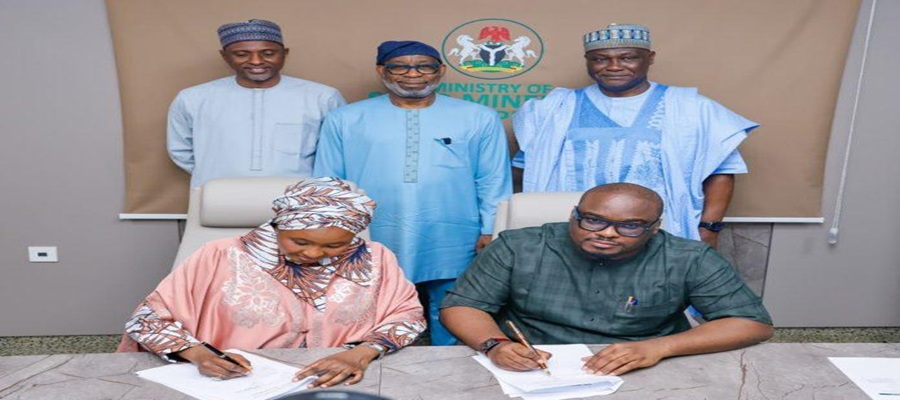
Nigerian Government has signed a $1.3 billion Memorandum of Understanding (MoU) with Africa Finance Corporation (AFC) via the Solid Minerals Development Fund (SMDF) to fund an alumina refinery, national geoscience mapping, and a strategic investment vehicle for mining growth.

Special Assistant to the Minister of Solid Minerals Development, Segun Tomori, said the refinery will process one million tonnes of bauxite yearly using a modern Bayer process, powered by an on-site gas-fired cogeneration plant.
Minister Dele Alake called it a transformative milestone boosting GDP, aligning with reforms that improve investment climate, regulations, and licensing to attract private capital. He directed agencies to fast-track permits.
The 20-year project at 95% utilization eyes 19 million tonnes total output, $1.2 billion annual GDP addition, $25 billion economic impact, and $8 billion forex earnings, per feasibility studies.
SMDF Executive Secretary Fatima Shinkafi termed it the agency’s biggest funding deal, supporting value-addition policy.
The partnership extends to geoscience mapping for mineral data, de-risking exploration, and a joint vehicle for mining assets.
Permanent Secretary Engr. Farouk Yabo praised the reforms. Shinkafi signed for government; AFC’s Franklin Edochie for the corporation, witnessed by AFC CEO Samaila Zubairu.
Tomori positioned it as Nigeria’s largest private mining investment and FDI magnet.

NAICOM Signs MoU with BPP to Deepen Insurance Compliance in Public Procurement

FG Approves GIS-enabled Digital Postcode to Tackle Logistics Gaps, Boost E-commerce

Firm Enhances its Security Awareness Platform with SCORM and PDF Support

AfDB Approves €6.5m for Tech Startups

GSMA, African Operators, Others to Launch Low-cost 4G Devices

Dr. Cairo Ojougboh Foundation Bolsters Nigeria’s Education Drive with ₦2.7m Student Support
Kaspersky Brings more Transparency to Threat Detection with New Hunt Hub

NDPC Commits to Balancing Data Privacy, Protection Information

OADC Lagos Reinforces Commitment to Local Data Hosting and Digital Transformation @ NDPC’s National Privacy Week Summit

PwC Reveals AI Scaling Gap Slows Africa’s Digital Transformation




 Telecom2 days ago
Sunil Bharti Mittal Conferred GSMA Lifetime Achievement Award for Transforming Global Telecommunications

 Telecom2 days ago
Why Digital Trust Matters: Secure, Responsible AI for African SMEs?

 General News2 days ago
Krishnan Exits Africa Data Centre to Embark on Professional Chapter

 E-Business2 days ago
Jumia Tech Week 2026 Begins with Tech Deals on Smartphones, Electronics, and Everyday Technology

 General News3 days ago
Leo Stan Ekeh at 70; thanks Tinubu, Obasanjo, Nigerians, Global Tech Community

 Broadcasting2 days ago
NCAA Orders Overland Airways to Refund VAT Charged on 2025 Tickets

 E-Financial1 day ago
NRS Targets N40trillion in Tax, Royalty Revenue in 2026

 Telecom2 days ago
House Probes Fintech Regulation via Public Hearing on New Commission Bill