

General News
Building Systems that Outlive Founders

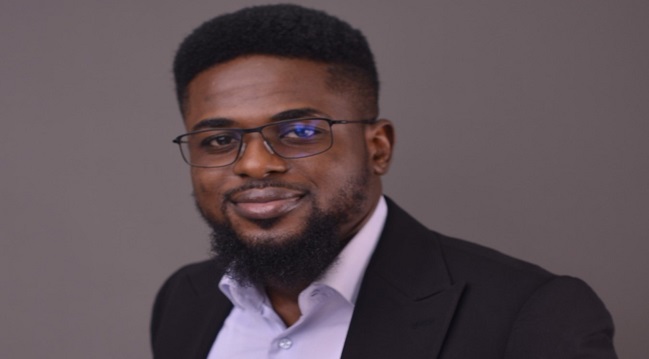
By Bidemi Oke
There is a quiet misconception in many growing companies that vision alone is enough to sustain momentum. Founders are often the engine because they are decisive, driven and deeply involved. But what happens when the engine steps back?

That question is where real companies are separated from fragile ones. Building something that outlives a founder is not about removing their influence; rather, it is about translating that influence into systems, repeatable, observable and transferable structures that do not rely on constant presence. Without this, growth becomes personality-dependent, and scale becomes inconsistent.
At the early stage, founder-led execution works. Decisions are faster, direction is clearer, and there is less friction. But as the company grows, that same model becomes a bottleneck. Every approval, every escalation, every strategic shift begins to orbit one person. The business does not slow down because of external pressure; it slows down because its internal architecture cannot carry its own weight.
Usually, “system” is often misunderstood. It is not just about tools, dashboards or policies. It is about designing how decisions are made, how information flows and how accountability is structured. It is about making sure that the logic behind actions is visible, not assumed.

For example, a strong system answers questions before they become problems. What triggers a decision? Who owns it? What data informs it? What happens if it goes wrong?
When these are unclear, teams default to escalation. When they are clear, teams operate with autonomy.
This is where many founders hesitate. System-building feels like losing control. In reality, it is the only way to extend control without being physically present. It shifts leadership from being reactive to being embedded.
One of the most overlooked aspects of building enduring systems is Documentation.
Now, not as a formality but as a strategic asset. Decisions that are not documented become opinions. Processes that are not documented become inconsistent.
Over time, this creates invisible friction. Teams solve the same problems repeatedly but differently each time.
Documentation, when done well, becomes institutional memory. It ensures that the company remembers even when individuals move on.
Another critical layer is Feedback Loops. Systems should not be static; they must evolve with the business. This requires structured ways to capture what is working, what is failing and what needs refinement. Without feedback loops, systems become outdated. With them, systems become adaptive.
There is also a cultural dimension to it. Systems do not operate in isolation; people execute them. If the culture rewards speed over clarity, systems will be bypassed. If the culture values accountability, systems will be strengthened. The goal is alignment where systems reinforce behaviour and behaviour reinforces systems.
In fast-moving industries, this becomes even more important, take fintech, for instance. The pace of regulatory change, market volatility and user expectations demands consistency under pressure.
Companies that rely solely on founder instinct struggle to keep up, while those that invest in structured decision-making, risk management frameworks, and operational clarity are better positioned to adapt.
This is something we are increasingly seeing in companies like FlashChange, where the focus is not just on growth, but on building operational resilience. The emphasis is shifting from “who is making the decision” to “how decisions are made.” That shift, while subtle, is very powerful. It creates a foundation that can support scale without losing direction.
Ultimately, building systems that outlive founders is about redefining leadership. It is not measured by how many decisions a founder makes, but by how many decisions the organisation can make without them.
The strongest companies are not those where the founder is always present. They are the ones where the founder’s thinking is quietly embedded, shaping actions, guiding priorities and influencing outcomes, even in their absence. That is how legacies are built.
Not through constant control, but through systems that carry intent forward.
Bidemi Oke is the Chief Executive Officer of FlashChange, a fintech platform focused on secure digital asset exchange. He is an entrepreneur and vibrant leader, recognised for driving innovation and redefining access in the financial technology industry.



Central Bank of Nigeria (CBN) has yet to publish its annual financial statements beyond the 2022 financial year, despite legal provisions requiring the apex bank to release its audited accounts annually.

An annual report is a comprehensive report on a company’s activities throughout the preceding year.
Annual reports are intended to give shareholders and other interested people information about the company’s activities and financial performance.
The most recent annual report and financial statements of the CBN available to the public remain those for the 2022 financial year.
Under Section 50 of the Central Bank of Nigeria (CBN) Act, the bank is required to prepare, submit and publish its audited annual financial statements.
Section 50(1) stipulates that the CBN must transmit its annual accounts, certified by an external auditor, to the President and the National Assembly within two months after the end of each financial year.
Section 50(2) further provides that the annual report submitted to the President and the National Assembly should be published in a manner determined by the CBN Governor, while Section 50(3) mandates the CBN Board to ensure the accounts are published in the Federal Government Gazette as soon as possible.
Despite these statutory requirements, the apex bank has not made public any annual financial statements after the 2022 reporting year.
The development comes after the CBN, on August 11, 2023, released its consolidated financial statements covering seven years the first such publication since 2015.
President Bola Tinubu appointed Olayemi Cardoso as Governor of the CBN on September 15, 2023, following the removal of former Governor Godwin Emefiele in June of the same year.
Emefiele is currently facing trial over alleged corruption-related offences.
Last week, the Supreme Court ordered the final forfeiture of several of Emefiele’s properties, along with $2.045 million in cash.

Dangote Petroleum Refinery and Petrochemicals has successfully completed a landmark US$2.5 billion private equity placement, in what is believed to be Africa’s largest publicly disclosed primary equity private placement by value.

This marks a major milestone in the company’s long-term expansion strategy.
In a statement issued on Thursday, the company said the offering was 3.7 times oversubscribed relative to its initial offer size, reflecting strong investor confidence in the refinery’s growth prospects and resulting in the issuance and allotment of approximately US$2.5 billion in new equity.
The fundraising follows the recent equity capital raise in which existing investors expanded their holdings alongside new institutional investors, strengthening the refinery’s capital base to support its next phase of growth.
According to the company, proceeds from the private placement will finance the continued expansion of its refining and petrochemical operations, reinforce its capital structure and enhance financial flexibility for future investments.
The transaction attracted broad participation from international and African institutional investors, sovereign-related investment vehicles, development finance institutions and long-term strategic partners.
Among the key investors were the Africa Finance Corporation (AFC) and India Infra Buildco, an investment vehicle facilitated by the African Export-Import Bank (Afreximbank). The offering also drew participation from a diverse mix of institutional and individual investors, underscoring strong market confidence in the refinery’s long-term strategy.
Chairman of Dangote Petroleum Refinery and Petrochemicals, Aliko Dangote, described the successful capital raise as a strategic move to deepen and institutionalise the company’s shareholder base while complementing internal cash flows and external financing.
“This further demonstrates our profound commitment to developing domestic refining and petrochemical capacity, reducing Africa’s reliance on imported refined products and strengthening the continent’s energy security,” Dangote said.
Managing Director and Chief Executive Officer of the refinery, David Bird, attributed the strong investor response to the company’s operational performance and leadership.
“The exceptional demand we saw is a testament to our operational excellence, execution capacity, and investor confidence in DPRP’s leadership,” he said.
Following the completion of the transaction, the company said it is well positioned to continue executing its long-term growth strategy by expanding world-class refining and petrochemical capacity while strengthening Africa’s energy security.


Once again, The Gathering on 100 Pitchathon has rewarded some of Nigeria’s most promising young entrepreneurs, with three startups sharing ₦5 million in funding.

Pitchathon
The pitchathon took place at the Abuja edition of the Gathering on 100 held between July 18 and 19, at This Day Dome, Central Business District, Abuja.
The competition brought together founders from different sectors to pitch their businesses before a panel of judges.
The Pitchathon remains one of the most sought after experiences at The Gathering on 100, an MTN Nigeria initiative that connects young Nigerians with opportunities for entrepreneurship, innovation and personal development.
Omolola Rebecca, founder of Agrovest, emerged overall winner, receiving ₦2.5 million for her agritech solution, which provides funding for farmers to improve access to capital and boost agricultural productivity.
Reacting to her victory, Rebecca said the recognition would give her business greater visibility and open doors to more investors. “Winning this competition means more people will notice what we’re building.
“It puts Agrovest in front of potential investors and partners, and gives us the opportunity to grow our impact by supporting even more farmers,” she said.
The second prize of ₦1.5 million went to Agbo Obinnaya, founder of Case Radar, a legal technology platform that uses generative artificial intelligence to simplify access to legal services in Nigeria.
The platform enables users to obtain legal guidance, understand legal documents and connect with legal professionals through a single digital platform.
Abdulmuiz Adam secured third place and ₦1 million with WaveBudget, a fintech platform that combines savings and responsible financing.
The platform allows users to save towards financial goals, access buy now, pay later services through partner merchants with a 50 per cent down payment, and manage their savings in one place.
Presenting the prizes to the winners, Lanre Coker, Manager, Customer Acquisition and Compliance, North-West, MTN Nigeria, said the initiative reflects MTN’s commitment to supporting young Nigerians with the resources they need to grow their ideas into sustainable businesses.
“The Gathering on 100 is about helping young Nigerians achieve the height of their endeavours, whatever they may be.
“We know there are brilliant ideas across the country, and through initiatives like the Gathering on 100, we are creating opportunities for innovators to access funding and the confidence to keep building,” he said.
The Abuja edition builds on the success of previous Pitchathons held during The Gathering on 100 across the country.
In Lagos, eight startups received a combined ₦45 million in funding, while three startups shared ₦5 million at the Aba, Enugu, and Kano editions. With the Abuja winners now joining the growing list of recipients, the Pitchathon continues to position itself as a platform for discovering and supporting the next generation of Nigerian entrepreneurs.

Nigeria Leads Africa in Online Gambling Regulation – GCI

CBN Has Not Published Annual Financial Statements Since 2022 despite Legal Requirement

ChatPay Unveils Public Waitlist for WhatsApp-Based Banking Platform

GSMA Says High Smartphone Costs Threatens Africa’s AI Future

Dangote Refinery Completes Landmark $2.5bn Private Equity Placement

NRC, Ponzi Scheme Collapses Resulting Loss of Billions of Naira

NASENI Moves to Digitize CCB’s 5m Assets Declaration and Operations

Lebara Nigeria Launches Lebara Play, Africa’s First Telecom-Owned Micro-Drama Platform

Tokenization, Blockchain Technology will Transform Financial Institutions – IMF

EFCC Busts NIS Visa Overstay Racket, Uncovers N700m in an Account




 General News2 days ago
FG Launches C.L.I.C.K.D., Consumer Credit Scheme for Tech Devices

 Telecom2 days ago
Airtel Nigeria Expands Retail Footprint to Strengthen Customer Access Nationwide

 Telecom2 days ago
MTN Nigeria Opens Applications for Next Afrobeats Star Season 2 with Bigger Prizes

 News2 days ago
NPC Opens Nationwide Digital Birth, Death Registration Platform

 Telecom2 days ago
Kaspersky Survey Highlights the Need for Smartphone Security

 E-Business2 days ago
Ovaloop Technologies Unveils Digital Tools to Formalize SMEs Operations Across Africa

 E-Financial2 days ago
CBN Retains Interest Rate at 26.5% as Cardoso Cites Global Uncertainty Despite Inflation Drop

 Telecom2 days ago
Why Africa’s Top ICT Ministers Are Gathering in Abuja This Week