

General News
Canon showcases cutting edge technology at CABSAT 2018


By peter oluka
Canon showcased its latest industry-leading innovations at CABSAT 2018, the leading broadcast, satellite and creative media event in the Middle East and Africa region.
The leader in imaging solutions also provided visitors with the opportunity to experience its full range of security solutions, Pro Video portfolio and professional imaging products first-hand at dedicated shooting areas and end to end workflow scenarios.
At the three-day event, Canon unveiled the latest additions to its Pro-Video segment with the launch of its 4K XF Series cameras, XF405 and XF400, which is in addition to the recent launch of the EOS C200, the 4K compact digital cinema camera from the esteemed Cinema EOS range. Under the XA series, XA-11 and XA-15 mark their entry into the region along with the low light network camera with remarkable performance, the ME20F-SHN.

The company also presented evolved and seamless workflow solutions that enable more efficient and cost-effective production for broadcasters and filmmakers.
Speaking about the event Roman Troedthandl, managing director – Canon Central and North Africa (CCNA) said, “Canon’s presence in CABSAT, which is considered to be one of the most important events in broadcast and media technology regionally and globally; is integral to showcasing our commitment towards playing a vital role in the cinema industry. Celebrating the incredible potential of filmmakers in Africa, Canon is set on clearing any hardships they may face enroute, through offering all the necessary technical and technological support they require, and this year we are going even further and extending our participation towards supporting young and aspiring filmmakers.”
“We also understand that there is an increasing integration of 4K into mainstream television dramas, documentaries and movies, and we are committed to continually evolving to meet the fluctuating needs of broadcasters and filmmakers with the latest additions to our innovative Cinema EOS series. As well as consistently strengthening and enhancing our partnerships with Tier 1 partners in markets like Nigeria, Morocco, West Africa and Egypt while hand in hand expanding our presence through an extended network of Tier 2 partners in Egypt, Nigeria and Morocco,” Troedthandl added.
Designed to benefit broadcasters and filmmakers alike, The EOS C200 is the first Cinema EOS camera to feature the revolutionary Cinema RAW light format which provides the same flexibility in colour grading as Cinema RAW in a smaller file size, enabling filmmakers to record internally to a CFast 2.0™ card.

Canon Team at the conference
Delivering incredible low-light performance and perfect for critical surveillance operations, the ME20F-SHN produces full colour and Full HD resolution images in limited light scenarios and packs in network capability and built-in video analytics into a lightweight and compact body. These innovations also support the convenience of seamless network integration with the ability to fit directly into existing workflows.
In addition to showcasing its full range of 4K, Full HD and HDR products, Canon also provided broadcast and cinematography professionals with a variety of end to end workflow scenarios including shooting experiences as well as review and editing processes. The ecosystem of videography was brought to life via a touch and try product section, dedicated shooting areas of Maasai Mara and a bakery area, a security zone and a chroma key area. Canon had also teamed up with the global leader in manual and robotic camera support systems, Vinten, to demonstrate the versatility of the ME200 and C200.
“Canon is set on becoming even more than a technical partner to customers in the African continent. We understand that the region is flourishing and becoming one of the rapidly growing media markets in the world; thus, we will continue expanding our footprint in the market via encouraging young talents and catering to their technical as well as support-related needs.” Said Somesh Adukia, sales & marketing director B2C – Canon Central and North Africa (CCNA). “We are very excited to be hosting a specific panel discussion during CABSAT that tackles the future of the filmmaking industry in Africa, as well as reviving our support to the youth by engaging them in a Canon Filmmaking Challenge; one of many initiatives which have been set to further support the filmmaking ecosystem in the region” He added.
Bringing the event to a successful closure, Canon awarded the shortlisted filmmakers for their efforts in bringing their stories to life. The announcement was made during the panel discussion which covered the future of the filmmaking industry in Africa alongside 3 prominent actors Injy El Mokkadem from Egypt, Omar Lotfi from Morocco and TY Bello from Nigeria.
Where the first-place winner, (Youness Hamiddine) from Morocco was awarded a (5D Mark 4) Canon camera. The second place winner (May El Hossamy) from Egypt and the third place winner (Ifeoma Nkiruka Chukwuogo) from Nigeria have both also received a (6D Mark 2) Canon camera.


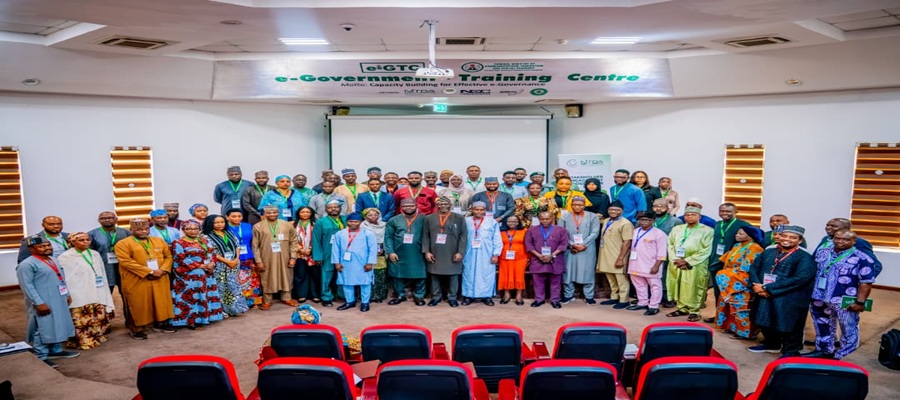
In a decisive push toward data-driven policymaking, the National Information Technology Development Agency (NITDA) has gathered key stakeholders to validate a comprehensive new framework designed to systematically measure, analyze, and maximize the impact of digital technologies on Nigeria’s rapidly evolving economy.

A Group photograph, of Representative of the Director General of NITDA , Researchers and committee.
The initiative officially kicked off at the Stakeholder Engagement and Validation Workshop on the Indicators and Measurement Framework for the National Research Study on the Impact of Digital Technologies on Nigeria’s Economy: Key Growth Indicators, Gaps and Future Outlook.
Hosted at the e-Government Training Centre of the Public Service Institute of Nigeria (PSIN) in Abuja, the workshop assembled a diverse coalition of government institutions, regulatory bodies, academia, private sector leaders, development partners, and the research community.
Together, their mission is to finalize the architectural blueprint that will guide a nationwide assessment of Nigeria’s digital landscape.
Delivering the welcome address, the Director General of NITDA, Kashifu Inuwa, CCIE represented by the Director Special Duties Unit Mr. Olawumi Oladejo, said building a globally competitive digital economy requires more than deploying technology, stressing that reliable evidence, trusted data and strong institutional collaboration are essential for sustainable digital transformation.
He observed that Nigeria has recorded remarkable progress in digital payments, broadband expansion, digital public services, innovation ecosystems and digital entrepreneurship.
However, he noted that without a harmonised national measurement system, it remains difficult to accurately assess the impact of these investments, identify existing gaps and prioritise future interventions.
Inuwa explained that the National Research Study is designed to establish a credible evidence base for understanding how digital technologies contribute to economic growth, employment, innovation, financial inclusion, improved public service delivery and national competitiveness.
He added that the study would also establish a common national framework for measuring digital transformation across sectors and institutions.
He further noted that the initiative aligns with NITDA’s Strategic Roadmap and Action Plan (SRAP 2.0), particularly its commitment to strengthening Nigeria’s technology research ecosystem through data driven policymaking.
He called on stakeholders to actively contribute their expertise to ensure that the framework is technically sound, practically applicable, the best global accepted and aligned with global best practices.
Also speaking during the opening ceremony, Dr. Saidu Mohammed Kumo, Chairman of the Technical Steering Committee and Director of Research and Development at NITDA, added that while the nation’s digital economy is expanding at an unprecedented pace, the capacity to systematically track its impact on productivity and social inclusion has lagged behind.
To bridge this gap, a multidisciplinary network of researchers hailing from Nigeria’s six geopolitical zones collaborated with the National Bureau of Statistics (NBS) to design a rigorous, statistically sound framework.
Dr. Kumo revealed that the framework evaluates three core analytical dimensions, which include digital infrastructure and access, digital capabilities and skills, and digital adoption and the enabling environment.
These dimensions are being configurationally applied across five strategic sectors: financial services, government services, e-commerce and digital trade, telecommunications, and e-health.
To turn these concepts into actionable data, the committee proposed 81 core indicators to evaluate how digital tools are changing Nigerian society and business.
The workshop served as a vital crucible for stakeholders to stress-test these metrics, ensure they fit sector-specific realities, and eliminate any outstanding data gaps before launching the nationwide data collection phase.
In her goodwill message delivered on behalf of the Statistician General of the Federation, Mrs. Saadatu Hayatuddeen Auwal of the National Bureau of Statistics described digital technology as the engine driving today’s economy, stressing that accurate measurement remains essential to understanding and improving its contribution to national development.
She reaffirmed the Bureau’s commitment to supporting the initiative through technical collaboration and the production of timely, reliable and policy driven statistics.
Representing the Federal Ministry of Health, Mrs. Ezedozie Adaora Ifeyinwa, commended NITDA for recognising the health sector as one of the five pilot sectors in the study.
She highlighted the growing role of digital technologies including electronic health records, telemedicine and data driven disease surveillance in transforming healthcare delivery, while emphasising the need for consistent measurement of their impact on health outcomes and economic development.
She also stressed the importance of addressing challenges such as fragmented health data, varying levels of digital maturity across healthcare institutions and data sensitivity, while reaffirming the Ministry’s commitment to collaborating with NITDA and other stakeholders to strengthen data sharing and support a more integrated digital health ecosystem.
The workshop featured technical presentations on the draft Indicators and Measurement Framework across the five pilot sectors—E-Health and Digital Health, Financial Services, E-Commerce and Digital Trade, Telecommunications, and Government Services.
Participants critically reviewed the proposed indicators, examined sector specific methodologies and offered recommendations to strengthen the framework ahead of the nationwide data collection phase.
The workshop concluded with stakeholders reaffirming their commitment to supporting the development of an institutionalised national e-governance and digital economy measurement system that will provide credible evidence for policymaking, strengthen strategic planning, attract investment and position Nigeria as a globally competitive digital economy.


Federal government has secured a fresh $208.3 million financing from the World Bank to strengthen Nigeria’s cash transfer programme targeted at poor and vulnerable households as the country continues to grapple with the economic impact of ongoing reforms.

President Bola Tinubu’
The new facility is expected to bolster the government’s social protection initiative by providing direct cash support to millions of low-income Nigerians affected by rising living costs following the removal of petrol subsidy and the liberalisation of the foreign exchange market.
The funding forms part of the World Bank-backed social safety net programme aimed at cushioning the impact of economic reforms while improving the country’s social protection system.
It is also expected to support efforts to enhance the National Social Register, strengthen payment systems and ensure that financial assistance reaches eligible beneficiaries more efficiently.
The latest financing adds to a growing list of World Bank-supported projects approved under President Bola Tinubu’s administration.
Since the administration assumed office in May 2023, Nigeria has secured more than $11.4 billion in World Bank loan approvals across key sectors, including power, agriculture, healthcare, education, digital infrastructure, financial inclusion and social protection.
However, only part of the approved funding has been disbursed, with several projects still at various stages of implementation.
Government officials have maintained that expanding the cash transfer programme is essential to protecting vulnerable Nigerians from the short-term effects of economic reforms while laying the foundation for long-term economic stability.
However, the fresh borrowing has renewed concerns among economists and policy analysts over Nigeria’s rising debt burden and increasing dependence on external financing.
Critics have called for greater transparency in the utilisation of borrowed funds and improved monitoring of social intervention programmes to ensure that the intended beneficiaries receive the support.
According to data from the Debt Management Office (DMO), Nigeria’s total public debt stood at approximately ₦159.28 trillion as of December 31, 2025, with multilateral lenders, particularly the World Bank, accounting for a significant portion of the country’s external debt portfolio.
Despite the concerns, analysts note that World Bank loans are generally concessional, offering lower interest rates and longer repayment periods than commercial loans.
They argue that the ultimate value of the new financing will depend on effective implementation, accountability and the successful delivery of cash support to vulnerable households across the country.

Socio-Economic Rights and Accountability Project (SERAP) has filed a legal action against the Independent National Electoral Commission (INEC) for allegedly failing to investigate claims that governors under the All Progressives Congress (APC) diverted N800 billion from public funds to finance President Bola Tinubu’s re-election bid.

The lawsuit, marked FHC/ABJ/CS/1426/2026, was filed last week before the Federal High Court in Abuja.
SERAP is asking the court to issue an order of mandamus directing INEC to investigate the allegations and compel the commission to obtain full disclosure from the APC and the governors on the alleged campaign fund, including the identities of donors and the lawful sources of the funds.Campaigns & Elections.
The organisation is also seeking an order directing INEC to commence a formal review into compliance with Section 91 of the Electoral Act by political parties and candidates, particularly regarding the sources and scale of campaign financing in the current political cycle.
According to SERAP, the allegations raise serious concerns about political finance transparency, electoral integrity and Nigerians’ constitutional right to participate freely in governance.
In the suit filed on its behalf by lawyers Kolawole Oluwadare and Kehinde Oyewumi, the organisation argued that the reported diversion of public funds for political purposes poses a significant threat to the credibility of the 2027 general elections.
It maintained that opaque political financing remains a major gateway for corruption and undermines public confidence in democratic institutions.
“The abuse of state resources for electoral advantage undermines democratic integrity and public trust. Fairness, transparency, and accountability in political or campaign finance are essential safeguards against corruption, state capture, and undue influence in democratic processes,” SERAP stated.
The organisation argued that Section 91 of the Electoral Act empowers INEC to regulate political donations, require disclosure of campaign contributions and enforce sanctions where donation limits are exceeded.
It noted that political parties found to have exceeded donation limits are liable to a fine of up to N10m and forfeiture of excess funds, while individuals who exceed the legal threshold face fines amounting to five times the excess contribution.
SERAP further contended that the commission has constitutional and statutory obligations to ensure transparency in political financing and prevent the misuse of public resources for electoral advantage.
According to the group, allegations involving large-scale public funds and opaque financial arrangements fall squarely within INEC’s investigative and monitoring responsibilities under the Constitution and the Electoral Act.
The suit also cited Sections 13, 14(2)(c) and 15(5) of the 1999 Constitution (as amended), arguing that they impose obligations on public institutions, including INEC, to safeguard democratic participation, prevent corruption and uphold constitutional principles.
SERAP further relied on international legal instruments, including the African Charter on Human and Peoples’ Rights, the International Covenant on Civil and Political Rights and the United Nations Convention against Corruption, which it said require transparency in political financing and accountability in the management of public resources.
The organisation argued that any diversion of public funds for campaign purposes would amount to a violation of both domestic and international legal obligations and would undermine the principle of a level playing field in elections.
No date has been fixed for the hearing of the suit.

JustMarkets Unveils New Web Terminal That Lets MT5 Traders Skip Software Downloads

Innovation Takes Centre Stage as The Gathering on 100 Pitchathon Rewards Kano’s Young Founders

NITDA Unveils National Framework to Measure Nigeria’s Digital Economy Growth

Xora Finance, Fintech Firm Refuses to Hire Nigerians over Alleged Dishonesty

FG Secures Fresh $208.3m World Bank Loan for Cash Transfer

NRC, Ponzi Scheme Collapses Resulting Loss of Billions of Naira

Nigeria Launches FreeTV Nationwide

NASENI Moves to Digitize CCB’s 5m Assets Declaration and Operations

Lebara Nigeria Launches Lebara Play, Africa’s First Telecom-Owned Micro-Drama Platform

CANAL+ Partners Samsung to Pre-Load DStv Stream on New Samsung TVs In Nigeria, Other African Countries




 News3 days ago
Police Busts Syndicate Who Allegedly Stole N3Bn from Financial Institution

 Telecom3 days ago
MTN Accelerates Network Expansion to Meet Surging Telecom Demand

 E-Financial3 days ago
SEC Unveils Plans to Enforce Mandatory ESG Reporting for Large Firms Next Year

 Telecom3 days ago
Airtel Africa to Connect 5,000 Schools to Free Internet by 2027

 E-Business3 days ago
TeKnowledge, Equinix Partner to Advance Nigerian Digital Infrastructure

 General News3 days ago
NSIB Faults Runway Identification, Reveals Cockpit Disagreement in Asaba Jet Incident

 General News3 days ago
Court Remands Akujobi, Ex Access over alleged Theft of N294.5m
 News24 hours ago
Xora Finance, Fintech Firm Refuses to Hire Nigerians over Alleged Dishonesty