

Broadcasting
Capital Flight and the Politics of Betrayal: When Leaders Stop Believing in Their Own Economy

By Blaise Udunze
Nigeria’s economy is bleeding, not from the absence of money, but from the silent, systemic outflow of capital that should be building industries, creating jobs, and stimulating innovation. Instead, wealth is fleeing into the vaults of local banks, offshore accounts, and speculative government instruments that promise easy returns but deliver little to the real economy.

This quiet drain known as capital flight has become one of Nigeria’s most understated yet devastating economic tragedies. It reflects not only a lack of investor confidence but also the failure of the banking and financial ecosystem to function as a true engine of growth. The role of banks in any healthy economy is to mobilize deposits, lend to productive sectors, and finance businesses that create value. Yet, in Nigeria, this cycle has broken down.
The country’s major banks, flush with liquidity, increasingly prefer to invest in risk-free government securities rather than lend to manufacturers, farmers, or entrepreneurs. The ease of earning double-digit interest from government bonds has turned banks into passive rent collectors rather than drivers of development. This behavior represents a form of internal capital flight with money technically within the system but practically locked away from the economy’s productive veins.
Beyond domestic hoarding, Nigeria faces a more pernicious form of external capital flight. Each year, billions of dollars exit the country through legal and illicit channels, draining investment, depleting foreign reserves, and eroding confidence in the nation’s economic future. Government and independent estimates suggest that Nigeria loses between $17 billion and $18 billion annually through illicit financial flows (IFFs), roughly 20 percent of the $88.6 billion that Africa collectively loses each year. That amount could have built schools, hospitals, and industries capable of employing millions.
The story of capital flight from Nigeria is not merely an economic tragedy; it is a moral one, the tale of a nation betrayed by its own custodians and courted by foreign accomplices who profit from its dysfunction.
Nigeria’s political elite have long mastered the art of wealth extraction. Through inflated contracts, misappropriated public funds, and dubious foreign investments, billions leave the country yearly. Yet, for many politicians, local investment is a risk they refuse to take. Their mansions rise in Dubai, London, and New York while their home constituencies languish in neglect. From shell companies in the British Virgin Islands to luxury real estate in the UAE, Nigerian politicians have woven a global web of concealed wealth shielded by secrecy jurisdictions and weak local enforcement. The irony is stark, as those who control Nigeria’s wealth have no faith in the economy they manage. Their lack of confidence in their own governance is perhaps the strongest indictment of their rule.
The aristocracy and business elite are not blameless. Nigeria’s high society, traditional rulers, business moguls, and political patrons have continued to move funds abroad under the guise of “diversification” or “investment security.” In reality, it is the same cycle of extraction and expatriation, where profits earned from domestic monopolies or state patronage are rarely reinvested at home. Instead, they are laundered into foreign banks, luxury assets, and offshore trusts. This unrestrained financial migration deprives the nation of growth capital and erodes public confidence, reinforcing a psychological colonization with the belief that nothing of value can thrive in Nigeria.
The problem, however, is not purely internal. Foreign corporations and their local collaborators play a significant role through aggressive tax avoidance and profit repatriation schemes. By exploiting loopholes in Nigeria’s weak fiscal systems, multinationals shift profits to low-tax jurisdictions, a process known as transfer pricing, which is draining billions from the economy each year. To make matters worse, global consulting and legal firms help structure these outflows, acting as enablers of corruption while hiding behind the veil of legality.
Capital flight thrives where institutions are weak. Agencies such as the Central Bank of Nigeria (CBN), the Nigerian Financial Intelligence Unit (NFIU), and the Economic and Financial Crimes Commission (EFCC) operate under immense political pressure. Investigations into politically exposed persons are often selective, and prosecutions drag endlessly. Meanwhile, banks (both local and foreign) play the silent role of facilitators, processing questionable transactions with minimal scrutiny. The result is a perfect ecosystem for looting by powerful politicians, complicit banks, pliant regulators, and eager foreign beneficiaries.
The effects are devastating. Capital flight undermines foreign exchange stability, weakens the naira, and starves industries of investment. When billions are left unchecked, the government resorts to borrowing, increasing national debt and mortgaging the country’s future. Nigeria’s public debt now stands at N149.39 trillion, with debt servicing consuming over 70 percent of government revenue. Inflation remains stubbornly high at 20.12 percent as of August 2025, while food inflation stands at 21.87 percent. Unemployment, officially at 5 percent, is far worse in reality, with underemployment and informal work masking widespread joblessness.
One overlooked driver of this crisis is Nigeria’s weak respect for property rights, which is the very foundation of investor confidence. In September 2025, the Lagos State government demolished over 19 buildings in the Trade Fair Complex, Ojo, citing permit violations. But beyond regulatory enforcement, the event exposed a deeper issue: inconsistent governance, opaque processes, and disregard for ownership that fuels distrust and drives capital offshore. When investors are uncertain that their assets are safe from arbitrary government action, they simply take their money elsewhere.
Multiple taxation, inconsistent policies, and weak monitoring of illicit flows further complicate the picture. Businesses face overlapping levies from different tiers of government, pushing many to conceal income or move operations abroad. Civil society estimates that over $18 billion is lost annually through illicit flows. This is a drain that robs Nigeria of the fiscal capacity to fund schools, hospitals, and roads.
Ultimately, the story of capital flight is one of moral and institutional decay. It reveals a political class that preaches patriotism while stashing wealth abroad, a banking system that serves itself rather than the economy, and a foreign financial order that profits from Nigeria’s dysfunction.
Reversing this pattern requires a national reorientation, one that goes beyond slogans to enforce accountability and rebuild trust. Nigeria must strengthen asset recovery frameworks, enforce beneficial ownership registries, and enhance cooperation with countries that host stolen wealth. Western nations, too, must shut down the safe havens that shelter looted funds; they cannot condemn corruption abroad while their financial systems profit from it.
More importantly, Nigeria’s leaders must recognize a simple truth that no nation develops by exporting its capital and importing its luxuries. Development is sustained by faith, the faith of a people who believe enough in their land to invest in it.
Capital flight is not merely an economic statistic; it is the reflection of a broken covenant between Nigeria and its leaders. The wealth that should build the nation has become the currency of betrayal. Until the ruling class and their foreign accomplices are held accountable, Nigeria will remain a country of immense potential shackled by the greed of its own custodians.
Blaise, a journalist and PR professional writes from Lagos, can be reached via: [email protected]


Broadcasting
Obi, NDC Presidential Candidate Faces N50Bn Defamation Claim over Alleged Podcast Remark

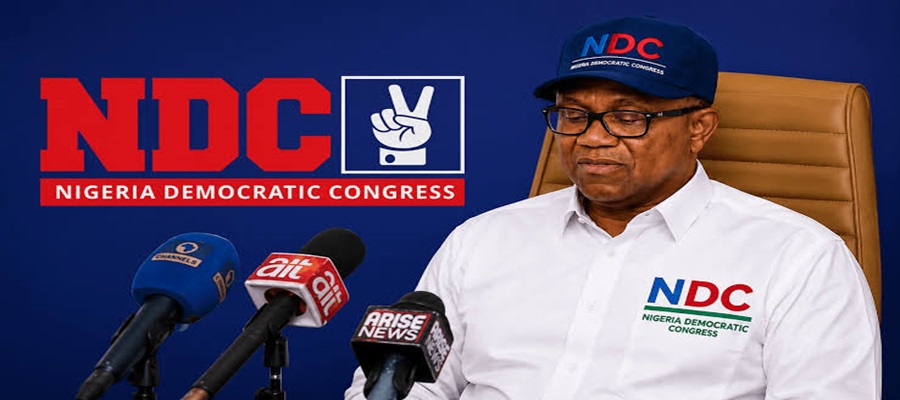
Abayomi Arabambi, national vice chairman (South-West) of the Labour Party, has demanded a public apology, a retraction, and N50 billion in damages from Peter Obi, presidential candidate of the Nigeria Democratic Congress (NDC), over an alleged defamatory statement made during a podcast interview.

The demand was contained in a letter issued by the law firm Neplus Ultra Attorneys and signed by Anderson U. Asemota, Peter O. Asimegbe, and Stanley C. Eziefulle on behalf of Arabambi.
According to the letter, the legal dispute arose from comments allegedly made by Obi during the interview, where he reportedly stated that Arabambi “does not have an address.”
Arabambi’s legal team described the statement as false, malicious, and defamatory, arguing that it portrayed their client as a faceless individual without legitimacy, credibility, or standing in public life.
The lawyers further claimed that the interview was widely circulated on television stations and digital platforms, exposing Arabambi to public ridicule and damaging his reputation.
“Our client has had a known residential and business address, maintains professional and political affiliations within Nigeria, and has never been a person whose whereabouts or identity were unknown,” the letter stated.
The legal team maintained that the alleged publication caused embarrassment and harmed Arabambi’s public image and political standing.
As part of their demands, the lawyers called for an unreserved public apology to be aired on national television, published on Obi’s verified social media platforms, and carried as full-page apologies in national newspapers.
They also demanded the payment of N50 billion as compensation for the alleged injury to Arabambi’s reputation, dignity, political standing, and public image.
Broadcasting
Why We’re Partnering With NIHOTOUR To Bring Nigerians In South Africa Home – Steve Babaeko

When Nigerians began arriving back home on emergency flights following an ultimatum from anti-migrant groups in South Africa, Steve Babaeko, alongside The Nigerian Institute of Hospitality and Tourism (NIHOTOUR), saw an opportunity to step up for his fellow citizens.

Steve Babaeko
The CEO of X3M Ideas explains that he saw a deep obligation, one that had nothing to do with advertising and everything to do with hospitality. For Babaeko, it was a reminder that an agency owes a duty of care to the community it exists within.
That conviction shaped the creative agency’s partnership with the Nigerian Institute of Hospitality and Tourism (NIHOTOUR) for the newly launched ‘Welcome Home’ pilot programme at Murtala Muhammed International Airport (MMIA) in Lagos. Rather than simply crafting a messaging campaign around the crisis, X3M Ideas helped design a tangible, physical system.
“This wasn’t built as a campaign about a crisis,” Babaeko said. “It was a hospitality agency deciding what it owes its own citizens the moment they land.”
For Babaeko, what X3M has built is infrastructure, something returnees can physically walk through, use, and benefit from the instant they clear the arrival gate.
With the MMIA pilot now officially running, NIHOTOUR directs returnees to immediate support services and issues them a Returnee Card. This card grants individuals a free first night at partner hotels, immediate transport assistance from the airport, and fast-tracked business registration support.
Furthermore, the initiative features a dedicated Restart Desk to assist returnee entrepreneurs and tradespeople with job placement referrals and business registration. This operates alongside a public Homecoming counter that tracks the cumulative number of returnees welcomed, businesses restarted, and jobs facilitated.

Spotify has announced a partnership with Afro Nation Portugal as the festival’s official sponsor and exclusive streaming partner for the 2026 edition, in a move aimed at bringing African music and festival experiences to a wider global audience.

The collaboration will provide fans with a dedicated Afro Nation destination on Spotify, featuring official festival playlists, participating artists and selected performance videos after the event.
The 2026 edition of Afro Nation Portugal is scheduled to hold from July 3 to July 5 in Portimão, Portugal.
Spotify said the partnership would enable fans to engage with the festival before, during and after the live event, regardless of their location.
The streaming platform noted that the initiative aligns with its continued investment in promoting African music and supporting its growing international audience.
Speaking on the partnership, Spotify’s Content Marketing Manager for Sub-Saharan Africa, Mr Rifumo Mdaka, described Afro Nation as a global showcase for African music and culture.
“Afro Nation is more than a festival; it is a global expression of African music, fan culture and creative influence.
“Our partnership is about helping that moment travel further through our first collaboration with Afro Nation of this nature.
“By bringing the festival to Spotify, we are giving fans a place to connect with the artists, performances and stories that define the festival long after the final set,” he said.
According to Spotify, the collaboration will also include exclusive festival content, artist discovery features, curated playlists and fan-focused storytelling.
The company said it would document the journey of a selected fan travelling to the festival as part of efforts to showcase the growing global appeal of African music.
Also speaking, Director of Global Partnerships at The Malachite Group and Afro Nation, Ms Clémence Blum, said the partnership represented a major step in expanding the festival’s global reach.
“Afro Nation has always been more than a festival. It is a platform built to celebrate African music, support artist breakthroughs and connect a global community through culture.
“Our partnership with Spotify reflects the shared role we both play in helping artists reach new audiences and giving fans deeper ways to engage with the music they love,” she said.
Spotify said selected live performances from the festival would be made available on the platform after the event, allowing fans around the world to relive the performances on demand.
The company added that the partnership reinforces its commitment to promoting African music, supporting artists and strengthening connections between creators and audiences across the globe.

SERAP Asks Akpabio, Abbas for Explain N1.3Bn Budgeted for ‘Fictitious’ Presidential Council

No Plans for Fresh Tariff Hike – MTN

FG Denies N8 Trillion ‘Shadow Budget’, Says IMF Quoted out of Context

Tokenization, Blockchain Technology will Transform Financial Institutions – IMF

Weebly Websites to Shut Down for Nigeria, 66 Other Countries from September

Mobile Internet Gender Gap Widest in Africa – GSMA

Nigeria Launches FreeTV Nationwide

NASENI Moves to Digitize CCB’s 5m Assets Declaration and Operations

UK, Nigeria Launch £15m Growth Programme to Accelerate Economic Transformation

Court Deals Fresh Blow to NBC, Throws Out Appeal over Broadcast Fines




 Broadcasting2 days ago
Why We’re Partnering With NIHOTOUR To Bring Nigerians In South Africa Home – Steve Babaeko

 News2 days ago
FG Clears N39Bn Pension Arrears for NITEL, PHCN, Other Retirees

 News2 days ago
How Fraudsters Emptied a Judge’s Account of N7.2 Million in Midnight Attack

 Telecom2 days ago
MTN Nigeria Celebrates Volunteers at Y’ello Care Impact Showcase

 E-Financial2 days ago
SEC Grants Approval to Luno, Other Crypto Firms under Regulatory Sandbox

 Telecom2 days ago
Google Play launches $1m fund to support African game developers

 Telecom2 days ago
MTN Takes ‘The Gathering on 100’ Youth Empowerment Initiative to Kano

 Telecom2 days ago
Xenophobia: MTN Nigeria Belongs to Nigerians, Not Only South Africans — Toriola