

E-Financial
CBN, Adesina See Big Agric Impact on Economy


Central Bank of Nigeria (CBN) has reaffirmed 6.72 per cent GDP Q2, 2013 growth forecast by the National Bureau of Statistics, and noted that the country’s now relies more on the non-oil sector as driver of growth.
On the country’s fiscal outlook, the CBN confirmed earlier projections, however, noted that “the relatively robust output growth projection for 2013 was hinged on expected three favourable conditions for increased agricultural production and other policy initiatives aimed at stimulating the economy.”
The CBN’s monetary policy committee (MPC) which met fortnight ago, also “noted with caution, the high GDP growth projection in view of the extant risk factors such as widespread insecurity, weak infrastructure and probable flooding from the projected heavy rains in some parts of the country.”
It also notes with trepidation the “state of emergency in the North East and the accompanying military operations in that axis have the potential to adversely affect economic activities generally, including agricultural production and food prices, as well as consumer demand.”
Dr. Akinnwumi Adesina, minister of Agriculture in separate interview with BBC radio stated that Nigeria was on path to self-sufficiency in food production.
Adesina who caused quite a ripple recently with his $600 million mobile phones for farmers’ project in the country, said Nigeria was on-course to regain lost grounds in groundnuts, palm produce and cocoa production.
Already, Nigeria is the largest producer of Cassava and Yam tubers globally. But its import bills in products like wheat and rice eat deeply into its annual GDP.
Yahaya Shehu, a member Monetary Policy Committee said the country’s “GDP growth rate of 6.56 per cent in Q1 of 2013, though a bit lower than the annualized level of growth in Q4 2012, maybe due to seasonal factors, is still robust and is forecast to increase in the next two quarters of 2013.”
He alluded that “one of the major challenges facing the Nigerian economy is the prospect of significant declines in oil earnings in the medium term, both due to weakening oil prices and declines in official domestic production occasioned by production disruptions and leakages. Already, this year, actual retained revenue of the federal government has been about 24 per cent lower that budgeted. Yet, there are some concerns that development imperatives and the security situation in the North Eastern part of the country might lead to substantial fiscal deficits necessitate increased government borrowing and generate inflationary pressures.”
Tunde Lemo, deputy Governor of CBN said: “arriving at policy decision seems a little bit complex. Current macroeconomic conditions suggest a benign environment, including moderation in inflation with all the measures now in single digit. The foreign reserve level has increased to a fairly comfortable level with demand pressure in the foreign exchange market fairly subdued. In addition, the money market rates have shown good degree of stability while investors‟ confidence in the economy has increased, evidenced by the declining yields on long term bonds.”
But Mallam Sanusi Lamido Sanusi, governor of the apex bank had some other reservations about risk factors in the economy other than declining oil revenue. He noted that the war against terror in Nigeria’s North East and subsequent investment in the “reconstruction and rehabilitation as the country deals with the humanitarian situation, are likely to be costly.”
Sanusi who recently got a hattrick of Africa Central Bank Governor of the Year award from the UK based Banker also noted that political spending in the country consequent to the next general elections in 2015 posed great risk to the economy.
“Secondly, as we approach 2014 and the nationwide election, political spending is bound to rise. While, to some, it may seem too early to worry about election spending, it is clear to me that 36 developments such as the Nigerian Governors’ Forum Chairmanship fiasco and the forging of alliances among opposition parties are indicative of the earnest commencement of horse-trading and grand-standing among politicians. The process has therefore commenced.”



In a bid to foster accurate public discourse as well as protect the stability of the financial sector, the Association of Corporate and Marketing Professionals in Banks (ACAMB) has stepped in to educate renowned content creator, Unofficial Osas, following his misrepresentation of facts concerning the Central Bank of Nigeria’s (CBN) recapitalisation drive, and subsequent invitation by the Nigerian Police Force.

ACAMB
The intervention by ACAMB led to the successful retraction of a misleading video regarding the CBN recapitalisation policy, demonstrating the Association’s commitment to its core mandate of public enlightenment.
In his official apology video, the content creator stated, “I was invited by the Nigerian police force national cyber crime centre in Abuja over the video I posted on the 15th of December, where i spoke about 12 banks that were shut down in relation to the CBN recapitalisation policy. I would like to offer an official retraction of that video and want to reiterate that no bank is shutting down.
“As a matter of fact, most of the banks have now met the ₦500 billion minimum capital base for banks with international and the N200bn for national banks recapitalisation requirements, so no bank is shutting down.
“I want to specifically appreciate ACAMB. They were very professional in handling this case and did well to educate and enlighten me on the recapitalisation process. I am now better informed and know better”
Commenting on the resolution, President of ACAMB, Jide Sipe, reinforced the Association’s dedication to protecting the integrity of the banking sector. “ACAMB stands for the restoration of professional banking ethics and public confidence through seamless information management and public enlightenment.
“We believe that an informed public is an empowered public. By engaging Unofficial Osas, we ensured that accurate information regarding the resilience and strength of our banks was disseminated to the millions of Nigerians who follow him.”
The Intervention shows ACAMB is dedicated to evolving strategies that enhance and sustain a good image for the nation’s banking sector as well as assist in fostering better banking habits among Nigerians.
E-Financial
FirstCap MD says Payment Security Remains Biggest Barrier to Bankable Gas and Power Projects


Ukandu E. Ukandu, Managing Director/CEO of FirstCap Limited, a leading investment banking firm and subsidiary of First HoldCo Plc., has reaffirmed that payment security remains the most decisive factor in determining whether gas and power projects in Nigeria secure financing.

He shared this perspective during a panel discussion on project bankability at the 2026 SPE Lagos Energy Week.
Ukandu noted that although several risks influence financing decisions, payment risk consistently emerges as the key barrier to financial close.
“Every major risk matter, but payment risk is the ultimate deal‑breaker. Without strong payment security and disciplined collections, no project can attract sustainable financing,” he said.
He explained that lenders typically evaluate three core risk pillars, payment reliability, foreign‑exchange exposure, and contract enforceability, with payment reliability presenting the greatest challenge across Nigeria’s energy value chain. Persistent collection inefficiencies, rising arrears, and liquidity pressures continue to weaken investor confidence.
To enhance payment security, Ukandu highlighted mechanisms widely used by financiers, including letters of credit, bank guarantees, escrow accounts with payment‑waterfall structures, reserve and sinking funds, sovereign or sub‑sovereign support, and take‑or‑pay offtake agreements.
Addressing foreign exchange risk, he noted that volatility remains difficult to manage, especially for projects with dollar‑denominated costs but naira‑denominated revenues. Lenders typically mitigate this through foreign exchange ‑linked tariff indexation, partial dollarisation for credible industrial offtakers, escrow protections, selective hedging, and foreign exchange reserve buffers.
However, he cautioned that indexation alone seldom eliminates exposure due to regulatory limits and timing delays.
On legal and regulatory certainty, Ukandu stressed the need for contracts that are enforceable and clearly structured, particularly around take‑or‑pay obligations, termination payments, step‑in rights, and dispute‑resolution frameworks. He added that factors such as tariff adjustments, licence changes, and price controls can significantly affect project viability if they are not fully addressed at the contracting stage.
While fiscal incentives such as tax holidays and accelerated depreciation can strengthen project economics, Ukandu emphasised that they cannot compensate for weak fundamentals.
“Incentives make a good project better, but they do not make a weak project bankable. Cash‑flow reliability and disciplined foreign exchange management must come first,” he said. He also noted that naira‑based incentives may lose value if project revenues are not indexed.
He concluded by urging industry players to prioritise revenue security from the earliest stages of project structuring: “Protect returns at the source. Build strong offtake arrangements with solid credit support and currency alignment to ensure cash is received in full and on time.”
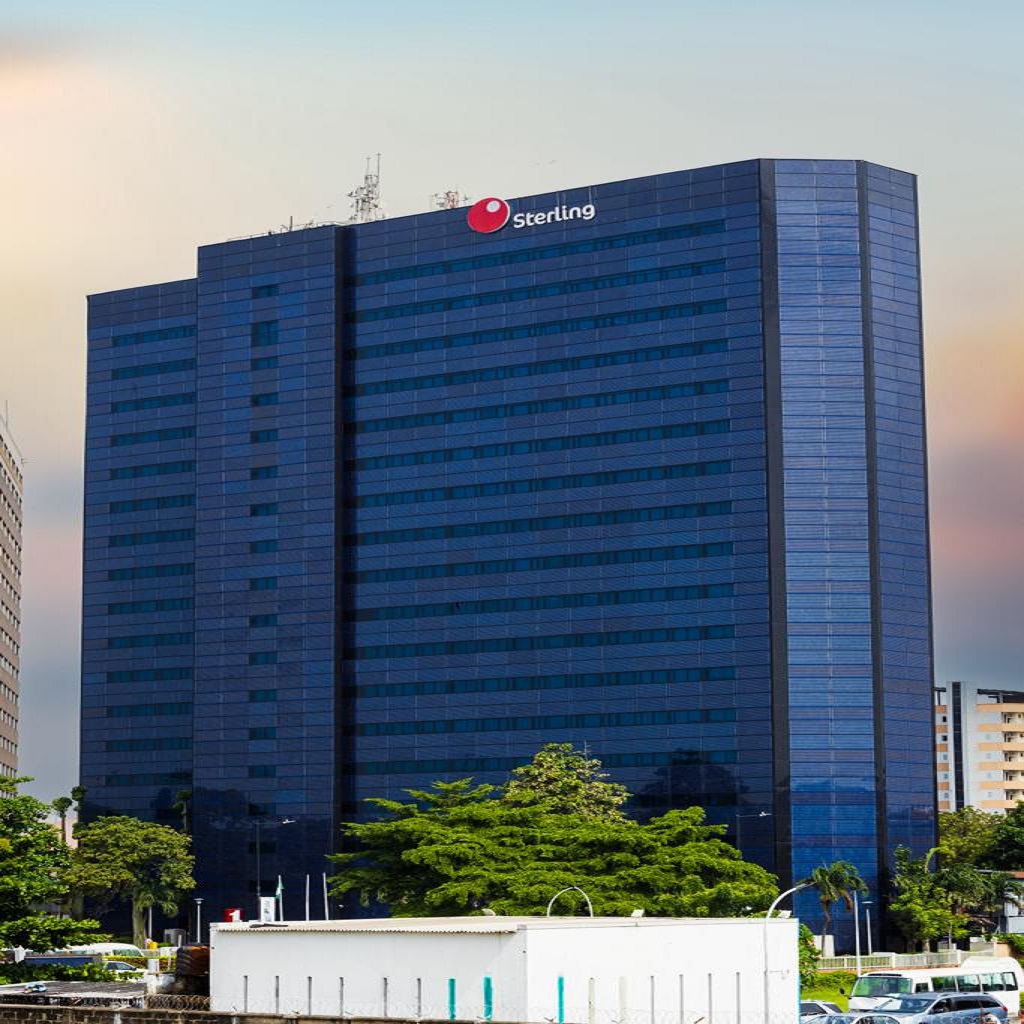
Sterling Financial Holdings Company Plc (Sterling HoldCo) has begun allotting 12,581,000,000 ordinary shares of 50 kobo each at ₦7.00 per share from its 2025 Public Offer.

Sterling HoldCo
The process follows Central Bank of Nigeria (CBN) and Securities & Exchange Commission (SEC) approvals.
The offer, opened September 15, 2025, drew 18,280 applications for 16.84 billion shares worth ₦117.88 billion—109.79 per cent oversubscribed.
Valid applications from 18,276 shareholders totalled 13.81 billion shares; all compliant applicants receive full allotments.
Refunds for rejects/excess, plus interest, process via RTGS/NIBSS by February 17, 2026, handled by Pace Registrars Limited.
Shares credit to CSCS accounts by the same date; new accounts held in pool pending documentation.
The raise bolsters capital for banking subsidiaries, injects ₦10 billion into SterlingFI Wealth Management to meet SEC rules, and funds credit expansion, innovation, and support for businesses/households.
Strong Financials, Diversified Growth
FY25 interim results show 99 per cent profit before tax growth; gross earnings up 46 per cent to ₦476.5 billion; assets at ₦3.92 trillion; deposits up 18 per cent to ₦2.98 trillion; shareholders’ funds up 39 per cent to ₦424 billion.
Cost-to-income ratio improved to 63 per cent from 72 per cent.
Subsidiaries—Sterling Bank Limited (conventional), The Alternative Bank Limited (non-interest, 150+ branches)—comply with CBN capital rules.
Initiatives include Mata Zalla (women tricycle training) and Plateau agriculture programme.
The offer attracted first-time retail investors, broadening ownership.
Sterling HoldCo welcomes new shareholders, poised for sustained growth and economic impact.
Zinox Technologies and TD Africa Forge Strategic Partnership to Revolutionize African Tech Ecosystem

Uwaje Pays Tribute to Leo Stan Ekeh @70

ABoICT Lecture 2026 to Focus on Impact of AI, IoT on Business Operational Efficiency

Leo Stan @ 70: Blessed and Bruised by Country, Eyes Next Disruption

IXPN Positions as the Regional Internet Exchange Hub for West Africa
Nigeria’s 9 Top FinTech Firms Valued at $10.6Bn in January 2026

Kaspersky Launches OT Calculator to Align Cybersecurity Investments with Business Goals

CBN Upgrades Licences of Opay, Moniepoint, Kuda, Palmpay, Paga to National Status

NITDA, NBC Explore Strategic Collaboration on Digital Transformation, Media Regulation

Accidental Billionaire Opts for Jail Instead of Returning Money Credited Him by Mistake




 Telecom3 days ago
Banks, Telcos Settle Four-Year Dispute over N300Bn USSD Debt

 Telecom2 days ago
Group Condemns Gabon’s Social Media Shutdown Amid Protests

 General News2 days ago
How JustMarkets Is Empowering African Traders with Global Market Access

 E-Financial3 days ago
ACAMB Educates Content Creator to Curb Misinformation on Bank Recapitalisation

 General News3 days ago
PalmPay Unveils First Batch of Winners in #LoveWithPalmPay Campaign

 E-Business2 days ago
Mutual Benefits Assurance Settles ₦5.9bn Claims in January 2026
 Telecom2 days ago
IXPN Positions as the Regional Internet Exchange Hub for West Africa

 Telecom2 days ago
Menxtt NG Emerges as Nigeria’s Virtual IT Hub for Premium Devices, Solutions