

General News
CBN Confirms Appointment of Three Bank CEOs

The Central Bank of Nigeria (CBN) has confirmed as substantive managing directors the managing director-designates of three banks.
They are Mr. Godwin I. Emefiele, for Zenith Bank PLC, Mr. Phillips Oduzua, United Bank for Africa, UBA, and Mr. Kehinde Durosinmi-Etti for the Skye Bank.
The nominees who were appointed by their boards following CBN’s directive that all managing directors in the banking industry that have served ten years consecutively should quit at the end of July 2010, were screened by the apex bank.
Three of the banks in the country were affected by the CBN new rules. They are Zenith Bank which Managing Director Jim Ovia, was the pioneer MD that had taken the bank to great heights.
UBA is yet another of the banks affected. Its current Managing Director Tony Elumelu was the MD of Standard Trust Bank that bought into UBA and merged the two banks. Skye Bank had Akinsola Akinfenwa as current managing director.
Godwin Emefiele was appointed as deputy managing director, Zenith Bank in 2001. Prior to this appointment, he was the bank’s executive director in charge of Corporate Banking, Treasury, Financial Control and Strategic Planning. He is responsible for all the Group’s local subsidiaries, Treasury and Correspondent Banking, and Multilateral, Conglomerates, & Private Banking.
United Bank For Africa Plc (UBA) named Phillips Oduoza as its new CEO in line with the new Central Bank of Nigeria directive. Oduoza has over 22 years’ experience in Banking and Financial Services spanning Banking Operations, Relationship Management, Credit/Marketing, Technology Implementation, Risk Management, Lean Banking Methods and Brand Management.
Prior to this appointment, Oduoza was the bank’s deputy managing director overseeing its operations in the South, which is the UBA Group’s largest strategic business group. He will commence as the Group Chief Executive of the Bank on August 1, 2010. In the interim, Oduoza will work in tandem with Tony Elumelu, current Group Chief Executive of UBA to ensure that the transition is seamless.
Kehinde Durosinmi-Etti started his banking career with the Nigerian-American Merchant Bank Limited, an affiliate of Bank of Boston, in 1987 where he was employed as the Head of Accounts/Computer and later Internal Control. He moved to Midas Merchant Bank initially as Head of Treasury and later Assistant General Manager in charge of Money Market Division. Upon the conclusion of the merger in early 2006, Durosinmi-Etti was appointed the deputy managing director of Skye Bank Plc.


Department of State Services (DSS), statutory known as the State Security Service (SSS), Nigeria’s premier domestic intelligence agency has reportedly acquired spyware that enables it illegally wiretap and detains citizens.

According to a report by The International Centre for Investigative Reporting (The ICIR), court filings and victim testimonies reviewed by it in the course its investigation revealed how spyware equipment acquired by Nigeria’s secret police for “national security” has become an instrument for illegal wiretapping.
In Nigeria, unlawful phone tapping and wiretapping are serious crimes as they violate privacy rights unless authorized by a judge.
The ICIR, an independent, non-profit news agency that promotes transparency and accountability through robust and objective investigative reporting in its report said the DSS, targets are monitored in secret, picked up, and hauled into horrible detention camps without trial dates or accountability.
Section 37 of the 1999 Constitution protects the privacy of citizens, their homes, correspondence, and telephone conversations.
But in exceptions, under the Constitution and the Lawful Interception of Communications Regulations 2019, authorized agencies (like the DSS and Police) can only intercept communications with a valid court order or warrant for reasons of national security or public safety.
Here is the full The ICIR report:
FIRST, the phones pinged. Then the knocks came. For suspects apprehended by operatives of the Department of State Services (DSS) since 2021 and taken to the military detention facility at Wawa, a border town in Niger State, the pattern was identical: strange calls, dropped signals, then arrests without warrants.
Court filings and victim testimonies reviewed by The ICIR in this investigation reveal how spyware equipment acquired by Nigeria’s secret police for “national security” has become an instrument for illegal wiretapping.
Targets are monitored in secret, picked up, and hauled into horrible detention camps without trial dates or accountability.
He sounded like a fan from America
On his way to Abuja from Abia State, a social media critic, Saheed Jamilu, got a call from a strange number.
The caller claimed to be a fan of his based in the United States who once lived in Abia.
“He hailed me and professed love for the South-East,” Jamilu said in a viral Facebook video. The caller later advised him to “soft-pedal” criticism of leaders, including the Ogun State governor, Dapo Abiodun.
Thirty minutes later, Jamilu checked the number.
Curiously, it carried a Nigerian code, not that of the U.S.
“It occurred to me something was fishy. I shared the number with my lawyer for verification. We later confirmed the caller was from the DSS,” Jamilu said.
He wondered why the secret police would chase critics instead of kidnappers holding hostages in forests across Nigeria.
Stories like his have flooded the social media space in Nigeria.
Activists and content creators, including the popular VDM (Very Dark Man), allege DSS surveillance and threats of arrest.
Where is ‘Blood’?
For lawyer Pius Awoke, 49, student Onyibe Chinonso, 34, and builder Nwocha Chinedu, 43, it was not an online alarm.
It was years of unspeakable horrors in detention.
On a wet Thursday morning in June 2021, along the Abuja-Lokoja highway, their Enugu-bound Sienna was flagged down near the Murtala Mohammed Bridge close to Lokoja.
Soldiers manning a checkpoint said the DSS had ordered a stop for a suspected IPOB (Indigenous People of Biafra) member.
Fifteen minutes later, plainclothes operatives arrived in an unmarked SUV. Among the eight passengers in the intercepted Sienna, the trio were ordered out and forced to surrender their phones.
Awoke recalled: “One operative brought out a paper and started dialling numbers with each phone. ‘Where is Blood?’ they barked, searching for a contact.”
Chinonso said they repeated the dialling three times and found nothing. After body and vehicle searches, the operatives began beating them.
“They kept beating and asking us ‘who is Blood?’ while we showed ID cards. After five hours of torture, they handcuffed us and took us to their Lokoja office,” Chinonso recalled.
The next day, they were ferried to DSS headquarters, Abuja, with face masks, phones and money seized. They were dumped in an underground cell called “Basement-2.”
Chinonso said one of the operatives, Jonah Daniel, urinated in a bottle and sprinkled it on their heads. “After that, our legs were chained together. We were kept incommunicado in a dark, cold, unventilated cell for two days,” he said.
Torture at the ‘Hell’ called Wawa
Wawa Military Cantonment in Borgu LGA, Niger State, near Benin Republic, is used for training and operations.
However, some ex-detainees told The ICIR that their ordeals in the hands of the DSS ended with detention at Wawa, describing it as “hell.”
For full details go to https://www.icirnigeria.org/how-dss-spyware-acquisition-enables-illegal-wiretaps-and-detentions/
General News
IHS Nigeria, FCT-HSES Concludes Clean Cooking Energy Campaign “Project Breathe Clean Air” in Abuja

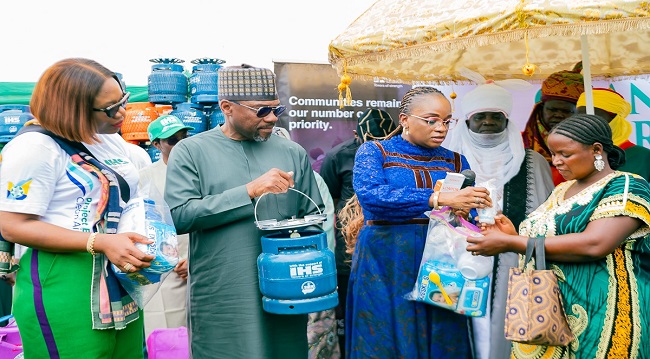
Communications infrastructure company, IHS Nigeria, in partnership with the Federal Capital Territory Health Services and Environment Secretariat (FCT-HSES), has successfully concluded the Project Breathe Clean Air Abuja, a landmark initiative designed to help the underserved communities across the Federal Capital Territory to access Liquified Petroleum Gas (LPG) cylinders as a cleaner alternative for household cooking.

The Grand Finale Ceremony, which held at the Bwari Area Council Stadium, marked the successful completion of the project following months of implementation across all the six Area Councils of the FCT. The event also featured the symbolic presentation of LPG cylinders and refill vouchers to beneficiaries in Bwari, the final beneficiary community under the programme.
Speaking at the event Mr. Dapo Otunla, Senior Vice President and Chief Corporate Services Officer, IHS Nigeria who represented the Chief Executive Officer, Mohamad Darwish, described the initiative as a practical demonstration of the company’s commitment to delivering sustainable impact in the communities where it operates.
“When we launched this initiative in November 2025, we committed to supporting the FCT Administration in reducing household air pollution and improving the health and wellbeing of vulnerable communities. Today, we are proud to celebrate the successful fulfilment of that commitment,” he said.
Mr. Otunla noted that Project Breathe Clean Air Abuja aligns directly with two of IHS Nigeria’s core sustainability pillars: Environment and Climate Change, and People and Communities.
He explained that by supporting the transition from traditional biomass fuels such as firewood and charcoal to Liquefied Petroleum Gas (LPG), the initiative has contributed to cleaner household energy use, reduced exposure to indoor air pollution, and improved health outcomes, particularly for women and children.
According to him, the project delivered 10,000 LPG cylinders across communities in the FCT over two phases, while also enrolling 2,000 beneficiaries into the IHS Project Clinic Without Walls (PCWOW) Health Insurance Scheme, thereby extending the project’s impact beyond clean energy to improved access to healthcare.
“As we celebrate the successful completion of this initiative, we are also celebrating the strength of partnership. The collaboration between IHS Nigeria, the FCT Administration, community leaders and the implementing partners has transformed a shared vision into measurable impact,” he added.
Delivering an overview of the project, the Mandate Secretary, FCT Health Services and Environment Secretariat, Dr. Adedolapo Fasawe, reflected on the journey that led to the initiative and expressed appreciation to IHS Nigeria for supporting the FCT Administration’s vision of promoting cleaner, healthier communities.
She explained that the project was conceived as a practical response to the widespread use of firewood and charcoal for cooking across communities in the FCT.
“We could not simply ask people to stop using firewood and charcoal without providing them with a practical alternative,” she said.
Dr. Fasawe commended IHS Nigeria for embracing the vision and providing the support required to make the project a reality.
She noted that, through the partnership, beneficiaries across the six Area Councils received LPG cylinders alongside refill vouchers, helping their households transition to cleaner cooking methods while reducing exposure to harmful household smoke.
She further described the project as an example of how collaboration between government and the private sector can deliver meaningful improvement in the lives of citizens.
Beneficiaries also shared testimonials on how the access to clean cooking energy has improved their daily lives, while officials of the Federal Fire Service conducted a practical demonstration on the safe handling and use of LPG cylinders.
The ceremony brought together senior officials of the Federal Capital Territory Administration, representatives of the Honourable Minister of State for the FCT, Area Council representatives, traditional rulers, and community stakeholders in celebration of the successful completion of the initiative.
The IHS Nigeria delegation was led by Mr. Dapo Otunla, Senior Vice President and Chief Corporate Services Officer, and included, Director, Sustainability, Titilope Oguntuga, Director, Corporate Communications, Sylva Ifedigbo and other members of the company’s leadership and sustainability teams.
The successful conclusion of Project Breathe Clean Air Abuja reinforces IHS Nigeria’s commitment to advancing sustainable development through strategic partnerships that promote environmental responsibility, improve public health outcomes and strengthen the resilience of host communities.
General News
Beyondsurface Hairhub Equips Women Entrepreneurs with Practical Business Structure Skills at Free Lagos Seminar
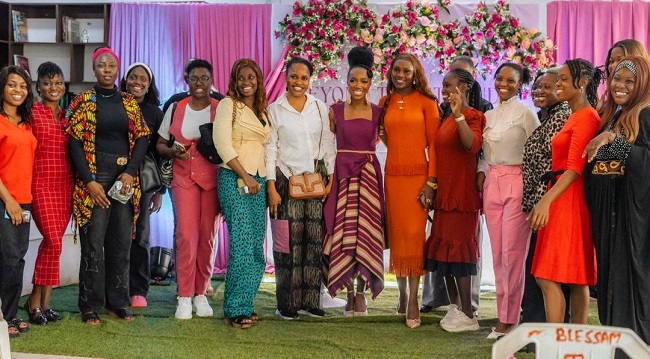
Beyondsurface Hairhub successfully hosted the maiden edition of the Beyond The Strands Business Seminar (BTS 2026) on June 30, 2026 at TheWrkoutHub, Lagos, under the theme “Business Structure Made Simple.”

The free seminar was conceived by Folashade Idowu, Founder of Beyondsurface Hairhub, to bridge the knowledge gap many young entrepreneurs face while building their businesses.
“Beyond The Strands was born from my personal journey as a young entrepreneur. I wanted to create a space where women could access practical business knowledge regardless of their financial capacity.
“At Beyondsurface, we are not just interested in serving women through our products, we are committed to their growth, because thriving businesses contribute to healthier families and stronger communities,” she said.
The event recorded 101 registrations, with 54 entrepreneurs attending physically despite heavy rainfall, while 93 additional participants joined via a publicly accessible livestream, extending the seminar’s reach beyond the venue.
Participants received practical training on building sustainable businesses through proper structure, covering branding, finance, operations, legal documentation, team management, and business systems. Speakers included Omolola Dada (Awani Digitals), Adebisi Odeleye (Moore Organic), Bankeye Akinwale (Michael Akinwale & Co.), and Olamide Olayinka (Mayana).
Beyond the learning sessions, the seminar fostered meaningful networking, business collaborations, and sales opportunities among attendees. Participants also received premium gift packs containing products from partner brands, including satin bonnets, natural herbal shampoo, healthy drinks, granola, coconut products, and other wellness items.
The event featured product exhibitions by August26 trend, Kiano Naturals, Glowbywealth and Beyondsurface Hairhub with support from several sponsors and partners committed to empowering women entrepreneurs.
Participant feedback reflected the event’s impact.
“I’m glad I came despite the rain. I learnt so much from the panel session and the business structure sessions. It was incredibly impactful,” said Olamide Hairmpire
Another participant, Chrisolite Hair who joined online via YouTube, remarked, “Your session was so insightful, and the panel session was amazing.”
With overwhelmingly positive feedback and video testimonials from attendees, Beyondsurface Hairhub has announced that Beyond The Strands Business Seminar will become an annual initiative, continuing its mission of equipping entrepreneurs with practical tools to build sustainable and impactful businesses.

DSS Spyware Acquisition Enables Illegal Wiretaps, Detentions – The ICIR

Microsoft to Lay Off 4,800 Workers

Access Bank, Fifth Chukker and UNICEF Renew Commitment to Expanding Educational Opportunities for Nigeria’s Most Vulnerable Children

IHS Nigeria, FCT-HSES Concludes Clean Cooking Energy Campaign “Project Breathe Clean Air” in Abuja

Kaspersky Transforms Threat Intelligence Reporting into an Interactive Content Hub

Mobile Internet Gender Gap Widest in Africa – GSMA

NASENI Moves to Digitize CCB’s 5m Assets Declaration and Operations

Nigeria Launches FreeTV Nationwide

CANAL+ Partners Samsung to Pre-Load DStv Stream on New Samsung TVs In Nigeria, Other African Countries

UK, Nigeria Launch £15m Growth Programme to Accelerate Economic Transformation




 E-Financial2 days ago
Tokenization, Blockchain Technology will Transform Financial Institutions – IMF

 General News2 days ago
NIS Deploys Advanced Surveillance Masts, other Critical Infrastructure to Boost Border Security

 Broadcasting2 days ago
Obi, NDC Presidential Candidate Faces N50Bn Defamation Claim over Alleged Podcast Remark

 E-Business2 days ago
Weebly Websites to Shut Down for Nigeria, 66 Other Countries from September

 Telecom2 days ago
No Plans for Fresh Tariff Hike – MTN

 E-Financial2 days ago
FG Denies N8 Trillion ‘Shadow Budget’, Says IMF Quoted out of Context

 News2 days ago
World Bank Sounds Alarm: Low Revenue, Not Debt, Is Nigeria’s Biggest Fiscal Threat

 Telecom2 days ago
Airtel Africa Foundation Equips 200 Young Women with Digital Skills to Drive Nigeria’s Tech Economy