

E-Financial
CBN dispenses N55bn to farmers via Anchor borrowers programme

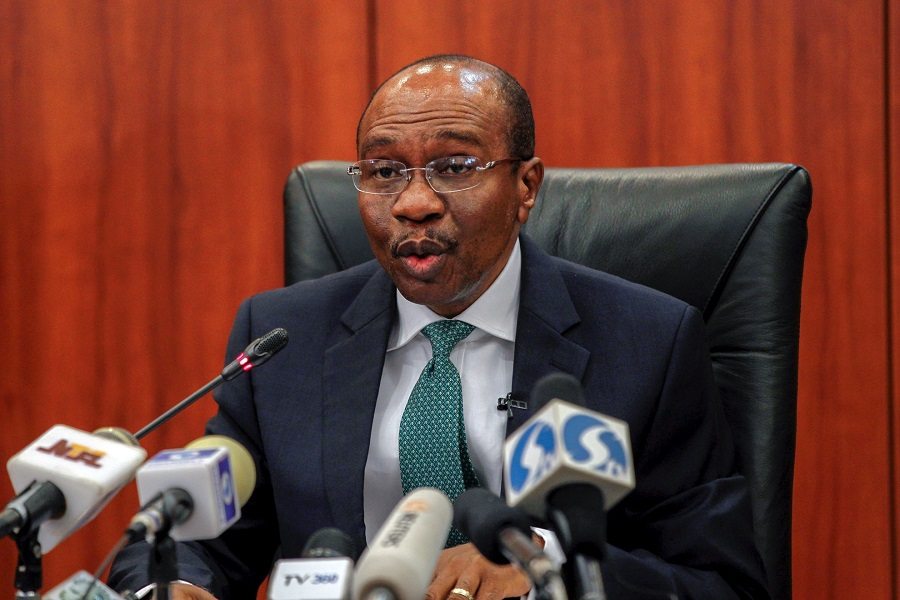
As part of its mandate to create economic linkages between farmers and processors, the Central Bank of Nigeria (CBN), says it has disbursed N55 billion to more than 250,000 farmers within two years of implementation of the Anchor Borrowers Programme (ABP).
Isaac Okorafor, Acting-Director, Corporate Communications Department, CBN, confirmed the figure on Wednesday in Abuja during a media briefing on the implementation of the programme.
The ABP was launched in Kebbi State on Nov. 17, 2015, by President Muhammadu Buhari.
It was designed to create economic linkages between farmers and processors, not only to ensure increased agricultural output of rice and wheat, but also close the gap between production and consumption.
Okorafor was accompanied to the briefing by the Special Adviser to the CBN Governor, Mr Olatunde Akande, and top executive of the Rice Farmers Association of Nigeria (RIFAN) led by its President, Alh. Aminu Gorongo.
Okorafor said that out of the N55 billion provided by the apex bank to farmers, 80 per cent of the amount, N44 billion was given to rice farmers alone.
He said the need to provide rice farmers adequate funding was to ensure self sufficiency in rice production and to also ensure that Nigeria becomes a net exporter of the product.
“It goes to underscore the effectiveness and efficiency that the CBN has put into this programme.
“We have assisted about 250,000 farmers across Nigeria to cultivate close to 300,000 hectares of farmlands and you can see the impact on the streets’’ he said.
Alh. Aminu Gorongo, RIFAN president, in his remarks, said that the association was partnering with the CBN to increase rice production by two million tonnes in 2018.
He said under the new ABP partnership between the CBN and RIFAN, 200,000 farmers would be given fresh funds to plant rice in the dry season farming.
According to him, another 500,000 rice farmers would also be mobilised during the wet season farming.
Gorongo said that through the funding, the farmers would be able to employ a total of five million people to work on rice production value chain during the period.
He said so far, farmers in about 34 states were presently under the new ABP with RIFAN.
“We have started collaboration with the CBN to have a private sector driven ABP, which means that under this new agreement, the state governments are not involved.
“We have launched this programme to put this country on the right part, especially in the area of agri-business.’’
Mr Olatunde Akande, Special Assistant to the CBN Governor on Development Finance, said the ABP had been digitized to keep account of the activities of all the farmers involved.
According to him, under the new agreement with RIFAN, each farmer’s identity, home address, farm location and other vital information has been captured and each farmer is given a biometric card.
He said the new system would help resolve the issue of delay in payments to farmers and also the recoupment of funds borrowed out by the CBN.
“We have successfully digitally mapped all the farmers that are participating in the projects. This makes the new programme reliable, accessible and verifiable.
“The digitization will ensure that no farmer will collect payment and refuse to pay. So loan repayment is guaranteed.
“Also, in the new agreement, RIFAN will provide training, and ensure that whatever is given to the farmers are well utilised.
“Depending on the season and the crop which is being cultivated, each farmer will get a support of about N250, 000 per hectare,’’ he said.


The Bank of Industry (BOI), the Implementing Agency for the Investment in Digital and Creative Enterprises (iDICE) Programme of the Federal Government of Nigeria, has announced the appointment of Kuramo Capital Management as Fund Manager of the DICE Fund of Funds.

The contract signing ceremony, held in Abuja between BOI’s Managing Director and the Chief Executive of Kuramo Capital, marks a pivotal milestone in Nigeria’s accelerating commitment to empowering its technology and creative entrepreneurs.
The DICE Fund of Funds is structured to achieve a minimum total capitalisation of $170.6 million, with the Federal Government contributing an anchor commitment of $85.3 million through the iDICE Programme. Kuramo Capital is mandated to raise matching private-sector capital on a dollar-for-dollar basis. This represents one of the largest dedicated government investments in technology and creative sector startups in African history.
An Ambitious Innovation Investment Programme
The iDICE Programme represents the Federal Government of Nigeria’s most ambitious intervention in the digital economy and creative sectors. Co-financed by the African Development Bank (AfDB), Agence Française de Développement (AFD), and the Islamic Development Bank (IsDB).
The programme was designed with a clear mandate: to promote entrepreneurship, drive innovation, create jobs at scale, and position Nigeria as Africa’s leading hub for the knowledge economy.
iDICE is implementing its investment mandate through a suite of complementary funds. In November 2025, the Programme achieved a landmark first milestone when it made Nigeria’s inaugural direct government investment into a private venture capital fund — a cornerstone commitment to Ventures Platform’s VP Pan-African Fund II, which closed at $64 million with co-investors including the International Finance Corporation (IFC), British International Investment (BII), Standard Bank of South Africa, and Proparco.
The signing of the DICE Fund of Funds contract with Kuramo Capital is the latest in a series of significant milestones being delivered across the iDICE Programme. As of June 2026, implementation is well advanced on all three programme pillars — skills and enterprise development, access to finance, and ecosystem enablement — with activities running in all six geopolitical zones.
Specifically, on skills & enterprise development, iDICE launched the iDICE Startup Bridge three months ago, with the first cohort of 185 founders well advanced in the week four of training.
Applications for Cohort 2 opened on the 24th of June 2026, and applications for the growth lab, the post-MVP track, expected to open in July 2026, offering growth-stage tech startups access to potential equity funding of up to $100,000.
The programme has commenced the setup and revamp of digital and creative hubs in 66 institutions (36 universities and 30 polytechnics) across the country in collaboration with NUC and NBTE. Hence working with the academia to link research and project outcomes to industry.
As part of the programme’s access to finance component, BOI has also rolled out the BOI/iDICE Debt Fund and & IsDB Murabaha Debt Fund. Both debt products have set aside a combined financing of $110 million for start-ups in the technology and creative sectors
The Dice Fund of Funds: Reaching Every Corner of Nigeria
The DICE Fund of Funds will invest across Nigeria’s 36 states and the Federal Capital Territory. It will deploy capital through indirect investments in selected closed-end venture capital and micro-venture capital funds focused on technology and creative sector businesses.
The Fund has a geographic mandate that ensures that capital reaches founders in the entire country, breaking the historical concentration of venture investment in a handful of urban centres.
The Fund targets a net Internal Rate of Return (IRR) of 20% and a net money multiple of 2.4x, structured with the government’s commitment as a junior tranche acting as 30% first-loss capital — a deliberate risk architecture designed to de-risk the fund structure, improve the risk-return profile for co-investors, and crowd in additional private capital.
Speaking on the Fund, Dr Olasupo Olusi, MD/CEO of the Bank of Industry had this to say – “By investing in Ventures Platform’s Fund II, and now by establishing the DICE Fund of Funds with Kuramo Capital, we are deepening the Federal Government’s objective of upscaling Nigeria’s technology and creative sectors by catalysing strategic investments in high-growth, technology-enabled enterprises.
The Bank of Industry is proud to be the executing agency driving this historic investment into the hands of Nigeria’s innovators.”.
Wale Adeosun, CEO of Kuramo Capital Management said “The DICE Fund of Funds represents a landmark moment for Africa’s venture capital ecosystem. Nigeria is demonstrating that a government can be both a serious anchor investor and a credible market-builder.
“We are honoured to be entrusted with this mandate and committed to deploying every resource at our disposal to raise the matching capital, invest wisely, and deliver returns that justify this historic confidence”.
While congratulating BOI & Kuramo Capital for this milestone on the iDICE Programme, Nigeria’s Vice President Kashim Shettima stated that “the commencement of investing by iDICE is an exciting milestone and a leap forward in the determined efforts of the Government of Nigeria, under the leadership of His Excellency President Bola Ahmed Tinubu, to deliver on our vision of unleashing the full potential of Nigeria’s young people, in line with the Renewed Hope agenda”.
Benefits for Nigeria’s Start-up Founders
For Nigeria’s technology and creative entrepreneurs, the establishment of the DICE Fund of Funds — combined with iDICE’s earlier investment in Ventures Platform $64 million Fund — represents a structural shift in the availability of early-stage capital.
The days when a Nigerian founder had to depend almost entirely on foreign venture capital, or navigate a landscape with few domestic institutional investors, are changing.
By deploying capital through both direct startup investments and established venture capital fund managers, the Fund creates multiple access pathways for founders across the entire country.

Federal Government has confirmed that it has accessed the first $1.5 billion from its $5 billion financing facility with First Abu Dhabi Bank (FAB), marking the initial drawdown from the arrangement.

The Minister of Finance and Coordinating Minister of the Economy, Mr Taiwo Oyedele, disclosed this on Monday while speaking with journalists after the Federal Executive Council (FEC) meeting in Abuja.
Oyedele said the financing package, which had previously received approval from the National Assembly, is structured to support debt refinancing, infrastructure development and budget implementation.
“The approval for that loan went to the National Assembly, so everybody is aware of it. It’s for refinancing of expensive debts, financing of infrastructure, as well as budgets,” he said.
The minister explained that the government would not be issuing separate public statements for each drawdown, noting that the arrangement is a standard financing structure.
“We don’t want to start making press releases each time we do a drawdown. It is not different from any other loan,” he added.
According to him, the facility is designed as a phased drawdown arrangement, allowing the government to access funds as needed rather than receiving the full amount at once.
He said the structure helps reduce borrowing costs, as interest is paid only on funds that have been utilised.
“The loan is meant to be a drawdown in tranches, and one of the advantages is that if you need $5 billion and take everything at once, you start paying interest even though you’re not spending all of it immediately,” Oyedele said.
He added that the approach aligns with the government’s broader debt management strategy aimed at improving efficiency in borrowing, lowering financing costs, and ensuring funds are deployed for priority projects and budgetary needs.
Reports had earlier indicated that Nigeria had begun accessing the facility through a structured financial arrangement involving First Abu Dhabi Bank.
The Federal Government said the phased utilisation would continue in line with project funding requirements and fiscal planning objectives.

Fidelity Bank Plc, leading financial institution, has reaffirmed its commitment to youth empowerment, financial inclusion and entrepreneurship through a strategic partnership with the Youth Economic Intervention and De-radicalization Programme (YEIDEP), a Federal Government-backed initiative designed to equip young Nigerians with the skills, support and opportunities required to build sustainable livelihoods.

As part of the collaboration, Fidelity Bank is supporting the enrolment of students and young people into the YEIDEP programme, which aims to address youth unemployment, promote enterprise development and expand economic participation among Nigeria’s growing youth population.
The next phase of the initiative will take place at Nnamdi Azikiwe University, Awka, where the institution has confirmed its readiness to host the enrolment exercise for students and youths across the Southeast region.
According to the Office of the Vice Chancellor, the exercise is scheduled to hold from July 1 to July 3, 2026, at the University’s Convocation Arena and is expected to target more than 60,000 regular undergraduate students.
Speaking on the partnership, Osita Ede, Divisional Head, Product Development, Fidelity Bank Plc, noted that empowering young people remains central to the bank’s vision of building a more inclusive and prosperous society.
“At Fidelity Bank, we believe that Nigeria’s greatest asset is its people, particularly its youths. Equipping young Nigerians with the right skills, opportunities and financial support is essential to unlocking their potential and accelerating national development.
“Through our digital banking platforms, financial literacy initiatives, youth-focused products and strategic partnerships, we continue to provide young people with the tools they need to succeed in an increasingly competitive world.
“We recognize that access to funding, mentorship and business development support remains a major challenge for many aspiring entrepreneurs, and we are committed to creating pathways that help them overcome these barriers”, said Ede.
The Bank added that its support for YEIDEP aligns with its longstanding commitment to empowering Micro, Small and Medium Enterprises, which remain critical drivers of economic growth and job creation in Nigeria.
Interested youths and students are encouraged to open accounts and register through the dedicated Fidelity Bank portal at https://eserve.fidelitybank.ng/oap/?youth=true.

Lebara Nigeria Becomes Member of GSMA Network

FG to Abolish JSS-SSS Separation Policy after 20m Pupils Drop Out

Vitel Wireless Warns Public, Says it Not Running any Investment Scheme

Army Says Terrorists Now Recruiting, Raising Funds Online

FG Mulls National Skills Database to Tackle Unemployment

Mobile Internet Gender Gap Widest in Africa – GSMA

London Strengthens Global Investment Ties with Africa @ First Ever London-Africa Business Summit

FG Targets Alleged N3tn Capital Flight, Opens Airtime Credit Market to Nigerian Fintechs

Japan, UNESCO Boost Digital Learning in 15 CoEs with Donation of ICT Equipment

Good News for DStv Users: Watch over 160 Channels Without Paying Extra




 E-Business2 days ago
LG Showcases AI-Powered Smart Living Innovations @ Africa Technology Expo 2026

 E-Financial2 days ago
UBA mobilises employees across Africa for environmental clean-up, wellness campaign

 Telecom2 days ago
OADC Reaffirms Abundant Capacity in Data Centres in Nigeria to Host Financial Data

 General News2 days ago
LASTMA Launches 3367 Toll-Free Hotline for Emergency Response, Traffic Management

 E-Financial2 days ago
PalmPay Calls for Trust, Infrastructure and Responsible AI to Drive Payment Ecosystem Innovation

 E-Business2 days ago
Want a Business Loan Without Interest? SMEDAN Launches N500m Fund

 Telecom2 days ago
ALTON Backs NCC’s Local Smartphone Manufacturing Drive to Widen Digital Access

 E-Financial2 days ago
ngCERT Raises Alarm over Surge in Banks’ ATM Cyberattacks