

E-Financial
CBN Opens Black Book for Bad Debtors

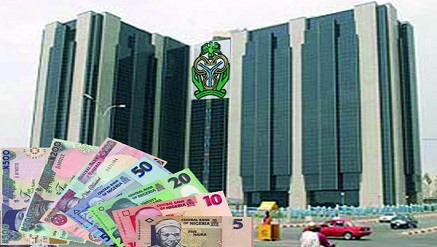
Central Bank of Nigeria (CBN) has opened a black book for serial defaulters in a new zero tolerance regime against bad debtors in the nation’s financial system.
The apex bank is to also publish names of such blacklisted borrowers, with a view to preventing them from accessing loans from any Nigerian bank again.
Under the plan, even borrowers of less than N5 million who have defaulted in repayment would be barred from further enjoying fresh credit.
Also, banks would not be disposed to financing new investments in the power sector, but rather, concentrate on the existing businesses to ensure that the investors attain their full capacity installations.
These were some of the new rules rolled out by the new Governor of CBN, Godwin Emefiele, at his inaugural meeting with chief executives of money deposit banks, under the aegis of Bankers’ Committee, yesterday in Abuja.
Consequent upon this plan, a black book containing names of banks’ bad debtors in the country would be opened immediately to blacklist defaulters from further obtaining bank loans in the country. The initiative will be assisted with the ongoing banks’ biometric capturing exercise, which pilot exercise ended at the weekend, where over 10000 bank customers were registered.
The new rules were disclosed yesterday by Mrs. Tokunbo Martins, director of Banking Supervision of the CBN , at a briefing after the Bankers’ Committee meeting.
She was accompanied by Phillips Odouza, GMD, UBA; Segun Agbaje, GTB; and Ladi Balogun, FCMB,
Martins said that “Blacklisting of debtors is something that we have to do gradually. You remember that in 2012, we issued a circular, blacklisting borrowers of N5 million and above from banks and those loans went bad and ended up in AMCON and they were blacklisted.
“What we are doing right now is that we are moving that threshold down, we are working out the modality. It is something that will be concluded very soon and then the industry will know. In fact, the entire country will know those that are no longer entitled to borrow from banks, because they have defaulted in some loans in the past,” she said.
With the publications of their names, the apex bank Director of Banking Supervision said the CBN would make sure that any of the serial and fraudulent borrowers was prevented from borrowing again from any Nigerian bank.
On macro economic stability, which was one of the issues discussed at the meeting, the bank chiefs observed that the new CBN governor was committed to price and exchange rate stability.
The committee, observing that though the interest rate was most desirable at present, however, said the new CBN, under Mr Godwin Emefiele, was working towards bringing interest rate down, a task it observed would be gradual.
In the area of development banking, the bankers’ committee said the new CBN would focus attention on agriculture, small and medium scale enterprises and power.
Rather than supporting the establishment of new power plant, the committee said it would focus on the existing power plants and ensure they performed to installed capacity.
The bankers’ committee also announced that over 10,000 bank customers had been enrolled in the first phase of biometric exercise, which came to an end last week.
The committee also disclosed that many bank customers were no longer coming to transact businesses in the banking halls, with their migration to e-platform.
However, the committee stated that the number of banking public, still under 30 million, was low, compared to the number of telephone subscribers, whom they described as potential bank customers.
“We have a means of identification of customers. So far, about 10,000 customers have been enrolled and we have continued to make progress.
“The pilot phase was actually concluded last Friday and the roll out for customers started yesterday (Monday). We believe that it’s going to assist the economy.
“It is going to assist us in consumer lending, to provide credit availability to people that have not been included in the banking system,” the committee stated.



Central Bank of Nigeria (CBN) has directed banks and other financial institutions to complete a newly deployed cybersecurity self-assessment tool (CSAT) as part of efforts to strengthen resilience across the financial system.

In a circular dated March 30, the apex bank said the tool was introduced in line with its mandate under the Banks and Other Financial Institutions Act 2020 and is designed to assess the cybersecurity posture of regulated entities.
According to the circular signed by Olubunmi Ayodele-Oni for the director of the compliance department, deposit money banks are required to submit their completed assessments within three weeks, while other institutions have five weeks.
The directive, which takes immediate effect, applies to deposit money banks, payment service banks, microfinance banks, payment service providers, finance companies, and development finance institutions.
“The CSAT is a structured supervisory instrument designed to obtain comprehensive information on the cybersecurity posture of regulated institutions,” the circular reads.
“It covers key areas including cybersecurity governance, risk management practices, technology and third-party risk controls, incident response capabilities, and overall operational resilience.
“Insights derived from the CSAT will support risk-based supervision and enhance regulatory oversight of cybersecurity risks across the financial system.
“Accordingly, all the referenced institutions are required to complete and submit the CSAT through a dedicated submission portal.”
The regulator added that access to the submission portal and guidance would be provided to chief information security officers and other relevant officials of the affected institutions.
CBN said all submissions must reflect data as of December 31, 2025, and be accompanied by relevant supporting documentation where applicable.
The apex bank warned that “submission of false, misleading, or inaccurate information constitutes a regulatory breach,” and would attract sanctions in line with BOFIA 2020.
CBN also said validation exercises, including off-site reviews and supervisory engagements, would be conducted to verify the accuracy of submissions.

NGX Regulation Limited (NGX REGCO), a wholly owned subsidiary of Nigerian Exchange Group (NGX Group) has sanctioned five trading license holders for alleged market manipulation and other prohibited trading activities, imposing fines totaling N291million.

In a notification dated March 27, 2026, and addressed to Emomotimi Agama, director-general of the Securities and Exchange Commission (SEC), the regulator said the decision followed deliberations of its Regulatory and New Business Committee (RNBC) held on March 16 and 24, 2026.
The sanctioned firms are CSL Stockbrokers Limited, Cowry Securities Limited, Meristem Stockbrokers Limited, SMADAC Securities Limited, and Associated Asset Managers Limited.
NGX RegCo stated that the cases were escalated by its Investigation Panel after hearings on February 25 and March 17, 2026, which uncovered repeated infractions such as wash trades, self-matching transactions, artificial price formation, and misleading market activity.
CSL Stockbrokers was fined N91.29 million, while Cowry Securities, Meristem Stockbrokers, SMADAC Securities, and Associated Asset Managers were each penalized N50 million in accordance with the Investment and Securities Act 2025.
The Exchange also directed the affected firms to undertake mandatory compliance and market conduct training to reinforce regulatory adherence and enhance market discipline.
It noted that the sanctions are proportionate to the violations and are intended to deter future misconduct, reaffirming its commitment to safeguarding market integrity, protecting investors, and strengthening confidence in Nigeria’s capital market.

Federal government has launched the “Cross-Border Digital Payments and Identity in Nigeria under the AfCFTA” report, urging stakeholders to unlock trade opportunities for Micro, Small and Medium Enterprises (MSMEs) to access the $3.5 trillion African Continental Free Trade Area (AfCFTA) market.

The high-level report, hosted by the Office of the Vice President in collaboration with ODI Global under the Supporting Investment and Trade in Africa (SITA) programme, was unveiled by Ibrahim Hassan-Hadejia, deputy chief of staff to the President, in Abuja.
Hassan-Hadejia described the research as both timely and strategic, noting the strong coordination by the Office of the Vice President and the leadership of the Federal Ministry of Industry, Trade and Investment.
He revealed that the cross-border payments report followed earlier milestones, including the development and launch of Nigeria’s Digital Trade Strategy and a capacity-building programme for subnational leaders.
Furthermore, he said Nigeria is increasingly assuming a leading role in shaping the digital trade agenda across the African continent, necessitating that the country remains at the forefront of AfCFTA implementation.
He noted that deepening engagement with AfCFTA and enabling businesses, particularly SMEs, to conduct seamless cross-border transactions will be critical to unlocking trade, fostering growth, and creating jobs.
He further stated that efficient cross-border payments, supported by trusted digital identity systems as recommended in the report, will be key to realising President Bola Ahmed Tinubu’s Renewed Hope vision for Nigerian MSMEs.
The Deputy Chief of Staff also observed that while the report identifies the Pan-African Payment and Settlement System as a critical platform for cross-border digital payments, Nigerian fintech firms such as PalmPay and Moniepoint, which have some of the largest and most active user bases, will play a pivotal role in driving adoption.
He assured that the Federal Government remains committed to strengthening critical infrastructure, regulatory frameworks, and partnerships to ensure Nigeria is not only ready for digital trade but continues to lead.
“I appreciate the efforts of all stakeholders and urge us to move AfCFTA beyond a continental agreement to a $3.5 trillion trade juggernaut that will reinvigorate our industries, unlock intra-African trade, and domesticate African prosperity,” he added.
He said “intra-African trade will be driven not only by large corporations but by small businesses empowered through digital trade and e-commerce, while noting that issues of trust, identity, and logistics, as highlighted in the report, must be addressed”.
Commenting on the report, Temitola Adekunle-Johnson, special Adviser to the President on Job Creation and MSMEs, said the report – developed under the purview of the Office of the Vice President-would significantly strengthen the MSME ecosystem.
He expressed optimism that the report’s findings and recommendations would enable Nigerian SMEs to achieve seamless access to continental markets.
Salihu Dasuki, special Assistant to the President on ICT Policy, Office of the Vice President, disclosed that the office, in partnership with development partners, has developed a framework to fast-track seamless cross-border payments for MSMEs.
He added that “a key pillar of President Tinubu’s Renewed Hope Agenda is enabling Nigerians to access digital trade, which informed the capacity-building programme conducted for subnational governments last year”.
Shuda Ahmed, special assistant to the President on Project Support, Office of the Vice President, commended ODI Global for leading the research underpinning the report.
She noted that without seamless and affordable cross-border payment systems, MSMEs across the continent would be unable to scale beyond their domestic markets.
The event was attended by officials of ODI Global, representatives of AfCFTA, the National Information Technology Development Agency (NITDA), National Identity Management Commission (NIMC), Nigerian Petroleum Development Company (NPDC), Federal Competition and Consumer Protection Commission (FCCPC), and MSMEs, among other key stakeholders.

How Recycled SIM Card Linked to N50m Kidnapping Nearly Landed me in Jail – Businesswoman

Senate Gives Tinubu Nod to Borrow Fresh $6Bn

FG Earmarks $2Bn to Launch 2 Satellites in 2028, 2029

CBN Directs Banks, Fintechs to Complete Cybersecurity Audit Tool

FG Launches CLHEEAN to Streamline Access to Government Services

Spotify’s Loud & Clear Report Reveals Over ₦60Bn Revenue for Nigerian Artists in 2025

Madonna University Taps Tech Guru Adote for Strategic Board Role

China Threatens to Shut Nigeria’s Satellite Over $11.44m Unpaid Debt

Jumia Tech Week 2026 Begins with Tech Deals on Smartphones, Electronics, and Everyday Technology

FCCPC Bans Lagos ‘No Refund’ Policy, Vows Fines and Shutdowns for Traders




 E-Financial2 days ago
CBN bars large‑ticket loan defaulters from banking services in tough new crackdown

 General News2 days ago
ARN Rejects Medical Bill over Attempt to ‘Scrap’ Profession

 Telecom2 days ago
NIGCOMSAT Supports Startups Growth with the Launch of Accelerator 3.0

 News2 days ago
Meningitis Kills a Quarter Million People a Year -Study

 Telecom2 days ago
FG Unveils Digital Economy Research Fund Scheme

 News2 days ago
Stakeholder says AI is Crucial to Nigerian Data Centres Amid Persistent Grid Collapse
- General News2 days ago
Nigeria Advances Digital Governance as NITDA takes over NGEA Portal

 General News2 days ago
Zarttech Reflects on Its Role in Changing Global Perceptions of Africa