

News
CFA’s Startups Hangout Holds Friday


The July 2017 edition of CFA’s Startups Hangout will come up this Friday, July 14, 2017 by 5:00pm at Adna Hotel, GRA, Ikeja Lagos.
The hangout will have in attendance, for the July 2017 edition, two outstanding Entrepreneurs in the tech ecosystem and they will be downloading the experiences they encountered while growing, and still growing their businesses.
They are Bolaji Finnih, CEO, TechPreneur Africa and Ommo Clark, CEO, iBez Solutions.
Past editions of the hangout had featured prominent successful Nigerian Entrepreneurs, such as Nadu Denloye, PhD, Co-Founder of Telnet and Director, CDNet, Deepankar Rustagi, the Co-founder, VConnect.com, Adeoye Abodunrin, ED, Xpos Technologies, Simeon Ononobi, Co-Founder, MyAdsGlobal, Helen Anatogu, CEO and Founder, iDea Nigeria, and Yele Okeremi Founder of Precise Financial Systems and others.
The CFA’s Startups Hangout, no doubt, serves as a free strategic avenue for Startups to meet and learn from successful Entrepreneurs that grace each edition of the Startups Hangout, through various nuggets that will assist them to grow their various Startups as well as network and synergize among one another.
The July Edition of the CFA’s Startups Hangout will be sponsored by Adna Hotel Limited, TAMS, DCHub, NiRA (.NG), and TechPreneur Africa.
“We look forward to the active support of more brands for the future Monthly Editions of this selfless mission to help many Nigerian Startups to learn, grow and sustain their businesses for the development of the Nigerian Entrepreneurial ecosystem in particular and the Nigerian economy in general.
“We also thank our media partners for the CFA’s Startups Hangout, Guardian Tech, Nigeria CommunicationsWeek, Connectnigeria.com, ITPulse.com.ng and CFAtech.ng, for the unprecedented support they have been giving us in propagating the activities of the Hangout”, Chukwuemeka Fred Agbata (CFA) said on Monday.
The July 2017 Edition of CFA’s Startups Hangout will hold on July 14, 2017 at Adna Hotel, Ikeja GRA, Lagos and registration is compulsory for every Startup that will be attending.
Please, visit https://startups.cfatech.ng/ to register for your seat reservation at the event.
CFA is the Founder, www.CFAtech.ng & Co-producer/Presenter,Tech Trends on Channels Television



Dangote Petroleum Refinery and Petrochemicals (DPRP) has debunked recent circulation of unauthorised information regarding a potential Initial Public Offering (IPO).

In a statement, DPRP noted that several online platforms and unofficial sources have published unverified, and in some instances inaccurate, information relating to a potential offering.
“Such reports do not originate from DPRP and should be treated with caution. All official updates regarding any potential transaction will be communicated strictly through DPRP’s formal public disclosures and announcements issued by its appointed advisers, in line with applicable laws and regulatory requirements.
“Accordingly, the public, investors, and all market participants are strongly advised to disregard speculative commentary and rely solely on verified information formally issued by DPRP or its authorised representatives,” the statement said.
The firm assured stakeholders that, when appropriate, comprehensive, and accurate details regarding any proposed transaction will be made available through official channels, including regulatory filings, authorised press releases, and coordinated communications by the Enterprise and its appointed advisers.
News
Descasio Launches “Give to Gain” Leadership Insights Report, Hosts Executive Brunch for Women in Leadership

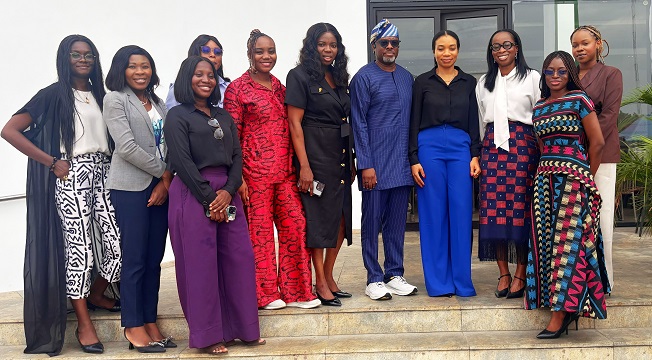
In celebration of International Women’s Day, Descasio hosted an intimate executive brunch bringing together distinguished women leaders from its customer community for a thoughtful conversation on leadership, partnership, and shared growth.

Centered around the 2026 International Women’s Day theme, “Give to Gain,” the gathering created space for accomplished women in enterprise leadership to reflect on mentorship, collaboration, and investing in people as key drivers of sustainable growth.
Held in Lagos, the event convened leaders from organizations including Honeywell Group Limited, Finchglow Travels, NGCOM, and Eroton Exploration & Production Company.
Guests were personally welcomed at the start of the gathering by Mr. Dele Nedd, CEO of Descasio; who greeted each of the women leaders and expressed his appreciation for their presence before leaving the session to allow the women lead the conversation among themselves.
The gesture reflected Descasio’s leadership culture; one where women are not only recognized, but actively supported and empowered. It also underscored the company’s belief that meaningful progress in leadership requires partnership and allyship across the organization.
Rather than a traditional panel discussion, the brunch was designed as a candid and reflective exchange among peers navigating leadership in complex industries. Throughout the conversation, participants shared perspectives shaped by experience, responsibility, and the realities of leading teams and organizations.
A recurring theme in the discussion was the role of execution and accountability in leadership. For many organizations, strategy alone is not enough; consistent delivery is what ultimately builds credibility and trust.
Reflecting on this, Josephine Adebola, Data Compliance & Process Automation Manager at Finchglow Travels, emphasized the importance of reliability in leadership and the discipline required to translate vision into results. “Get it done on time and in full.”
The conversation also explored the role of curiosity and continuous learning in shaping effective leaders. In rapidly evolving industries, the ability to ask questions, remain open to new perspectives, and keep learning is often what enables leaders to grow alongside their organizations.
Sharing her perspective, Tomi Otudeko, Chief Operating Officer at Honeywell Group Limited, reflected on how curiosity has shaped her leadership journey.
“Asking questions and continuously learning have always stood me in good stead as a leader.”
She also spoke about the importance of leading with empathy and understanding the people behind the roles within organizations.
“Everyone has multiple dimensions to who they are. Leadership has taught me to see people in their totality. That awareness doesn’t make a leader weak; it makes them more effective.”
Another important theme that emerged from the conversation was authenticity in leadership. In an environment where leaders often face pressure to conform to traditional expectations, remaining true to one’s identity while continuing to evolve is essential.
For Helen James-Eziashi, General Manager at NGCOM, authenticity and curiosity remain key guiding principles. “Be yourself, keep learning, and stay curious.”
The discussion also highlighted the role of self-awareness in sustaining leadership journeys, particularly in complex and high-responsibility environments. Understanding one’s values, motivations, and support systems often becomes the anchor that allows leaders to navigate uncertainty with confidence.
Reflecting on this, Ifeanyi Onyejekwe, IT Manager at Eroton, emphasized the importance of knowing what grounds a leader.
“Know who you are and understand what supports and sustains your leadership journey.”
According to Descasio, the event reflects its broader commitment to building strong partnerships and fostering meaningful leadership conversations across its enterprise customer community.
“For us, this was about more than marking International Women’s Day,” said Umama David-Ogebe, The HR Manager at Descasio. “It was about creating a space where leaders could learn from one another and reflect on the kind of leadership that builds strong organizations. The most meaningful partnerships grow from conversations like these.”
To extend the impact of the discussion, Descasio has published “The Give to Gain Leadership Report: Insights from Women Leading Enterprise Organizations,” a curated publication capturing key reflections and leadership lessons shared during the session.
The report highlights themes including:
- The role of curiosity and continuous learning in leadership
• Building stronger teams through empathy and accountability
• The importance of authenticity and self-awareness in navigating leadership journeys
• How investing in people drives stronger partnerships and resilient organizations
The Give to Gain Leadership Report is now available for download Here.
Ahead of World Backup Day, Kaspersky reveals the most popular ways to store important data and gives practical advice on how to keep it safe. Global research shows that zoomers and millennials keep nearly everything electronically, while almost one‑in‑three respondents over 55 y. o. still prefer good old‑fashioned paper.

Where do we store what matters?
Research* conducted by Kaspersky’s Market Research center shows that most people prefer to keep important info stored digitally.The majority of all respondents (84%) claim they store sensitive personal data like ID, financial details, healthcare related info or photo archive in electronic format.
When it comes to digital data storage, more than half (56%) say they keep their important records on a computer or a hard drive, 45% use cloud solutions and 20% entrust their data to government digital services.
Does digital mean safer?
Each storage method has its own advantages and limitations. Physical media can be lost or suffer damage, external hard drives are not always convenient to use on the go and cloud services, while being accessible, are vulnerable to unauthorised access. To maximise digital data security, Kaspersky experts advise adhering to the following best‑practice recommendations:
- Develop a backup strategy
There is no universal approach to data storage, nor is it necessary to back up every single file. Nonetheless, cultivating a regular backup routine is strongly recommended, particularly for sensitive data or files that cannot be regenerated or recovered through other means.
According to the popular 3-2-1 backup strategy you should have at least three copies of important data, store it on two different storage types, and make at least one copy off-side (cloud or external physical location).
The most sensitive data like passwords, ID or financial details requires special attention. Use a dedicated security solution like Kaspersky password manager, which apart from securely keeping users’ credentials and bank cards, has a special secret vault functionality aimed at storing important documents, for example, scanned Passports/IDs and PDF files, addresses and notes.
- Protect your vaults
According to Kaspersky’s data, 98% of all respondents take at least some measures to protect their personal data storages, which is a good sign. However, 36% of respondents use quick-to-remember passwords to safeguard their personal data.
Relying solely on simple passwords leaves your digital vaults vulnerable to brute‑force attacks. That’s why experts recommend enabling two‑factor authentication (2FA) wherever it is available or adopting passkey technology. Passkeys can be stored securely in a password manager and accessed seamlessly from any authorised device.
- Set up automatic backups where possible
Continuously remembering to perform backups can be cumbersome. To streamline the process, enable the built‑in backup service on every device you use (e.g., iCloud for iPhone/iPad/Mac, Google Drive/OneDrive for Android/Windows).
Test it once a month or two by restoring a single file, just to be sure the backup works. Kaspersky Premium allows users to make regular backups and restore information on Windows devices. Backup copies of data can be easily saved on removable drives or in cloud storage in an encrypted format.
“We all know backups are important, but most of us never do them because we try to back up everything at once and it gets overwhelming. The smarter approach? Treat backup like any other workflow. Tag your files – critical, important, low‑priority.
Automate real‑time backups for the critical stuff, schedule weekly or monthly backups for the rest. And for sensitive data like passwords and IDs, use our dedicated solution with a secret vault to keep it secure. When you automate and prioritise, you protect what really matters without getting overloaded,” comments Marina Titova, Vice President for Consumer Business in Kaspersky.
The study was conducted by Kaspersky’s market research center in November 2025. 3000 respondents from 15 countries (Argentina, Chile, China, Germany, India, Indonesia, Italy, Malaysia, Mexico, Saudi Arabia, South Africa, Spain, Turkey, UK, United Arab Emirates) took part in the survey.

EFCC Waxes Worriedly over $160Bn Crypto Crime Losses

Dangote Refinery Debunks Speculations on IPO

FG Awards N50m Each to 45 Students under S-VCG

NGX REGCO Fines 5 Firms N291m for Market Manipulation

FG Launches Cross-Border Digital Payments Report

Spotify’s Loud & Clear Report Reveals Over ₦60Bn Revenue for Nigerian Artists in 2025

Madonna University Taps Tech Guru Adote for Strategic Board Role

China Threatens to Shut Nigeria’s Satellite Over $11.44m Unpaid Debt

Jumia Tech Week 2026 Begins with Tech Deals on Smartphones, Electronics, and Everyday Technology

FCCPC Bans Lagos ‘No Refund’ Policy, Vows Fines and Shutdowns for Traders



 General News3 days ago
Anti Graft Agencies Raise Alarm over Rising Crypto-Linked Financial Crimes

 E-Business3 days ago
NITDA Takes Over National Digital Architecture System

 E-Financial1 day ago
CBN bars large‑ticket loan defaulters from banking services in tough new crackdown

 General News1 day ago
ARN Rejects Medical Bill over Attempt to ‘Scrap’ Profession

 Telecom1 day ago
NIGCOMSAT Supports Startups Growth with the Launch of Accelerator 3.0

 News1 day ago
Stakeholder says AI is Crucial to Nigerian Data Centres Amid Persistent Grid Collapse

 Telecom1 day ago
FG Unveils Digital Economy Research Fund Scheme

 News1 day ago
Meningitis Kills a Quarter Million People a Year -Study