

Telecom
Challenges of Last mile Infrastructure in Service Delivery


One of the major obstacles to Telecommunications service delivery in the country is absence of last mile infrastructure required to deliver services to consumers of these services at their respective homes and offices.
Last mile infrastructure is that transmission infrastructure telecommunications operators used to deliver services to potential subscribers at their domains. Basically, infrastructure required in this regard includes optic fibre and microwave.
The need for effective transmission infrastructure especially fibre optic which is seen as being reliable become necessary in view of developments in the industry, which is geared towards improving quality of service as well as reduces cost of services to operators and subscribers. For instance, operators have before now relied heavily on satellite communications for their bandwidth requirement as against undersea cable because of unreliability of Sat-3 which then was the only in its category, but, now there are several alternative especially in the undersea cable, where we have Glo 1 and MainOne cable and awaited West Africa Cable System (WACS). The coming of these two telecommunications infrastructure has to a great deal drive down cost of bandwidth. Nigeria CommunicationsWeek investigation revealed that one mega byte per second bandwidth sold for $800 now goes for as low as $300 which is more than 100% reduction. This reduction can only be enjoyed by subscribers of telecommunications services if the needed infrastructure to deliver services to end users are available, in this case last mile fibre optics. But it is not readily available. Nigeria CommunicationsWeek gathered that all undersea cable infrastructure lands at the shores of Lagos and need to extend to different operators’ network switches and to transport this infrastructure from Lagos Island to Mainland area of Lagos will cost an operator $600 per one mega byte if it is to lease fibre optic from another operator that has it.
More so, the absence of this facility forced them to largely adopt microwave and satellite technology, few years ago, over 80 percent of telephone access in the country was rendered through satellite technology. Experts have noted that quality of service delivered using microwave technology is often times affected by atmospheric condition, making the technology not suitable for reliable service delivery compared to fibre optic cable also known as terrestrial infrastructure. But today, this scenario is fast changing as operators are now deploying fibre optic transmission network to improve on their service quality. But more work is still needed in this regard.
A fibre optic cable is made from a glass cladding that (due to its lower refractive index) reflects ‘escaping’ light back into the core, resulting in the light being guided along the fibre.
Currently, the growth and potential earning accruable from telecommunications services in Nigeria economy is comparable to other markets in the world, and the current rate of network growth across the country is impressive.
Quite a number of global technology corporations are extending their operations to Nigeria with multiplier effect on the economy, and international trade between us and other countries of the world.
However, it is encouraging to note that despite the rapid growth of telecommunications in the country, there is still a great opportunity for further growth and even development, as Nigeria being the most populous country in Africa, has an estimated addressable telecommunications market of 100 million subscribers presently. In view of the country’s landscape, she remains major market for long distance network operators due to increasing demand for multi-service, such as voice, data, video as well as rural telephony access.
Experience has shown that in order for predominantly mobile operators to improve on their quality of service, as well as capture multi-service segment of the market, they must invest in fibre optic backbone.
Efforts in this regard
The absence of terrestrial infrastructure in the telecommunication industry is being felt in all service deliveries. For instance, in direct-to-home satellite television broadcasting, it is a common occurrence for service to be disrupted each time it rains, more so, the hope of offering broadband internet service cannot be realized without a fibre optic infrastructure, its absence is responsible for the narrow band services rendered by operators in the sector.
It is against this backdrop that telecommunications giant; Globacom initiated its fibre optic ring project across the country. So far, it has completed Abuja to Kano, Minna, Enugu, Owerri, Uyo among others even as works on the last link between Lagos and Benin has reached advance stage.
Nigeria Telecommunications Limited (Nitel) has fibre optic ring that is not being used probably because of the monopolistic tendencies of the moribund company, which resulted in the federal government parastatal’s refusal to lease out the infrastructure to GSM operators that requested for it during their early roll out plan.
This however led to them embarking on similar project. MTN in order to meet the growing high-capacity transport and connectivity needs of the industry has almost completed a world-class quality Metropolitan Area Fibre Networks in Ibadan, Kano, Warri, and Aba. When completed, it will support anticipated voice, data and video growth in these cities by providing superior transmission capacity, reliability, robustness and quality service. This is in addition to 3,885km of fibre optic backbone networks popularly referred to as ‘Blaze’ network. Blaze was implemented in four phases, namely: Phases 1 and 2 southern and eastern rings with a total of 2,422km. Phase 3, Northern ring with a total span of 1,116km, Phase 4 Niger Delta with a total span of 347km. MTN is leveraging on this infrastructure to provide connectivity of some commercial banks as well as Central Bank of Nigeria.
Zain is not left out in this effort to improve service through effective transmission infrastructure of fibre optic. The company having taken delivery of its first fibre optic project 4,000km from Nokia Siemans has awarded another contract to the same company for the expansion of its existing 4,000km nationwide fiber backbone network by a further 6,000km.
Zain Nigeria, explained that the aim of the project is to create wide capacity for Nigeria’s growing number of customers demanding high quality broadband services by deploying self owned fiber.
Zain awarded the original project in November 2007, but Nokia Siemens Networks speed up the project’s preliminary deadline of June 2009, and completed Phase 1 of the project by end February. This phase 2 of the project has been completed.
In essence, Nigeria will begin to witness emergence of an improved and unlimited telecom services, massive expansion of networks and benefits or their existing market goodwill, and a significant increase in the demand for multi-service.
The market will begin to offer bundled services, as costs come down. The competition between wireless and wired line services would begin to grow.
Impact
Gbenga Adebayo, chief executive officer, Communications Network support service, said that aside improved transmission of voice call, data and video occasion by the expansion of fibre optic by telcos, there will be emergence of wired services. He said wired line services offer multi-service at very affordable rate without compromise on quality. According to him, the fixed nature of the service of wired line, provide for a long tern relationship between operators of the service and their customer. He said that, market research has shown that in the urban areas, a large number of residential customers have a higher retention of their fixed lines with better quality than mobile services.
Deolu Ogunbanjo, president of National Association of Telecommunications subscribers of Nigeria (Natcomms) said that transmission of telecommunication services via microwave contributes to poor quality of service being experienced by subscribers of telecom services, and that with a shift to more effective transmission by fibre optic backbone, Nigeria subscribers will begin to witness unmatched service delivery especially in video, and data service.
It is a known fact that challenges for wired network operators in the country range from the difficulty in infrastructure deployment, right of way approval processes, and unwillingness of operators to co-share ducts among others. But as these are gradually being addressed through the growing of national fibre optic transmission backbone, Nigerians are expecting the emergence of wired line services as telecommunications development is moving to the next level of value added which ultimately required bandwidth.


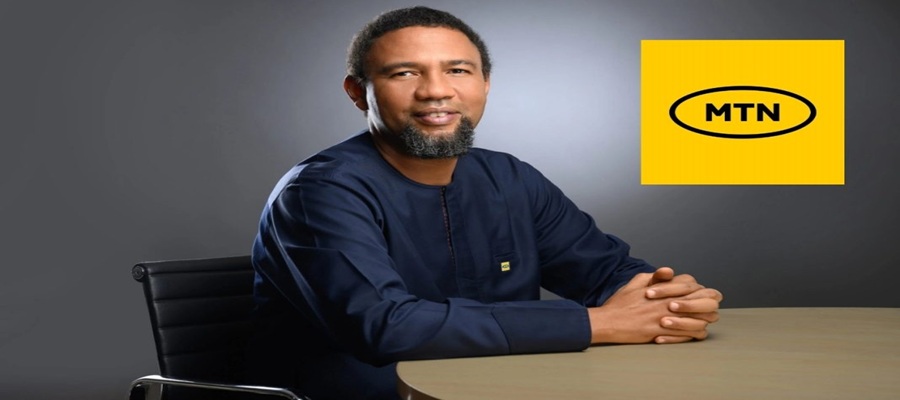
MTN Nigeria has raised the bar for corporate disclosure in Africa after publishing its 2025 sustainability report in full compliance with International Financial Reporting Standards S1 and S2.

Dr. Karl Toriola, CEO of MTN Nigeria,
The report, independently assured by Ernst & Young, marks the telecom operator’s seventh consecutive annual sustainability publication and third year as an early adopter of the global framework ahead of its mandatory implementation.
Dr. Karl Toriola, CEO of MTN Nigeria, said, “strong governance and ethical conduct are foundational to our sustainability strategy. We reinforced compliance through our Conduct Passport Framework and robust internal controls.”
He added that “in May 2025, we became the first telecommunications company in Nigeria to publicly present a sustainability report on the Nigerian Exchange Group platform, an important milestone in our commitment to IFRS S1 and S2- aligned disclosure and accountability.”
The company also secured Carbon Disclosure Project ratings of ‘B-’ for climate change and ‘C’ for water security.
Under the IFRS S2 framework, the telecoms operator disclosed climate-related risks linked to flooding, heat stress, regulatory changes and possible future taxes or charges on carbon emissions, following a climate scenario analysis completed in 2024.
The report also showed that MTN Nigeria now uses a digital reporting format – XBRL. This makes its sustainability and governance data easier for investors and ESG rating agencies to access and analyse through automated systems.
The Company also carried out assessments to understand how sustainability issues affect both its business operations and society at large, while measuring its overall economic, environmental and social impact from 2021 to 2024.
In addition, over one-third of MTN Nigeria’s biggest suppliers (based on spending) have committed to supporting the company’s net-zero emissions goals, although these commitments have not yet gone through an independent audit or verification process.

National Agency for Science and Engineering Infrastructure (NASENI) has signed a Memorandum of Understanding (MoU) with the Rural Electrification Agency (REA) to promote locally manufactured renewable energy technologies under the Federal Government’s ‘Nigeria First Policy’.

L-R: EVC/CEO, National Agency for Science and Engineering Infrastructure, Mr. Khalil Suleiman Halilu; Director-General of the Bureau of Public Procurement (BPP), Dr. Adebowale Abraham Adedokun; and Dr. Abba Abubakar Aliyu, Managing Director and Chief Executive Officer of the Rural Electrification Agency (REA), at the signing of the MoU on implementation of Nigeria First Policy for offtake of NSSENI’s renewable energy products for rural electrification projects held on Friday, June 19, 2026 at BPP’s office in Abuja.
The agreement signing was facilitated by the Director-General of the Bureau of Public Procurement (BPP), Dr. Adebowale Abraham Adedokun at the BPP headquarters in Abuja on Friday, June 19, 2026.
Speaking at the event, the Executive Vice Chairman/CEO of NASENI, Mr. Khalil Suleiman Halilu, said the Agency is focused on linking research, production, and commercialization to ensure that innovations are translated into market-ready products.
He said “NASENI would scale up renewable energy production, including solar panels and streetlights, through initiatives such as DefFrontier, to strengthen local manufacturing and reduce import dependence, adding that the Agency will meet the renewable energy requirements of REA.”
Instead of continuous importation of technologies, machines and equipment for producing renewable energy solutions, NASENI by this MoU will be committed to local manufacturing and domestication of the technologies, equipment and other ways and means of proliferation of renewable resource in the country and to increase the nation’s off-grid energy solutions.
The Managing Director/CEO of REA, Dr. Abba Abubakar Aliyu, described the relationship with NASENI as a strategic partnership aimed at building Nigeria’s renewable energy ecosystem through local production and deployment.
He stated that “while NASENI provides the manufacturing and technological capacity for renewable equipment, REA will focus on deploying solutions to expand electricity across rural areas.”
Meanwhile, the Director-General of BPP, Dr. Adebowale Abraham Adedokun, said the Nigeria First Policy, exemplified by this agreement, is aimed at strengthening local content, ensuring value for money, and promoting accountability in public procurement.
He emphasized that implementation of the agreement will be performance-based, with strict monitoring to ensure compliance and measurable outcome. He added that the MoU is expected to deepen collaboration between NASENI and REA in expanding renewable energy and reducing dependence on imported technologies.
The MoU will be implemented through NASENI’s subsidiary company, NASENI Devfrontier Green Energy FZE and REA limited liability company, RAMco.The two Federal Government agencies seek to establish a strategic collaboration under which REA shall offtake PV modules, inverters, energy storage batteries of NASENI-Devfrontier Green Energy FZE directly or through its approved distribution companies/assembly and manufacturing factory.
As part of the agreement, REA shall provide institutional visibility to enable NASENI participate in electrification projects; facilitate opportunities for engagements between NASENI and eligible developers/contractors under REA programs; ensure that such facilitation is consistent with applicable procurement, local content, and transparency requirements; and also collaborate with NASENI in promoting standardized, high-quality PV technologies across its programme portfolio.
Telecom
TikTok, ICC Gather Nigeria’s Entrepreneurs to Drive Small Business Growth and Digital Transformation

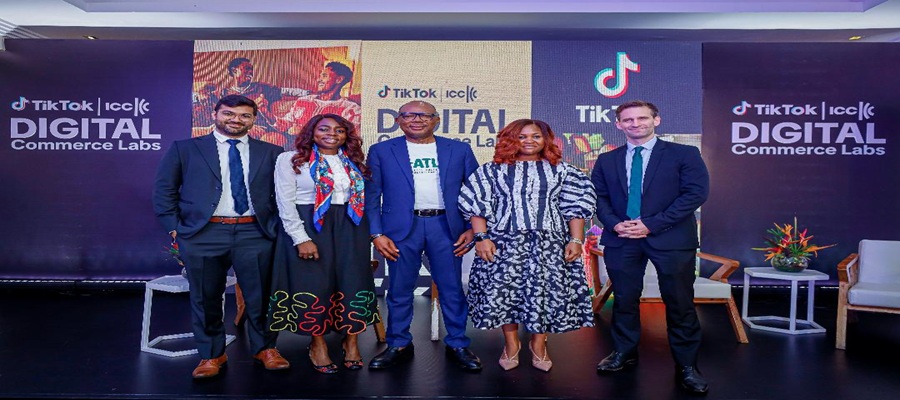
TikTok, in collaboration with the International Chamber of Commerce (ICC), on Thursday convened hundreds of entrepreneurs, small business owners, digital creators and industry stakeholders in Lagos for a flagship Digital Commerce Labs (DCL) event aimed at accelerating digital skills development and economic inclusion across Sub-Saharan Africa.

TikTok
The event, supported by the National Information Technology Development Agency (NITDA) and the Lagos State Employment Trust Fund (LSETF), brought together participants from across Nigeria’s business and technology ecosystem to explore how digital platforms can be leveraged to scale enterprises, improve market access and drive job creation.
Speaking at the event, organisers said the initiative marks the beginning of a broader programme designed to train thousands of small and medium-sized enterprises (SMEs) across the region in digital commerce skills through both online and physical learning platforms.
According to TikTok, the partnership reflects its commitment to supporting small businesses and strengthening Africa’s growing digital economy.
“Digital commerce is reshaping how businesses grow across Sub-Saharan Africa, and Nigerian entrepreneurs are at the heart of that shift,” said Tokunbo Ibrahim, Acting Head of Government Relations and Public Policy, Sub-Saharan Africa, TikTok.
He said the initiative would ensure that small businesses benefit from emerging opportunities in social commerce and digital trade.
The Director-General of NITDA, Kashifu Inuwa Abdullahi, said digital platforms have evolved beyond entertainment and are now key drivers of economic growth and innovation.
He noted that Nigeria’s youth population and growing digital adoption position the country to benefit significantly from the expansion of online commerce and creator-led businesses.
“At NITDA, our vision is to make Nigeria a digitally enabled nation, fostering inclusive economic development through technological innovation,” he said.
The ICC Deputy Secretary General, Julian Kassum, described the programme as a strategic effort to equip small businesses with tools needed to compete in the global digital economy.
He said the Digital Commerce Labs initiative would help expand opportunities for trade, entrepreneurship and employment.
The Lagos State Employment Trust Fund (LSETF) also announced support for the programme through capacity-building training in financial literacy, business structuring, record keeping, taxation and legal advisory services. It said participating businesses would gain access to funding opportunities after completing the programme.
Data presented at the event showed that Nigeria’s social commerce sector is projected to reach $2.04 billion in 2025 and nearly $4 billion by 2030, while Africa’s wider market is expected to grow to $9.43 billion within the same period.
Speakers at the event noted that social media platforms have become central to business growth in Nigeria, with many SMEs relying exclusively on digital channels to reach customers and drive sales.
The programme also featured keynote presentations, business training sessions, and a creator economy spotlight where Nigerian entrepreneurs shared experiences on building brands and scaling businesses through digital platforms such as TikTok.
Organisers said the initiative is expected to strengthen digital literacy, expand market access for SMEs, and deepen Nigeria’s participation in the global digital economy.

Galaxy Backbone @ 20, Unveils New Identity

ALTON Backs CBN on Local Data Hosting Rule for Banks, Fintechs

MTN Nigeria Commits to Ethical Conduct with IFRS S1, S2 Compliance

NDPC to Review Data Law to Address AI, Privacy Concerns

FG Moves to End Double Taxation

CBN Extends PoS Geo-Fencing Enforcement Deadline to August 2026

London Strengthens Global Investment Ties with Africa @ First Ever London-Africa Business Summit

FG Targets Alleged N3tn Capital Flight, Opens Airtime Credit Market to Nigerian Fintechs

Japan, UNESCO Boost Digital Learning in 15 CoEs with Donation of ICT Equipment

African Electric Vehicle Platform Raises $215m to Scale Electric Mobility in Nigeria, Others




 E-Financial3 days ago
How Fraudsters Stole N134Bn from Banks, Customers in 6 Years – CBN

 General News3 days ago
Police Uncovers N7.7Bn Telecom Data Fraud Syndicate, Recovers Assets Worth Millions

 Telecom2 days ago
TikTok, ICC Gather Nigeria’s Entrepreneurs to Drive Small Business Growth and Digital Transformation

 E-Business2 days ago
Payaza Launches AI-powered Storefront Platform to Drive Cross-border Commerce

 Telecom2 days ago
How a New NITDA-TikTok Partnership Could Transform Thousands of Nigerian Businesses

 Telecom2 days ago
Nigeria Moves to End Solar Imports as NASENI, REA Seal Major Renewable Energy Deal

 E-Financial2 days ago
NAICOM’s 18 Months Management Spill @ African Alliance Ends

 E-Financial2 days ago
Standard Bank Targets $15.4b SME Growth in Nigeria, Others with Trade Expansion Drive