

General News
Closing the Gap in Social Inequality with Education, Employment and Entrepreneurship


By Dayo Aderugbo
For most developed countries, the youths remain an important focus in areas such as economic development, sustainability and nation building. When organisations and the government drive conversations and activities around social investments, these discourse are usually focused on empowering young people as they hold the power to drive growth across all levels of the economy both locally and internationally.
In a country like Nigeria, with lots of liquid resources and just about 2.11 trillion Naira in circulation as at May 2019 according to the CBN, the standard of living for the average citizen does not exactly reflect the volume of Nigeria’s asset. There is an existing gap in connecting education, employment and entrepreneurship within the youths, creating a great layer of social inequality.
Globally, more than 200 million young people are either unemployed, or they have jobs, but continue to live in poverty due to low income. This social and economic inequality is a challenge shared by many countries.
Infact, it is estimated that 1% of the world’s population will own two thirds of its wealth. This level of inequality stifles growth and creates disharmony. It significantly affects disadvantaged young people who often can’t access the skills and opportunities needed to close this income gap.
The question for us now is how do we build a sustainable development agenda, spearheaded by young people now and in the future. How do we invest in them and equip them to learn, earn and grow?
Achieving a more developed and sustainable society as a nation, calls for youth inclusion in closing the obvious existing inequality and prosperity gap. Heavy and consistent investment in the youth through education employment and entrepreneurship will contribute greatly to tackling this challenge.
Youths are often referred to social actors with the abilities to bring revolutionary changes and improvement in any society so there is a need to implement long term strategies to invest in future economies. Active youthful engagement in the labour market is a necessary prerequisite to generating a young people pool of resources for both government and private entities.
In Standard Chartered Bank, we believe that education, employment and entrepreneurship are three key pillars through which young people can be empowered. We do this through our Future Makers project, which seeks to tackle the issue of inequality and promote greater economic inclusion for young people in our communities. We encourage young people especially from low income households to take part in programmes focused on education, employability and entrepreneurship.
Our strong ambition is focused on raising USD50 million through fundraising and Bank-matching between 2019 and 2023 to empower the next generation of young people. We also realized that the success of some of our existing community programmes are projective to include expanding our goal to education programme for girls, incorporating financial education into all of our programmes and developing new global community programmes in employability and entrepreneurship.
We must not also forget the entrepreneurs in our communities, who remain valuable assets. There is a need to inspire and encourage them to their greatest potential as they possess what it takes to change the dynamics of how we live and work. Their innovations may improve standards of living and also create wealth.
Despite the strides made in technology, the “gender digital divide” remains a major concern. There is significant difference in access to technology and financial services for women owned enterprises than men.
In Nigeria, female population comprises of 49.34 per cent of the total population of Nigeria. With fewer income generating opportunities for the population at large, this leaves nearly half of the Nigerian population constituting women deprived of economic empowerment through employment, professional growth and livelihood opportunities. For us at Standard Chartered, this just isn’t good enough.
Similar to several emerging markets like Pakistan and Brazil, Nigeria is currently passing through a demographic transition, which has resulted in an increase in the working-age population i.e. youths comprising nearly half of the population, as a share of the total population.
To reap the ‘demographic dividend’ of this change, the economy needs to provide education and create productive and remunerative employment for young workforce entrants. Moreover, innovation through digitisation and entrepreneurship is a crucial and workable element in human capital development.
The bank has recently launched the Women in Tech Incubator programme (WiT) to help close this divide. WiT Tech targets female-led entrepreneurial teams and we provide them with training, mentorship and seed funding.
The incubators includes mentorship with the Bank’s own staff, connecting Women in Tech to other prominent brands like Google and Apple, and providing a platform for them to engage with experts so they could learn how to grow their business. The programme creates tangible and measurable impact to ensure that female entrepreneurs have the right opportunities to grow and nurture their business.
We are optimistic about the impact this programme will have on the socio-economic empowerment of female led entrepreneurs in Nigeria. The support the beneficiaries will get will go a long way in ensuring the sustainability of the businesses while creating employment for more women and youths in the country.
“This initiative builds on the Bank’s track record of increasing women’s access to entrepreneurial finance, employability and supporting adolescent girls and women through financing and capacity building.”
From our standpoint, the development and sustenance of a good economy in any nation is dependent on the level of quality education, employment and entrepreneurship opportunities especially available to young people.
Conscious steps must be taken towards equipping the youth regardless of class and economic status, with access to opportunities needed to realize their full potential to foster greater economic inclusion.
(Dayo Aderugbo is the Head of Corporate Affairs, Brand & Marketing Standard Chartered Bank for Nigeria and West Africa)



Nigeria’s startup ecosystem received a fresh injection of momentum as top emerging ventures secured funding and investor attention at the iHatch National Demo Day, where Interface Africa clinched the highest prize of $15,000.

The 4th cohort of the NITDA–JICA-backed accelerator brought together founders, policymakers, and venture stakeholders in Abuja, showcasing innovations ranging from clean-energy financing and digital food marketplaces to next-gen fintech tools.
The startups went rounds of running through state-level selections and regional competition. iHatch was established in 2021 as a strategic partnership to create an enabling environment for young Nigerians to develop and scale their innovative solutions.
The iHatch National Demo Day (4th Cohort), is an initiative by NITDA and JICA which provides a clear pathway for homegrown talent to contribute significantly to economic diversification and digital transformation.
After rigorous selection processes, the top founders converged to pitch their innovations, recognised the standout performers, which are:
Interface Africa with $15,000, the firm is driving Nigeria’s clean energy transition by enabling structured and affordable solar financing.
Ahioma with $12,000, the firm enhances food accessibility with a digital marketplace connecting consumers directly to trusted vendors.
Linia Finance with $10,000, the firm is helping Nigerians take control of their finances with tools for budgeting, tracking, and smart money planning.
Chapta got a laptop reward. They delivering an offline-capable school application ensuring consistent, accessible learning for students everywhere.
Softdrop also got a laptop reward, they solve logistics challenges through a modern delivery platform designed for speed, convenience, and efficiency.

Fidelity Bank Plc, a leading financial institution, will host a free virtual training on the Nigeria Tax Act 2025 (NTA) as part of its commitment to helping small businesses prepare for the upcoming legislation.

Fidelity Bank
The masterclass is scheduled for 10:00 AM (Nigerian time) on Friday, 12 December 2025. It will provide participants with clear insights into changes in the tax framework, the impact on income and business operations, and practical steps to avoid penalties in 2026.
Attendees will also learn strategies to stay ahead in an evolving regulatory environment.
The Nigerian government enacted major tax reforms on 26 June 2025 when President Bola Ahmed Tinubu signed four tax bills into law.
These Acts will take effect on 1 January 2026 and represent a significant overhaul of the country’s tax system.
The reforms aim to modernize and harmonize Nigeria’s tax framework, improve revenue generation, broaden the tax base, and create clearer rules for individuals, businesses, and government agencies.
“Our decision to host this masterclass reflects our commitment to empowering businesses with the right information ahead of the commencement of the new tax regime.
“Information is money and a well-informed business owner is already steps ahead in the race to success.
“This is why we are bringing experts to provide accurate details and demystify the tax act,” said Osita Ede, Divisional Head, Product Development, Fidelity Bank Plc.
Interested participants can register via https://bit.ly/2026TaxLawMasterclass .
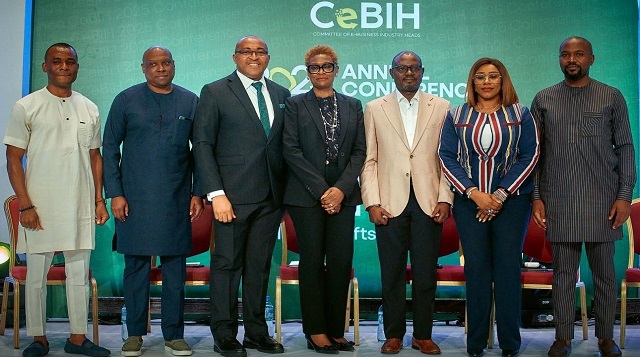
PalmPay, Nigeria’s leading digital banking platform, has renewed its commitment to deepening financial inclusion across the country. At the CeBIH Annual Conference 2025, themed “Reimagining Financial Inclusion through Cultural Shifts in Consumer Credit,” PalmPay’s Managing Director, Chika Nwosu, urged industry players to deepen financial inclusion by embracing community-aligned solutions and customer-centric innovations that can better serve Nigeria’s underserved and unbanked populations.

Speaking during a panel session titled “Social Inclusion, A Veritable Tool for Financial Inclusion,” Chika Nwosu joined other industry leaders to share insights on strengthening participation among women, rural dwellers, low-income earners, and other financially excluded groups.
Chika Nwosu highlighted PalmPay’s commitment to inclusive finance through its 500,000-strong agent network, which enables seamless cash-in/cash-out services for unbanked users across Nigeria. He also emphasised the importance of PalmPay’s USSD platform, 861#, which allows users with basic phones or limited internet access to perform essential financial transactions.
“Financial inclusion goes beyond access; it must be equitable and tailored to real-life needs,” Chika Nwosu said. He shared how PalmPay leverages behavioural insights to design impactful services, including affordable health insurance, reliable bill payments, merchant solutions, and automated savings features that support financial discipline among users.
The session further examined the role of grassroots agents and community touchpoints in driving last-mile adoption. Chika Nwosu noted that PalmPay’s widespread community presence continues to build trust and encourage excluded populations to embrace digital financial tools.
The session was moderated by Ronke Kuye of the CeBIH Advisory Council and featured representatives from E-Doc Online, SmartCash Payment Service Bank, SANEF, and EFINA.
PalmPay reaffirmed its commitment to driving accessible, secure, and inclusive financial services for all Nigerians. PalmPay is a leading digital banking platform driving financial inclusion and economic empowerment in underserved emerging markets. Through its secure, user-friendly, and inclusive suite of financial services, PalmPay empowers individuals and businesses with tools to manage and grow their money.
PalmPay offers a comprehensive range of products, including mobile payments, savings, and micro-insurance via its app and mobile money agent network.
Since launching in Nigeria in 2019 under a Mobile Money Operator license, the platform has grown to over 35 million app users. PalmPay has operations in Nigeria, Ghana, Tanzania, and Bangladesh.

NCC Blocks Piracy Sites as Nollywood Faces Rising Digital Theft

Minister Claims Bandits Exploit Poor Network, Bounce Calls Off Multiple Towers

FIRS says MOU with DGFIP Won’t Compromise Nigeria Tax Data Sovereignty

Top Nigerian Startups Secure Funding Boost @ iHatch Demo Day Awards

Four Must-Watch African Films Debut Free on Glo TV

Kaspersky Introduces Cyber Pathways to Support Career Development in Cybersecurity

Firm Urges Organizations to Check Protection of their Websites Amid Search Engine Optimisation Attack Schemes

FCCPC Sets Deadline for Digital Lending Regulatory Compliance

Hackers Breach Phones of Dangote and Otedola, Demand Ransom

Nigeria Records Highest Weekly Cyberattacks in Africa — Report




 Telecom3 days ago
Airtel Africa Foundation Opens Undergraduate Scholarship Portal in Nigeria

 E-Financial3 days ago
Ecobank Nigeria to Fully Repay $300m Eurobond Ahead of Schedule

 Broadcasting3 days ago
CKay’s “Love Nwantiti” Crosses Billion-Stream Mark on Spotify

 Telecom3 days ago
YouTube Nigeria Unveils 2025’s Top Lists and Launches New YouTube Recap Feature

 E-Financial3 days ago
Reps Give Banks Four-Day Ultimatum on Tax Deductions, Charges

 General News3 days ago
PalmPay MD Seeks Deeper Financial Inclusion @ CeBIH Annual Conference 2025

 Telecom2 days ago
MTN Nigeria Launches Unlimited 5G Broadband Plans to Boost Digital Inclusion

 General News3 days ago
AI-Powered Fraud Drives Global Race for Deepfake Defenses