

E-Business
Coders at 13, Billionaires @ 30


In the last few days, the world celebrated another computer science week; a statutory commemoratory series of events which held between December 8th-14th of the world to recognize the huge contribution that the knowledge of computer science and engineering has added to our world.
The event aimed to introduce 10 million students of all ages to computer science ideas and tools—and to let them try coding for one hour—while also demonstrating to parents, teachers, and policymakers how accessible coding can be.
Technology as we know it today has changed the way we live, the way we love and learn.
From the 1 Billionth view of the Gangnam Style video on Youtube to the 1.9 Billionth impression of the #bringbackourgirls hashtag on twitter, our world is experiencing huge technological and social Metamorphosis having the duo of its merits and demerits.
It might be healthy however to simply focus on the positive contributions and see how focus on this can magnify the benefits over the ills.
As we think about the how the social media has ushered in a new culture of learning, buying and even consuming products, and we remember the billions of dollars locked in information assets, we must rethink business as usual.
CNN had once said that “the future of TV is Twitter and TV is the future of Twitter”. Amazon, the Internet Market Giant has such a small office space compared to the gigantic plants of Toyota and Ford, yet the company made it to top 20 most valuable brands in the world ahead of both automobile firms.
What is special to learn about the founders of Google, the Creator of Facebook and the father of Microsoft is that they all started investing in the knowledge of technology at a really young age.
Reading Malcom Gladwell’s outliers, I realized that Bill Gate had been learning to code and coding for six (6) years before he got into Harvard.
Steve jobs interned with Bill Hewlett co-founder with David Packard of HP before Mark Zuckerberg (founder of FACEBOOK) built what has today become the third largest ‘Nation’ in the world after China and India, he began using computers and writing software in middle school.
His father taught him Atari BASIC Programming in the 1990s, and later hired software developer David Newman to tutor him privately.
Code.org an international organization in support with sponsors including Microsoft and Omidyar Network is leading a huge campaign that will ensure that millions of line of codes are written and promote the knowledge of programming and computer science education all over the world. The Initiative has been dubbed the “Hour of Code”.
Tons of events were held all over the world to celebrate the Computer Science week and get millions of Children and youth to start coding. During the computer Science week in Nigeria, Microsoft Nigeria partnered with Wifi-Combat academy (an organization that trains children how to code and build mobile applications), to host the hour of Code Lagos.
This is part of the organization’s commitment as software, devices and services leader to transform Nigeria’s economy and build future information technology entrepreneurs.
In the ‘tweets’ of Satyr Nadella, Microsoft’s CEO, “Coding is fun! Help us get 100M students to see how it can help them achieve great things”.
This is my own submission, If they start coding at 13, they could be Billionaires at thirty, or to be modest something close.
We can only live what the technology of the future will look like to our lofty imaginations. In every way, within our sphere of influence, we can and should inspire children and youth to maximize tools like their mobile phones to create technology.
We cannot just remain consumers, we can turn the table around and one way to do this is to take charge of the creating side.
Which software(s) will run the technology consumed by the 200Million people who will live in Nigeria by 2025?
Who will write the software(s)? These two questions must be answered, and better answered in our favor.
The future is about quantum information, Information at the snap of thought, the age of speed, 4-dimensional representations, cloud computing and ubiquitous computing.
If we put the children in charge of this, that’s how to secure the future.
Olusola Amusan is the Citizenship Manager at Microsoft Nigeria. He manages all non-Profit and youth engagements, an inspirational speaker and inspiration to the nearly 60,000 young people he has trained in the past 5 years.


Nigeria has taken a major step toward strengthening its digital governance framework as the National Information Technology Development Agency (NITDA) officially assumes control of the Nigeria Government Enterprise Architecture (NGEA) infrastructure.

The handover ceremony held in Abuja, marks the culmination of a high-level partnership with the Korea International Cooperation Agency (KOICA).
This transition signals a shift from fragmented IT projects to a unified, disciplined approach to national digital investment.
The NGEA initiative forms a core part of the e-Government Masterplan 2.0 (Ne-GMP 2.0), aimed at establishing a unified and structured approach to managing government IT investments and digital resources.
The framework is designed to ensure that technology deployment across public institutions aligns with national priorities while improving efficiency and accountability.
With the system now operational, government agencies are expected to adopt more integrated digital processes, allowing seamless data sharing and interoperability.
This is anticipated to reduce duplication, strengthen risk management, and translate policy objectives into measurable digital outcomes.
Over the past two and a half years, Nigerian technical experts worked closely with their Korean counterparts to develop the architecture framework, create reference models, and execute pilot programmes in key institutions.
These include the National Identity Management Commission, Nigeria Customs Service, Nigeria Immigration Service, and NITDA.
Officials say the NGEA represents a shift from fragmented digital efforts to a more coordinated, citizen-focused system.
The infrastructure is hosted by Galaxy Backbone Limited, providing a secure and reliable platform for nationwide deployment.
Looking ahead, NITDA is expected to work with government stakeholders to expand and sustain the system, while the Federal Ministry of Communications, Innovation and Digital Economy will provide policy guidance to ensure its adoption across the country.
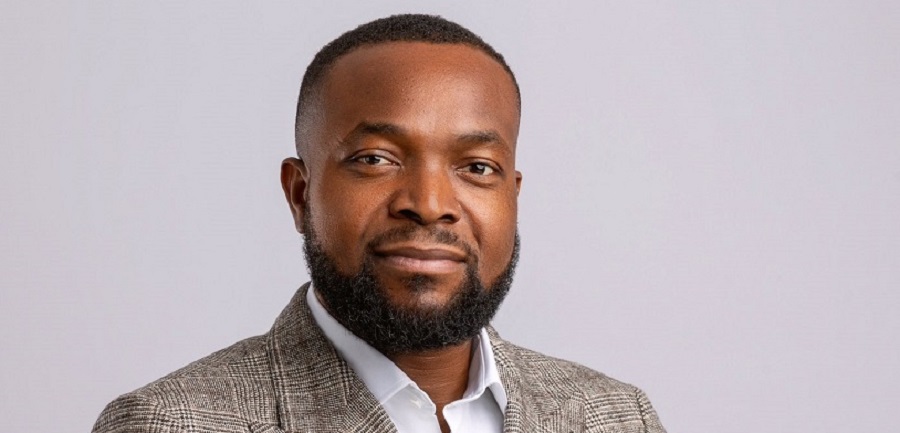
Bosun Tijani, minister of Communications, Innovation and Digital Economy, has said the government is shifting focus from expanding access to ensuring “meaningful connectivity” that drives economic growth and inclusion.

Bosun Tijani, minister of Communications, Innovation and Digital Economy
The minister made the statement on Friday while addressing stakeholders at the inauguration of board members of the Universal Service Provision Fund (USPF) in Abuja.
He said that although Nigeria had made significant progress since the introduction of GSM services, millions of people, particularly in rural and underserved communities, remain either unconnected or unable to fully benefit from digital services.
Dr Tijani highlighted ongoing investments in digital infrastructure, including plans to deploy 90,000 kilometres of fibre optic network and nearly 4,000 telecom towers nationwide.
He said initiatives under the USPF had improved access through projects such as rural connectivity and digital facilities in schools but stressed that the next phase must prioritise effective usage.
“It is not enough to connect a community. We must ensure that schools can teach with digital tools and that small businesses can access market opportunities,” he said, citing a pilot project in the Kura community where connectivity has enhanced access to communication, education and healthcare.
Aminu Maida, executive vice chairman, Nigerian Communications Commission (NCC) also called for a shift towards meaningful connectivity, noting that while data usage had grown significantly, it remained concentrated in urban areas.
According to him, recent data shows that telecom usage has increased by about 160% over the past two years, largely driven by urban demand.
“When we drill down, we see that a lot of that growth is actually in urban centres. So, the gap between those who are not connected or not meaningfully connected is growing,” he said.
Dr Maida added that the trend underscored the need for the USPF board to intensify efforts to bridge both access and usage gaps across the country.
Both officials emphasised the importance of collaboration, sustainable investment models and improved digital literacy to ensure that connectivity translates into real economic benefits for Nigerians.

A jury in Los Angeles has found technology companies, Meta and Google liable for contributing to a young woman’s social media addiction, in a case being described as a landmark ruling.

The 20-year-old woman, identified only as Kaley, argued that she became addicted to Google’s YouTube and Meta’s Instagram from an early age due to their attention-driven design features.
According to her testimony, she began using YouTube at the age of six after downloading the app on her iPod Touch to watch videos about lip gloss and online games.
Kaley told the court that she joined Instagram at nine, bypassing parental restrictions put in place by her mother, and spent extended periods on social media.
The trial, which lasted about a month, with arguments and evidence from both sides.
Jurors also heard testimony from Mark Zuckerberg, chief executive, Meta and Adam Mosseri, Instagram head.
However, Neal Mohan, YouTube chief executive, did not testify.
The jury found that the companies were negligent in the design of their platforms and failed to adequately warn users about potential harms. Meta and Google were ordered to pay the woman $3 million in damages.
Jurors also recommended additional punitive damages, including $900,000 against YouTube and $2.1 million against Meta, according to company spokespersons.
The jury apportioned 70 per cent of the responsibility to Meta and 30 per cent to YouTube.
Kaley was present in the courtroom when the verdict was delivered, alongside parents of other teenagers who say they were harmed by social media use. Both companies said they plan to appeal the decision.
“We respectfully disagree with the verdict and will appeal. Teen mental health is profoundly complex and cannot be linked to a single app. We will continue to defend ourselves vigorously as every case is different, and we remain confident in our record of protecting teens online”, a Meta spokesperson said.
José Castañeda, Google spokesperson, said the case misunderstands YouTube, which is a responsibly built streaming platform, not a social media site.

EFCC Waxes Worriedly over $160Bn Crypto Crime Losses

Dangote Refinery Debunks Speculations on IPO

FG Awards N50m Each to 45 Students under S-VCG

NGX REGCO Fines 5 Firms N291m for Market Manipulation

FG Launches Cross-Border Digital Payments Report

Spotify’s Loud & Clear Report Reveals Over ₦60Bn Revenue for Nigerian Artists in 2025

Madonna University Taps Tech Guru Adote for Strategic Board Role

China Threatens to Shut Nigeria’s Satellite Over $11.44m Unpaid Debt

Jumia Tech Week 2026 Begins with Tech Deals on Smartphones, Electronics, and Everyday Technology

FCCPC Bans Lagos ‘No Refund’ Policy, Vows Fines and Shutdowns for Traders



 General News3 days ago
Anti Graft Agencies Raise Alarm over Rising Crypto-Linked Financial Crimes

 E-Business3 days ago
NITDA Takes Over National Digital Architecture System

 E-Financial1 day ago
CBN bars large‑ticket loan defaulters from banking services in tough new crackdown

 General News1 day ago
ARN Rejects Medical Bill over Attempt to ‘Scrap’ Profession

 Telecom1 day ago
NIGCOMSAT Supports Startups Growth with the Launch of Accelerator 3.0

 News1 day ago
Meningitis Kills a Quarter Million People a Year -Study

 Telecom1 day ago
FG Unveils Digital Economy Research Fund Scheme

 News1 day ago
Stakeholder says AI is Crucial to Nigerian Data Centres Amid Persistent Grid Collapse