

General News
Consulting Should Tout Insights for Business Growth- Kalu


Ikechukwu Kalu is the chief executive officer/lead consultant of Customer Passion Point Limited. He was the Vice President/Group Head of Marketing & Communications of one of Nigeria’s leading financial institutions, First City Monument Bank (FCMB).
He began his career with Guinness Nigeria Plc and worked in different capacities spanning Production, Human Resources, Internal Audit as well as Marketing.
He is a Chartered Marketer and member of the National Institute of Marketing of Nigeria (MNIMN) and Chartered Institute of Marketing (MCIM), London. He is an alumnus of the revered Harvard Business School as well as Lagos Business School.
In this interview he spoke to peter ugwu he disclosed why he really wanted to be known for value creation consulting which is mainly about business marketing.
Leaving FCMB for Customer Passion Point Limited
Yes. It’s a great job I enjoyed while it lasted. As you may remember, I was head hunted and recruited all the way from Tanzania where I had just ended an expatriate contract as Marketing Director for Zanzibar Telecoms (Zantel Limited), a part of Etisalat.
I had a two year contract with FCMB which ended in August 2014 but we agreed to extend it to December 2014, a period we thought was adequate to get the team fit into a new structure which was intended to align the activities of marketing and the retail banking group in the bank’s quest to build a viable / profitable retail franchise.
The Concept of CPPL
Customer Passion Point Limited is a value creation firm that is positioned to support p small, growing and medium size organisations to create stakeholder value through consumer insights.
This we do through business marketing consulting and training / development.
We sit with SMEs and Entrepreneurs to understand their issues and develop appropriate solutions to solve the issues. We also serve large organisations that may not have the capacity in house to implement their strategies.
Ever Envisaged Leaving FCMB?
Yes I did know that I was going to leave FCMB at the end of the 2 year contract but I must confess that I expected that the contract would be renewed for another 2 years as I didn’t think the initial 2 years was adequate to midwife the new marketing that I set up.
Looking back now, I see why it was important for the team to work their way around the new structure and evolve organically. I always knew I will go back to working at CPPL because it was borne out of a vision to support small and growing businesses that definitely would not have the capacity for strategy and implementation and would require the services of consultants.
How did it start? It was in 2010 when I was leaving Zain (now Airtel, Nigeria) to travel to Tanzania to take up an expatriate job as Marketing Director when it the idea of setting up Customer Passion Point Limited (CPPL) occurred to my wife and I and we went for it and offered some shares to a friend who was also to run the company while we are away but it didn’t really worked.
The registration was completed but we never did any job until we got back from Tanzania in 2013.
As faith will have it, I had to set up the Tanzania arm in 2011 after my contract with Zantel Limited (a part of Etisalat) ended and I was very comfortable taking up another paid job.
It started with two very influential and successful businessmen (Zadock Kola, the owner of ZK Advertising), a Tanzanian and Tito Alai (a former member of Celtel International Board) from Kenya called me to a meeting on how we could start a truly African brand.
The meeting held at Southern Sun Hotel, Dar es Salam. I still remember the day very vividly. Interestingly, they two big men never got back to me on the subject even as you read this interview, but I walked away from that meeting with a strong passion to set up Customer Passion Point Limited in Tanzania, a brand that would soon become a truly African brand.
Three months after setting up CPPL in Tanzania, we got an opportunity to pitch for a customer engagement campaign job at Ecobank.
We were successful at the pitch and had the responsibility to develop and execute the campaign end to end.
It was about generate quality awareness for the band and growing both customer acquisition and low cost deposit for Ecobank Tanzania. The campaign ran for six (6) and I guess it was very successful as the campaign was later replicated in all Ecobank operations.
It was exactly three (3) into the campaign when FCMB head hunted and hired me for the role of Group Head, Marketing & Communication at a Vice President level.
CPPL’s Service Offerings
We offer two broad services – Business Marketing Consulting and Training / Development. (a.) Business Marketing Consulting. Forward looking businesses know that value creation through efficient and effective marketing is the key to success across times and seasons – during both good and bad economic times.
The challenge for most businesses is that they are not able to quickly and cleverly adapt their marketing strategies to current and foreseeable economic climates. This is not surprising as successful business promotion requires marketing experience and knowledge that many businesses don’t have in-house.
Investing in an experienced business marketing consultant can give an organisation the help that they need to acquire, grow and retain customers while building a solid and sustainable brand. We believe that when you build a solid brand, it will sell itself through advocacy which is the ultimate of good marketing. (b.) Training / Development.
We are focused on delivering business enhancement training programs. Our flagship program is the CPPL monthly training program for business people where we train business owners and their core staff on strategies for growth and profitability.
We have recently introduced other programs like: (i.) Effective Business Writing & Communications Skills program to help improve communication within the business environment, appreciating the over whelming positive impact of good business writing and communication to a business. (ii.) We have also introduced leadership and personal effectiveness training programs. This is because leadership sets the tone for the entire business and people must be thought to appreciate the role of leadership. People should also be thought on how to ensure personal effectiveness at work and manage stress.
The Making of a Good Businessman
A good businessman or woman is someone who is able to convert an idea or value to a profitable business. It’s someone who is able to make a meaning by improving quality of life, righting the wrong and or preventing the end of something good.
He does all these and makes money out of it. If no money is made, then it’s purely social responsibility.
Therefore, I want to emphasis that I really want to be known for value creation consulting which is really about business marketing – marketing of businesses. Secondly, training should be an intervention coming out of a consulting.
Consulting should help tout develop insights which if acted upon should unlock massive opportunities for growth and profitability for the business.
The Toughest Hurdle in Bringing CPPL to This Point
Good question. It’s been getting people to try you out. I thought that it would be a smooth start given that I had worked in great companies and rose quite high there, that they will naturally want to patronize me.
It’s not that easy as they also have to be sure that you can provide value that match the need they have. So, I have had to start small with training and growing gradually.
Our flagship training, the CPPL monthly training program for business people has been on for the past 14 months and we have trained well over 150 participants from more than 50 businesses. We now have to leverage on this to pitch for marketing consulting jobs. Slowly but surely, we shall get there.
The Best Way to Start and Nurture a Business
Start small and grow gradually. This will help you keep cost down and invest wisely. There is nothing wrong in starting from you home and gradually hit the high streets. It’s important to manage cost, be discipline, professional, keep good record, and track your business performance by doing some simple profitability test. It’s really important to start right.
Costliest Mistake Most Business People Make
In my view, it’s about not being disciplined. You don’t borrow money to do business when you are not sure of the returns.
How do you pay back? Some have invested huge funds on aesthetics claiming that ‘image is everything’ You have to start small, understand the terrain and position properly before you start to get into huge investment. There is really no hurry. Get it right the right time and always.
Set Target in Next Five Years as CEO
I hope to build a thriving business with clients that you can look back and say, yes we did it together. I have been successful with my work carry.
I hope to replicate same in business. I want be known creating value in the market place. I want to redefine the concept of value creation consulting.
The market is there and we are actually few in this sector. My vision is to operate CPPL as a dynamic African brand while focusing on excellent client service in every country (and culture) where we operate in.
Most Difficult Experience Encountered
My case is somehow peculiar. I have been in paid employment for about 32 years and over 10 years of it were on roles that gave me some authority. I had really gotten used to people coming to me as against me going to them.
I was saw surprise now having to wait on the queue to be attended to. It was a rude shock but I learnt humility fast and it’s a long better. My advice is being patient, focus on the value you have and wait for that golden moment to sell.
The making Of A Good Business Consultant
Personal effectiveness is key. You must manage your time well, work well with your clients and continuous self-development. Your client is depending on you for insights and you can’t afford to fail them.You must always to seek first to understand and then to be understood. This way you hear the voice of your client and possibly respond more aptly to their needs. We want our clients to focus on other aspects of their businesses while we help them with the development of insights and the relevant value propositions to drive growth and profitability.
—


General News
EdTech Platform Unveils over 5,000 Self-Paced Courses for Skills, Knowledge, and Literacy

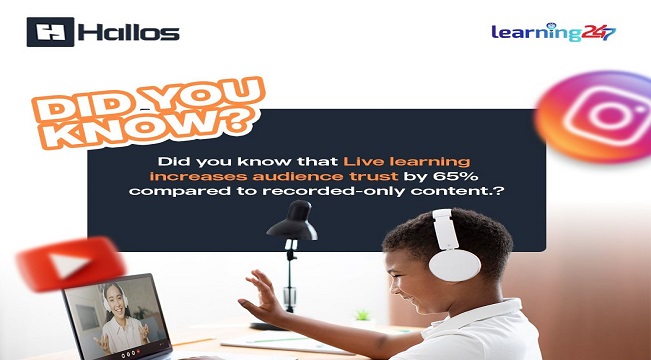
Hallos, formerly known as Aahbibi, has officially announced its rebrand alongside the launch of more than 5,000 self-paced courses aimed at strengthening knowledge transfer, accelerating skill acquisition, and improving literacy among everyday learners across Africa and beyond.

The new identity signals a renewed commitment to building an inclusive, creator-driven learning ecosystem that equips individuals with practical, relevant skills for today’s economy.
Positioned as a creator-economy engine, Hallos brings together education, entertainment, and commerce within a single digital platform. It integrates live classes hosted by creators, social commerce and merchandising, podcast-driven learning, and quiz-based gamification. This blended approach is designed to deepen understanding, boost engagement, and promote fast, practical learning experiences for users at every level.
With creators already active on the platform from Kenya, Ghana, Côte d’Ivoire, Lagos, the United States, and Dubai, Hallos is cultivating a truly global community rooted in African creativity and innovation. Its expanding international network offers diverse perspectives, practical insights, and culturally relevant content that resonates with learners across regions.
Beyond online learning, Hallos is also emerging as a creative economy powerhouse, driving engagement through physical and hybrid experiences.
Upcoming initiatives include the Learning247 Creator Summit at the University of Nigeria, Enugu Campus (UNEC), and a major exhibition at the Enugu Technology Festival. These events are designed to connect creators, learners, and industry stakeholders, fostering collaboration, showcasing innovation, and expanding opportunities in the creative and digital sectors.
At the heart of Hallos’ mission is a four-pillar strategy focused on long-term social and economic impact. The platform is dedicated to supporting women in technology, advancing massive open connected education, and positioning Africa as a global production hub through market-ready skills development.
By empowering individuals with practical knowledge, Hallos aims to strengthen the labour market and unlock new economic opportunities across the continent.
Hallos is also introducing a social impact course that encourages collective participation in Africa’s transformation. The initiative invites individuals, creators, and organisations to help reshape narratives, broaden opportunities, and drive the continent toward greater prosperity.
With its new brand identity and expanded course catalogue, Hallos is charting a bold future for learning — one where creators lead, communities thrive, and practical knowledge is accessible to all.
The Federal Ministry of Livestock Development has announced its commitment to collaborate with the World Bank Group and the African Development Bank (AfDB) to address climate change challenges affecting Nigeria’s livestock sector.

Permanent Secretary of the ministry, Dr. Chinyere-Ijeoma Akujobi, made this known during a meeting with a delegation from the two banks on Wednesday in Abuja.
She said the partnership aims to unlock opportunities for sustainable growth and resilience in the industry and that the collaboration is strategic in realising the ministry’s strategic goals.
“The proposed collaboration aligns with our mandate to mitigate the adverse impacts of climate change on livestock production, safeguard livelihoods, and promote environmentally responsible practices throughout the value chain,” the permanent secretary said.
Represented by the Director of Planning, Research and Statistics in the ministry Mr. Ohaeri Ezenwa, Dr. Akujobi highlighted the livestock sector’s significance to Nigeria’s economy.
She pointed out that “Despite its importance, the sector is highly vulnerable to climate variability and change,” outlining its implications for animal health, productivity, and greenhouse gas emissions.
While emphasising the urgency of robust policies and reliable data to address the impacts of climate change, the Director (Technical) and Team Lead of the Technical Working Group on Climate Change, Dr. Alike Peter, explained that “These realities underscore the need for evidence-based policies and coordinated national action to drive climate-smart livestock development.”
Dr. Peter said that the Technical Working Group supports the National Livestock Growth Acceleration Strategy (NLGAS), which aims to double the sector’s contribution to GDP from approximately $32 billion to $74 billion in a decade.
He added, “Both growth pathways have direct implications for greenhouse gas emissions, making climate considerations crucial in livestock development planning.”
The ministry is also collaborating with the World Bank to establish a national methane baseline and develop evidence-based mitigation measures.
Dr. Peter said, “Ongoing collaborations aim to strengthen Nigeria’s Nationally Determined Contributions (NDCs) and access carbon markets.”
Dr. Harrison Charo Karisa, a representative from the World Bank Group, highlighted opportunities in climate-smart aquaculture, the blue economy, and carbon markets.
“Seaweed can serve as a nutritious livestock feed supplement rich in essential vitamins and minerals,” he noted.
Dr. Youssouf Kabore, Chief Livestock Officer at AfDB, commended the ministry’s proactive approach and assured the bank’s support in implementing effective interventions in the livestock sector.

The 2026 Winter Olympics will begin on February 6 in Italy, attracting the attention of fans both online and offline. Hundreds of athletes will participate, and the host cities are expected to welcome large crowds. Kaspersky experts have listed the types of threats that may emerge in the context of a major international event, regardless of its location.

The Event Audience as a Target
The Olympics attract thousands of people travelling to the host country. Offline spectators may face unpleasant surprises such as fake tickets, which scammers distribute. This could result in stolen funds from bank accounts or even compromised cryptocurrency wallet credentials instead of access to their favourite events. Meanwhile, online fans are at risk from fake live streams and fraudulent websites selling merchandise of their favourite athletes.
Travellers may also encounter fraudulent services posing as cell phone plans that collect and steal personal and financial information. That is why it’s convenient to choose Kaspersky eSIM Store to always stay connected, avoiding potential fraudulent services and physical SIM card hassles.
Attacks on athletes
Cybercriminals may exploit publicly available information and the popularity of the participating athletes. Other scenarios might be targeted phishing attacks and deepfake-based operations aimed at data theft or blackmail.
These should be of particular concern, as well as the potential hijacking of social media accounts. In addition, athletes may face risks of ‘doxxing’, — the public exposure of private information — and other forms of tech-enabled abuse, which can impact personal safety.
Threat actors may also take advantage of vulnerabilities in online security, particularly through data leaks that affect users’ personal information. The Data Leak Checker feature in Kaspersky Premium enables users to identify potential compromises in their accounts, alerting them to any risks of exposure.
Urban infrastructure attacks
Both profit-driven and other types of threat actors may target critical city systems, including transportation, utilities, communication networks, and vulnerable public Wi‑Fi, with the aim of disrupting services or compromising operational stability.
According to a 2024 study by Kaspersky, conducted ahead of the Summer Olympic and Paralympic Games in Paris, nearly 25 percent of the approximately 25,000 free Wi-Fi hotspots analysed in the city were found to have weak or no encryption, putting users’ personal and banking data at risk of theft.
These attacks can be carried out using malware, network intrusions, or manipulation of connected systems, potentially affecting city operations and services relied upon by residents and visitors. Using security solutions such as Kaspersky Premium along with a VPN will help to protect data by encrypting Internet connection and securing online activity.
Ransomware
Ransomware actors, seeking maximum profit, may view mass events and the related entities such as vendors or other organisations in the supply chain as high-value targets. To maximise financial gain from the high demand to attend the event in person, such attacks can target hotel networks in the host city, as well as stadiums, official ticket sales platforms and other event resources.
APT attacks
Advanced Persistent Threat (APT) actors also consider large international events as strategically significant targets due to their global visibility, high concentration of critical IT infrastructure contractors and complex supply chains.
A prime example of such an attack was the Olympic Destroyer, used against the IT infrastructure at the 2018 PyeongChang Olympics. In this attack, the malware spread within the organisers’ network using compromised credentials and was aimed at sabotage and disrupting the operation of the event.
Hacktivism attacks
Hacktivist actors may launch campaigns targeting event-related organisations to achieve their strategic goals and public attention. These offensive operations could take the form of data theft and leaks, misinformation, or the disruption of the systems involved in the event, such as broadcast infrastructure or ticketing platforms, potentially affecting both the spectators and organisations.
“Events on the scale of the Olympic Games typically draw significant attention from cybercriminals, and potential threats can take many forms, affecting spectators, cities’ infrastructure and the athletes themselves, as well as millions of people accessing with digital services before, during and after the event.
The international dimension and big audience make such events especially attractive targets for sophisticated actors, who pose serious threats that everyone involved should be prepared for,” said Igor Kuznetsov, Director of Global Research & Analysis Team at Kaspersky.

Firm Reviews the Evolution of Phishing Threats in 2025

EdTech Platform Unveils over 5,000 Self-Paced Courses for Skills, Knowledge, and Literacy

Incentives alone won’t win over Africa’s next billion fintech users — Kuda MFB MD

MTN Guns for $2.76bn IHS Towers Buyout in African Telecom Power Grab

NCC, NSCDC Warn Construction Firms Against Damaging Fibre Optic Cables

19 Nigerian Banks Meet CBN Recapitalization Targets Ahead of March Deadline

Youth Talent Takes Center Stage as T2 Ignites High-Octane Rap Battles @ Carnival Calabar

Aig-Imoukhuede Foundation Wrapped Up 2025 with Real Change in Governance, Health, Media Across Africa

Nigerian Terra Industries Secures $11.8m for Expansion

US invests $115m in counter-drone tech for World Cup security




 News2 days ago
New Study Reveals How Moniepoint Powers Nigeria’s Downstream Oil Sector with Same-Day Settlements and Working Capital Boost

 E-Business3 days ago
OADC Lagos Reinforces Commitment to Local Data Hosting and Digital Transformation @ NDPC’s National Privacy Week Summit

 Telecom3 days ago
MTN Powers 6,000 Young SMEs with Digital Skills in Economic Backbone Boost

 News3 days ago
FG Mandates Shared Funding for N1.98trn Electricity Subsidy

 News3 days ago
Spain Bars Under-16s from Social Media in Digital Safety Crackdown

 Telecom3 days ago
Onafriq, PAPSS Launch Wallet-Based Payments Pilot from Nigeria to Ghana

 E-Financial3 days ago
FG Signs MoU with ICAN, CIBN, Others to Train 10m Nigerians in Financial Literacy

 General News3 days ago
Corporate Comms in the Age of Crypto: Why Nigeria’s Digital Finance Future Depends on Trust