

/home/kenneth/web/nigeriacommunicationsweek.com.ng/public_html/wp-content/themes/zox-news/parts/post-single.php on line 153
">
Warning: Undefined array key 0 in /home/kenneth/web/nigeriacommunicationsweek.com.ng/public_html/wp-content/themes/zox-news/parts/post-single.php on line 153
Warning: Attempt to read property "cat_name" on null in /home/kenneth/web/nigeriacommunicationsweek.com.ng/public_html/wp-content/themes/zox-news/parts/post-single.php on line 153
Consumer Enlightenment Imperative

As efforts are being intensified by industry stakeholders, the government and the Courier Regulatory Department to reposition the postal sector to meet the aspirations of the 21st century market environment, it is also important that consumers of postal services should be in the know what their rights and limitations are in dealing with operators of courier companies.
Considering that information is power, consumer awareness of the products and services rendered by courier companies will go a long way in stimulating the postal market as well as creating confidence in the minds of consumers. There is need to shore up confidence level of indigenous courier companies compared to their multi-national counterparts. There are some people who would never send their consignments or letters through the indigenous courier companies simply because they believe the indigenous ones are not good enough. Obviously the judgment is as a result of bias formed over the years when letters used to disappear in transit with the Nigerian Postal Service surface mail system. But all those is now history as the Nipost has showed determination and fervor to compete with private courier companies in the postal business in recent times.
In the market economy that is Information and Communication Technology driven, some courier companies are still shying away from exploiting possibilities provided by the ICT platform. Most of these courier firms have websites which are never updated for over four years thereby leaving visitors to such sites with little or no information to work with. To say the truth some will move to another location while their websites still maintain the old addresses. What they achieve with this is only but to mislead the public. I had a sad experience when I visited the site of one of these courier firms one day and what did I get? Virus of course. It was an expensive visit in deed.
It keeps beating my imagination why majority of the courier practitioners are shy to divulge information about their organizations which will be of immense pay back to their organizations even when disclosing such pieces of information attracts no cost, whereas their counterparts in the other sectors see the press as partners in progress and are willing to court and marry with the media.
The postal and courier sector needs to be opened up. The present world economy thrives on co-operation and collaboration and no longer on I can do it alone mentality.
The Courier Regulatory Department of Nipost has in its series of seminars and workshops been trying to sensitize the postal and courier sector on the modern ways of doing business among other areas, but there is also need for the department to device a strategy to accommodate and listen to customer complaints which may arise as a result of failed service delivery on the part of courier operators. Each courier company should be made to display in all their branch offices the Courier Regulatory Department’s phone numbers through which customers can reach the department and somebody should be made to attend to complaints arising from customers at any point in time.
I witnessed an encounter involving a courier company and a customer who sent her consignment through the courier firm. The van conveying the consignment was attacked by hoodlums along the way and goods were alleged to have been stolen. The encounter revealed how naïve and ignorant some customers are with the processes and procedures for sending their parcels through the courier companies. To cut the long story short, the customer was allowed to send her consignment without having to disclose and record taken by the clerk at the counter all the items the customer was sending out. It was obvious from the account that some of the bags for delivery were not even opened.
As a result of the robbery, the customer was contacted to declare the items which she sent through the courier company that were missing. The claims she made revealed that all the items she packaged were not recorded in the manifest by the clerk. Now how would this matter be resolved as the courier company threatens not to be liable to the spurious claims (as the GM of the courier firm puts it) emanating from the customer?.
The missing link is lack of information on the customer in knowing what his or her rights are. Courier companies should also at their own level be involved in educating their customers whenever the opportunity arises and not only be interested in pocketing clients’ monies alone. Service for what has been paid for has to be delivered. Educating their entire work force through training and workshops should also be a regular phenomenon in courier companies. This will help to improve the level of trust customers have in courier companies which is necessary for the growth of the postal business.


Warning: Undefined array key 0 in /home/kenneth/web/nigeriacommunicationsweek.com.ng/public_html/wp-content/themes/zox-news/parts/post-single.php on line 493
Warning: Attempt to read property "cat_ID" on null in /home/kenneth/web/nigeriacommunicationsweek.com.ng/public_html/wp-content/themes/zox-news/parts/post-single.php on line 493


Kuda Technologies Limited, a Nigerian digital bank backed by global investors, has laid off employees across several departments as it restructures its operations, even as the company says its financial position has been improving.

The job cuts affected multiple departments.
The firm however said that the decision to cut job is not driven by financial pressure, but part of the natural evolution of a company at our stage, aligning with industry benchmarks.
On Wednesday, March 25, staff were invited to a company-wide video call with senior executives.
Before the meeting ended, hundreds of employees were informed that their roles had been terminated as part of a broader restructuring.
The cuts affected multiple teams, including marketing, where 19 of the unit’s 40 employees were impacted, two affected workers said.
In a statement emailed on Friday, a Kuda spokesperson said the move followed a strategic review of the business and was meant to prepare the company for its next phase of growth.
“Kuda is evolving how the organisation is structured to support the next phase of our growth and scale,” the spokesperson said. The company added that the decision was not driven by financial pressure or employee performance but by changes in operational priorities.
Employees received notices explaining that the company had reviewed its future direction and industry benchmarks before deciding to reorganise some departments.
The process, according to the company, was aimed at aligning its workforce with long-term goals.
Still, the way the layoffs were communicated unsettled some staff.
An unusual company-wide meeting was scheduled earlier in the day, and several employees initially struggled to access the call link, according to a former employee. When the meeting began, senior leaders confirmed the job cuts.
Some workers also questioned the timing of the restructuring, pointing to recent hiring decisions, including senior-level recruits.
Kuda said it is offering affected employees severance packages that vary depending on role and length of service.
According to a person familiar with the terms, some staff may receive up to seven months of pay. The company has also proposed enhanced exit packages tied to settlement agreements.
The layoffs come at a time when many African fintech companies are shifting focus from rapid expansion to profitability and operational efficiency after years of venture-backed growth.
Kuda, which has about seven million registered customers, has been narrowing its losses in recent years. The company reduced its losses to about $5.83 million in 2024 from $35.11 million a year earlier, helped by stronger performance from its Nigerian business and lower operating expenses.
Its Nigerian unit nearly doubled revenue in local currency to about N21.2 billion during the period.
The fintech has also reported strong growth in transaction activity. In its last public update, Kuda said it had processed more than 300 million transactions worth roughly N14.3 trillion and issued N16.4 billion in overdrafts, up 43 percent from the previous quarter.
Babs Ogundeyi, chief executive officer said the company’s net margin has ranged between three percent and seven percent per month. If that pace continues through the year, the digital bank could process more transactions in 2025 than it did in its first five years combined.
Kuda last raised external funding in 2024, securing $20 million in equity at a valuation of about $500 million. The fundraising came after the company recorded nearly $45 million in losses over the two years leading up to the round.
The restructuring suggests the startup is now adjusting its cost base and internal structure as competition intensifies in Nigeria’s fast-growing digital banking market and investors push fintech firms to show clearer paths to sustainable growth.
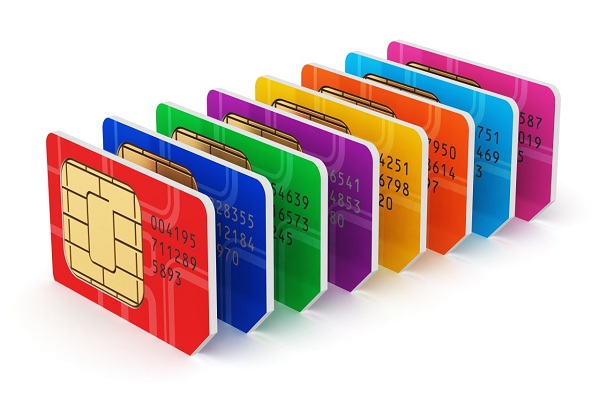
Nigerian Communications Commission (NCC) has unveiled plans to introduce a Telecoms Identity Risk Management System (TIRMS) platform to tackle SIM-related fraud, strengthen digital security and boost confidence in Nigeria’s digital economy.

Aminu Maida, executive vice chairman of the commission, disclosed this on Thursday in Abuja at a stakeholders’ consultative forum on the proposed platform and planned regulatory changes.
Maida, represented by Rimini Makama, executive commissioner, Stakeholder Management, said the Mobile Station International Subscriber Directory Number (MSISDN), commonly known as SIM or mobile phone number, had become central to financial transactions, digital identity and access to services, but warned that its widespread use had also created vulnerabilities.
He noted that fraudulent activities linked to recycled, swapped, churned and barred SIMs had emerged as a major channel for identity theft and financial crimes, weakening trust in digital platforms.
He said, “The Mobile Station International Subscriber Directory Number commonly known as the SIM or mobile phone number has evolved into a critical identifier underpinning financial transactions, digital authentication, and access to essential services across all sectors of our economy.
“This evolution, however, has created new and challenging vulnerabilities. The fraudulent use of churned, recycled, swapped, and barred MISISDN’s has become a significant vector for financial fraud and identity theft, eroding public trust in our digital platforms and undermining the identity of systems we have worked hard to build.
“It is in direct response to these challenges that the Commission has initiated the Telecoms Identity Risk Management System Platform.”
According to him, the platform will enable service providers to verify mobile numbers flagged for suspicious or fraudulent activities before granting access, a move expected to reduce exposure to fraud and improve accountability.
He added that the system would enhance coordination among regulators, financial institutions and security agencies to build a more resilient digital ecosystem.
To support the rollout, the commission has proposed amendments to its Quality of Service Business Rules and the Registration of Communications Subscribers framework.
The proposed changes will require telecom operators to notify subscribers at least 14 days before recycling their lines and to upload details of churned numbers to the platform within seven days.
The amendments also introduce stricter provisions for blocking fraudulently registered or misused SIMs, aimed at improving transparency and protecting consumers.
Maida said the initiative reflects the commission’s commitment to collaboration and a whole-of-government approach to addressing digital risks, urging stakeholders to actively contribute to shaping the framework.
Also speaking, Olatokunbo Oyeleye, director of Cybersecurity and Internet Governance at the commission, emphasised the importance of trust in the digital economy.
“As rightly noted, digital trust is the operating licence of modern economy. Without it, nothing scales and with it everything accelerates. For our sector, this trust must be embedded across the entire value chain,” she said.
It was reported earlier that the NCC proposed that telecom operators must give subscribers a minimum of 14 days’ notice before deactivating their SIM cards over inactivity or post-paid churn.
The proposal was contained in a consultation paper titled Stakeholders Consultation Process for the Telecoms Identity Risks Management Platform, dated February 2026 and published on the Commission’s website.
Under the proposed amendments to the Quality-of-Service Business Rules, the NCC stated that “prior to churning of a post-paid line, the Operator shall send a notification to the affected subscriber through an alternative line or an email on the pending churning of his line.”
It added, “This notification shall be sent at least 14 days before the final date for the churn of the number.”
A similar provision was proposed for prepaid subscribers. The commission said, “prior to churning of a pre-paid line, the Operator shall send a notification to the affected subscriber through an alternative line or an email on the pending churning of his line,” stressing again that the notice “shall be sent at least 14 days before the final date for the churn of the number.”

Mr. Charles Ebuebu, director General of the National Broadcasting Commission (NBC), has called on Nigerian content creators to actively participate in the country’s Digital Switchover (DSO), describing the transition as a major opportunity for visibility, revenue growth, and industry collaboration.

Mr. Charles Ebuebu, DG, NBC
Speaking as Special Guest of Honour at the induction ceremony of the Electronic Media Content Owners Association of Nigeria (EMCOAN) in Lagos, Ebuebu stressed that the success of the DSO depends on engaging content to populate the nation’s new digital channels.
“Without content, the DSO’s success would be incomplete. We are urging content owners to collaborate with the Commission to ensure Nigeria’s digital future is rich, diverse, and sustainable,” he said.
The NBC boss highlighted that the upcoming FreeTV Direct-to-Home (DTH) platform, along with its mobile applications, would provide content creators with nationwide reach, advanced analytics, and brand partnership opportunities.
Nigeria’s DSO, which marks the shift from analogue to digital broadcasting, is being implemented by the NBC using the Nigcomsat satellite infrastructure. The programme aims to deliver over 100 nationwide channels and expand access to Nigerians in remote areas via hybrid decoders, addressing long-standing infrastructure and funding challenges. The project, which has experienced delays since 2012, now has strong government backing and is scheduled for launch in April 2026.
Ebuebu commended EMCOAN members for their contributions to strengthening Nigeria’s creative economy and encouraged them to leverage the opportunities offered by the DSO to promote local stories, culture, and creativity on both national and global stages.
During the ceremony, EMCOAN honoured its distinguished members, naming Wale Adenuga, MFR, as Grand Patron and Mr. Yinka Adebayo as Patron.
Prominent figures in the broadcasting content industry, including Wale Adenuga, Opa Williams, Agatha Amata, Jibe Ologeh, High Chief Emeka Ossai, Debbie Odetayo, Amina Mohammed, and Frank Elaboya, attended the event.
Representing the NBC at the event was Mr. Ralph Akpan, director of the Lagos Zone, while EMCOAN president, Mr. Adeniji Omirin, MD of ADNOM Media, urged members to fully engage in the digital switchover.

Breaking…..Kuda Lays Off Many Employees in Broad Restructuring

NCC to Curb SIM Fraud, Strengthen Digital Security with New Platform

NBC Boss Urges Content Ceators to Participate in DSO

Kidnappers Now Use Banks to Collect Ransoms — Expert

CBN Says Bank Customers Won’t Lose Deposits because of Recapitalisation

Kaspersky Discovers New Phishing Campaign Exploiting Google Tasks Notifications to Steal Corporate Credentials

esentry 2025 Report Shows Healthcare, Financial Services and Telecoms as Staging Grounds for Increased Cyberattacks in Africa

Spotify’s Loud & Clear Report Reveals Over ₦60Bn Revenue for Nigerian Artists in 2025

MTN Nigeria Posts Record N1.70 Trillion Pre‑Tax Profit, Declares N20 Dividend for 2025

China Threatens to Shut Nigeria’s Satellite Over $11.44m Unpaid Debt




 E-Financial3 days ago
CBN Directs IMTOs to Open Naira Settlement Accounts

 Telecom3 days ago
Nigerians Lose N12.5Bn to AI-Driven Scams- PwC

 General News3 days ago
Court Remands Hacker for Allegedly Stealing N3.09Bn from FCMB

 Telecom3 days ago
Airtel Africa, Starlink Mobile Data and Messaging Testing Take off in Kenya

 E-Financial3 days ago
DLM Capital Group’s AAA-Rated Sovereign Bond-Backed Composite Notes (“SBCNS”) Strengthens Investor Confidence with Successful First Principal & Interest Payment

 E-Business3 days ago
AU Sees AI Adoption Evolving to Boost Economic Growth in Africa

 News3 days ago
Kaspersky, AFRIPOL Conduct Joint Cybersecurity Training for African law Enforcement

 Telecom3 days ago
GATEWAY Programme Opens Doors for 340,000 Nigerian Youths to Tap into $1.85trn Global Gig Economy