

E-Financial
Consumer Tips for Cybersecurity Awareness Month – Sophos


In the mood of Cybersecurity Awareness Month, Christopher Budd, Director Sophos X-Ops, has compiled some tips for staying secure online.

Below is a detailed guide on how to stay secure in today’s online world:
Cybersecurity Pro Tips:
- Face Scans and Fingerprints are Safer Than Passcodes: Use features like Face ID or fingerprint scans for your devices as much as possible. These are safer than passcodes and devices have good built-in protections for this sensitive information.
· Use Multi-Factor Authentication: Use multi-factor authentication (MFA) whenever possible. This gives an important extra layer of security that makes it harder for cybercriminals to access your accounts. If you can’t use something more secure like secure authenticator applications or physical hardware security keys, use your phone number — it’s safer than using nothing. If you use MFA for only one thing, use it for your email: that’s what attackers want the most.
· Think Before You Share Publicly: Think twice before sharing any information publicly –cybercriminals can use it to access your accounts or to convince someone that they’re you.
o Think about those cute surveys on Facebook with questions about your first car, city you were born in: these are the same kinds of info cybercriminals can use to pretend they’re you and log into and take over your accounts.
· You Don’t Always Need (to keep) the App: Don’t feel pressured to download an app every time: you can often use the service’s website just as well. Apps collect much more data than websites, including your location, your contact list and other info you might not want to share.If you do download an app, think about deleting it when you’re done using it: you can always reinstall it next time you need it.
· Beware of Apps You Get Outside of the Big-Name App Stores: Apps from app stores and websites that aren’t the official big names ones like Google Play, Apple’s App Store, Samsung’s Galaxy Store can be very risky. The official stores have security and privacy standards that can identify malicious activity. Always stick to official sources for downloading apps or, if they’re not on the official app stores, download the app from the developer’s official website or use the app’s web version.
· Be On Your Guard for Unexpected Emails and Text Messages: Phishing continues to be one of the most effective tactics cybercriminals use to compromise consumers. If you get an unexpected email or text message, ignore it or at least don’t interact with it (don’t open attachments, don’t click on links). If you think it might be legitimate, reach out directly to who you think sent it and check with them.
·Question Urgency in Emails and Calls: Cybercriminals use urgency to get you to let your guard down and make bad decisions. If someone contacts you saying they’re from a trusted organization like the IRS, police or your bank and need you to take action quickly or something bad will happen, stop and question it. Go to the trusted source like the number on the back of your credit card to independently validate the request.
· Practice Good Password Security: Every account should have its own unique complex password. A strong password is at least 12 characters long with a mix of numbers, upper- and lower-case letters, and punctuation characters. Passwords should not be based on any personal information, and the best ones use a phrase rather than single words. If these passwords are too tough to juggle, try a password manager to stay organized.
· Keep Everything Updated and Run Security Tools. Make sure all your apps and devices are always fully updated. Be sure to have some sort of security software on all of your phones and computers (even if you have a Mac).
- Get Rid of End-of-Life Devices and Software: Everything from operating systems to services to Wi-Fi routers “go stale” and must be replaced eventually. For example, it might surprise you, but your internet router is typically only supported with patches and updates for a few years after you get it. Attackers love out-of-date devices. When something is “out of support” it’s stale: get rid of it and replace it with something fresh.
· Back Up Your Data: While ransomware groups are mostly after businesses that can pay higher ransoms, they still go after people at home. It’s still important to have your data backed up so that you don’t have to consider paying a ransom.
Put Your Mind at Ease Regarding These Cybersecurity Concerns
Part of staying secure requires being able to filter out the noise and prioritize the security actions that matter. Here are things not to worry about. Focus your energy on real risks, not exaggerated threats.
· Public Wi-Fi is Safer Than You Think: Contrary to outdated advice, public Wi-Fi is generally safe due to encryption used by most websites and apps. Use it freely at airports or coffee shops, but avoid sensitive activities.
· Beware of Fearmongering Around New Tech Features: Not every new technology is as risky as it’s made out to be. For example, Apple’s NameDrop feature is generally safe and requires specific conditions to function. However, if you’re concerned, you can easily turn it off in settings.
· Stop Stressing Over Public Chargers: The risk of “juice jacking” (data theft from public chargers) is extremely low. Don’t worry about using public phone chargers — just focus on real, more prevalent threats.



NGX Regulation Limited (NGX REGCO), a wholly owned subsidiary of Nigerian Exchange Group (NGX Group) has sanctioned five trading license holders for alleged market manipulation and other prohibited trading activities, imposing fines totaling N291million.

In a notification dated March 27, 2026, and addressed to Emomotimi Agama, director-general of the Securities and Exchange Commission (SEC), the regulator said the decision followed deliberations of its Regulatory and New Business Committee (RNBC) held on March 16 and 24, 2026.
The sanctioned firms are CSL Stockbrokers Limited, Cowry Securities Limited, Meristem Stockbrokers Limited, SMADAC Securities Limited, and Associated Asset Managers Limited.
NGX RegCo stated that the cases were escalated by its Investigation Panel after hearings on February 25 and March 17, 2026, which uncovered repeated infractions such as wash trades, self-matching transactions, artificial price formation, and misleading market activity.
CSL Stockbrokers was fined N91.29 million, while Cowry Securities, Meristem Stockbrokers, SMADAC Securities, and Associated Asset Managers were each penalized N50 million in accordance with the Investment and Securities Act 2025.
The Exchange also directed the affected firms to undertake mandatory compliance and market conduct training to reinforce regulatory adherence and enhance market discipline.
It noted that the sanctions are proportionate to the violations and are intended to deter future misconduct, reaffirming its commitment to safeguarding market integrity, protecting investors, and strengthening confidence in Nigeria’s capital market.
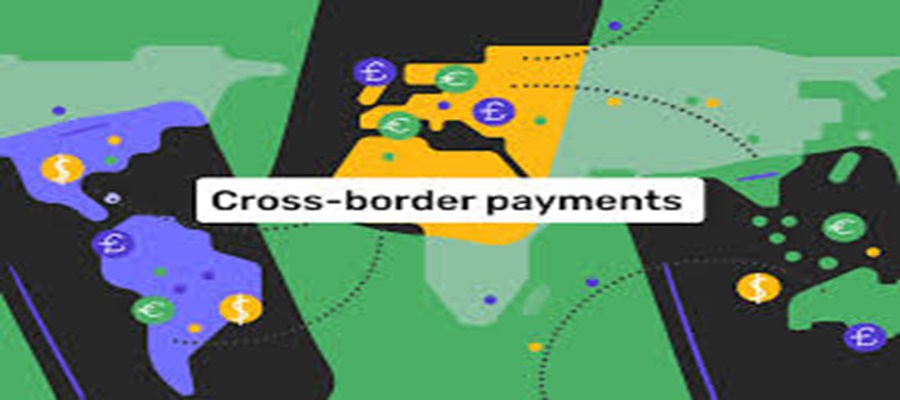
Federal government has launched the “Cross-Border Digital Payments and Identity in Nigeria under the AfCFTA” report, urging stakeholders to unlock trade opportunities for Micro, Small and Medium Enterprises (MSMEs) to access the $3.5 trillion African Continental Free Trade Area (AfCFTA) market.

The high-level report, hosted by the Office of the Vice President in collaboration with ODI Global under the Supporting Investment and Trade in Africa (SITA) programme, was unveiled by Ibrahim Hassan-Hadejia, deputy chief of staff to the President, in Abuja.
Hassan-Hadejia described the research as both timely and strategic, noting the strong coordination by the Office of the Vice President and the leadership of the Federal Ministry of Industry, Trade and Investment.
He revealed that the cross-border payments report followed earlier milestones, including the development and launch of Nigeria’s Digital Trade Strategy and a capacity-building programme for subnational leaders.
Furthermore, he said Nigeria is increasingly assuming a leading role in shaping the digital trade agenda across the African continent, necessitating that the country remains at the forefront of AfCFTA implementation.
He noted that deepening engagement with AfCFTA and enabling businesses, particularly SMEs, to conduct seamless cross-border transactions will be critical to unlocking trade, fostering growth, and creating jobs.
He further stated that efficient cross-border payments, supported by trusted digital identity systems as recommended in the report, will be key to realising President Bola Ahmed Tinubu’s Renewed Hope vision for Nigerian MSMEs.
The Deputy Chief of Staff also observed that while the report identifies the Pan-African Payment and Settlement System as a critical platform for cross-border digital payments, Nigerian fintech firms such as PalmPay and Moniepoint, which have some of the largest and most active user bases, will play a pivotal role in driving adoption.
He assured that the Federal Government remains committed to strengthening critical infrastructure, regulatory frameworks, and partnerships to ensure Nigeria is not only ready for digital trade but continues to lead.
“I appreciate the efforts of all stakeholders and urge us to move AfCFTA beyond a continental agreement to a $3.5 trillion trade juggernaut that will reinvigorate our industries, unlock intra-African trade, and domesticate African prosperity,” he added.
He said “intra-African trade will be driven not only by large corporations but by small businesses empowered through digital trade and e-commerce, while noting that issues of trust, identity, and logistics, as highlighted in the report, must be addressed”.
Commenting on the report, Temitola Adekunle-Johnson, special Adviser to the President on Job Creation and MSMEs, said the report – developed under the purview of the Office of the Vice President-would significantly strengthen the MSME ecosystem.
He expressed optimism that the report’s findings and recommendations would enable Nigerian SMEs to achieve seamless access to continental markets.
Salihu Dasuki, special Assistant to the President on ICT Policy, Office of the Vice President, disclosed that the office, in partnership with development partners, has developed a framework to fast-track seamless cross-border payments for MSMEs.
He added that “a key pillar of President Tinubu’s Renewed Hope Agenda is enabling Nigerians to access digital trade, which informed the capacity-building programme conducted for subnational governments last year”.
Shuda Ahmed, special assistant to the President on Project Support, Office of the Vice President, commended ODI Global for leading the research underpinning the report.
She noted that without seamless and affordable cross-border payment systems, MSMEs across the continent would be unable to scale beyond their domestic markets.
The event was attended by officials of ODI Global, representatives of AfCFTA, the National Information Technology Development Agency (NITDA), National Identity Management Commission (NIMC), Nigerian Petroleum Development Company (NPDC), Federal Competition and Consumer Protection Commission (FCCPC), and MSMEs, among other key stakeholders.
E-Financial
Interswitch Deepens Strategic Partnership with KCB Group to Advance Digital Payments and Financial Inclusion


Interswitch, Africa-focused integrated payments and digital commerce enabler, has reaffirmed and expanded its longstanding partnership with KCB Group within the East Africa region, marking a significant milestone in the drive to accelerate seamless, secure, and inclusive digital payments across the region.

During a recent executive engagement at KCB Group Headquarters in Nairobi, Interswitch Founder and Group CEO, Mitchell Elegbe, led a cross-functional delegation from the company’s Lagos and Nairobi offices, including Interswitch’s Kenya Country General Manager, Bernard Kinara, in high-level discussions with KCB leadership, including Group CEO, Paul Russo, and Director of Strategy & Innovation, Mark Mwongela.
The engagement reinforced both organizations’ shared commitment to scaling digital payment infrastructure and delivering innovative financial solutions that meet the evolving needs of individuals, businesses, and institutions across the region.
Interswitch recently announced an expansion of Verve card acceptance footprint in Kenya, leveraging it’s consolidated partnership with KCB Group, Kenya’s largest financial services group by assets, following a similar move in Uganda through the local KCB Franchise in February 2022.
At the core of the strengthened collaboration is the integration of Interswitch’s robust payment rails, card scheme, and emerging digital token solutions with KCB Group’s expansive regional footprint and trusted banking franchise. This integration enables the acceptance of Verve cards and tokenized payment solutions across KCB’s extensive merchant point-of-sale network in Kenya and Uganda, significantly enhancing everyday usability for customers while strengthening KCB’s digitally driven retail payments offering.
The consolidated partnership is expected to drive increased merchant acquisition, improve interoperability across payment ecosystems, and expand access to secure, cashless transactions. It also reinforces both organizations’ shared objective of deepening financial inclusion and accelerating digital commerce across East Africa.
Speaking on the strategic engagement with KCB Group, Mitchell Elegbe noted:
“Our collaboration with KCB Group represents a powerful alignment of vision and capability. By combining our technology-driven payment solutions with KCB’s strong regional presence, we are unlocking new opportunities to scale access, drive innovation, and deliver greater value to customers across East Africa.”
As digital transformation continues to reshape Africa’s financial services landscape, Interswitch and KCB Group remain focused on building resilient, interoperable systems that empower businesses, support economic growth, and drive broader participation in the digital economy.

LG Electronics Celebrates Women Who Power Progress @ 2026 Women’s Month Event

EFCC Waxes Worriedly over $160Bn Crypto Crime Losses

Dangote Refinery Debunks Speculations on IPO

FG Awards N50m Each to 45 Students under S-VCG

NGX REGCO Fines 5 Firms N291m for Market Manipulation

Spotify’s Loud & Clear Report Reveals Over ₦60Bn Revenue for Nigerian Artists in 2025

Madonna University Taps Tech Guru Adote for Strategic Board Role

China Threatens to Shut Nigeria’s Satellite Over $11.44m Unpaid Debt

Jumia Tech Week 2026 Begins with Tech Deals on Smartphones, Electronics, and Everyday Technology

FCCPC Bans Lagos ‘No Refund’ Policy, Vows Fines and Shutdowns for Traders




 E-Financial2 days ago
CBN bars large‑ticket loan defaulters from banking services in tough new crackdown

 General News2 days ago
ARN Rejects Medical Bill over Attempt to ‘Scrap’ Profession

 Telecom2 days ago
NIGCOMSAT Supports Startups Growth with the Launch of Accelerator 3.0

 News2 days ago
Meningitis Kills a Quarter Million People a Year -Study

 Telecom2 days ago
FG Unveils Digital Economy Research Fund Scheme

 News2 days ago
Stakeholder says AI is Crucial to Nigerian Data Centres Amid Persistent Grid Collapse
- General News2 days ago
Nigeria Advances Digital Governance as NITDA takes over NGEA Portal

 General News2 days ago
Zarttech Reflects on Its Role in Changing Global Perceptions of Africa