

News
Courier Operators Prepare for Training School

Registered courier operators in Nigeria have began preparation to set up a Courier Training Institute to be modeled after the Nigeria Communications Commission (NCC) Digital Institute to train skilled manpower for the industry, Nigeria Communications Week can now reveal.
The problem of personnel has become one of the greatest challenges facing the postal industry, because they are not adequately educated.
Registered courier operators under the aegis of Association of Nigeria courier Operators (Anco) said the situation has become unbearable, as they spend a lot of money and time training and re-training courier staff.
Toyin Olufade, Anco president who spoke to Nigeria Communications Week admitted that skilled manpower was part of the problems of the industry and that the institute will address that.
“Skilled manpower is an area that needs a serious attention, unfortunately for us, right now there is no courier school, no university where one can study courier, but of course we have courses in logistics which is not enough, so right now Anco is working on becoming chartered.
“We are planning to set up a training school, to train and also have a recruitment centre for various departments, from courier to clericals, customer service, marketers, and things like that, that is in the focus and it is in the pipe line. I am hoping that in the next one year, things will materialize and in our movement with government, the ministry of education and others, we will be able to become certified as soon as possible. Right now, individually we are trying to train and re-train our people in new developments in the courier industry”, Olufade said.
Also, he noted that it takes a longer time to train courier staff individually but if the training was done collectively in an institute, like what is obtainable in ICAN where after studying accountancy you also take a professional course to become a chartered accountant.
Furthermore, he said that as soon as the training school takes off courier operators will become more professional and more efficient in carrying out their responsibilities.



National Reading Culture (NRC), an online investment platform targeting Nigerians has collapsed, resulting in the loss of billions of Naira for investors.

The website unexpectedly shut down, blocking users from withdrawing their funds and locking in their investments.
Just like all other investment scams, victims were lured with promises of doubling their money in few weeks.
When National Reading Culture eventually crashed, the operators vanished with users’ funds, leaving investors devastated.
How the Platform WorkedTask-Based Earning:
According findings, National Reading Culture lured users with promises of making money by completing simple daily tasks like reading articles, clicking links, or inviting friends.
They also offered investment tiers to earn higher daily profits, where users had to deposit their own money into the platform.
Evidence showed the website previously operated as a Chinese job search platform before rebranding into an “earning” scheme.


The Nigeria Social Insurance Trust Fund (NSITF) has signed a memorandum of understanding (MoU) with Rand Mutual Assurance (RMA) to collaborate on digital transformation aimed at strengthening worker protection systems and support economic growth.

According to RMA, the agreement was concluded during a visit by its delegation to Abuja.
The partnership will focus on institutional capability development, modernising operating models, improving service delivery and sharing knowledge between the two organisations.
Through the partnership, RMA and NSITF will collaborate to strengthen institutional capability, modernise operating models, accelerate digital transformation and improve services for workers and employers.
The organisations will also explore opportunities for knowledge exchange and the adoption of best practices in social security administration.
RMA said the agreement forms part of its broader engagement with governments, regulators and social security institutions across Africa to support improvements in governance, operational resilience and service delivery.
“Our partnership with NSITF reflects much more than the signing of an agreement,” said Mandla Shezi, group chief executive officer of RMA. “This partnership is not simply about sharing knowledge. It is about co-creating the next generation of African social security systems.”
He added: “By combining our respective strengths, we can help build institutions that are more resilient, more responsive and better equipped to protect workers while supporting national development.”
Shezi said the future of social security depends on integrated systems where prevention, insurance, healthcare, rehabilitation, technology, investment management and institutional capability work together.
News
Senate Rejects Nationalisation of MTN, DStv Over Xenophobic Attacks on Nigerians in South Africa

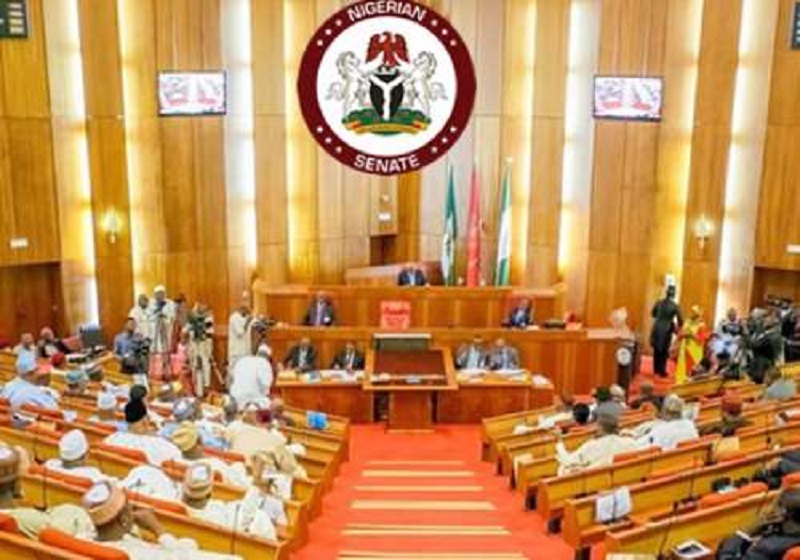
Senate on Tuesday rejected calls for the nationalisation of South African-owned companies operating in Nigeria, including MTN and DStv, as a retaliatory measure against renewed xenophobic attacks on Nigerians in South Africa.

The upper chamber, however, condemned the attacks and intimidation of Nigerians and other African nationals in South Africa, urging the Federal Government to intensify diplomatic efforts to secure the safety of Nigerians living in the country.
The resolutions followed a motion titled: “Motion on the Need to Halt the Recurring Xenophobic Attacks and Intimidation Against Nigerians and Other African Nationals in the Republic of South Africa,” sponsored by Senator Asuquo Ekpenyong (APC-Cross River South).
The motion was triggered by renewed concerns over attacks against foreign nationals in South Africa following the expiration of a June 30, 2026 deadline reportedly issued by some vigilante groups asking foreigners to leave the country.
During the debate, Senator Wasiu Eshilokun proposed that South African companies operating in Nigeria should be nationalised, while Senator Adams Oshiomhole suggested that profits generated by South African firms could be appropriated to compensate Nigerians who suffered losses if the South African government failed to provide compensation.
Oshiomhole argued that Nigerians should not continue to bear the consequences of attacks against their businesses and lives while South African companies operating in Nigeria continued to make profits.
He said the government should consider using profits from affected companies to compensate victims if South Africa refused to address the losses suffered by Nigerians.
However, the Senate declined the proposal, opting instead for diplomatic engagement and further investigation into the attacks.
Presiding over plenary, Deputy Senate President Barau Jibrin cautioned lawmakers against relying on unverified social media reports and urged a careful approach to the matter.
Jibrin said Nigeria must condemn attacks against its citizens but should allow relevant committees to complete their investigations before taking further actions.
He directed the Senate Committees on Foreign Affairs and Diaspora and Non-Governmental Organisations to review previous resolutions on the matter and submit a report within two weeks.
The Senate also urged the Federal Government, through the Ministry of Foreign Affairs and the Nigerian High Commission in South Africa, to obtain written assurances from South African authorities on the protection of Nigerians and demand the arrest and prosecution of persons responsible for violence, intimidation and looting.
The lawmakers further called for collaboration with other African countries and relevant continental institutions to establish effective mechanisms for monitoring and preventing xenophobic attacks.
Senator Ekpenyong had earlier raised concerns that the attacks were no longer limited to undocumented migrants but had extended to Nigerians with valid work and residence permits.
He described the situation as a threat to the dignity and safety of Nigerians abroad, urging the government to take stronger measures to protect citizens.
The Senate’s latest action comes amid renewed public anger over attacks targeting Nigerians and other foreigners in South Africa, with lawmakers insisting that diplomatic solutions should be prioritised over economic retaliation.

Court Declares ARCON’s N60Bn Fine against Facebook Nigeria Illegal

NIN Enrollment Hits over 136m as New ID Law Takes Effect

NRC, Ponzi Scheme Collapses Resulting Loss of Billions of Naira

Plateau PCC Collects Nigerians’ Data without Privacy Policy – FIJ

FG Suspends New Internet Regulations to Prevent Overlapping Rules

NASENI Moves to Digitize CCB’s 5m Assets Declaration and Operations

Mobile Internet Gender Gap Widest in Africa – GSMA

Nigeria Launches FreeTV Nationwide

CANAL+ Partners Samsung to Pre-Load DStv Stream on New Samsung TVs In Nigeria, Other African Countries

CredibleVoteNG Opens Free Access to all Polling Units in Nigeria after INEC Demanded N1.Bn for Register




 E-Financial3 days ago
Tokenization, Blockchain Technology will Transform Financial Institutions – IMF

 General News3 days ago
NIS Deploys Advanced Surveillance Masts, other Critical Infrastructure to Boost Border Security

 General News2 days ago
IHS Nigeria, FCT-HSES Concludes Clean Cooking Energy Campaign “Project Breathe Clean Air” in Abuja

 Broadcasting3 days ago
Obi, NDC Presidential Candidate Faces N50Bn Defamation Claim over Alleged Podcast Remark

 E-Business3 days ago
Weebly Websites to Shut Down for Nigeria, 66 Other Countries from September

 E-Financial3 days ago
FG Denies N8 Trillion ‘Shadow Budget’, Says IMF Quoted out of Context

 Telecom3 days ago
No Plans for Fresh Tariff Hike – MTN

 News3 days ago
World Bank Sounds Alarm: Low Revenue, Not Debt, Is Nigeria’s Biggest Fiscal Threat