

Telecom
Court Judgement: Confusion over Future of 9mobile


Spectrum Wireless Communications’ lawyers have warned all institutions or companies engaged in commercial transactions for the sale or acquisition of 9mobile that they did so at their own risk.
The solicitors to the firm, J. A. Achimugu and Co. and Dr. Reuben Atabo and Co., said by virtue of the judgement it received on Friday, the transition board appointed to oversee the sale of the company had been nullified and the order appointing the board vacated.
Spectrum Wireless is also demanding a refund of its initial investment of $35m in Etisalat Nigeria.

“My client wants his money back,” one of the solicitors, Atabo said while speaking with journalists at a press briefing in Lagos on Sunday.
Atabo claimed that the $1.2bn loan secured by Etisalat was shrouded in secrecy as Spectrum Wireless was not aware of it.
He said findings showed that about $100m investment from Spectrum Wireless and three other non-bank investors was used to build infrastructure that some directors in the company used as collateral for the $1.2bn loan.
Atabo stated, “Our client and three other investors put in about $100m as of 2009. The $100m was used in providing infrastructure for the company. It was this infrastructure that gave EMTS the opportunity to go to the banks to obtain the loan of $1.2bn. Is it proper for United Capital not to recognise the original investor when they got the loan?
“We have written series of letters to the Nigerian Communications Commission as the regulating body conveying to them our investment and the need for them to come to our aid. They always tell us they are investigating for the past five to six years.
“Assuming they go ahead with the sale, we will not be recognised at all. It is better the issue is sorted out before the sale is completed.”
Following the inability to the resolve a loan of about $1.2bn obtained from a consortium of 13 Nigerian banks under the auspices of United Capital Trustees Limited, the Etisalat Group of United Arab Emirates withdrew its 45 per cent stake in the company.
As a result of the pulling out its business and brand name from Nigeria, a change of name from Etisalat to 9mobile was effected.
However, through the intervention of the NCC and the CBN, the takeover of the company by the consortium of banks was prevented and a board was put in place to see to the sale of the company.
Companies that have been reportedly shortlisted for the acquisition of 9mobile after submitting their expressions of interest to Barclays Bank include Bharti Airtel, Smile Telecoms Holdings, Helios Investment Partners LLP and Teleology Holdings Limited and Globacom.
The Federal High Court in Lagos had on Friday nullified the appointment of an interim board for 9mobile, the company that came out of Etisalat Nigeria following the pull-out of its major shareholder, Emerging Markets Telecommunications Service, from Nigeria.
Justice Ibrahim Buba made the order based on an application by Spectrum Wireless Communication Limited.
The court order nullified the appointment of Dr. Joseph Nnana of the Central Bank of Nigeria as the chairman of the 9mobile; Mr. Boye Olusanya, as managing director; and Mrs. Funke Ighodaro, as chief financial officer.
Other members of the board affected by the order are Mr. Seyi Bickersthet and Mr. Ken Igbokwe.
The judge made the order after dismissing a preliminary objection filed by United Capital Trustees Limited in response to the application by Spectrum Wireless, a shareholder of EMTS.
The interim board of 9mobile, which was constituted by the CBN and the Nigerian Communications Commission, had received bids from about five bidders for the sale of the company.
The sale was to be concluded by December 31, 2017 but it was recently moved to January 16.
Following the exit of Etisalat and its directors in June 2017 from EMTS, United Capital initiated an action in court and obtained an ex parte order on July 3, 2017 to appoint a transitional board to superintend over the affairs of the company.
The transitional board rebranded the company as 9mobile and announced a bid for its sale to interested investors.


MTN Nigeria has alerted the public to a fraudulent 25GB anniversary data offer currently circulating across social media and messaging platforms.

In an official advisory published on its support handle on X at the weekend, the telco warned customers against interacting with unverified links, sharing private credentials, or making payments to access the supposed anniversary promotion.
According to MTN, the official 25GB anniversary freebie is only accessible via the MTN eShop and the MyMTN NG App.
In the post, the company said, “Please beware of fake MTN 25th Anniversary 25GB giveaway offers circulating online.
“The official MTN 25GB Anniversary Giveaway is available ONLY via the MyMTN NG App and MTN eShop.
“Do not click on links, share your personal information or make payments on any other platform claiming to offer the giveaway.
“Only trust official MTN channels.”
In a different post, the provider explained how eligible subscribers could access the legitimate MTN data giveaway.
The company said, “Log in to the MyMTN App and tap ‘Redeem Now’ on the anniversary banner or via the MTN eShop.
“To access the 25GB offer, kindly visit the MyMTN App or the MTN E-Shop and follow the prompts to activate the bundle, if you are eligible for the offer.
“You may also click on the link contained in the SMS notification you received regarding the offer.”
To safely claim the reward, the telecom operator advised subscribers to rely strictly on details published through its official communication channels.
MTN added that the complimentary 25GB data allocation remains valid until 11:59 p.m. on the designated expiration date, urging eligible customers to redeem the package before it expires.
The warning follows a wave of viral posts and link-sharing schemes falsely offering free data under the guise of the company’s 25th-anniversary celebration.
Consequently, users are strongly cautioned against engaging with unauthorized platforms or providing sensitive personal information and fees to third-party sites claiming to offer the promotional data.

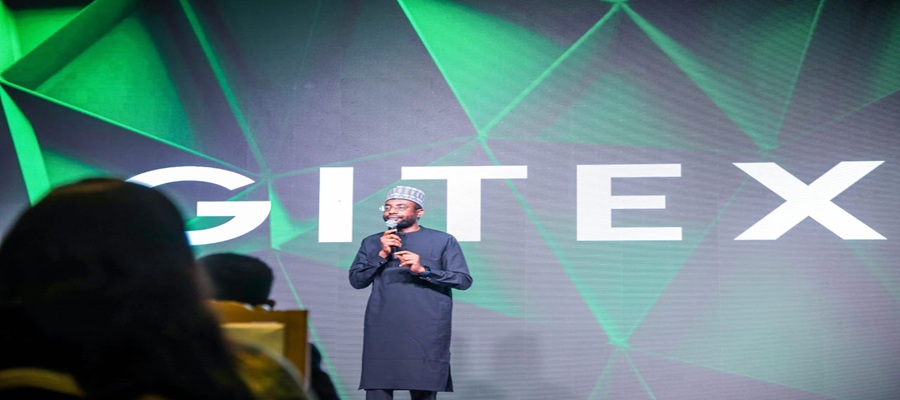
Nigeria is strengthening its position as a leading digital economy in Africa as it prepares to host the second edition of GITEX Nigeria, against projections that the continent’s artificial intelligence (AI) economy could generate up to $1 trillion in economic value by 2035.

GITEX Nigeria
GITEX Nigeria, described as West Africa’s largest technology, AI and startup event, is scheduled to hold in Abuja and Lagos from Aug. 31 to Sept. 3, under the patronage of President Bola Tinubu.
The event is supported by the Federal Ministry of Communications, Innovation and Digital Economy in collaboration with the National Information Technology Development Agency (NITDA), endorsed by the Lagos State Government and organised by KAOUN International.
With the theme, “Beyond Connectivity: The Bridge to Sovereign Innovation,” the 2026 edition is expected to bring together global technology companies, investors, policymakers, regulators, startups and other stakeholders to advance Nigeria’s digital transformation agenda.
According to the organisers, the event will focus on strengthening digital resilience, scaling AI infrastructure, attracting strategic investments and building partnerships to support digital sovereignty across Nigeria and West Africa.
Nigeria’s progress in digital skills development is expected to feature prominently at the event, with the Federal Government’s 3 Million Technical Talent (3MTT) programme highlighted as a major intervention.
The programme has recorded 1.87 million registrations across all 774 local government areas, while more than 135,000 Nigerians have been trained through three cohorts.
The programme has also extended learning opportunities to more than 300,000 people through community resources and created 15,000 job and opportunity pathways, according to figures released by the organisers.
Another key initiative, Project BRIDGE, is aimed at expanding Nigeria’s national ICT backbone and improving connectivity in underserved communities.
The project is expected to create up to 20,000 direct jobs and more than 150,000 indirect jobs, train 5,000 Nigerian youths, raise internet penetration above 70 per cent and extend high-speed connectivity to millions of households, businesses, schools and hospitality establishments.
Dr Bosun Tijani, Minister of Communications, Innovation and Digital Economy, said Nigeria’s objective was to build the foundations for digital sovereignty and a globally competitive AI-powered economy.
“Building on the momentum forged through the implementation of Project BRIDGE, our national blueprint for expanding digital infrastructure and connecting communities across Nigeria, our aspiration ahead of this year’s edition is clear: to solidify the foundations Africa needs for digital sovereignty, technological self-determination, and a globally competitive AI-powered economy,” Tijani said.
He said Nigeria was seeking to promote equitable access, accelerate cross-continental progress and position the country as a producer and exporter of digital technologies and AI solutions.
The GITEX Nigeria Government Leadership and AI Summit will open in Abuja on Aug. 31, bringing together ministers, governors and regulators to discuss digital public infrastructure and other issues shaping West Africa’s digital economy.
The GITEX Nigeria Tech Expo and Future Economy Conference, as well as the Startup Festival, will also return for the second consecutive year.
A new component, FDX Nigeria by GITEX, will focus on finance and digital asset exchange, with the organisers describing it as a platform designed to promote financial inclusion and connect emerging technology with global capital.
Gov. Babajide Sanwo-Olu of Lagos State said the state remained central to Africa’s digital transformation, noting its role in attracting talent, capital and innovation.
He said hosting GITEX Nigeria would further support Lagos’ ambition of becoming a smarter, more connected and globally competitive economy.
Kashifu Inuwa Abdullahi, Director-General of NITDA, said Nigeria’s digital future would depend not only on technology adoption but also on resilience, trust and effective governance frameworks.
“GITEX NIGERIA seamlessly complements this mandate, creating a unique environment for the dialogue needed to accelerate responsible AI adoption, develop a secure digital economy, and unlock new opportunities for innovation and economic growth,” Abdullahi said.
He said the expertise, investment and partnerships generated through the event would contribute to building an AI ecosystem that was secure, inclusive and capable of supporting Nigeria and West Africa’s long-term competitiveness.
The organisers said Nigeria’s National AI Strategy, 3MTT programme and Project BRIDGE were among initiatives strengthening the country’s capacity in talent development, digital infrastructure, investment attraction and responsible AI adoption.
They said GITEX Nigeria would provide an avenue for global stakeholders to establish partnerships and develop solutions capable of accelerating the region’s digital transformation.
Trixie LohMirmand, CEO of GITEX, said the event was intended to demonstrate that West Africa was ready to convert technological ambition into economic growth, resilience and global competitiveness.
She said GITEX Nigeria would facilitate strategic conversations and partnerships aimed at strengthening regional competitiveness and unlocking scalable growth across Nigeria and West Africa.
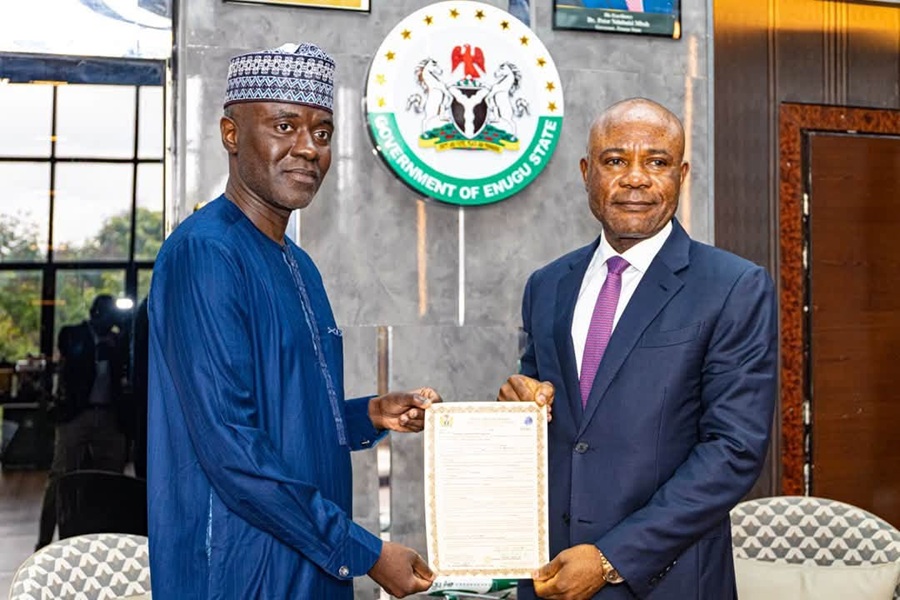
Nigerian Communications Commission (NCC) and the Enugu State Government have signed an agreement for the operational lease of the NCC Digital Industrial Park and NCC Learning Centre in Enugu.

The agreement was witnessed by Dr Aminu Maida, Executive Vice Chairman and Chief Executive Officer of the NCC, alongside members of the Commission’s Board and Management.
The development is expected to strengthen digital innovation, skills development and technology-driven opportunities in the state.
As part of the engagement, the NCC delegation also visited the Enugu Smart School Initiative, where technology is being integrated into teaching and learning.
The initiative is aimed at equipping young Nigerians with relevant digital skills and preparing them for future opportunities in an increasingly technology-driven economy.
The NCC said it remained committed to supporting initiatives that expand digital inclusion, strengthen innovation and develop the talent required to drive Nigeria’s digital transformation.
The Commission said partnerships with state governments and other stakeholders were critical to creating an enabling environment for digital skills development and technology adoption across the country.

Fake Agency: ICPC Indicts NITDA, Others over Inadequate Due Diligence

Tax Reform Built on Taxing Prosperity, Not Poverty– Adedeji

UNESCO Taps Oguamanam,Nigerian Scholar to Advisory Body on Science, Tech Ethics

MTN Alerts Subscribers over Fake 25GB Anniversary MTN Data Giveaway

X Replaces Revenue Sharing wit New Creator Rewards Programme

EFCC Busts NIS Visa Overstay Racket, Uncovers N700m in an Account

Fact-Check: Elon Musk’s “Tesla Pi Phone” is Internet Rumor

NBC Tasks Broadcasting Stations over 2028 DSO Global Deadline

NBC Scraps Annual Digital Access Fee on DSO

Glo Sponsored African Voices to Feature Netflix’s “The Polygamist” Stars




 General News2 days ago
Guinness Rewards Consumers with ₦17 Million in First Week of ‘Open for More’ Promo Draw

 News3 days ago
Glovo Pioneers AI Quick-Commerce

 News2 days ago
World Bank Debars United Aviation Services, Owner over Fraudulent Activities

 E-Business2 days ago
NITDA Introduces Cloud Certification Boost Data Localisation Compliance

 Telecom2 days ago
NCC, Enugu Sign Deal to Operate Digital Industrial Park, Learning Centre

 E-Financial2 days ago
BOI Opens N250Bn Bond Offer to Fund Businesses

 News2 days ago
Enugu State Approves Land for ITF’s Digital Fabrication Centre

 General News2 days ago
Meta Hit With $567m US Court Order Over Alleged Harm to Children