

E-Financial
Court Okays Suit Compelling Emefiele to Account for COVID-19 Donations


Justice Inyang Ekwo of Federal High Court in Abuja has granted leave to Heda Resource Centre – a group to apply for judicial review and order of mandamus to compel the Governor of Central Bank of Nigeria (CBN) to among others, provide details of financial donations received by the country in relation to the coronavirus pandemic.

Mr. Godwin Emefiele, CBN governor
Justice Ekwo, in a ruling on Monday, also granted leave to Heda to seek an order declaring that the failure of the CBN to provide the plaintiff information on the sources of the donations, how they are being applied, among others, amounted to a violation of the applicant’s rights under the Freedom of Information Act and the African Chatter on Human and People’s Rights.
The ruling was on an ex-parte motion filed by Heda in a suit, marked: FHC/ABJ/CS/1456/2020, with the CBN Governor listed as sole respondent.
Justice Ekwo ordered Heda to file, within seven days, a formal application for the orders sought, which it must serve on the respondent within seven days.
The judge ordered the respondent to, upon being served, files its response within 30 days.
With the leaves granted on Monday, Heda is now empowered to apply for an order of judicial review and mandamus to compel the CBN Governor to “disclose and make a comprehensive breakdown of financial donations received towards responding to the emergence of COVID 19 tilt date.
It will also seeks to compel the respondent “to release detailed list of the names of the donors (individual, corporate and international organizations), sources of the donations and the amount contributed by each of the individuals and corporate bodies,” and “provide the dates of every donation received by the Central Bank of Nigeria.”
The applicants equally intends to seek an order declaring that the failure of the respondent to publish and provide comprehensive details of financial donations received towards responding to the emergence of COVID-19 til date; detailed list of the names of the donors (individual, corporate and international organizations), sources of the donations and the amount contributed by each of the individuals and corporate bodies, as well as the dates each donation were received by the CBN constitutes a breach of the applicants’ rights under the Freedom of Information Act, 2011 and the African Charter on Human and Peoples’ Rights.
Heda, in a supporting affidavit, stated that its recourse to the court was informed by the CBN Governor’s failure to provide the information as sought in its letters dated July 29 and September 30, 2020.
It added that “it is widely reported that about N15 billion in monetary contributions, is currently in the account set up under the Private Sector Coalition Against COVID19 (CACOVID) and domiciled with the respondent.
“The applicant is seriously concerned that the larger proportion of Nigerians, including the poorest and the most vulnerable people, have not benefited, up tlil now, from the Federal Government and Private Sectors announced palliatives, donations, cash payments, cash transfers and other benefits.
“The interest of the public in granting access to the information requested is far greater than any other interest the respondent may be trying to preserve.”


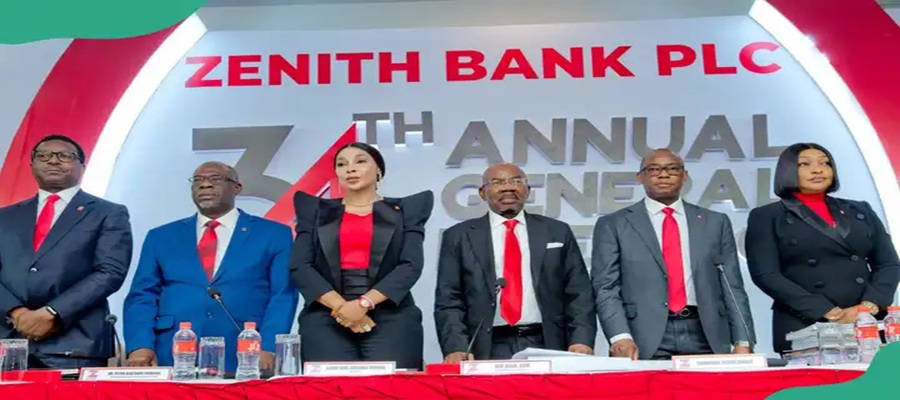
Renaissance Capital Africa (Rencap) has named Zenith Bank Plc its top conviction pick among Nigerian banks, ahead of GTCO and AccessCorp, in a fresh research report highlighting the lender’s robust balance sheet and dividend potential despite sector headwinds.

Zenith Bank
The comprehensive review of the Nigerian banking industry notes that Zenith’s current market valuation lags its improving fundamentals, even as the NGX Banking Index posts strong gains recently.
Rencap upgraded Zenith from HOLD to BUY, lifting its target price by 96 per cent based on a lower risk-free rate from falling government bond yields, refined beta estimates, and expectations of cleaner assets post-forybearance resolutions.
Balance Sheet Strength Drives Outlook
Analysts project challenges to earnings growth from anticipated Central Bank of Nigeria (CBN) rate cuts but foresee higher dividend payouts from resolved forbearance and single obligor loan (SOL) exposures alongside rising cash profits.
“Although we expect banks to face challenges in growing earnings… the balance sheet clean-up… will support higher dividend payouts relative to prior years,” the report states, ranking Zenith first, followed by GTCO and AccessCorp.
Key positives include loan write-offs that bolstered asset quality, enabling sustainable growth amid financial system reforms.
Dividend Recovery in Focus
Sector profitability from 2023-2024 was inflated by unrealised foreign exchange gains, which regulations barred from cash dividends, capping payouts despite headline profits.
Zenith historically led payout ratios in 2021-2022 via strong cash generation and capital discipline; Rencap expects a rebound as pressures ease, attracting income-focused investors.
Tier-1 Leadership Reinforced
Zenith Bank recently topped Nigeria’s tier-1 capital rankings for the 16th straight year, per The Banker magazine (Financial Times), affirming its resilience and positioning for long-term value creation.
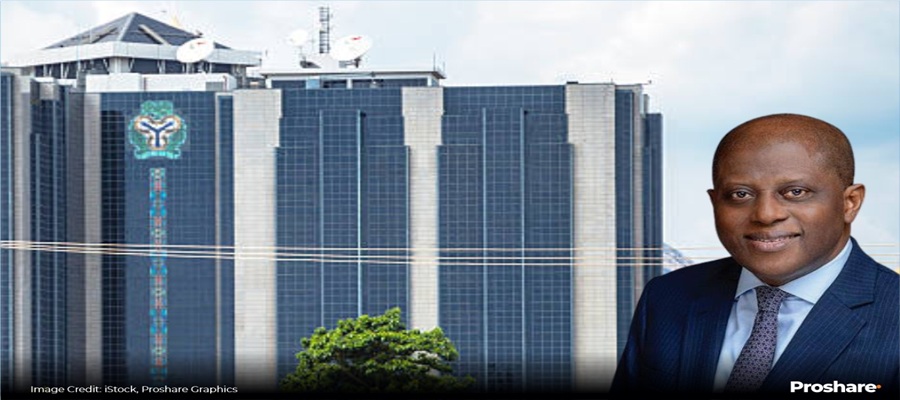

CBN
- Access Bank Plc
- Fidelity Bank Plc
- First Bank of Nigeria Ltd
- Guaranty Trust Bank (GTBank)
- United Bank for Africa (UBA)
- Zenith Bank Plc
- FCMB (First City Monument Bank) – currently pushing to raise additional capital to secure its international licence.
- Wema Bank
- Standard Chartered Bank (Nigeria)
- Citibank Nigeria
- Stanbic IBTC Bank
- Sterling Bank
- Globus Bank
- Premium Trust Bank


The Securities and Exchange Commission (SEC) has revised the minimum capital applicable to all categories of regulated capital market entities after 10 years.

The minimum capital review, according to the SEC, is informed by the need to strengthen market resilience, enhance investor protection, align capital adequacy with the evolving risk profile of market activities, and ensure that regulated entities possess sufficient financial capacity to discharge their obligations in a sustainable manner.
“The revised Minimum Capital framework seeks to: enhance the financial soundness and operational resilience of market operators; align capital requirements with the scope, complexity, and risk exposure of regulated activities; promote market stability and systemic risk mitigation; and support innovation and orderly development of new market segments, including digital assets and commodities markets,” SEC said in a January 16 circular to market operators.
The SEC circular was sent to all entities regulated by the Commission, including but not limited to core and non-core capital market operators; market infrastructure institutions; capital market consultants; financial technology (FinTech) operators; Virtual Asset Service Providers (VASPs); and Commodity market intermediaries.
All affected entities are required to comply with the revised Minimum Capital Requirements on or before June 30, 2027, the circular said.
“Entities that fail to meet the prescribed requirements within the stipulated timeline shall be subject to appropriate regulatory sanctions, including suspension or withdrawal of registration, as may be determined by the Commission,” SEC said.
Tier-1 Portfolio Managers (Full Scope) involved in the management of Collective Investment Schemes (CIS) and Alternative Investment Funds (Private Equity, Venture Capital, Infrastructure Funds etc) above N20 billion Net Asset Value (NAV), or discretionary and Non-Discretionary Private Portfolio Management Services above N20 billion Assets under Management (AuM), or exposure to foreign instruments up to 40 percent of the NAV are now required to have a minimum capital of N5 billion as against N150 million.
“Any Fund and Portfolio Manager with NAV/AuM of more than N100billion should have a minimum of 10 percent of the NAV/AuM as capital,” SEC added.
For the Tier-2 fund/portfolio managers (Limited Scope) who are in the business of management of Collective Investment Schemes with limited pooled fund creation of not more than 10 times the required capital (N20 billion) on Net Asset Value (NAV), or discretionary and non-discretionary private portfolio management services of not more than N20 billion, or those exposure to foreign instruments of not more than 20 percent of the NAV, now require N2 billion as minimum capital as against low of N150 million.
Likewise, broker-dealers whose services include: client execution, proprietary trading, margin/securities lending and advisory services no longer require N300 million minimum capital to operate but N2 billion.
The SEC said the minimum capital review from 2015 low is in line with its mandate under the Investments and Securities Act 2025 to regulate and develop the Nigerian capital market.
Also, Tier 1 issuing houses who do non-interest finance services, advisory & arrangement services but no underwriting now require N2 billion as against N200 million; while Tier 2 –issuing houses with underwriting and offers a ‘one-stop-shop’ for issuers, provides underwriting services, and renders advisory and product development services require N7 billion minimum capital for this business as against N200 million.
Also, the minimum capital requirement for brokers (client execution only) has been jacked up from N200 million to N600 million, while that of dealers (proprietary trading only) has been moved from N100 million to N1 billion.
Broker-Dealers’ (client execution, proprietary trading, margin/securities lending and advisory services) has been raised from N300 million to N2 billion, while Sub-Brokers’ (Digital) from N10million to N100million; Sub-Broker (Corporate) has been increased from N10million to N50 million. Also, sub-brokers’ (Individual) now need N10 million minimum capital for the business as against N2 million while inter-dealer brokers require N2 billion as against N50 million.

Zenith Bank Top Nigerian Bank Pick Ahead of GTCO, AccessCorp

Here Are Nigerian Banks That Have Secured Their Licences

ICPC Charges Ozekhome with Forgery, Corruption Over London Property

MTN CEO Toriola Hails Nigeria’s Telecom Transformation at MIPAD

SEC Hikes Minimum Capital Requirements for Market Operators After a Decade

Banks quietly move to enforce new ₦50 transfer levy from Jan. 1

FIRS says NIN, CAC Numbers to Serve as Tax IDs from 2026

FIRS Declares NIN, CAC Numbers as Tax IDs from 2026

US Begins Partial Visa Ban on Nigerians January 1

Galaxy Backbone Tops FG’s Website Performance Ranking



 E-Financial2 days ago
SEC Hikes Minimum Capital Requirements for Market Operators After a Decade

 Telecom2 days ago
Study Shows Blocks in Telegram are Pushing the Underground Out

 News2 days ago
Nigeria Off EU High-Risk Money Laundering List in Major Financial Win

 News2 days ago
NGX Unveils Net-Zero Plan for Greener Capital Market

 Telecom2 days ago
Vodacom Crowned Africa’s Top Employer 3rd Year Running on Innovation, Ethical AI

 Telecom2 days ago
Galaxy Backbone Marks Two Decades of Powering Nigeria’s Digital Evolution

 Telecom2 days ago
Galaxy Backbone Marks 20 Years, Tops FG Website Scorecard
 News5 hours ago
ICPC Charges Ozekhome with Forgery, Corruption Over London Property