

Telecom
COVID-19: No 5G License in Nigeria Yet- Pantami Clarifies

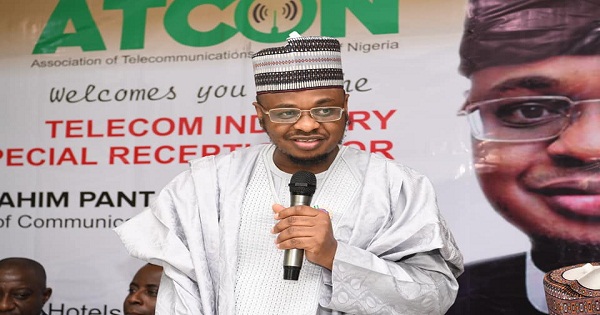
Dr Isa Ali Ibrahim (Pantami), minister of Communications and Digital Economy, has clarified that no license has been issued for the deployment of Fifth Generation (5G) network services in Nigeria.

Pantami gave the clarification in a press statement released over the weekend and made available to NigeriacommunicationsWeek.
According to the statement, he said that his attention has been drawn to the public concern about the health implications of the deployment of Fifth Generation Mobile Networks (5G) in Nigeria and based on available records he clarified as follows:

“i. The National Frequency Management Council (NFMC), of which I am the Chairman, has not deliberated on or released any bulk frequency spectrum for the deployment of 5G;
“ii. No license has been issued for the deployment of 5G in the country;

“iii. A 3-month study trial commenced on the 25th of November, 2019 in order to critically review and study the health and security implications of deploying 5G in Nigeria;
“iv. As part of the study trial process, I directed the Nigerian Communications Commission (NCC) to ensure that a team of experts, security agencies and other stakeholders fully participate in the trial process and my office also invited these agencies to participate in the trial; and
“v. The trial process has been concluded and the study and reporting process is currently ongoing.”
He further stated that, president, Muhammadu Buhari, places premium on the welfare, health and security of Nigerians.
“As such, our desire for technological advancement will never be at the expense of the health and welfare of our citizens,” he declared.
Pantami assured that FG will not act on the speculations only, but rather we will take an informed decision on 5G after due consultation with experts and the public.
“I have also directed the NCC to engage citizens on any questions or concerns they may have regarding 5G.
“We advise you all to remain rest assured that government will always take the welfare, health and security of the public into account while considering the deployment of any technology,” he assured.


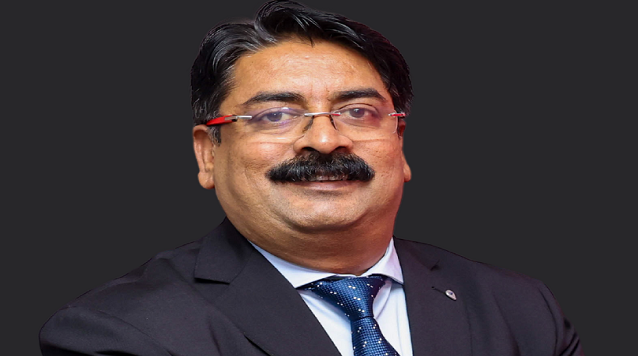
Airtel Nigeria is approaching the 18,000-cell-site mark as the telecommunications operator accelerates network deployment across the country, adding more than 1,000 new sites annually and extending high-speed mobile connectivity deeper into rural communities.

The expansion places Airtel as an operator making one of the largest sustained infrastructure commitments to Nigeria’s digital economy, with the company’s network now spanning all 774 Local Government Areas in the country.
More than 99 percent of Airtel Nigeria’s sites are 4G-enabled, with the company continuing to add new capacity and upgrade existing infrastructure as demand for mobile connectivity rises. Airtel Africa’s latest annual report said the Nigerian operation added more than 1,050 new sites during its 2025-26 financial year.
The pace represents a significant increase from the approximately 15,000 sites Airtel operated two years ago. By early 2026, the operator had crossed 17,000 sites, after adding about 2,000 sites in two years.
The current expansion has also taken the network further into locations that have historically been underserved by telecommunications infrastructure. These communities include Kukawa, Borno State; Okomu-Udo, Edo State; Chimbi, Niger State; Orile Ijaiye, Oyo State; Kopii, Benue State; and Aran-Orin, Kwara; among others.
Airtel has previously said a significant portion of its network investments is targeted at deep rural communities, small towns and the fringes of major cities. At a media roundtable in February, Chief Executive Officer, Dinesh Balsingh, said the company intended to maintain the large scale of network expansion during 2026.
“Everyone has the right to digital connectivity, including people in deep rural markets and small communities,” Balsingh said.
The impact of the growth extends beyond the ability to make calls or browse the internet. Wider network availability gives families more reliable access to one another, enables businesses to communicate with customers and suppliers, and supports access to digital banking, education, healthcare and government services.
For farmers in remote areas, mobile connectivity can provide access to current crop prices, weather information, market information and agricultural advisory services. For small businesses, reliable mobile data supports payments, customer acquisition, logistics and digital commerce. For communities, connectivity can improve access to health and social services and help residents participate more fully in the digital economy.
Airtel’s network strategy is also increasingly focused on improving the experience delivered through the infrastructure already in place. In 2025, the company upgraded capacity on about a quarter of its existing sites, deploying higher-capacity radios and moving portions of its backhaul from microwave to fibre.
The operator has also reported a continued addition of spectrum to strengthen its spectrum position. Since November 2025, it has added 20MHz spectrum, which is on track for full integration on all sites this quarter.
Balsingh said the company’s investment programme was designed to improve coverage, capacity and resilience, with the benefits ultimately reflected in the quality of service experienced by customers.
“We have invested with discipline and clarity to strengthen our network nationwide. Those investments are now translating into measurable improvements in performance, customer experience and reach, including in underserved communities,” he said.
Third-party measurements have also continued to provide evidence of changing network performance in Nigeria. Ookla’s Speedtest Global Index, for example, reported a median mobile download speed of 97.74 Mbps for Nigeria in June 2026.
For Airtel, the network expansion not only extends the geographical footprint; but also increases the speed, capacity and stability available to existing customers.
Director of Marketing, Ismail Adeshina, said the company’s network investments were ultimately aimed at making connectivity more useful in the everyday lives of Nigerians, as increasing numbers of consumers, families and businesses depend on mobile services for communication, commerce and access to essential services.
Airtel’s infrastructure programme is also contributing to the wider development of Nigeria’s digital economy.
“With mobile connectivity increasingly serving as the platform for financial services, commerce, education, healthcare, agriculture and enterprise, expanding the physical network effectively increases the number of Nigerians able to participate in those activities,” Adeshina said.
Telecom
GSMA Industry Services Unveils Circularity Services to Help Operators Reduce E-Waste and Unlock Value


GSMA Industry Services have announced the launch of its new Circularity Services offering, designed to help mobile operators and ecosystem partners extend the life of devices, reduce e-waste, and unlock greater value from existing assets.

The offering launches with two commercial partners: Closing the Loop, whose ‘One for One’ service links one new mobile device sold by an operator to the collection and responsible recycling of one end-of-life device, and RGX, a neutral, online marketplace for enterprise asset disposition.
As the mobile industry continues to grow, operators are increasingly looking for practical ways to both meet sustainability commitments and enhance commercial performance.
GSMA Circularity Services has been developed to address these challenges by providing access to trusted partners and proven solutions that support the recovery, reuse, refurbishment and responsible recycling of ICT assets – helping organisations deliver on customer needs, reduce costs and generate value from equipment that might otherwise sit idle.
The ‘One for One’ service provides a practical and measurable way for organisations to incorporate circularity into their device propositions. Vodafone, Samsung and T-Mobile have successfully used the customer-centric program for devices sold in Europe, while Google is a global user.
One for One leads to electronic waste reduction around the world and has created positive impact in countries where formal waste collection and recycling infrastructure is often limited. Closing the Loop is an award-winning social enterprise, supported by UNIDO, UNEP and GIZ.
Joost de Kluijver, Co-founder and CEO, Closing the Loop, said: “The GSMA is globally respected as a unifier of the mobile ecosystem, and we’re excited to work together to expand the value that our ‘One for One’ service can deliver across the industry.
“By linking one new device sold to the collection and responsible recycling of one end-of-life phone, we help operators take practical action on waste reduction while supporting their wider circularity ambitions.
“One for One is also a differentiator at the point of sale that adds clear, value for customers and the brand. Through this partnership, we look forward to helping more organisations use circular thinking to excite customers.”
Michael Jungwirth, Head of Sustainability, Vodafone Germany explains why One for One is important to them and the broader ecosystem: “E-waste is a global problem. That’s why our solutions must not end at national borders.
“With One for One, we take responsibility and set an example for the industry. Not just a sign of change, but a sign of action. We close the loop for our customers. For one new phone Vodafone brings into circulation, we retrieve an old one.”
Addressing another aspect of the circularity challenge, RGX provides a neutral, online marketplace for e-waste management and enterprise asset disposition that connects organisations with service providers through a single automated platform.
The service is designed to help businesses optimize returns from redundant devices and equipment through competitive bidding and effective resource management, while ensuring responsible disposal practices. Initially available in the United States, the offering is expected to expand internationally over time.
Sean Miles, Co-founder, RGX said: “Innovation is only as good as its ability to scale. Through our partnership with GSMA Industry Services, we have an opportunity to help a broader part of the mobile ecosystem put circularity into place.
“RGX helps organisations manage enterprise asset disposition and e-waste more efficiently through a trusted, transparent marketplace. By working together, we can help operators recover value from redundant equipment, support responsible recycling practices and help operators turn circularity ambitions into action.”
Roman Smith, Director, Global Environmental Sustainability, AT&T commented on their collaboration with RGX: “RGX has been a valued strategic collaborator as we’ve developed our retail e-waste initiative.
“Their platform and expertise have helped support practical circularity solutions, and we appreciate the work they’ve done with our teams to advance more sustainable device recovery and recycling opportunities”
Sianne Ryder, Chief Executive Officer, Events and Industry Services, GSMA, said: “The launch of Circularity Services, together with partners Closing the Loop and RGX, marks an important step in helping operators take practical action on circularity. By bringing together solutions that support both responsible recycling and asset recovery, we are making it easier for organisations to reduce waste while unlocking greater value from existing assets.
“Through these partnerships, operators can access proven services that help accelerate their circularity ambitions and respond to growing demand for more sustainable approaches to device lifecycle management. The opportunity is a win-win: circular approaches are both more sustainable and deliver meaningful operational and commercial benefits for the industry.”

MTN Nigeria has unveiled the Y’ello Street Museum beneath Falomo Bridge in Lagos, an immersive experience that chronicles 25 years of connectivity, culture, innovation and shared experiences, as the company marks its silver jubilee in Nigeria.

Designed as a walk-through journey across five generations of network technology, from 1G to 5G, the museum brings together technology, campaign artefacts, cultural memorabilia, iconic devices and personal stories that reflect how connectivity has transformed the way Nigerians communicate, work, create, learn and engage with the world.
Located beneath one of Lagos’ most recognisable landmarks, the museum transforms the urban space into a living archive of Nigeria’s digital evolution.
Visitors begin the experience in 2001, when MTN commenced operations with approximately 50,000 subscribers and devices such as the Nokia 3310, before progressing through successive eras of connectivity that have helped shape today’s digital economy.
Along the journey, visitors encounter moments that have resonated across generations of Nigerians, from popular entertainment platforms and cultural experiences to technological innovations that changed how people access information, consume content, discover talent, build businesses and stay connected.
The experience captures the evolution of mobile technology, digital services, music, storytelling, entrepreneurship, and everyday life over the past quarter century.
Speaking at the launch, Chief Financial Officer, MTN Nigeria, Modupe Kadri, described the museum as a tribute to the millions of Nigerians who have shaped the company’s journey.
“When we look back at the last 25 years, we recognise that this story has been shaped by millions of Nigerians. Our customers, government, and regulatory stakeholders, partners, employees, communities, and many others have been part of the progress we celebrate today.
“The Y’ello Street Museum is an opportunity to reflect on the moments, innovations and connections that have transformed lives, businesses and communities across the country, while appreciating everyone who has contributed to that shared history.”
Speaking about the experience, Onyinye Ikenna-Emeka, Chief Marketing Officer, MTN Nigeria, said the museum celebrates not only technological progress but also the memories and moments that connect people.
“Technology is most meaningful when viewed through its impact on people. The Y’ello Street Museum brings together memories, cultural moments and innovations that have shaped everyday life over the last 25 years.
“Many visitors will see their own stories reflected in this experience, from the devices they used and the entertainment they enjoyed to the connections that helped them learn, build businesses and create opportunities.
“Above all, it is a celebration of the customers and communities whose experiences have shaped this journey.”
The museum places MTN’s story within the broader context of Nigeria’s transformation over the last two and a half decades. As network technology evolved from voice services to high-speed connectivity, new opportunities emerged for communication, entrepreneurship, financial inclusion, entertainment, education, and participation in the digital economy.
It also highlights the role connectivity has played in supporting Nigeria’s creative industries, enabling artists, performers, creators and businesses to reach wider audiences and participate in an increasingly connected world.
Through its blend of technology, culture and human-centred storytelling, the experience celebrates not only technological progress but also the ingenuity, resilience and aspirations of Nigerians.
Open to the public for seven days, the Y’ello Street Museum invites visitors to revisit the milestones, memories and moments that have defined a generation, while reflecting on the possibilities that the next chapter of connectivity and innovation can unlock.

Airtel Nigeria Adds Over 1,000Cell Sites in Nationwide Expansion to Surpasses 17,000

MacOS Users Report More Cyber Threats than Windows Users – Survey Reveals

Mastercard, TeamApt Collaborate to Expand Digital Payments Across Africa

Access Holdings Sets New Benchmark in Nigeria’s Finance Talent Pipeline

Anambra Seeks Digital Inclusion in Rural Communities

EFCC Busts NIS Visa Overstay Racket, Uncovers N700m in an Account

Fact-Check: Elon Musk’s “Tesla Pi Phone” is Internet Rumor

NBC Tasks Broadcasting Stations over 2028 DSO Global Deadline

NBC Scraps Annual Digital Access Fee on DSO

Glo Sponsored African Voices to Feature Netflix’s “The Polygamist” Stars




 Telecom2 days ago
ipNX Joins Calls for Innovation-Friendly Ecosystem and Stronger Local Opportunities at Regenesys AI Summit

 E-Business2 days ago
NDPC Probes UNILAG, Lotus Bank, Hackerbella over Alleged Students’ Data Misuse

 E-Financial2 days ago
KudiWave Asks for Clarification over N750m Transfer from PalmPay Account

 News2 days ago
PalmPay Reinforces Commitment to Youth Empowerment on International Youth Day

 Telecom2 days ago
NCC Reports over 5,000 Fibre Cuts in 6 Months

 Telecom2 days ago
Google Selects Six Nigerian News Creators for Emerging Voices Growth Lab

 E-Financial2 days ago
Nigerians Borrow More to Buy Homes as Mortgage Demand Climbs – CBN

 General News2 days ago
NUPRC Warns of Counterfeit, AI-Generated Appointment Letters