

E-Financial
Criminal Cartel Hijack Bank Data, Demand Ransom in Bitcoins


Criminal cartel recently hijacked a local commercial bank’s data and demanded for a ransom payment in bitcoins, according to the Tribune.

This reportedly prompted the Central Bank of Nigeria (CBN) at the weekend to prohibit commercial banks and other financial institutions from facilitating payment for cryptocurrency transactions.
Reacting to various comments and reactions following its recent reminder to Deposit Money Banks (DMBs) to desist from transacting in / and with entities dealing in cryptocurrencies, the CBN said most of these reactions revealed a need to provide further justifications about its position, especially to the general public.
In a statement by Osita Nwanisobi, acting director, Corporate Communications, the CBN said it had no comfort in cryptocurrencies at this time and will continue to do all within its regulatory powers to educate Nigerians to desist from its use and protect the financial system from activities of fraudsters and speculators.
“For those who are not conversant with the universe of cryptocurrencies, it is important to state that Cryptocurrencies are digital or virtual currencies issued by largely anonymous entities and secured by cryptography. Cryptography is a method of encrypting and hiding codes that prevent oversight, accountability, and regulation. While there are a number of cryptocurrencies now in circulation, Bitcoin was the first to be introduced in 2009, and now accounts for about 68 percent of all cryptocurrencies,” he said.
“As regards our recent policy pronouncement, it is important to clarify that the CBN circular of February 5, 2021 did not place any new restrictions on cryptocurrencies, given that all banks in the country had earlier been forbidden, through CBN’s circular dated January 12, 2017, not to use, hold, trade and/or transact in cryptocurrencies . Indeed, this position was reiterated in another CBN Press Release dated February 27, 2018.
“It is also important to note that the CBN’s position on cryptocurrencies is not an outlier as many countries, central banks, international financial institutions, and distinguished investors and economists have also warned against its use. They have all made similar pronouncements based of the significant risks that transacting in cryptocurrencies portend- risk of loss of investments, money laundering, terrorism financing, illicit fund flows and criminal activities. China, Canada, Taiwan, Indonesia, Algeria, Egypt, Morocco, Bolivia, Kyrgyzstan, Ecuador, Saudi Arabia, Jordan, Iran, Bangladesh, Nepal and Cambodia have all placed certain level of restrictions on financial institutions facilitating cryptocurrency transactions.
“In China, for example, cryptocurrencies are completely banned and all exchanges closed as well. Banks and other financial institutions are not allowed by law to transact or deal with cryptocurrencies. China’s Central Bank, called the Peoples Bank of China (PBoC) has provided several directives ruling out the use of these currencies. The PBOC views cryptocurrencies as illegal because they are not issued by any recognized monetary institution and do not hold any legal status that can make them equivalent to money. Hence banks and all stakeholders are strongly advised against their use as a currency.”
He said, even famed investor Warren Buffett has called cryptocurrencies “rat poison squared,” a “mirage,” and a “gambling device.” Mr. Buffett believes it is a “gambling device” given that they are mostly valuable because the person buying it does so, not as a means of payment; but in the hope they can sell it for even more than what they paid at some point.
During an online forum hosted by the Davos-based World Economic Forum few weeks ago, Andrew Bailey, the Governor of the Bank of England, highlighted the extreme price volatility of cryptocurrencies as one of the biggest flaws and explained that this flaw makes it impossible for them to be used as a lasting means of payment.
“Have we landed on what I would call the design, governance and arrangements for what I might call a lasting digital currency? No, I don’t think we’re there yet, honestly. I don’t think cryptocurrencies as originally formulated are it,” he said.
CBN said, “It is not surprising he would take that position because, Bitcoin, the best-known cryptocurrency, hit a record high of $42,000 per unit on January 8, 2021, and sank as low as $28,800 about two weeks later. This is far greater volatility than is found with normal currencies.
“Let us now turn to some of the justifications for CBN’s recent policy reminder. A perfunctory reflection on the definition of cryptocurrencies can already reveal several problems.
“First, in light of the fact that they are issued by unregulated and unlicensed entities, their use in Nigeria goes against the key mandates of the CBN, as enshrined in the CBN Act (2007), as the issuer of legal tender in Nigeria. In effect, the use of cryptocurrencies in Nigeria are a direct contravention of existing law. It is also important to highlight that there is a critical difference between a Central Bank issued Digital Currency and cryptocurrencies. As the names imply, while Central Banks can issue Digital Currencies, cryptocurrencies are issued by unknown and unregulated entities.
“Second, the very name and nature of “cryptocurrencies” suggests that its patrons and users value anonymity, obscurity, and concealment. The question that one may need to ask therefore is, why any entity would disguise its transactions if they were legal. It is on the basis of this opacity that cryptocurrencies have become well-suited for conducting many illegal activities including money laundering, terrorism financing, purchase of small arms and light weapons, and tax evasion. Indeed, many banks and investors who place a high value on reputation have been turned off from cryptocurrencies because of the damaging effects of the widespread use of cryptocurrencies for illegal activities. In fact, the role of cryptocurrencies in the purchase of hard and illegal drugs on the darknet website called “Silk Road” is well known. They have also been recent reports that cryptocurrencies have been used to finance terror plots, further damaging its image as a legitimate means of exchange.
“More also, repeated and recent evidence now suggests that some cryptocurrencies have become more widely used as speculative assets rather than as means of payment, thus explaining the significant volatility and variability in their prices. Because the total number of Bitcoins that would ever be issued is fixed (only 21 million will ever be created), new issuances are predetermined at a gradually decelerating pace. This limited supply has created a perverse incentive that encourages users to stockpile them in the hope that their prices rise. Unfortunately, with a conglomeration of desperate, disparate, and unregulated actors comes unprecedented price volatility that have threatened many sophisticated financial systems. In fact, the price of ether, one of the largest cryptocurrencies in the world, fell from US$320 to US$0.10 in June 2017. The price of Bitcoins has also suffered similar volatilities.
“Given that unlike Fiat Money which accompanied by full faith and comfort of a country or Central Bank, cryptocurrencies do not have any intrinsic value and do not generate returns by themselves. When one buys a stock, say of a conglomerate in the Nigeria Stock Exchange, its price reflects the activity and production of that conglomerate and the value people place on their goods and/or services. This price may rise as the conglomerate produces better goods/services and probably gains greater market share. The reverse would be true if the conglomerate does not innovate to improve the quality of its goods/services. In other words, the price of that stock reflects market fundamentals. In contrast, , cryptocurrencies do not have fundamentals and would never have fundamentals. Investors only buy in the hope that its use and acceptability will rise, thereby pushing up its demand and price. But since new versions of cryptocurrencies come on stream with new mathematical models, an infinite supply may someday crash the price to zero.
“At this juncture, the CBN would like to assert that our actions are not in any way, shape or form inimical to the development of FinTech or a technology-driven payment system. To the contrary, the Nigerian payment system has evolved significantly over the last decade, leapfrogging many of its counterparts in emerging, frontier and advanced economies propelled by reforms driven by the CBN. This is evident from the variety of participants, products, channels, cutting-edge technology in the payments system. It is also validated by the astronomical growth of volume/value of transactions and the fact that Nigeria is an investment destination of choice for international financial technology companies because of CBN’s policies that have created an enabling investment environment in the payments system.
“These developments in the payments and settlements space has helped to grow the financial system, improving financial inclusion, the quality and convenience of financial services and has also created millions of direct and indirect jobs for teeming youth population.
“The innovations in Nigeria’s payment system were catalyzed by regulatory reforms driven by the CBN which entailed the issuance of a raft of guidelines and regulations on Operations of Electronic Payments Channels in Nigeria; Transaction Switching; Card Issuance and Usage, Licensing of payment service providers; Mobile Money Services, Electronic Payments of Salaries, Pensions, Suppliers and Taxes, Licensing Super Agents in Nigeria; and use of USSD for Financial Services in Nigeria, Super Agents and Agent Banking Operations and Payment Service Banks to mention a few.
“The robust regulatory framework put in place by the Bank opened up the payment system to innovation with several new players across in the following licensing categories- Payment Terminal Service Providers (PTSPs), Payment Solution Service Providers (PSSPs), Mobile Money Operators (MMOs), Payment Terminal Application Developers (PTSAs), Switches, Super Agents, Agents and Payment Service Banks (PSBs) This has created both direct and indirect jobs for Nigeria’s youth population.
“Several other initiatives are being implemented to further support FinTech development and creation of jobs. These include regulatory sandbox and open banking principles that the Bank recently implemented.
“The recent regulatory directive became necessary to protect the financial system and the generality of Nigerians (including the youth population) from the risks inherent in crypto assets transactions, which have escalated in recent times, with dire consequences for the integrity of the financial system and financial stability. Due to the fact that cryptocurrencies are largely speculative, anonymous and untraceable they are increasingly being used for money laundering, terrorism financing and other criminal activities. Small retail and unsophisticated investors also face high probability of loss due to the high volatility of the investments in recent times.
“In light of these realities and analyses, the CBN has no comfort in cryptocurrencies at this time and will continue to do all within its regulatory powers to educate Nigerians to desist from its use and protect our financial system from activities of fraudsters and speculators.”


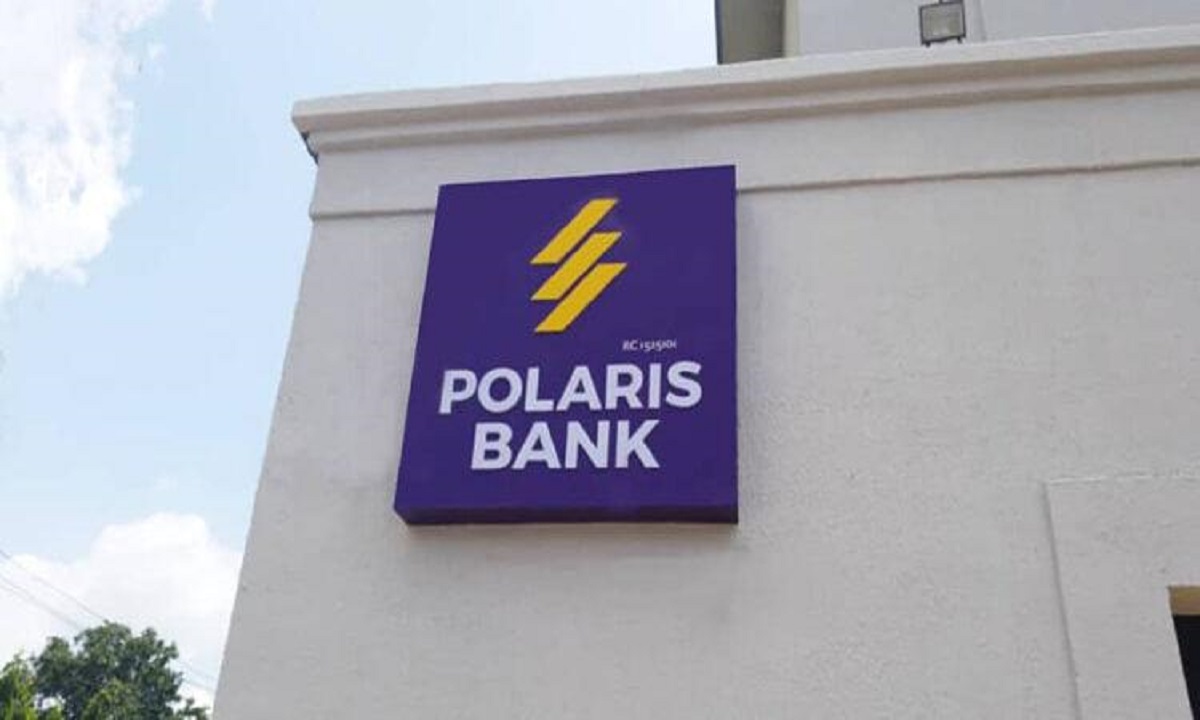
Central Bank of Nigeria (CBN) has debunked rumours suggesting that Polaris Bank is undergoing liquidation, assuring the public that the country’s banking system remains stable and secure.

Polaris Bank
The apex bank disclosed this in a post on X, where it shared a screenshot of a viral claim and flagged it as false.
It clarified that the claims, suggesting Polaris Bank had failed to meet recapitalisation requirements and was set for liquidation, are entirely false and do not reflect the current state of the Nigerian banking sector
“The Central Bank of Nigeria has noticed reports, in certain media outlets, about a recommendation for the Federal Government to take over some CBN-supervised financial institutions,” said Hakama Sidi-Ali, apex bank’s acting Director, Corporate Communications, in a statement.
“To avoid any doubt, Nigerian banks are still safe and sound. The CBN advises the public to go about their daily lives without getting disturbed by reports regarding the health of Nigerian banks that have not come from the CBN.
“The CBN is fully equipped to carry out its statutory duty of ensuring the stability of Nigeria’s financial system. “We assure the general public and depositors that their funds are safe in Nigerian financial institutions. “Bank customers are therefore advised to proceed with their banking transactions as u
The clarification was after a viral post, claiming that Polaris Bank was facing liquidation for failing to meet the Bank’s recapitalisation requirements, and could soon lose its operating licence, with the Nigeria Deposit Insurance Corporation set to take over the process.
It further alleged that founder of the Eleganza Group, Razaq Okoya, had made a bid to acquire and revive the bank, pending approval from regulators and shareholders.
Sharing a screenshot of the viral claim, however, the apex bank flagged it as “fake content.”
It clarified that the claims, suggesting Polaris Bank had failed to meet recapitalisation requirements and was set for liquidation did not reflect the current state of the Nigerian banking sector.
“This content is fake. Let the public be guided. The Nigerian Banking System is Safe and Secure,” the bank said.
On April 1, the CBN confirmed that 33 banks successfully met the revised minimum capital requirements under its recapitalisation programme, marking a significant milestone in strengthening the financial system.
African Development Bank Group (AfDB) has approved a $200 million loan to Nigeria to support a landmark digital infrastructure initiative aimed at expanding broadband access, developing digital skills and driving large‑scale job creation.

The financing will support the Digital Value Chain Infrastructure for Boosting Employment project, known as D‑VIBE or Project BRIDGE. The initiative seeks to deploy about 90 000 kilometres of new open‑access fibre optic cable across Nigeria, extending the national fibre backbone from roughly 30 000 km to about 120 000 km.
The expanded network will connect all 774 local government areas, including schools, hospitals, agro‑industrial zones, rural communities and commercial centres. It will also establish cross‑border digital links with Benin, Cameroon, Niger and Chad, strengthening regional integration.
Nigeria is Africa’s most populous country and West Africa’s largest economy, with the digital sector increasingly contributing to gross domestic product growth. The project is expected to close major connectivity gaps, raise productivity and unlock job opportunities for young people.
D‑VIBE is structured as a public‑private partnership through a special purpose vehicle, with public ownership capped at between 25% and 49% and private sector participation ranging from 51% to 75%.
This structure is intended to address high fibre rollout costs, including construction and right‑of‑way challenges.
The African Development Bank loan forms part of an $800 million sovereign financing package, alongside $500 million from the World Bank and $100 million from the European Bank for Reconstruction and Development.
Total project financing is estimated at $2 billion, including a $25.79 million European Union grant, a $2.6 million Multilateral Cooperation Centre for Development Finance preparation grant and at least $1.2 billion in private sector investment.
“Nigeria has the talent, the market and the ambition, but lacked the backbone infrastructure to connect opportunity with potential,” said Abdul Kamara, Director General of the African Development Bank Group’s Nigeria Office.
“This project will deliver high‑speed connectivity nationwide and equip young people to build digital careers.”
Beyond physical infrastructure, the project will support affordable devices, large‑scale digital skills training and digital platforms in priority sectors. It also includes cybersecurity, competition reforms and resilience measures, including greater use of renewable and hybrid power.
D‑VIBE is expected to help create up to 2.8 million jobs and raise broadband penetration from 45% to around 70% by 2030. The project aligns with Nigeria’s Vision 2050 and continental development priorities.

World Bank has warned that Nigeria faces a deepening early childhood development crisis in health, nutrition, and learning, threatening long-term productivity and economic growth amid persistent poverty.

World Bank
In its April 2026 Nigeria Development Update, “Nigeria’s Tomorrow Must Start Today: The Case for Early Childhood Development,” the bank noted moderate 2026 growth driven by services like ICT, financial services, and real estate, following 4.0 per cent GDP expansion in 2025. Inflation eased to double digits via tight policy, stable exchange rates, and better food supply, while reserves hit $45.5 billion gross by end-2025, covering 8.7 months of imports.
Fiscal deficit widened slightly as non-oil revenues rose to 8.5 per cent of GDP from improved tax administration, e-filing, and VAT e-invoicing, though wage growth lagged inflation, leaving real incomes strained and poverty unchanged.
The bank highlighted poor outcomes with 110 of 1,000 children dying before age five, 40 per cent stunted, and 52 per cent developmentally off-track at school entry—gaps three times wider in poor households and exceeding 40 points between rich and poor. It urged investment in the first 2,000 days for better education, earnings, health, and cohesion.
Regionally, Sub-Saharan Africa’s 2026 growth forecast dipped to 4.1 per cent from 4.4 per cent due to Middle East conflict inflating fuel and fertiliser costs.
Finance Minister Wale Edun countered with recovery signs: falling inflation, rising non-oil revenues, declining debt-to-GDP, and stabilising naira via digital tracking, audits, and PPP shifts. Budget Director Tanimu Yakubu described reforms as correcting imbalances from subsidies and multiple rates, boosting FAAC revenues 40 per cent and reserves over $40 billion, with debt under 30 per cent of GDP.
NACCIMA President Jani Ibrahim called for data-driven strategies amid tax changes, inflation, and global tensions, eyeing AfCFTA, digital economy, and green investments for growth.

FG to Gift Nigerians over 100 Free TV Channels from May 15

FG New Approves Biometric Passenger Verification System for Airports Security

STBMAN, NBC Bicker over Alleged Due Process Breaches

CBN Dismisses Polaris Bank Liquidation Claim

AfDB Okays $200m for Nigeria’s Digital Backbone, Others

Spotify’s Loud & Clear Report Reveals Over ₦60Bn Revenue for Nigerian Artists in 2025

Kuda MFB Increases Kuda for Her Business Grants to ₦10 Million

Why JustMarkets Is a Strong Choice for Gold Trading

Canal+ to Cut Jobs as Part Sweeping Restructuring

Nigeria tops global rankings for USDT, USDC ownership




 E-Financial2 days ago
How Sterling Bank Is Empowering 1m Women with ₦500Bn

 E-Financial2 days ago
See Key Changes in BVN Rule from May 1 by CBN

 E-Financial2 days ago
Paga Group Rejigs Leadership as Oviosu, Founder Becomes Group CEO

 Broadcasting2 days ago
INEC Warns Broadcasters against Misinformation ahead of 2027 Polls

 E-Financial2 days ago
Reputation: The Real Currency Powering Fintechs

 E-Business2 days ago
Jumia Expands Nationwide Footprint, Deepens Reach Across Underserved Nigerian Cities

 News2 days ago
Google, UpSkill Universe Relaunch Hustle Academy to Bring Free AI Skills to Africans

 Telecom2 days ago
Truecaller Targets Global Market with Powerful New Business Chat Push