

News
Critics Blame Buhari, CBN for Nigeria’s Worst Economic Crisis

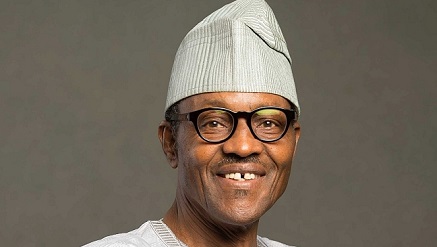
Some Nigerians have blasted President Muhammadu Buhari, elected on a wave of optimism last year, for failing to react not fast enough to the changing climate but made matters worse by experimenting with outmoded remedies that have not stemmed the economy’s freefall.
Godwin Emefiele, governor of Central Bank of Nigeria (CBN) has also come under bouquet of criticisms for some of his obnoxious policies as the apex bank governor.
Financial Times reported that as consequences of these that; supermarkets in Lagos are struggling to keep their shelves stocked, fuel is rationed and food prices have soared.
“The pain level is going up,” said Olisa Agbakoba, former head of the Nigerian Bar Association. “Everything is in short supply.”
Kayode Akindele at TIA Capital, a Lagos-based investment firm said that “The economy was a mess anyway and Nigeria was heading for a hard fall, but . . . should the fall be this hard?”
‘Self-inflicted’ wounds
According to the Financial Times, the fortunes of Africa’s most populous nation and leading oil producer have long ebbed and flowed with the price of oil, on which Nigeria depends for more than 90 per cent of hard currency earnings. But economists list several factors that make the current downturn markedly more worrying.
The structural change in the global oil industry since shale reserves were opened up by the development of new fracking techniques in the US makes it unlikely that major oil producers like Nigeria will see a significant price recovery any time soon.
In 2008, the last time crude prices crashed, Nigeria had savings to fall back on. This time it doesn’t: the administration of former president Goodluck Jonathan squandered the proceeds of the boom years in a bonanza of profligacy and corruption before he was voted out of office.
Then there is what critics describe as the “self-inflicted” wounds — the currency policies and associated import controls set up to conserve hard currency by prioritising strategic imports when Mr Buhari took power 12 months ago.
These have starved existing businesses of inputs, leading to a collapse in supplies of everything from medicines to spare parts, while incidents of price gouging have risen. The policies are also blamed for encouraging capital flight while forestalling fresh investment. Inflows dropped by nearly 75 per cent to $711m in the first four months of 2016.
“No one, even investors like us with a long-term view, is going to put money into Nigeria in the expectation of losing a third of the value of that investment,” says a senior partner in a UK-based private equity fund. He and other investors say that despite the president’s visceral opposition to devaluation, it appears inevitable.
The impact has been chilling. Nigeria’s economy, which grew annually at an average rate of 7 per cent in the decade to 2014, contracted by 0.36 per cent in the first quarter. According to most forecasts it is heading into recession.
The import controls and restrictions on foreign exchange have hit the manufacturing sector hard, eroding the credibility of the Buhari administration’s ambition to diversify the economy.
“Growing non-oil income is a key economic strategy of this government,” says Keith Richards, a veteran of Nigeria’s consumer goods industry who used to run a subsidiary in the country of Guinness, the brewer. “Blocking manufacturers manufacturing will have the opposite effect.”
More than half a million workers lost their jobs in the first four months of this year, according to official statistics. The livelihoods of tens of millions more people employed in the informal sector have been hit by inflation of nearly 14 per cent, spurred by escalating shortages of basic goods and the rapid devaluation of the naira on the parallel market, where most traders are now compelled to source their foreign exchange.
And while a new wave of militancy in the oil-producing Niger Delta has triggered a rally in the global price — it hit $50 per barrel last week for the first time in seven months — the violence is making matters worse at home, with any gains offset by production losses. In recent weeks, pipeline attacks have cut production to 1.45m barrels a day — far short of the 2.2m assumed in this year’s expansionary budget.
Oil revenues typically account for more than two-thirds of government income. Collapsing prices and falling production mean the government is now operating on about one-quarter of the $5bn in monthly revenues it had before the price fall began in mid-2014. Many state governments are now unable to pay salaries while power generation levels are at their lowest in years.
“Investors fear Nigeria is on a stagflationary road to Venezuelan-style multiple exchange rates and eventual meltdown,” says Charlie Robertson, chief economist at Renaissance Capital. “[But] we think reformists will help Nigeria swerve in time and avoid that car crash,” he said, after a government decision earlier this month to raise the price of fuel by 67 per cent in response to months of crippling shortages.
The price rise was interpreted as the government accepting the reality of severe dollar scarcity. But it fell short of the deregulation of state-set fuel prices that has long been urged by economists seeking to ease the chronic distortions in the economy. It left many observers saying shortages will return unless the government loosens its grip on the price of both fuel and the naira.
In a speech on Sunday marking his first year in office, Mr Buhari said he had inherited a “state near collapse”, ill-equipped for the strain of low oil prices. Insecurity was widespread, “corruption and impunity were the order of the day” and the treasury had been emptied. The initial challenge for his government had been to block leakages and reconstruct “the spine of the Nigerian state”.
The central bank last week admitted that the exchange rate cap — defended by Mr Emefiele as a way of protecting strategic imports from the low oil price and shielding the poor from inflation — is failing and should be abandoned. The comments fuelled speculation of a policy switch. Mr Buhari, on Sunday, appeared defensive about the approach taken so far but acknowledged that he had been forced to listen to advice to change course. He said he supported the central bank’s new strategy “to ensure alignment between monetary policy and fiscal strategy”.
The president also hinted in a briefing with local media that he was open to considering his options. “The . . . economists come and talk things to me, and when I raise issues they talk over my head instead of inside my head,” he was quoted as saying in Nigeria’s ThisDay newspaper. “On the value of the naira, I’m still agonising over it . . . I need to be educated on this . . . I am under pressure and we’ll see how we can accommodate the economists.”
Mr Emefiele has been crucial to the president’s defence that tight currency controls are the best response to the economic crisis. The two men meet frequently at the presidential villa, according to one of Mr Buhari’s spokesmen, and statements on monetary policy by the two over the past year are virtually indistinguishable.
Business argues that a controlled devaluation would allow manufacturers and traders to make informed pricing decisions, less dependent on the central bank governor’s will. Despite the recent comments, however, companies are not holding their breath.
Others in the government insist that the new budget will kick-start the economy. External borrowing to finance it has yet to be secured, however, and business remains unconvinced that government spending alone will be enough.
“It’s a monumental waste of money to be trying to stimulate the economy on the one hand and slowing it down on the other,” said Oyin Anubi, an Africa economist at Bank of America in London.
Losing allies
The damage is not just economic. The country’s travails have overshadowed progress the president has made on the problems he most wanted to tackle: the Islamist insurgency of Boko Haram and pervasive corruption in government.
Most damaging though is the political impact that is beginning to cost Mr Buhari allies. His decision-making style appears, even to senior members of the administration, overly secretive. Some criticise him for failing to consult with his cabinet and view his refusal to listen to alternative points of view.
Obiageli Ezekwesili, who served as a minister in two previous administrations and once led the World Bank’s Africa division, recently criticised Mr Buhari’s economic policies as “opaque” and “archaic”, saying that something that “did not work in 1984 cannot possibly be a solution in a global economy that’s much more integrated”.
Advisers to the president say his original priority was to lift people out of poverty. It was not to please the wealthy business community and skittish foreign portfolio investors. But those close to the administration claim there are signs of a shift in ideology within government: from the unbridled crony capitalism of the past to a more state-driven vision for promoting industry and jobs.
Industrial revolution
Mr Buhari’s initial instinct, said advisers, was to batten down the hatches, and pursue capital and import controls similar to those pursued by China in the 1980s, while gradually building up export capacity in sectors beyond oil.
The aim was to engineer the beginnings of an industrial revolution, create jobs and dedicate investment towards rebuilding infrastructure. Ethiopia, on the other side of the continent, has spurred the beginnings of an economic transformation using similar methods.
In Nigeria’s case, however, it could already be too late. The government’s ability to control the capital account — the deficit doubled to 3.7 per cent of GDP in 2015 — and restrict imports in a country rife with smuggling is questionable.
A Venezuela-style meltdown — once dismissed out of hand — now no longer seems such an outlandish prospect. Some observers argue that this doomsday scenario is forcing officials, including the president, to accept the need for a course correction.
“The bunker mentality has changed [in the past month] to a more open-to-discussion one” said Bismarck Rewane, chief executive of Financial Derivatives, a consultancy in Lagos.
“Even if the change [in policy] is involuntary, the combination of inflation, slowing GDP, exchange rate pressure and the drop in oil production . . . will bring change.”
Oil fight: Delta violence hits output Who are the Niger Delta Avengers? What do they want? How seriously should their threats to shut down Nigeria’s oil and gas sector be taken? The only question with an unequivocal answer is the third one.
Its leadership, backers and motivations remain unclear. But the devastating economic impact of the group’s sabotage campaign is plain to see. It has cut Nigeria’s crude exports by at least 850,000 barrels per day with attacks this year on pipelines and export terminals across the Niger Delta, home of the country’s oil industry, and no stranger to clashes over calls for a fairer distribution of oil revenues with the local community.
The shutdown in exports by the Avengers is not yet on a par with that of the militants of MEND at the height of the previous insurgency that ended with a ceasefire in 2009. But with state finances already severely strained by low oil prices, economists predict Nigeria will fall more quickly into recession unless the damage to energy infrastructure is repaired and the sabotage ends.
President Muhammadu Buhari has ordered army reinforcements to the Delta and threatened to treat the militants like the Boko Haram Islamists who have terrorised the north-east of the country. The comparison has angered many in the Delta who argue that, even if the sabotage damages the economy, it should be seen as a cry for attention.
“[Buhari] tends to see the Delta as a security issue . . . it’s about handling the ‘bad guys’,” says one western diplomat. “You hear almost nothing on the underlying grievances.”
The failure of the 2009 amnesty is one point over which the Buhari administration and many Deltans could find common ground.
“It was a bribe for peace,” said Charles Ekiyor, a former leader of the Ijaw Youth Council. The deal was supposed to include development of the impoverished region, he said. But under Mr Buhari’s predecessor, Goodluck Jonathan — who is from the Delta — it did not happen. Now the same grievances are being exploited by the Niger Delta Avengers.


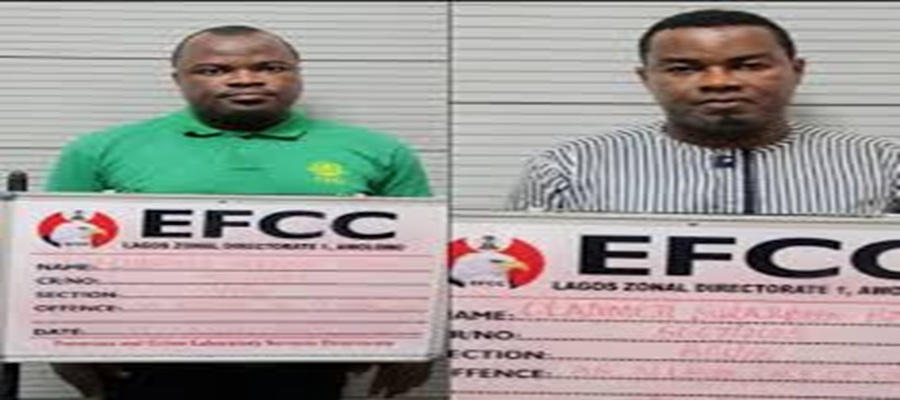

EFCC


The African Development Bank Group last week approved an investment of €6.5 million in the Saviu II fund in order to support technology start-ups through their seed phase and first institutional fundraising, mainly in French-speaking Central and West Africa.

The Bank will invest €4.5 million as equity and €2 million as a first-loss hedging tranche on behalf of the European Commission, under the Boost Africa Programme.
This participation of the Bank Group will enable the Saviu II fund to give priority to companies with a strong technological or digital component.
Saviu II, the second investment vehicle of Saviu Partners, plans to invest between €500,000 and €3 million in about 20 technology or technology-oriented business-to-business start-ups in the seed phase or carrying out first institutional fundraising.
The Saviu II venture capital fund aims to make at least 60% of its commitments in the French-speaking countries of West and Central Africa: Côte d ‘Ivoire, Cameroon, Benin, Senegal, Togo, Burkina Faso and Mali.
The fund can also co-invest in promising technology companies in East Africa that have a strong team and business model, and whose strategy includes entering the market in French-speaking West African countries and establishing a strong presence there.
In addition, the fund will devote a dedicated envelope to pre-seed investments, focusing on minority equity investments, usually in co-investment with studios, incubators or other ecosystem partners.
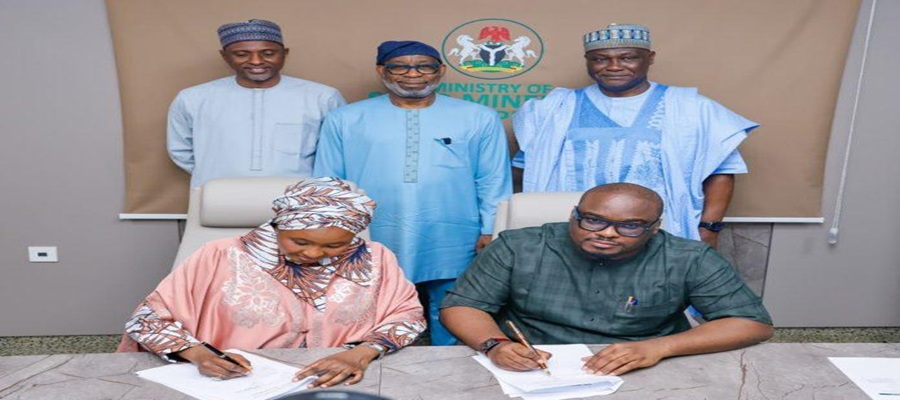
Nigerian Government has signed a $1.3 billion Memorandum of Understanding (MoU) with Africa Finance Corporation (AFC) via the Solid Minerals Development Fund (SMDF) to fund an alumina refinery, national geoscience mapping, and a strategic investment vehicle for mining growth.

Special Assistant to the Minister of Solid Minerals Development, Segun Tomori, said the refinery will process one million tonnes of bauxite yearly using a modern Bayer process, powered by an on-site gas-fired cogeneration plant.
Minister Dele Alake called it a transformative milestone boosting GDP, aligning with reforms that improve investment climate, regulations, and licensing to attract private capital. He directed agencies to fast-track permits.
The 20-year project at 95% utilization eyes 19 million tonnes total output, $1.2 billion annual GDP addition, $25 billion economic impact, and $8 billion forex earnings, per feasibility studies.
SMDF Executive Secretary Fatima Shinkafi termed it the agency’s biggest funding deal, supporting value-addition policy.
The partnership extends to geoscience mapping for mineral data, de-risking exploration, and a joint vehicle for mining assets.
Permanent Secretary Engr. Farouk Yabo praised the reforms. Shinkafi signed for government; AFC’s Franklin Edochie for the corporation, witnessed by AFC CEO Samaila Zubairu.
Tomori positioned it as Nigeria’s largest private mining investment and FDI magnet.

GCR Affirms Afreximbank’s International Scale Ratings of A, A2

SmartCash Launches ‘No Be Cho Cho Cho’ Campaign to Boost Digital Banking in Nigeria

MTN Nigeria Non-Executive Director Mazen Mroue Quits to Focus on Group Role

Google Adds Yorùbá, Hausa to AI Search, Boosting Access for Millions of Nigerians

MultiChoice Shuts Down Showmax After 11 Years Amid Streaming Wars

Dr. Cairo Ojougboh Foundation Bolsters Nigeria’s Education Drive with ₦2.7m Student Support

Kaspersky Brings more Transparency to Threat Detection with New Hunt Hub

NDPC Commits to Balancing Data Privacy, Protection Information

PwC Reveals AI Scaling Gap Slows Africa’s Digital Transformation

Firm Reviews the Evolution of Phishing Threats in 2025




 E-Financial3 days ago
NRS Targets N40trillion in Tax, Royalty Revenue in 2026

 General News3 days ago
Purple Woman 3.0 Is Back, to Empower Women in Tech this IWD 2026

 E-Financial3 days ago
SEC Revokes Registration of Kensington Agro Trading Limited

 News3 days ago
EFCC Arraigns Two FSDH Bank Officials Over $307k, €50k Fraud

 E-Financial2 days ago
Nigeria’s VAT Jumps 34%, CIT Soars 48% to ₦14trn in 9M’25 – NBS

 Telecom2 days ago
FG Approves GIS-enabled Digital Postcode to Tackle Logistics Gaps, Boost E-commerce
 E-Business3 days ago
NDPC, 60 DPAs Collaborate on Enforcing Privacy Rights in the Use of Al

 Telecom3 days ago
Konga Launches ‘Berekete Sales’ with Up to 50% Discounts Across Major Categories