

/home/kenneth/web/nigeriacommunicationsweek.com.ng/public_html/wp-content/themes/zox-news/parts/post-single.php on line 153
">
Warning: Undefined array key 0 in /home/kenneth/web/nigeriacommunicationsweek.com.ng/public_html/wp-content/themes/zox-news/parts/post-single.php on line 153
Warning: Attempt to read property "cat_name" on null in /home/kenneth/web/nigeriacommunicationsweek.com.ng/public_html/wp-content/themes/zox-news/parts/post-single.php on line 153
CSCS Boss Urges Investors to Choose Credible Portfolio Managers

Kyari Bukar, chief executive officer, Central Securities Clearing System (CSCS) has advised investors to be savvy in choosing their portfolio managers to ensure their resources are entrusted in the hands of credible, efficient and well capitalized operators.
He gave the advice at the weekend during the Finance Correspondents Association of Nigeria (FICAN) Bi-Monthly Forum hosted by CSCS in Lagos.
Bukar, who spoke on the theme: ‘Role of Central Securities Clearing System in The Nation’s Financial Sector’ said investors needed to be fully informed about the market and companies where they are putting their capital.
He said: “The most important thing for a market like this is to have an informed investor. The investors needed to be informed for them to exercise their choices. There is need to enlighten investors to enable them make the right choices for the future,” he said.
According to him, there is also need for investors to regularly check their accounts with the CSCS, as such would update them on the performance and position of their investments with brokers.
He said the automation of brokerage business has reduced the cost of operation for most operators. Automation, he said reduces cost of operation for companies. “The most important thing is that investors should be in control of their money or go for collective investment scheme. Still, investors need to beware and invest in portfolio managers that are credible, efficient and have all the necessary capital to be in the position to sale their assets,” he said.
He said both the big and small operators have gone retail, meaning that they can accommodate both big and small investors after getting their processes fully automated.
“Previously, if it is not large volume, brokers may not efficiently service the system. But with automation of operations, some of the big stockbrokers have through automated system, have realized that servicing the customer, whether they have N1, 000 or N10 billion, is usually the same. Stock brokers now require very little efforts in servicing the investors. There must be a code that the industry must develop to serve all investors,” he said.
Kyari explained that the CSCS is implementing the transaction cost analysis because it wants to understand the total cost of each transaction to an investor.
He said that investors buy shares to make money and are always concerned about fees and other cost of transaction that follow each deal. “Investors pay fees when they are buying shares and when exiting. We need to benchmark ourselves, against other markets. Since foreign investors look at the various markets, and apportion their resources to them accordingly, depending on many criteria, there is need to be competitive with cost,” he said.
According to him, investors may also be looking at how free or open the market is, how easy it is to go in and out, and the riskiness of the country, especially whether it is democratic or not among other factors. He said there are other investors that consider other elements like the transaction costs before they go in.
“It may result in reduction of charges and that might increate market participation. Understanding the cost and dynamics of both the intrinsic and explicit costs means that you are taking an informed action rather than just reacting and that is the reason we are applying the transaction cost analysts,” he said.
Bukar said operators should be efficient in carrying out their work and also consider critical issues like time spent in buying or selling portfolios and timeline for share certificate dematerialization are things investors look out for in different markets.


Warning: Undefined array key 0 in /home/kenneth/web/nigeriacommunicationsweek.com.ng/public_html/wp-content/themes/zox-news/parts/post-single.php on line 493
Warning: Attempt to read property "cat_ID" on null in /home/kenneth/web/nigeriacommunicationsweek.com.ng/public_html/wp-content/themes/zox-news/parts/post-single.php on line 493

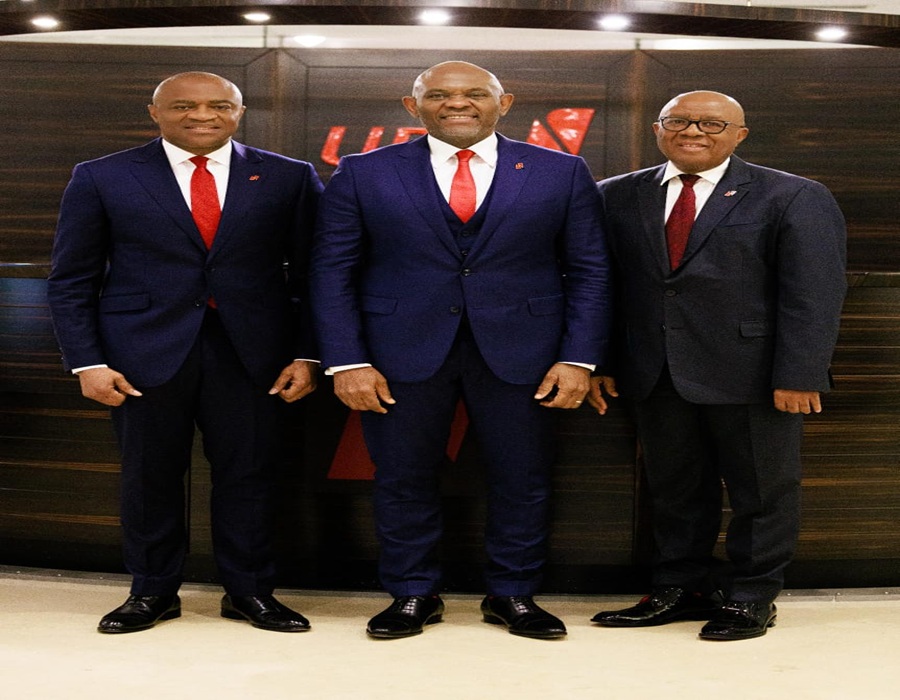
United Bank for Africa (UBA) Plc has announced that its Group Chairman, Mr Tony O. Elumelu, will retire from the Board of Directors on Aug. 21, 2026, upon completing the 12-year tenure limit for non-executive directors prescribed by the Central Bank of Nigeria (CBN).

The bank disclosed this in a statement issued following a meeting of its Board of Directors held on July 6.
According to the statement, the board accepted Elumelu’s retirement and elected Mr Emmanuel N. Nnorom, a Non-Executive Director of the bank, as his successor with effect from Aug. 21, 2026.
The board expressed appreciation to Elumelu for what it described as his visionary leadership and immense contributions to the growth and institutional development of the UBA Group.
It noted that under his leadership, UBA expanded into a leading pan-African financial institution with operations in 20 African countries and four global financial centres, serving more than 50 million customers.
The board described Elumelu’s tenure as a defining period in the bank’s history.
Nnorom, who will assume office as chairman upon Elumelu’s retirement, is a chartered accountant with more than 40 years of experience in banking, finance and auditing.
The statement said he brings extensive leadership experience and deep institutional knowledge of the bank to his new role.
Speaking on his retirement, Elumelu described serving UBA as one of the greatest privileges of his professional career.
“Serving United Bank for Africa has been one of the great privileges of my career.
“UBA has established a unique competitive position across Africa and globally, and I leave the Board with great confidence in UBA’s future.
“Emmanuel Nnorom is a leader of integrity, experience and sound judgement, and I am confident that the bank will continue to thrive under his leadership,” he said.
Responding to his appointment, Nnorom expressed gratitude to the board for the confidence reposed in him.
“I am honoured by the trust the Board has placed in me and deeply conscious of the legacy I inherit.
“I look forward to working with my colleagues on the Board, Management and our staff across all our markets to sustain UBA’s momentum and continue delivering long-term value to our shareholders, customers and stakeholders,” he said.
UBA operates in 20 African countries as well as the United Kingdom, the United States, France and the United Arab Emirates.
The bank provides retail, commercial and institutional banking services and serves more than 50 million customers globally, with a workforce of about 25,000 employees across its operations.

Zedvance Finance Limited has appointed Professor Pius ‘Deji’ Olanrewaju as Chairman of its Board of Directors, effective July 1, subject to the approval of the Central Bank of Nigeria (CBN).

Professor Pius ‘Deji’ Olanrewaju
The company disclosed this in a statement, describing the appointment as a significant step in strengthening its corporate governance structure and positioning the organisation for its next phase of growth.
According to Zedvance, the appointment reflects its commitment to building a robust governance framework capable of driving innovation, sustainable growth and long-term value creation for stakeholders.
The company said Olanrewaju brings extensive boardroom experience, leadership credentials and expertise in governance, strategy and organisational transformation to the role.
It noted that the strengthened board structure would enhance oversight and support the company’s strategic growth ambitions.
Speaking on his appointment, Olanrewaju expressed appreciation for the confidence reposed in him.
“I am honoured to assume the role of Chairman of the Board of Zedvance Finance.
“The company has established a strong reputation as a trusted financial partner, leveraging innovation and technology to create meaningful impact.
“I look forward to working with the board and management to support the company’s strategic aspirations and deliver sustainable value for our stakeholders,” he said.
Olanrewaju is a legal scholar, banking expert and corporate leader with more than four decades of experience spanning banking, finance, academia and institutional governance.
He holds degrees in Law, Arts and Social Sciences, including a Bachelor of Laws (LL.B), Bachelor of Laws (B.L.), Bachelor of Arts (B.A.), Master of Science (M.Sc.), Master of Laws (LL.M.) and a Doctor of Philosophy (Ph.D.).
He is a Fellow of the Chartered Institute of Bankers of Nigeria (FCIB), Fellow of the Institute of Capital Market Registrars (FIMA), Fellow of the Institute of Management and Administrative Technology (FCMR), and Fellow of the Enterprise Risk Management Professionals (FERP).
Olanrewaju is also a member of several professional bodies and served as the immediate past President and Chairman of the Council of the Chartered Institute of Bankers of Nigeria (CIBN).
During his more than 35 years of service to the institute, he held several strategic positions, including Chairman of its Capacity Building and Certification Committee.
He is currently a Professor of Banking Law at Babcock University, where he previously served as Provost and Dean of the School of Law and Security Studies.
He has authored and co-authored several academic publications and serves on the boards of a number of organisations, including Babcock University Microfinance Bank.
The company expressed confidence that his experience in strategic leadership, corporate governance and financial services oversight would support its long-term growth and institutional development.


Socio-Economic Rights and Accountability Project (SERAP) has given Godswill Akpabio, Senate President, and Tajudeen Abbas, speaker of the House of Representatives, seven days to explain how over N1.3 billion was allocated in the 2026 Appropriation Act to a presidential council that the Presidency has described as fictitious.

In a Freedom of Information (FoI) request dated July 4, 2026, SERAP asked the National Assembly leadership to release certified copies of all documents related to the approval of the N1,302,978,784 allocation to the Presidential Foreign Intervention Promotion Council (PFIPC)/Presidential Economic Advisory Council.
The rights group also called on the National Assembly to invoke its investigative powers under Sections 88 and 89 of the 1999 Constitution to probe the circumstances surrounding the allocation and identify those responsible for what it described as apparent irregularities in the budget process.
SERAP further requested records identifying the lawmakers and committees that considered the allocation, as well as the public officials or representatives who defended the budget proposal before the committees.
The civil organisation also sought clarification on whether the allocation originated from the Executive’s 2026 Appropriation Bill or was introduced during the legislative appropriation process.
It equally demanded to know whether any lawmaker questioned the legal status or operational mandate of the council before approving the allocation.
The FoI request follows a July 1 statement by the Presidency denying the existence of the Presidential Foreign Intervention Promotion Council and insisting that the Federal Government never created the body.
Describing the conflicting claims as alarming, SERAP said they raised “serious concerns regarding the integrity of Nigeria’s appropriations process, legislative oversight, public financial management, and accountability.”
The FoI request, signed by Kolawole Oluwadare, deputy director, SERAP, stressed that Nigerians have a constitutional right to know whether public funds were appropriated to an entity that does not legally exist.
SERAP said, “Nobody has a more sacred obligation to obey the law than those who make the law, and that the National Assembly has a constitutional responsibility not merely to approve the Executive’s budget proposals but to rigorously scrutinise them before authorising public expenditure.”
The organisation argued that disclosure of the requested documents would enable Nigerians to determine whether the National Assembly fulfilled its constitutional obligations under Sections 80, 81, 88, and 89 of the Constitution in approving the allocation.
SERAP warned that if the requested information is not released within seven days of receipt or publication of the letter, it would initiate legal proceedings to compel the National Assembly to disclose the documents.
The organisation further maintained that making the records public would strengthen confidence in the National Assembly’s credibility, enhance transparency in the appropriation process, and promote accountability in the management of public funds.
It also cited the Freedom of Information Act, the Nigerian Constitution, the African Charter on Human and Peoples’ Rights, the International Covenant on Civil and Political Rights, and the Tshwane Principles as legal bases for its demand for full disclosure.

After 12 Years at the Helm, Tony Elumelu Bows Out of UBA

Zedvance appoints Prof. Olanrewaju as board chairman

SERAP Asks Akpabio, Abbas for Explain N1.3Bn Budgeted for ‘Fictitious’ Presidential Council

No Plans for Fresh Tariff Hike – MTN

FG Denies N8 Trillion ‘Shadow Budget’, Says IMF Quoted out of Context

Mobile Internet Gender Gap Widest in Africa – GSMA

Nigeria Launches FreeTV Nationwide

NASENI Moves to Digitize CCB’s 5m Assets Declaration and Operations

CANAL+ Partners Samsung to Pre-Load DStv Stream on New Samsung TVs In Nigeria, Other African Countries

UK, Nigeria Launch £15m Growth Programme to Accelerate Economic Transformation




 News3 days ago
FG Clears N39Bn Pension Arrears for NITEL, PHCN, Other Retirees

 Broadcasting3 days ago
Why We’re Partnering With NIHOTOUR To Bring Nigerians In South Africa Home – Steve Babaeko

 News3 days ago
How Fraudsters Emptied a Judge’s Account of N7.2 Million in Midnight Attack

 Telecom3 days ago
MTN Nigeria Celebrates Volunteers at Y’ello Care Impact Showcase

 E-Financial3 days ago
SEC Grants Approval to Luno, Other Crypto Firms under Regulatory Sandbox

 Telecom3 days ago
Xenophobia: MTN Nigeria Belongs to Nigerians, Not Only South Africans — Toriola

 Telecom3 days ago
Google Play launches $1m fund to support African game developers

 Telecom3 days ago
MTN Takes ‘The Gathering on 100’ Youth Empowerment Initiative to Kano