

/home/kenneth/web/nigeriacommunicationsweek.com.ng/public_html/wp-content/themes/zox-news/parts/post-single.php on line 153
">
Warning: Undefined array key 0 in /home/kenneth/web/nigeriacommunicationsweek.com.ng/public_html/wp-content/themes/zox-news/parts/post-single.php on line 153
Warning: Attempt to read property "cat_name" on null in /home/kenneth/web/nigeriacommunicationsweek.com.ng/public_html/wp-content/themes/zox-news/parts/post-single.php on line 153
CSR Initiatives by Courier Companies

All over the world Corporate Social Responsibility (CSR) is attracting attention as disasters resulting from natural occurrences are in the increase and even taking a larger dimension thereby necessitating cooperation and attention towards alleviating the sufferings of people hit by such disasters.
Whether in this area or in the establishment of programmes on health, education, environmental safety and protection, and on entrepreneurial development, courier companies have shown good corporate citizenship.
Jude Ugwoke, general manager, IFEX Express Courier submits that CSR is a long term survival strategy of a company based on adding value to a company’s image.
Laying credence to Herbert Simon, Ugwoke emphasized that companies must be involved in Corporate Social Responsibility as every company is made up of internal and external environments, which interrelate with various units to make or mar the survival of the organization.
He also said that CSR can be used to create more awareness about the services of a company and that "when a company is engaged in building of roads, assisting students among others, it is adding value to the image and service of the company as well as providing utility service to the community. From the above, the company is endearing itself to the community for more patronage and greater awareness. From the capitalist point of view, Ugwoke said that CSR is non-profit oriented but that it is engaged by companies which see tomorrow from today," Ugwoke philosophized.
Describing CSR as IFEX long-term survival strategy, he said that the company through its chairman has responded to the CSR need of churches and schools in Yaba, Lagos as well as awarded scholarships to indigent students in Lagos and at home, and in providing borehole water to Enugwu-Ezike community in Nsukka.
Other local and international courier companies are also in their various capacities contributing to CSR.
DHL for instance believes that commitment to corporate citizenship is a fundamental part of achieving sustained value creation for both society and company towards ensuring the sustainability of the company as Ugwoke earlier espoused, and as a service delivery company.
The company also believes that being a good corporate citizen requires building successful partnerships with its customers, suppliers and community which it believes is critical to establishing a trusted brand and reputable company.
DHL Nigeria as part of the global company established a partnership with UNICEF on ongoing basis to donate one percent of employees’ annual salary running into millions of naira to the UNICEF polio project.
Last year, it donated N6.5m to this project and also made a donation of a 27KVA generator set worth N1.3m to a less privilege home in Lagos among several other donations to other projects.
UPS has also been involved in community projects spanning millions of naira.
Red Star Foundation, an arm of Red Star Express is a not-for-profit organization established by the company to coordinate the company’s charitable gestures.
The foundation is endowed by the company to provide support for approved projects on a sustainable basis.
Tony Anunobi general manager CTN Express Ltd having viewed the gains deniable from CSR has therefore suggested that government should make it mandatory for organizations to pay certain amount of money as Corporate Social Responsibility every year to make sure that the environment they are doing business is protected and people living in those environments are also protected while disclosing that as a CSR citizen the outfit along with the parent body have under the supervision of the chairman responded to various areas of need to people and communities part of which is the construction of 10km road in the chairman’s village.
Anunobi said lack of CSR has generated tension and strife in certain areas as community people feel exploited by companies doing business in such communities and summarized by saying that no company can survive under a harsh environment.
Some other CSR initiatives cover wider perspectives and not limited to a particular environment. FEDEX in providing in-kind shipping for more than two million pounds of relief aid to those affected during the 2005 hurricane season or in working with more than 20 governments and relief organizations to deliver more than one million supplies following the tsunamis in Southeast Asia and in transporting relief supplies for victims of earthquakes in Pakistan, Afghanistan, and India has distinguished itself as a world player in the express business as well as a good corporate citizen.
CSR no doubt is a good strategy, which national and international courier firms should hold onto to ensure sustain ability in business.


Warning: Undefined array key 0 in /home/kenneth/web/nigeriacommunicationsweek.com.ng/public_html/wp-content/themes/zox-news/parts/post-single.php on line 493
Warning: Attempt to read property "cat_ID" on null in /home/kenneth/web/nigeriacommunicationsweek.com.ng/public_html/wp-content/themes/zox-news/parts/post-single.php on line 493

Lebara Nigeria has become a member of the Global System for Mobile Communications Association (GSMA) as it expands operations in the West African country.

The membership places Lebara Nigeria within a global network of more than 1,000 mobile operators, device manufacturers, technology companies and digital service providers.
Through the GSMA, the company will have access to industry research, technical standards, policy engagement and industry initiatives.
Lebara Nigeria said the move reflects its participation in the wider telecommunications ecosystem as it develops its operations in Nigeria’s mobile market.
Nigeria’s telecommunications sector plays a central role in the country’s digital economy, with more than 170 million active mobile subscriptions supporting services such as digital payments, e-commerce, education and healthcare.
Industry analysts say participation in international bodies such as the GSMA supports knowledge sharing and the adoption of industry standards.
Lebara Nigeria said GSMA membership will support its engagement with industry developments and policy discussions in the telecommunications sector.
The company said it remains focused on operating in Nigeria’s mobile telecommunications market as demand for connectivity continues to grow.
GSM Association is the advocacy and lobbying organization for the mobile communications industry, representing more than 1,000 mobile operators as full members and a further 400 companies in the broader mobile ecosystem as associate members.
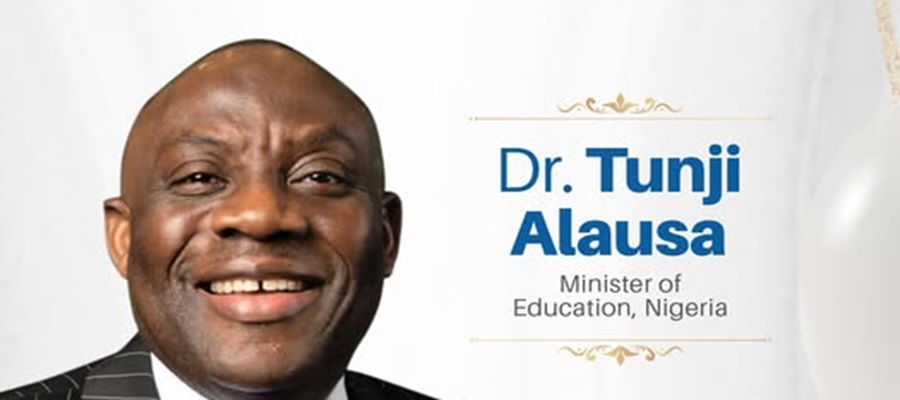
Federal government has announced plans to end the separation between Junior Secondary School (JSS) and Senior Secondary School (SSS) as part of efforts to improve school retention and reduce the high number of pupils dropping out before completing secondary education.

Tunji Alausa, minister of Education
Tunji Alausa, minister of Education, announced the proposal on Tuesday during the inauguration of the Ministerial Implementation and Monitoring Committee of the Universal Basic Education Commission (UBEC) in Abuja.
Alausa said the existing “disarticulation policy,” which requires junior and senior secondary schools to operate independently with separate principals, management structures and facilities, has failed to achieve its intended objectives and has instead worsened access to education.
According to him, the Federal Government will present a proposal to abolish the policy at the next meeting of the National Council on Education (NCE), the country’s highest education policymaking body.
“We have 20 million dropouts from primary school to JSS. Where are those students?” the minister queried.
“We also found we have 80,000 public primary schools and only about 15,000 junior secondary schools. That’s a one-to-eight ratio.”
He explained that the mismatch between the number of primary and junior secondary schools has created severe bottlenecks in the education system, leading to overcrowded classrooms at the junior secondary level while many senior secondary school facilities remain underutilised.
Alausa cited Kaduna and several northern states as examples where the policy has contributed to poor transition rates between basic and secondary education.
“This disarticulation policy has failed. We will phase it out. We can’t be creating positions because we want to create director-level appointments for people while we harm our education system. It’s about doing what is best for every Nigerian child,” he said.
The minister said the proposed reform forms part of broader efforts by the Tinubu administration to improve access to education, increase retention rates and enhance learning outcomes across the country.
He acknowledged previous shortcomings in tackling the out-of-school children crisis but expressed confidence that the current administration would reverse the trend.
“This government will not fail. We are fixing it,” Alausa declared.
At the ceremony, the minister also inaugurated the UBEC Ministerial Implementation and Monitoring Committee, chaired by Prof. Rashid Aderinoye, to supervise the execution of UBEC-funded Smart Schools, Bilingual Schools and Alternative Schools nationwide.
He said the committee had been tasked with ensuring that the projects are completed, handed over to state governments and opened for teaching and learning.
Although UBEC has invested in hundreds of Smart Schools and related educational projects across the country, Alausa lamented that many remain abandoned, unfinished or yet to admit pupils, describing the situation as an unacceptable waste of public resources.
He stressed that improving education requires more than constructing schools, insisting that completed facilities must become fully operational and accessible to learners.

Management of Vitel Wireless, mobile virtual network operator (MVNO), has distanced the company from a fraudulent scheme operating under the name: “Vitel Shares Services.”

In an official statement, the management clarified that Vitel Wireless is not selling shares or running any investment schemes.
They warned that the operators of “Vitel Shares Services” are using unauthorised websites, mobile applications, social media promotions, and bank accounts falsely linked to Vitel Wireless to mislead the public.
The statement reads: “The attention of Vitel Wireless has been drawn to a fraudulent scheme operating under the name ‘Vitel Shares Services.’
“We wish to state clearly that Vitel Wireless has no affiliation with Vitel Shares Services, or any platform claiming to offer Vitel shares, investments, or financial products through unofficial channels.
“We do not solicit investments through agents, social media, websites, apps, or third parties. Any platform claiming to offer Vitel Wireless shares or investments outside our official channels is fraudulent and should be treated as such.
“We urge the general public to remain vigilant and verify all information through official Vitel Wireless communication channels before making any payments or sharing personal data.”

Lebara Nigeria Becomes Member of GSMA Network

FG to Abolish JSS-SSS Separation Policy after 20m Pupils Drop Out

Vitel Wireless Warns Public, Says it Not Running any Investment Scheme

Army Says Terrorists Now Recruiting, Raising Funds Online

FG Mulls National Skills Database to Tackle Unemployment

Mobile Internet Gender Gap Widest in Africa – GSMA

London Strengthens Global Investment Ties with Africa @ First Ever London-Africa Business Summit

FG Targets Alleged N3tn Capital Flight, Opens Airtime Credit Market to Nigerian Fintechs

Japan, UNESCO Boost Digital Learning in 15 CoEs with Donation of ICT Equipment

Good News for DStv Users: Watch over 160 Channels Without Paying Extra




 E-Business2 days ago
LG Showcases AI-Powered Smart Living Innovations @ Africa Technology Expo 2026

 E-Financial2 days ago
UBA mobilises employees across Africa for environmental clean-up, wellness campaign

 Telecom2 days ago
OADC Reaffirms Abundant Capacity in Data Centres in Nigeria to Host Financial Data

 General News2 days ago
LASTMA Launches 3367 Toll-Free Hotline for Emergency Response, Traffic Management

 E-Financial2 days ago
PalmPay Calls for Trust, Infrastructure and Responsible AI to Drive Payment Ecosystem Innovation

 Telecom2 days ago
ALTON Backs NCC’s Local Smartphone Manufacturing Drive to Widen Digital Access

 E-Business2 days ago
Want a Business Loan Without Interest? SMEDAN Launches N500m Fund

 E-Financial2 days ago
ngCERT Raises Alarm over Surge in Banks’ ATM Cyberattacks