

Telecom
CTO 2014 Forum Calls for ICT Role in Social Development


Participants at this year’s three-day Commonwealth Telecommunications Organisation (CTO) Forum 2014 renewed calls for a greater role for ICTs in social empowerment.
Stakeholders at the Forum which ended on Thursday in Dhaka praised the Organisation for the success of this year’s event, which is held in Bangladesh for the first time.
The event focused primarily on the need for greater efforts in the use of ICTs as tools for social empowerment.
“If we want to achieve double-digit economic growth, the unlimited opportunities of a technology-based, creative economy are calling us, and we can’t afford to miss the train”, said Zunaid Ahmed Palak MP, Bangladesh’s State Minister of Posts, Telecommunications and Information Technology as he called for stronger and wider collaboration between key sectors.
“I do not believe that ICTs have a sufficient place in the global development goals beyond 2015, and Commonwealth countries will consult to explore how more commitment can be made to ICTs”, said Professor Tim Unwin, secretary-general of the CTO in his closing remarks.
The event was attended by over 200 participants from Commonwealth countries and beyond, including Bhutan, the Netherlands, Switzerland, Thailand, Tunisia, USA and Nigeria.
“An excellent opportunity to be appraised of key developments in several ICT areas” – Cris Seecheran, Telecommunications Authority of Trinidad & Tobago.
“A great place for sharing and gathering ideas and knowledge among Commonwealth countries” – Morshed Noman, The Daily Prothom Alo, Bangladesh.
“The CTO facilitates excellent networking opportunities among actors in the field” – Shahid Akbar, Bangladesh Institute of ICT in Development.
“Great event for networking with regulators and ministries of ICTs” – Bilel Jamoussi, ICT Ministry, Tunisia.
“The event was well managed”, according to Josephine Anuwa, Nigerian Communications Commission.
“Educating and mind opening sessions”, added Chungu Vestus, Zambian Information and Communication Technology Authority.
Held every year in a Commonwealth country, the Commonwealth Telecommunications Organisation Forum is the annual gathering of the 53-group of member countries where they discuss common ICT issues.
Announcement of the 2015 location is expected at the end of the Organisation’s Council meeting also taking place this week in Dhaka, on 11 – 12 September 2014.


Association of Licensed Telecommunications Operators of Nigeria (ALTON), has defended the N6.98 Unstructured Supplementary Service Data (USSD), fee charged on banking transactions, insisting that the cost reflects the service provided by network operators, regardless of whether the transaction is completed.

Gbenga Adebayo, chairman, ALTON, made the clarification during a radio programme, where he addressed growing consumer complaints over what many Nigerians have described as “unfair billing” and the alleged “scam” of data expiration.
Adebayo likened the role of telecommunications companies in USSD transactions to that of a transport service provider facilitating access to banks’ digital platforms.
He said: “The phone company is like a taxi taking you to the bank’s digital office. Even if the bank’s system is down when you get there, you still have to pay the taxi man.
“Every USSD request initiated by a subscriber utilises network resources, irrespective of the outcome of the transaction on the bank’s end.
“When customers make repeated attempts due to failed transactions, telecom operators still provide connectivity for each attempt, thereby incurring operational costs,” he explained.
On the lingering dispute between telecom operators and banks over failed USSD transactions, Adebayo disclosed, “that regulators, including the Nigerian Communications Commission (NCC), and the Central Bank of Nigeria (CBN), are currently reviewing data to determine responsibility for transaction failures.
“Each time you dial a USSD code, the telco provides the access. If the bank does not complete the transaction, it does not negate the fact that the network has already been used,” he added.
The ALTON Chairman also addressed widespread dissatisfaction over data expiration, clarifying that data bundles are sold within defined validity periods and are not designed for indefinite use.
“You can’t carry it in perpetuity, but you have the benefit of extending it without losing unused portions by just resubscribing,” he said.
He explained that subscribers can retain unused data through rollover options, provided they renew their subscriptions before the expiration of the current bundle.
Adebayo further shed light on the concept of toll-free lines, noting that such services are not entirely free but are funded by the receiving organisation.
“There is nothing like free service. These are reverse charge lines where the business or government pays for the calls,” he explained, adding that economic realities have made many organisations reluctant to sustain such costs.
He noted that this has contributed to the limited availability of toll-free services in Nigeria.
While acknowledging consumer frustrations, Adebayo stressed the need for greater public understanding of how telecom services operate, particularly the cost implications of maintaining network infrastructure.

European Union (EU) has warned that Meta may be failing to effectively prevent children under the age of 13 from accessing its social media platforms, including Facebook and Instagram.

Meta
The warning followed an investigation conducted under the Digital Services Act (DSA), which found that the company’s age-verification safeguards may be inadequate.
EU regulators said preliminary findings showed that children could easily bypass age restrictions by providing false birth dates during registration.
They also noted that tools for reporting underage users were difficult to locate and use, raising concerns about children’s exposure to inappropriate content and online risks.
EU Executive Vice-President for Tech Sovereignty, Security and Democracy, Henna Virkkunen, said platform rules should go beyond written policies.
“Terms and conditions should not be mere written statements, but rather the basis for concrete action to protect users, including children,” Virkkunen said.
Under Meta’s policies, users must be at least 13 years old to create accounts on its platforms.
However, EU officials said the company’s enforcement mechanisms appeared insufficient and did not adequately address the risks posed to younger users.
If the findings are upheld, Meta could face penalties of up to six per cent of its global annual turnover under the Digital Services Act.
The company, however, rejected the allegations, saying it already operates systems designed to detect and remove underage accounts.
Meta added that it would continue to cooperate with EU regulators on the matter.
The investigation, launched in May 2024, forms part of the EU’s wider push to strengthen oversight of major technology firms and improve online safety for children.
Regulators are also reviewing broader platform design concerns, including features they describe as potentially addictive and harmful to users’ wellbeing.
The EU is considering additional measures, including the possibility of introducing a bloc-wide minimum age restriction for social media use, amid growing pressure for tighter child safety regulations online.
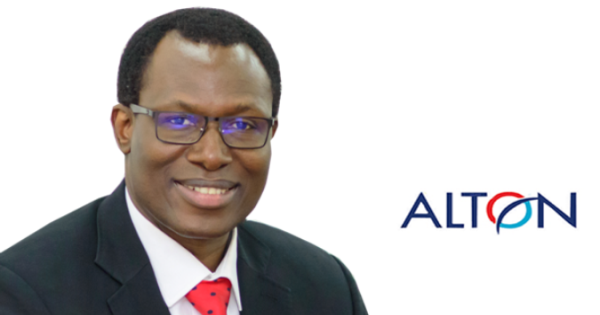
The recent broadcast on Nigeria Radio FM 99.3, hosted by Jimi Disu, saw listeners ask Engr. Gbenga Adebayo, Chairman, Association of Licensed Telecommunications Operators of Nigeria (ALTON) on Saturday, April 25, over what many described as ‘unfair’ billing and the ‘scam’ of data expiration.

ALTON Chairman Engr. Gbenga Adebayo
Addressing the heated matter surrounding the NGN6.98 USSD fee for banking transactions, Adebayo offered a blunt analogy to justify the cost.
He likened the telecommunications provider to a ‘taxi’ that carries a passenger to the bank’s digital front door. Defending the charge, he argued, “The phone company is like a ‘taxi’ taking you to the bank’s digital office. Even if the bank’s system is down when you get there, you still have to pay the taxi man.”
The ALTON Chairman was equally firm on the matter of data expiration, a major point of friction for Nigerian consumers. He clarified that data plans are sold within specific subscription windows, such as 7 or 30 days, and are not designed to be held in perpetuity.
Addressing this directly, he told listeners, “You can’t carry it in perpetuity… but you have the benefit of extending it without losing unused portions by just resubscribing.” He explained that subscribers can indeed keep their unused data through ‘rollover’ benefits, provided they resubscribe to a new plan before their current bundle officially lapses.
The dialogue moved to the issue of toll-free lines, with Adebayo explaining the technical reality of toll free numbers.
He noted that ‘nothing is free,’ rather, these are “reverse charge lines” where the business or the government absorbs the cost so the caller does not have to pay.
In Nigeria’s current economic climate, fewer businesses are willing to pay for these calls, leading to a shortage of truly free lines for consumers.
This financial burden is part of the broader “opportunity cost” analysis that consumers must understand when comparing Nigerian services to international standards.
Data provided during the broadcast also shed light on the dispute between telcos and the banking sector. Adebayo revealed that the NCC and the CBN are currently reviewing data to determine which party is responsible for failed transactions.
He noted that when a user attempts a USSD transaction multiple times, the telco provides the connection for every single attempt. If the bank’s system fails to complete the transaction, the telco has still expended resources to provide the link, which is why the N6.98 charge is applied for the access provided.
In his concluding remarks, Adebayo urged for more public enlightenment to bridge the gap between consumer frustration and technical realities.
He stressed that while the NCC continues to impose fines and penalties on operators for quality lapses, these fines do not actually solve the underlying problems of power failure and vandalism.
For service to truly improve, there must be a collective effort to protect the network from physical harm and a better understanding of the business models that keep Nigeria connected.

Telcos Defend N6.98 USSD Charge despite Failed Transactions

Fidelity Bank “Basking in Approval” under Onyeali-Ikpe, CEO

FRSC, BSG Renew Pact to Tackle Drink-Driving

GSMA, Pleias Seek to Close African Language Gap in AI

Firm Reveals a 37% Increase in Malicious Packages Compromising Software Supply Chains

FG to Gift Nigerians over 100 Free TV Channels from May 15

Microsoft Revamps Copilot in Workplace AI Push

What Adekunle Gold’s Support Means for ‘The Gathering on 100

UBA Beefs Up Mobile App Security to Stop Fraudulent Debits, Withdrawals

NRS Takes Over Mineral Royalties Collection Under New Tax Laws




 News2 days ago
Buhari, SSG’s Signatures Forged to Defraud Nigeria of $6.2m in CBN – EFCC

 General News2 days ago
Reliable Payment Rails Key to Financial Inclusion – TeamApt

 News2 days ago
CSCS Targets Market Leadership Through Technology, Diversified Revenue

 General News2 days ago
MTN Powers the Ultimate Youth Link-Up with the Launch of Live It 100 Youth Campaign

 General News2 days ago
EFCC Declares Tejuosho, City Boys Movement’s Women Leader Wanted over “419”

 E-Business2 days ago
Angst as FG Drops $32.8m Fine on Meta for Data Breach

 General News2 days ago
Afreximbank to Fund 3 New Refineries in Nigeria

 Telecom2 days ago
CerAwards 2026: CeraVe & Konga Health Reward Top Creators with Paris Trips and N12M in Prizes