

General News
CWG, Others Introduce IT Transformation Solutions in East Africa

Computer Warehouse Group (CWG) in collaboration with IBM and Infosys successfully introduced IT transformation solutions for the financial services sector in East Africa.
This was at a business technology summit organized by CWG Uganda a member of the pan African Systems Integration Company, CWG.
The summit saw participants from all the major financial companies in Uganda and the East African region.
The summit theme “Driving Finacle core banking application on IBM Power7 and storage” provided a forum to discuss and create awareness about “Finacle core banking application on IBM power systems and storage”.
Industry experts and stakeholders in the financial services industry in East Africa were present at the forum.

Somas K Balasubramanian, Client Technical, Architect, IBM MEA an IT expert with over 16 years industry experience gave a presentation titled “IBM STG Solutions to accelerate the Banking Transformation Projects with IaaS Cloud”.
In his presentation he spoke about the key challenges in the banking industry ranging from operations integration, service operations to market share demand/ Growing revenues.
He went on to speak about how banks can align their IT services with business objectives and how they can improve the quality of their service while reducing long term costs on IT.
He also touched on the topic of governance, policies, processes and methodologies with regards to Cloud computing, and how IBM can support banks in their journey in the banking industry where IBM has partnered with banks to achieve Smart cloud objectives.
Neeraj Bajpai, ISV & SI’s Architect, IBM & Open Group certified IT Architect; gave a presentation titled “Why Power Systems are Important: Transform your business with IBM Power Systems”
In his presentation he spoke about factors that banks should consider when choosing a hardware platform for their Core banking application.
Neeraj explained how IBM’s systems high performance, energy efficient servers are ideal for multiple applications and infrastructure workloads while providing one architecture design that supports banking transactions at optimum performance and cost.
He further talked about the IBM/ Finacle value proposition to the banking industry where IBM is the number 1 Unix server maker in the world.
Also how Finacle integrates and uses IBM technologies such as websphere, Infosphere, Filenet and Rationale.
He also highlighted some of the benefits derived from deploying your core banking application on IBM power servers such as: TCO, Scalability, optimized computing resources, improved server utilization rate, enhanced workload request, approve, capture, deploy process management and control while reducing image deploy time from 2-4 weeks to a few hours for the development and testing workloads amongst other features and benefits.
Michael Manzi, country manager, CWG Uganda who spoke at the summit says; “The trend in the industry today is that customers increasingly feel more comfortable to engage a Single Responsibility Partner (usually the software provider, who has impeccable credentials in hardware as well).
This significantly increases the success factor, and drastically reduces the points of failure in the project by eliminating the resort to finger pointing by many vendors and CWG has over time proved herself as such a Partner with leadership skills and resources in Software, Hardware and Database”.
Addressing the participants, CS Vinay, Associate Regional Manager and Head Africa, Finacle noted that, Finacle core banking application from Infosys is a highly sophisticated and advanced system that has been deployed and is being used by a number of financial services institutions in Africa and other continents. According to him, Finacle enables banks to transform their multi-country operations through a standard platform and process.
It has a set of offerings including interest free banking, wealth management, an enhanced mobile banking solution, consumer e-banking and treasury solutions amongst others.
Finacle has recorded numerous success stories of business transformation in banks in Africa running on IBM Power Servers and Storage systems.
He further explained that the journey so far has been a remarkable one and that he is absolutely sure that the financial industry players in the East Africa will experience remarkable transformation in their businesses by embracing this Finacle solution. According to him, the solution will enable banks drive its objectives of enhancing productivity and innovation-led customer experience in all its operations.
CS Vinay also pointed out the role that Computer Warehouse Group plays in delivering the finacle solution to its banking customer which goes beyond mere partnering with Infosys.
“CWG possess the requisite skills and resources to engage with the customer from the beginning of the sale until the solution is fully delivered.” He said.
CWG, the Pan African Systems integration company, partnering with IBM, a renowned leader and pioneer in the IT industry, and Infosys, the leading universal banking solutions provider will partner with the organisations on their transformation journey delivering world class IT solutions that will add value to the financial services industry in East Africa as we have jointly done in West Africa.


National Identity Management Commission (NIMC), has explained why kidnappers and terrorists are not always traceable despite the country’s expanding digital identity infrastructure.

NIMC explanation pointed to a simple but significant gap in the system.
Abisoye Coker-Odusote, director-general of the agency said that: “A lot of the time, you find out the kidnappers use the phones of the people they have abducted, which means how do you trace them because they are not using their own phones?” she said.
Coker-Odusote spoke during an appearance on Channels Television, where she was asked to explain why criminals remain difficult to trace despite the mandatory NIN-SIM linkage policy.
She said criminals frequently frustrate investigations by using mobile phones belonging to their victims, instead of their own registered lines.
“We already know the NIN is the foundational identity for the security architecture, but a lot of the time, you find out the kidnappers use the phones of the people they have abducted. Which means, how do you trace them because they are not using their own phones?” she said.
She also suggested that some criminal elements involved in kidnapping operations may not even be captured in Nigeria’s identity database.
“There is a theory that it may be possible that these kidnappers are not Nigerians and are brought into the country 48 or 72 hours before a kidnapping takes place specifically for that purpose. I’m not insinuating anything, but if that were the case, they naturally would not be captured in our database,” she added.
The comments have revived questions about whether expectations placed on the NIN-SIM linkage have exceeded what the system was designed to deliver.
The NIN-SIM linkage exercise was introduced by the Nigerian Communications Commission (NCC) in collaboration with NIMC to strengthen identity management, eliminate anonymous SIM ownership and support national security.
Over the years, the exercise resulted in millions of subscribers linking their SIM cards with their National Identification Numbers, while telecom operators also deactivated millions of lines that failed to comply with regulatory directives.
Earlier, the NCC maintained that the policy was aimed at improving the integrity of Nigeria’s SIM registration database, strengthening identity verification and supporting security agencies in criminal investigations.
The regulator also described the exercise as an important component of the country’s digital economy and national security framework.
Telecommunications operators have consistently maintained that while they play a critical role in implementing the NIN-SIM linkage policy, they are not responsible for tracking criminals.


Quest Merchant Bank recently hosted the second edition of the Great Place to Work® Nigeria Study Mission, reaffirming its commitment to fostering a high-performance workplace culture and advancing people-centric leadership practices.

The Study Mission serves as a collaborative learning platform that brings together Great Place to Work® Certified organizations to exchange insights, share best practices, and strengthen workplace cultures.
The event welcomed Human Resources leaders and representatives from FITC, Princeps Credit Systems, Tonic Technologies and Esentry Limited for an engaging and insightful session focused on building thriving workplace cultures, promoting continuous learning, and advancing employee-centric practices that drive organizational success.
Speaking at the event, Tolulope Dayo-Peters, Head of People Management, emphasized the importance of continuous learning and collaboration in building sustainable workplace cultures.
“We are delighted to host the second edition of the Great Place to Work® Nigeria Study Mission. At Quest Merchant Bank, we believe building a great workplace is an ongoing journey rooted in trust, purposeful leadership, and a genuine commitment to our people.
“We are pleased to share the practices that have shaped our culture and look forward to more opportunities to learn and collaborate with like-minded organizations.”
Also speaking at the event, Afolabi Olorode, Acting Managing Director/CEO, Quest Merchant Bank Limited, highlighted the critical role workplace culture plays in driving long-term business success.
“We recognize that a strong workplace culture is fundamental to sustainable business success. Creating an environment where our people are empowered to grow, innovate, and perform at their best enables us to consistently deliver value to our clients and stakeholders. We are proud to support initiatives like the Great Place to Work® Nigeria Study Mission that encourage organizations to learn from one another and collectively raise the standard of workplace excellence in Nigeria.”
The Study Mission reinforced the importance of collaboration among organizations committed to creating exceptional employee experiences.
By providing a platform for open dialogue, peer learning, and the exchange of practical ideas, the initiative enabled participants to explore innovative approaches to employee engagement, organizational culture, leadership development, and talent management while strengthening a growing community of employers dedicated to workplace excellence.
Hosting the Great Place to Work® Nigeria Study Mission further strengthens Quest Merchant Bank’s position as a thought leader in workplace culture and talent management.
It also enhances the Bank’s employer brand and demonstrates its unwavering commitment to creating an environment where employees can grow, innovate, and achieve their full potential.
Quest Merchant Bank remains committed to championing initiatives that promote learning, innovation, and people-centric leadership. Through strategic partnerships and knowledge-sharing platforms such as the Great Place to Work® Nigeria Study Mission, the Bank continues to contribute to the advancement of exceptional workplace cultures and the future of work across Nigeria’s corporate landscape.
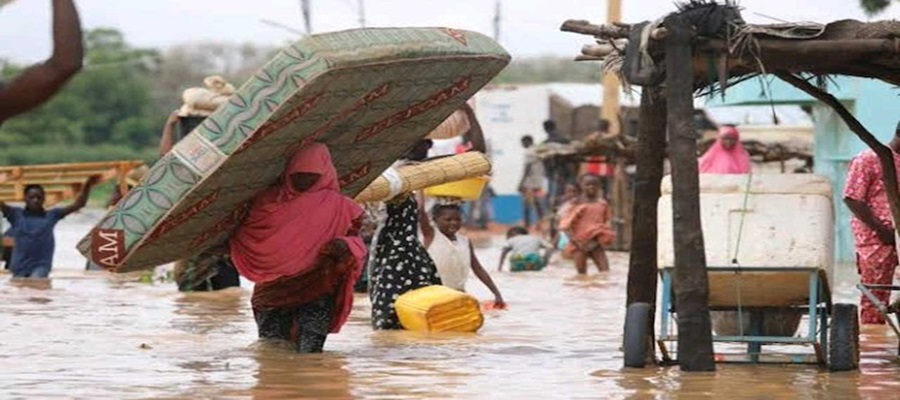
Nigeria Hydrological Service Agency (NIHSA) has warned of possible floods in parts of Adamawa, Bauchi, Edo, Imo, Enugu, Akwa Ibom, Cross River, Kaduna, Plateau, Niger, Benue, and Borno states within the next seven days.

According to information posted on NIHSA X handle, the Agency announced medium flood advisory in force for the next 7 days across Adamawa, Bauchi, and 11 other States.
“Localised inundation is forecast along the main channel; named communities below sit on the projected footprint. Stations: Saminara on the Karam river, Waya Dam Site on the Waya river, Amber on the Amber river.
“Adamawa; Lemsa, Lamurde, Numan Exposure: 147 comm. 49 schis 40 hith 6 mkts17 relig. Bauchi-Bauchi, Ningi, Shira. Exposure: 4 comm. Kaduna; Chikun, Giwa, Igabi, Jaba, Jema’a, Kachia, Kaura, Kauru, +6 more. Exposure: 1 comm.
“Borno-Gubio, Mobbar. Exposure: 680 comm. 8 schls 6 hith 5 mkts 21 relig. Edo-Akoko-Ed, EtsakoEa, EtsakoWe, Ikpoba-Okha, Orhionmw, OviaNort, OviaSo.. Exposure: 3 comm.
“Imo-Aboh-Mba, Oguta, Ohaji/Eg, Okigwe, Owerri North, Owerri West. Exposure: 3 comm. 7 more states affected and severity LGAs”.
NIHSA advised people in the affected areas to “do NOT cross flooded roads, bridges, or fast-moving water on foot or by vehicle.
“Clear drainage channels and river-mouth blockages; avoid building or living in the floodplain and move people, livestock and valuables from the floodplain to pre-identified higher ground,” NIHSA stated.

NBC Scraps Annual Digital Access Fee on DSO

Surge in Fibre Cuts Hobbles Service Provisioning

Why Bandits, Kidnappers are Hard to Trace despite NIN-SIM Linkage – FG

First Securities Brokers Empowers Nigerians to Trade in the Stock Market with the Launch of FirstInvest App

Quest Merchant Bank Hosts Great Place to Work® Nigeria Study Mission

NRC, Ponzi Scheme Collapses Resulting Loss of Billions of Naira
Nigeria Launches FreeTV Nationwide

NASENI Moves to Digitize CCB’s 5m Assets Declaration and Operations

Lebara Nigeria Launches Lebara Play, Africa’s First Telecom-Owned Micro-Drama Platform

CANAL+ Partners Samsung to Pre-Load DStv Stream on New Samsung TVs In Nigeria, Other African Countries




 Telecom2 days ago
MTN Nigeria Slashes Cost of Broadband Internet Router, Unwraps New Data Bundles for Low-Budget Users

 E-Financial2 days ago
Nigerians Accumulate $59Bn in Cryptocurrency Assets —FDC

 E-Financial2 days ago
Flutterwave Partners Xoom on Transfers into Nigeria

 General News2 days ago
Nearpays, Nigerian Fintech Becomes First African Startup to Win UN’s AI for Good Innovation Factory

 News2 days ago
DataPro Upgrades Dangote Cement’s Credit Rating to AA+

 Telecom2 days ago
Nokia’s 14 Years of Mobile-Phone Supremacy Ended in an Afternoon

 E-Business2 days ago
Tinubu Orders NIMC to Enrol Every Nigerian by End of this Year – DG

 General News2 days ago
Fintech Brands Should Communicate Right in a VUCA Economy