

E-Business
Cybersecurity Firm Shares a Guide to Deleting your Digital Footprint from the Internet

Users’ digital footprints have been building up for years. Social media accounts, old comments, carelessly posted photos, message boards, and old marketplace listings — everything that each individual user has ever shared online remains there, potentially causing serious retroactive issues for the poster.

This information may be of interest to potential employers, government agencies, advertisers, scammers and even exes. HR departments often conduct thorough online background checks on candidates before hiring. Additionally, data obtained through the use of shady services that search for leaked information from data breaches can be used for doxing and harassment purposes.
Kaspersky shares guidelines on how to manage your personal digital footprint and minimise the amount of private information available to everyone online.
Google yourself regularly
By searching for yourself, you’ll first see exactly where you once registered (and perhaps forgot about), and second, you’ll be able to check for any fake or impersonating accounts using your name.
Get rid of old accounts and posts
Once you’ve dealt with the fake accounts and compiled a list of your genuine ones, it’s time to delete the superfluous and outdated ones. Don’t rely entirely on the initial search or your own memory.
Dig deep into your email archives to see which sites and services message you as their user. You can also review the list of saved passwords in your browsers or password managers.
Dealing with shadow profiles
Unfortunately, the accounts you’ve registered are only half the battle. Sometimes social media sites generate shadow profiles containing data on you that may persist even after you delete your account. These profiles can include information you never directly shared with the service. For example, you might have granted the Facebook app access to your phone contacts without ever importing them into your account. All the data from your address book could end up in that shadow profile.
Even more unsettling, sometimes these accounts get created for users who’ve never even registered with the service, by gathering data from other platforms and open sources. While it’s nearly impossible to completely prevent shadow profiles from being created, you can minimise the damage. Go through your old apps and revoke their access to your sensitive data — things like your camera, photos, contacts, location, and so on. Going forward, meticulously monitor which permissions you grant to each new app.
Set up data breach notifications
Data leaks happen online virtually every day, exposing massive amounts of personal data: IP addresses, names, phone numbers, email addresses, payment info, and much more. Websites like Have I Been Pwned allow you to enter your email and get alerts if it shows up in a new leaked database.
However, for a comprehensive approach and greater convenience, it’s best to monitor leaks through Kaspersky Premium — we search for breaches using both email addresses and phone numbers.
You can add all your email addresses and phone numbers (for yourself and your family) and be confident that we’ll warn you about a breach almost immediately, thanks to the Kaspersky Security Network (KSN) – our global threat intelligence infrastructure.
Unfortunately, preventing leaks single-handedly is an impossible task for the average user. So, the best defence is to limit how much personal data you share when registering new accounts.
Clean up your inbox
An email inbox overflowing with old messages that contain private information is also part of your digital footprint. Go through your mail using keywords like “password”, “SSN”, or “account”, and delete any emails containing this sensitive data. Unsubscribe from old mailing lists. This lowers the chance that your email address will leak from a marketer’s database.
Erase local traces
Don’t forget to regularly — at least once a month — clear your browser history, cookies, and cache on all your devices. Alternatively, set up your browser to clear this data automatically when you close it. This lessens the chance of an outsider collecting information from your device if they gain access to it.
On smartphones, it’s advised to disable or periodically reset your advertising identifier.
Review your privacy settings
You can check and adjust privacy and security settings through our free service, Privacy Checker. It will guide you on how to configure popular social platforms, services, and even operating systems to your desired level of privacy.


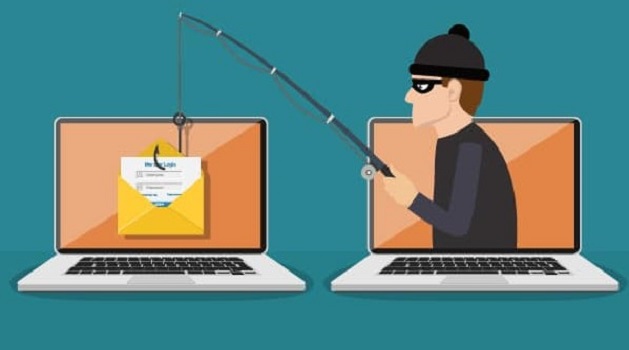
A new Kaspersky review reveals how cybercriminals revived and refined phishing techniques to target individuals and businesses in 2025, including calendar-based attacks, voice message deceptions and sophisticated multi-factor authentication (MFA) bypass schemes.

The findings emphasise the critical need for user vigilance, employee training and advanced email protection solutions to counter these persistent threats moving forward.
Calendar-based phishing targets office workers
A tactic originally from the late 2010s, calendar-based phishing, has reemerged with a focus on B2B environments. Attackers send emails with calendar event invitations, often containing no body text, hiding malicious links in the event description.
When opened, the event auto-adds to the user’s calendar, with reminders urging them to click links leading to fake login pages, such as those mimicking Microsoft.
Previously aimed at Google Calendar users in mass campaigns, this method now targets office employees. Organisations should conduct regular phishing awareness training, such as simulated attack workshops, to teach employees to verify unexpected calendar invites.
Voice message phishing with CAPTCHA evasion
Phishers are deploying minimalist emails posing as voice message notifications, containing sparse text and a link to a basic landing page. Clicking the link triggers a chain of CAPTCHA verifications to bypass security bots, ultimately directing users to a fraudulent Google login page that validates email addresses and captures credentials.
This multi-layered deception highlights the need for employee training programmes, such as interactive modules on recognising suspicious links and advanced email server protection solutions like Kaspersky SecureMail, which detect and block such covert tactics.
MFA bypass via fake cloud service logins
These sophisticated phishing campaigns are targeting multi-factor authentication (MFA) by mimicking services like pCloud (a cloud storage provider that offers encrypted file storage, sharing and backup services).
These emails, disguised as neutral support follow-ups, lead to fake login pages on lookalike domains (e.g., pcloud.online). The pages interact with the real pCloud service via API, validating emails and prompting for OTP codes and passwords, granting attackers account access upon successful login.
To counter this, organisations should implement mandatory cybersecurity training and deploy email security solutions like Kaspersky Security for Mail Servers, which flags fraudulent domains and API-driven attacks.
“With phishing schemes growing more deceptive, Kaspersky urges users to treat unusual email attachments, like password-protected PDFs or QR codes, with caution and verify website URLs before entering any credentials.
“Organisations should adopt comprehensive training programmes, which includes real-world simulations and best practices for spotting phishing attempts. Additionally, deploying robust email server protection solutions ensures real-time detection and blocking of advanced phishing tactics,” comments Roman Dedenok, Anti-Spam Expert at Kaspersky.

Nigerian Data Protection Commission (NDPC), has expressed its commitment to balance information around data privacy and protection.

Dr. Vincent Olatunji, national commissioner, NDPC, stated this in Abuja, at the National Data Privacy Summit with the theme, “Privacy in the Era of Emerging Technologies,” organised by the commission.
Olatunji said the NDPC, at the moment, was looking at balancing information around data privacy and protection.
“What we are doing is just to look at how to balance information around privacy and protection, which is really important, because as we are innovating, at the same time, we have to consider issues around privacy and protection,” he stated.
He added that the commission has been very bold in taking risks that would bring about growth.
“Our starting point is growing at a very alarming rate, and we are not afraid of anything. We can take risks. And that is why a lot is happening in Nigeria, and this is the level of clarity,” he explained.
In his address, Dr. Aminu Maida, executive vice chairman (EVC) of the Nigerian Communications Commission (NCC), stated that Internet of Things holds promise for Nigeria’s economy.
The EVC, who was represented by Abraham Oshadami, executive commissioner, Technical Services (ECTS), noted that, “in an era in which digital assets, Internet of Things, future digital computing and other transformative technologies are key, and both a cornerstone of building trust for the adoption and a prerequisite for sustainable progress.
“Emerging technologies hold immense promise for Nigeria’s grand economy, but they also introduce complex risks to personal and individual rights.
“So, balancing innovation through post-ethical safeguards and public trust is the first step to ensuring that global digital advancement benefits all Nigerians without compromising their privacy or their security,” he added.
“As we just heard from the Nigeria Police, telecom operators have a vast amount of sensitive historical information daily, including connectivity apps and collaboration on privacy, security, and number protection, both to their and their inheritors,” he said.
Dr. Bako Shurkuk, commissioner for Science, Technology and Innovation, Plateau State, who represented Caleb Mutfwang, Governor of Plateau State, said, emerging technologies can be harnessed to attain sustainable growth.
E-Business
OADC Lagos Reinforces Commitment to Local Data Hosting and Digital Transformation @ NDPC’s National Privacy Week Summit
Open Access Data Centres (OADC) Lagos has reaffirmed its commitment to Nigeria’s data protection and digital transformation agenda through its sponsorship and active participation in the Nigeria Data Protection Commission’s (NDPC) National Privacy Week Summit.

The National Privacy Week Summit, organised by the NDPC, convened policymakers, regulators, technology providers, and industry stakeholders to promote data privacy awareness, strengthen compliance with the Nigeria Data Protection Act (NDPA), and advance conversations around data security, sovereignty, and responsible data governance.
As a sponsor of the event, OADC Lagos demonstrated its continued support for the Federal Government’s drive toward local data hosting and data domiciliation, which are increasingly critical to safeguarding sensitive information, enhancing regulatory compliance, and building trust in Nigeria’s digital economy.
Through its carrier-neutral, Tier III Design certified data centre in Lekki, Lagos, OADC provides secure, resilient, and compliant infrastructure that enables government institutions and private sector organisations to host and manage data locally while meeting international best practices.
Commenting on the engagement, Adesola Adesugba, Country Marketing Manager, Open Access Data Centres Nigeria, said: “We are proud to have supported the Nigeria Data Protection Commission through the National Privacy Week Summit and to stand alongside the government in advancing Nigeria’s digital transformation objectives.
“Strengthening local data hosting and domiciliation is fundamental to national data sovereignty, improved security, and sustainable digital growth, and OADC Lagos remains committed to enabling this future.”
OADC’s participation at National Privacy Week Summit underscores its role as a trusted digital infrastructure partner to government and enterprise, supporting secure cloud connectivity, regulatory compliance, and the long-term development of Nigeria’s digital ecosystem.
Open Access Data Centres is part of the WIOCC Group and operates open-access, world-class data centres across Africa, serving cloud providers, network operators, enterprises, and public sector institutions.

Firm Reviews the Evolution of Phishing Threats in 2025

EdTech Platform Unveils over 5,000 Self-Paced Courses for Skills, Knowledge, and Literacy

Incentives alone won’t win over Africa’s next billion fintech users — Kuda MFB MD

MTN Guns for $2.76bn IHS Towers Buyout in African Telecom Power Grab

NCC, NSCDC Warn Construction Firms Against Damaging Fibre Optic Cables

19 Nigerian Banks Meet CBN Recapitalization Targets Ahead of March Deadline

Youth Talent Takes Center Stage as T2 Ignites High-Octane Rap Battles @ Carnival Calabar

Aig-Imoukhuede Foundation Wrapped Up 2025 with Real Change in Governance, Health, Media Across Africa

Nigerian Terra Industries Secures $11.8m for Expansion

US invests $115m in counter-drone tech for World Cup security




 News2 days ago
New Study Reveals How Moniepoint Powers Nigeria’s Downstream Oil Sector with Same-Day Settlements and Working Capital Boost

 E-Business2 days ago
OADC Lagos Reinforces Commitment to Local Data Hosting and Digital Transformation @ NDPC’s National Privacy Week Summit

 Telecom2 days ago
MTN Powers 6,000 Young SMEs with Digital Skills in Economic Backbone Boost

 News2 days ago
FG Mandates Shared Funding for N1.98trn Electricity Subsidy

 News2 days ago
Spain Bars Under-16s from Social Media in Digital Safety Crackdown

 Telecom2 days ago
Onafriq, PAPSS Launch Wallet-Based Payments Pilot from Nigeria to Ghana

 E-Financial2 days ago
FG Signs MoU with ICAN, CIBN, Others to Train 10m Nigerians in Financial Literacy

 General News2 days ago
Corporate Comms in the Age of Crypto: Why Nigeria’s Digital Finance Future Depends on Trust