

Telecom
Danbatta Gives Account of 5-year Stewardship, Sets Priorities for Second Term

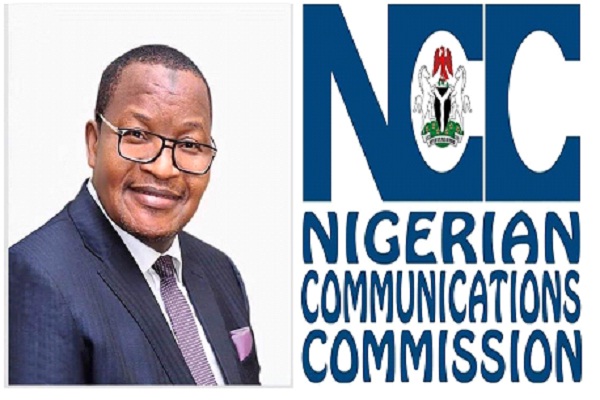
Prof. Umar Garba Danbatta, executive vice chairman and chief executive officer of the Nigerian Communications Commission (NCC), at the weekend hosted an interactive session with senior media chiefs from the mainstream and online media community where he gave impressive accounts of his stewardship as the Chief Telecoms Regulator in the last five years.

Prof Umar Danbatta, EVC, NCC
The event, held at the NCC’s Communications and Digital Economy Complex, Mbora, Abuja, was attended by the top-notch of the fourth estate of the realm both physically and virtually, as well as the senior management of the Commission, including Adeleke Adewolu, executive commissioner Stakeholder Management.
Addressing the forum, Danbatta, who was recently reappointed for another five years in office following the expiration of his first term in August 2015, eloquently enunciated his major policy initiatives that have produced record broadband penetration and enhanced the growth in the telecoms sector, especially in the contribution to the nation’s Gross Domestic Product (GDP).
He also reeled out NCC’s regulatory priority areas for the next five years to include facilitating the attainment of 70 per cent broadband penetration by 2025; consumer protection and empowerment; and consolidation of spectrum trading to ensure maximum and efficient usage of available frequencies.
Other areas of focus, according to him, will include continuous SIM registration audit to provide security and curtail incidences of banditry, kidnapping, and armed robbery; creation of Emergency Communications Centres (ECCs) in more states of the federation; and execution of the counterpart funding agreements with the licensed Infrastructure companies (InfraCos) to facilitate the digital transformation of the economy.
Speaking on his achievements in the last five years, Danbatta said that the diligent implementation of NCC’s Strategic Vision Plan (SVP), which focused on the 8-Point Agenda, has helped to lift broadband penetration from 6 per cent in 2015 to 42.02 per cent by July, 2020.
The sector’s contribution to GDP increased from 8.50 per cent in 2015 to 14.30 per cent in the second quarter of 2020.
In financial terms, Danbatta said the Q2 2020 contribution translates to N2.272 trillion.
He noted that when he came on board five years ago, 217 access gap clusters were identified in the country affecting 40 million Nigerians without access to telecoms services.
“But today, we have reduced the access gap clusters to 114 with 15 million of the 40 million digitally excluded Nigerians now having access to telecoms services. We are committed to addressing the remaining access gap clusters, which are areas outside the frontier of economic viability to ensure the remaining 25 million Nigerians have access,” he said.
Similarly, Danbatta said on assumption of office, there were 47,000 kilometers of fibre optic cables laid across the country.
However, five years after, as a result of regulatory focus, there are now 54,725 kilometers of fibre cables laid across the country through the efforts of some private companies in the sector.
“In line with the Federal Government’s target, an additional 120,000 kilometers of fibre are being planned over the next four years. In this regard, the NCC is working on last-mile connectivity to different parts of the country through leveraging the 40 terabyte capacity of five submarine cables on the coastal shores of Nigeria,” he said.
Danbatta pointed out that the licensing of six Infrastructure Companies (InfraCos) to deploy fibre infrastructure across the six-geo political zones will also help to galvanise increased connectivity.
“This will also bring about a reduction in cost of data from N1000, per gigabyte of data to around N390 with broadband penetration target of 70 per cent to cover 90 per cent of the population within the next five years as contained in the new Nigerian National Broadband Plan (2020-2025),” the EVC said.
Danbatta, however, noted that “we cannot have pervasive broadband with only 37,000 4G-enabled Base Transceiver Stations (BTS) of the total 50,000 BTS currently in the country. We need more next-generation technologies as we work through addressing infrastructure deficit occasioned by the spike in data usage in the country.”
In this regard, the EVC said the 5G trial conducted by the NCC in 2019 and its eventual safe deployment in the country will increase data speed and boost efficiency in service experience for the consumers.
On capital importation, the EVC said in 2015, Foreign Direct Investment (FDI) in the telecom sector stood at $1 billion but declined to $212 million by 2018. He, however, noted that through regulatory efforts, the FDI in the sector has picked up again reaching $930 million according to recent figures from the Central Bank of Nigeria (CBN).
Danbatta also talked about the various consumer-centric initiatives his leadership has put in place to strengthen consumer protection and empowerment in the last five years. These include the declaration of 2017 as the Year of the Consumer, the introduction of the Do-Not-Disturb (DND) 2442 Short Code, the introduction of the NCC toll-free Number 622; the stringent provisions of Subscriber Identification Module (SIM) Registration Guidelines, issuance of direction on forceful subscription and data roll-over, among others.
Such initiatives, According to Danbatta, also include the constitution of a multi-sectoral committee on e-fraud, revision of the consumer complaints, and service level agreements (CC/SLA) for prompt resolution of consumer complaints by the Mobile Network Operators (MNOs).
He reiterated NCC’s commitment towards delivering on its mandate of ensuring the quality of service to the consumers, driving investment, and boosting healthy competition in the industry as enshrined in the Nigerian Communications Act (NCA), 2003.
Danbatta lauded the role of the media in the reportage of the telecom sector over the years and urged the practitioners to continue to be objective and constructive in their coverage of the activities of the Commission and that of its licensees.



Dimension Data Nigeria has raised ₦20 billion (approximately $13.7 million) through a bond programme under Dimension Data SPV Funding Plc, following approval from the Securities and Exchange Commission of Nigeria.

This initiative aims to strengthen Nigeria’s digital infrastructure by addressing gaps in fibre coverage, limited enterprise connectivity, and increasing demand for cloud, fintech, digital services, and Artificial Intelligence.
The integrated IT solutions provider stated that the capital will be used to fund long-term investments in expanding network capacity, enhancing resilience, and supporting carrier-grade and enterprise services as data consumption continues to accelerate nationwide.
Speaking at a documentation and regulatory clearances event in Lagos, managing director, Gbenga Olabiyi, said sustained infrastructure investment is critical to maintaining competitiveness and enabling future growth.
He noted that strategic upgrades would help future-proof operations, reduce service disruptions, and allow the company to scale efficiently as business and consumer demand for cloud, fintech, and other digital services intensifies.
The bond programme is backed by private equity firm Mbavaa Partners Limited, whose managing partner, Shatse Kakwagh, described the transaction as a milestone that unlocks long-term capital for expansion.
He highlighted that strong ratings and an oversubscribed first issuance show investor confidence in Dimension Data’s execution and growth potential.
The fundraising comes as Nigeria confronts persistent infrastructure gaps, including limited metro and last-mile fibre coverage and rising enterprise connectivity needs.
Government intends to deploy 90,000 kilometres of fibre nationwide under Project Bridge aim to expand internet penetration and lower access costs.


MTN Nigeria Communications Plc has recorded a landmark turnaround in 2025, posting a pre‑tax profit of N1.70 trillion, reversing a loss of N550.3 billion in 2024 as the company emerged from a rough patch driven largely by foreign exchange volatility.

MTN Nigeria
The telecom giant said the performance reflects a “significant turning point” in its corporate and financial trajectory, underpinned by improved macroeconomic conditions, strong service‑revenue growth, and tightening operational efficiency.
Profitability, Revenue, and Dividend
For the full year 2025, MTN Nigeria reported profit after tax of N1.11 trillion, compared with a loss after tax of N400.4 billion in 2024, while earnings per share rose to N53.07 from a negative N19.05 a year earlier.
Total revenue grew 54.9% year‑on‑year to N5.20 trillion, with service revenue up 55.1% to N5.17 trillion, driven mainly by data, voice, and fintech services.
The company’s board proposed a final cash dividend of N15 per share, bringing the total dividend for the 2025 financial year to N20 per share. Dividends will be paid electronically to shareholders on the register as of April 8, 2026, subject to completed e‑dividend mandates.
This payout is one of the largest single‑year dividends in Nigerian corporate history, signalling strong cash‑flow generation and management confidence in the company’s earnings quality.
Fourth‑Quarter Momentum and Customer Base
MTN Nigeria’s fourth‑quarter performance was particularly robust, with pre‑tax profit surging 248.8% year‑on‑year to N569.6 billion, compared with N163.3 billion in Q4 2024.
The company’s mobile subscriber base reached 87.3 million at year‑end, up 7.9% from the previous year, reinforcing its position as Nigeria’s largest telecom operator by subscribers.
Active data users grew by 11.6% to 53.2 million, and smartphone penetration rose to 66.1%, reflecting the deepening shift toward data‑driven services and digital lifestyles among Nigerians.
Data, Fintech, and Voice Growth
Data was the biggest growth driver, with data revenue up 74.5% to N2.78 trillion and data traffic increasing 34.0%, amid rising demand for mobile broadband and video streaming.
Voice revenue also climbed strongly, rising 42.1% to N1.85 trillion as tariffs and usage patterns adjusted to more stable exchange‑rate conditions.
Fintech revenue surged 79.7% to N191.3 billion, underscoring the rapid expansion of MTN Nigeria’s mobile money ecosystem and the growing role of digital financial inclusion in the country’s economy.
Cost Management and EBITDA Leap
Operating leverage improved markedly, with cost of sales rising 30.3% and operating expenses up 16.7%, both growth rates below the 55% revenue expansion.
EBITDA jumped 108.9% to N2.74 trillion, lifting the company’s EBITDA margin into the mid‑to‑high 50% range, ahead of its prior guidance.
Management attributed the improvement to a more stable foreign‑exchange market, moderated inflation, and sustained demand for data and digital services, as well as disciplined cost control.
FX Recovery and Capital Expenditure
Foreign exchange performance was a major swing factor: MTN Nigeria recorded a net FX gain of N90.3 billion in 2025, compared with a N925.4 billion FX loss in 2024.
The turnaround followed settlement of outstanding letters of credit and a deliberate reduction in dollar‑denominated exposure, which helped insulate earnings from earlier currency shocks.
Capital expenditure excluding leases rose 126.2% to N1.00 trillion, as the company invested heavily in network capacity, coverage, and digital infrastructure, including fibre rollout and 4G/LTE upgrades.
Despite the higher capex, free cash flow soared 215.5% to N1.2 trillion, indicating that the expansion is being funded internally without straining the balance sheet.
Balance Sheet and Shareholder Value
The company’s balance sheet strengthened materially, with total assets up 28.7% to N5.40 trillion and shareholders’ equity turning positive after several years in deficit.
Shareholders’ funds rose 219.8% to N548.7 billion, while retained earnings closed at N400.4 billion, compared with negative N607.5 billion in December 2024.
In the stock market, MTN Nigeria’s shares recently traded around N760, making it the most capitalised company on the Nigerian Exchange with a market valuation of about N16 trillion.
The stock has gained 33% in February 2026 alone, taking year‑to‑date returns to 49%, following a 155.5% rally in 2025, which investors see as a vote of confidence in the company’s turnaround story.
Outlook and Strategic Guidance
Management maintains a medium‑term service‑revenue growth guidance of at least low‑20% annually, underpinned by ongoing data and fintech expansion as well as gradual price adjustments.
The group has also revised its EBITDA margin guidance upward to the mid‑to‑high 50% range, signalling sustained profitability even as the company continues to invest in network and digital infrastructure.
Analysts note that MTN Nigeria’s 2025 performance not only restores investor confidence but also sets a benchmark for other Nigerian corporates navigating FX‑linked risks and regulatory uncertainty.

Nigerian B2B e‑commerce platform Alerzo is disposing of large parts of its delivery fleet, including buses, motorcycles, and operational vehicles, as it contends with a N4.38 billion debt owed to Moniepoint Microfinance Bank.

Alerzo
Footage of the company’s facility in Ibadan, packed with dusty Alerzo‑branded motorcycles and buses, circulated on social media on Thursday, with a background voice inviting buyers to purchase the vehicles in bulk. The asset sale follows a Federal High Court order in Lagos that froze Alerzo’s accounts and assets after the company defaulted on a N5 billion working‑capital loan obtained in January 2025 from Moniepoint.
By December 2025, the outstanding balance on the loan reached N4.38 billion, with interest still accruing.
While Alerzo has not issued an official public statement, insiders close to the company attribute the business downturn to the harsh macroeconomic conditions in Nigeria, including rising fuel and logistics costs, inflation‑driven price pressures, and tight credit. “They tried their best. They did everything to stay afloat and keep several young Nigerians under their employment, but several economic factors were against them,” said a source close to the company.
Facing severe financial strain, Alerzo reportedly turned to Moniepoint in early 2025 for emergency funding to stabilise operations and maintain inventory supply to retailers. The facility was initially structured as an 18‑month loan, with a clause allowing Moniepoint to recall it immediately in case of default. Despite a demand letter issued on November 18, 2025, Alerzo allegedly failed to fully repay the debt, triggering the bank’s legal action.
In January 2026, the Federal High Court in Lagos granted Moniepoint Microfinance Bank Limited a Mareva injunction against Alerzo Limited and its associates, directing all financial institutions to freeze accounts and assets linked to the defendants pending the resolution of the case. The bank’s suit names Alerzo Limited, its Managing Director Adewale Opaleye Adesina, three guarantors – Opaleye Bukola Modinat, Dauda Hakeem Omotayo Taiwo, and the Singapore‑based Alerzo PTE Limited – as defendants. Court documents show that Alerzo sought the N5 billion facility through a board resolution dated January 20, 2025, to meet working capital and inventory supply needs.
Moniepoint argued that despite the demand notice, the defendants did not liquidate their obligation, leaving a N4.38 billion balance as of December 3, 2025. The bank also complained of difficulties in serving court processes on some guarantors at their known addresses, with the Singapore‑registered entity requiring substituted service via courier.
Alerzo’s Chief Executive Officer, Adewale Opaleye, has since clarified that the company is only selling scrap vehicles and not its core operational fleet. He stated that Alerzo still operates over 400 active delivery vehicles, and the sale of the idle and damaged units does not signify a full shutdown of logistics operations. According to Opaleye, the disposed assets were mainly old or non‑functional units withdrawn from service, and the exercise forms part of an internal asset‑optimisation drive unrelated to the Moniepoint loan dispute.
Founded as a B2B e‑commerce and distribution platform, Alerzo developed a network that supplied fast‑moving consumer goods directly to neighbourhood retailers, cutting out middlemen and promising lower prices, faster delivery, and improved stock efficiency for small shops. At its peak, the company raised about $20 million in venture funding and expanded across Lagos, Oyo, Ogun, and other southwestern states, employing hundreds of staff and building a large fleet of delivery vehicles.
However, the capital‑intensive logistics and low‑margin nature of the business began to weigh heavily on the balance sheet, especially as fuel, maintenance, driver salaries, and warehousing costs surged. By 2023, Alerzo had initiated layoffs to cut costs and restructure operations, reflecting the broader pressure on Nigerian startups that scaled up during the 2020–2022 venture‑capital boom but now struggle with tighter funding, higher operating costs, and slower growth.
Alerzo’s situation echoes wider challenges facing the Nigerian tech ecosystem, where several once‑promising startups have shut down or scaled back operations since 2023, underscoring the risks of high‑burn logistics models in a difficult macro environment and the need for tighter alignment between unit economics, funding runway, and real‑market conditions.

Galaxy Backbone Confirms Over 150,000 Active Official Government Email Accounts, Clarifies Status of GOVMAIL

More 14m Farmers to Benefit from AfDB-backed Initiative

Dimension Data Nigeria Secures ₦20Billion Funding to Strengthen Digital Infrastructure

Newmark Webinar Explores How AI Could Transform Healthcare in Africa

Alerzo Liquidates Delivery Fleet as N4.38bn Moniepoint Loan Row Deepens

Kaspersky Launches OT Calculator to Align Cybersecurity Investments with Business Goals

Accidental Billionaire Opts for Jail Instead of Returning Money Credited Him by Mistake

Why the Future of PR Depends on Healthier Client–Agency Partnerships

New Horizons Nigeria Breaks Ground: First to Fuse Mandarin into ICT Curriculum

Kaspersky Brings more Transparency to Threat Detection with New Hunt Hub




 General News3 days ago
KPMG Strengthens Africa Leadership to Support Long‑term Growth Across the Continent

 E-Business3 days ago
esentry 2025 Report Shows Healthcare, Financial Services and Telecoms as Staging Grounds for Increased Cyberattacks in Africa

 News2 days ago
NITDA Equips Federal Character Commission with Data Tools to Drive Public Sector Reform

 E-Financial2 days ago
History is Watching: Tinubu’s Moment to Rescue Nigeria’s Stolen Future

 Telecom2 days ago
Telecom Giant MTN Injects N1.0 Trillion CAPEX into Network Expansion

 E-Financial3 days ago
Flutterwave Rises from Lagos Startup to Africa’s Fintech Powerhouse

 News3 days ago
Nigeria, EU Ink Research, Innovation Deal Worth €100Bn

 General News3 days ago
PalmPay Couples Show How Love Is Funded Digitally