

Telecom
Alerzo Liquidates Delivery Fleet as N4.38bn Moniepoint Loan Row Deepens

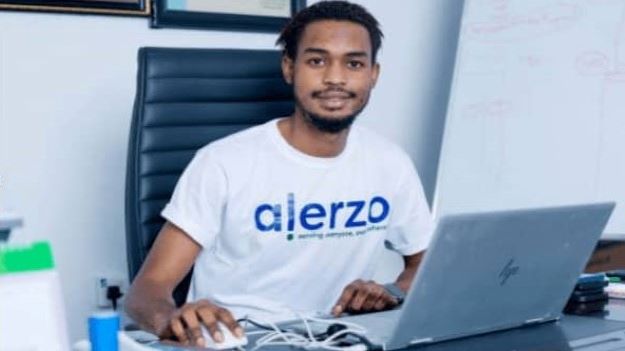
Nigerian B2B e‑commerce platform Alerzo is disposing of large parts of its delivery fleet, including buses, motorcycles, and operational vehicles, as it contends with a N4.38 billion debt owed to Moniepoint Microfinance Bank.

Alerzo
Footage of the company’s facility in Ibadan, packed with dusty Alerzo‑branded motorcycles and buses, circulated on social media on Thursday, with a background voice inviting buyers to purchase the vehicles in bulk. The asset sale follows a Federal High Court order in Lagos that froze Alerzo’s accounts and assets after the company defaulted on a N5 billion working‑capital loan obtained in January 2025 from Moniepoint.
By December 2025, the outstanding balance on the loan reached N4.38 billion, with interest still accruing.
While Alerzo has not issued an official public statement, insiders close to the company attribute the business downturn to the harsh macroeconomic conditions in Nigeria, including rising fuel and logistics costs, inflation‑driven price pressures, and tight credit. “They tried their best. They did everything to stay afloat and keep several young Nigerians under their employment, but several economic factors were against them,” said a source close to the company.
Facing severe financial strain, Alerzo reportedly turned to Moniepoint in early 2025 for emergency funding to stabilise operations and maintain inventory supply to retailers. The facility was initially structured as an 18‑month loan, with a clause allowing Moniepoint to recall it immediately in case of default. Despite a demand letter issued on November 18, 2025, Alerzo allegedly failed to fully repay the debt, triggering the bank’s legal action.
In January 2026, the Federal High Court in Lagos granted Moniepoint Microfinance Bank Limited a Mareva injunction against Alerzo Limited and its associates, directing all financial institutions to freeze accounts and assets linked to the defendants pending the resolution of the case. The bank’s suit names Alerzo Limited, its Managing Director Adewale Opaleye Adesina, three guarantors – Opaleye Bukola Modinat, Dauda Hakeem Omotayo Taiwo, and the Singapore‑based Alerzo PTE Limited – as defendants. Court documents show that Alerzo sought the N5 billion facility through a board resolution dated January 20, 2025, to meet working capital and inventory supply needs.

Moniepoint argued that despite the demand notice, the defendants did not liquidate their obligation, leaving a N4.38 billion balance as of December 3, 2025. The bank also complained of difficulties in serving court processes on some guarantors at their known addresses, with the Singapore‑registered entity requiring substituted service via courier.
Alerzo’s Chief Executive Officer, Adewale Opaleye, has since clarified that the company is only selling scrap vehicles and not its core operational fleet. He stated that Alerzo still operates over 400 active delivery vehicles, and the sale of the idle and damaged units does not signify a full shutdown of logistics operations. According to Opaleye, the disposed assets were mainly old or non‑functional units withdrawn from service, and the exercise forms part of an internal asset‑optimisation drive unrelated to the Moniepoint loan dispute.
Founded as a B2B e‑commerce and distribution platform, Alerzo developed a network that supplied fast‑moving consumer goods directly to neighbourhood retailers, cutting out middlemen and promising lower prices, faster delivery, and improved stock efficiency for small shops. At its peak, the company raised about $20 million in venture funding and expanded across Lagos, Oyo, Ogun, and other southwestern states, employing hundreds of staff and building a large fleet of delivery vehicles.
However, the capital‑intensive logistics and low‑margin nature of the business began to weigh heavily on the balance sheet, especially as fuel, maintenance, driver salaries, and warehousing costs surged. By 2023, Alerzo had initiated layoffs to cut costs and restructure operations, reflecting the broader pressure on Nigerian startups that scaled up during the 2020–2022 venture‑capital boom but now struggle with tighter funding, higher operating costs, and slower growth.
Alerzo’s situation echoes wider challenges facing the Nigerian tech ecosystem, where several once‑promising startups have shut down or scaled back operations since 2023, underscoring the risks of high‑burn logistics models in a difficult macro environment and the need for tighter alignment between unit economics, funding runway, and real‑market conditions.


ntel, has officially moved away from its traditional voice and data business, unveiling a major transformation that will see it focus on digital infrastructure, artificial intelligence and technology-driven services.

As part of the consolidation process, ntel unveiled The Next Frontier, a transformation agenda planned to see the firm transform into an integrated digital infrastructure, connectivity and real estate enterprise.
Its new focus is a now BET Agenda – anchored on three growth pillars, Beam, Eden, and Titan and the drivers said that the strategy reflected ntel’s commitment to creating new opportunities through technology innovation, infrastructure development, and strategic asset optimisation.
The launch comes as ntel continues its journey towards regaining spectrum assets, while actively leveraging strategic partnerships to redefine innovation in the telecommunications industry and unlock new pathways for growth.
Built on the company’s BET Agenda – anchored on three growth pillars, Beam, Eden, and Titan – the strategy reflected ntel’s commitment to creating new opportunities through technology innovation, infrastructure development, and strategic asset optimisation.
The launch comes as ntel continues its journey towards regaining spectrum assets, while actively leveraging strategic partnerships to redefine innovation in the telecommunications industry and unlock new pathways for growth.
The company also showcased a portfolio of initiatives designed to strengthen its position as a future-focused infrastructure platform.
Under Beam, ntel announced the launch of WakaGo, a global e-SIM solution that delivers seamless connectivity for international travellers, alongside AirFibre, a high-speed fixed wireless broadband service designed to provide reliable internet access for businesses.
Under Titan, the company highlighted its growing infrastructure business focused on tower development, fibre connectivity, duct infrastructure, colocation services, and infrastructure sharing solutions that enable operators, enterprises, and technology providers to expand efficiently and sustainably.
A major highlight of the launch was Eden, ntel’s real estate development platform, which is transforming NatCom’s extensive property portfolio into high-value commercial and residential developments.
To further push its transformation, the company unveiled three flagship projects. They are Eden Place, a premium multi-storey commercial development in Lagos’ prime business district.
There is also Nova Place, a modern commercial development strategically located within Port Harcourt’s growing technology and business hub.
Terenna Court, a premium multi-storey residential apartment development in Abuja.
Together, these projects demonstrate ntel’s ambition to unlock the full potential of its real estate assets through strategic partnerships, innovative design, and long-term value creation.
Speaking at the unveiling of The Next Frontier, Soji Maurice-Diya, managing director/chief executive officer, NatCom Development and Investment Limited (trading as ntel), described the initiative as far more than a business transformation strategy.
According to him, it represents the company’s commitment to building an integrated ecosystem that connects people, empowers businesses, drives digital inclusion, and creates sustainable economic value for Nigeria.


Airtel Africa Foundation, through Airtel Nigeria, has reaffirmed its commitment to developing Nigeria’s future workforce with a high-impact virtual masterclass designed to equip young people with the practical skills required to thrive in an increasingly technology-driven economy.

The Initiative, held to commemorate World Youth Skills Day 2026, themed “Skills for a Shared Future – The NextGen Advantage,” presented a platform on which experienced Airtel professionals provided mentorship and coaching to undergraduates, interns, and recent graduates for the current realities of formal work environments.
Organised on the auspices of the Airtel Employee Volunteer Programme (EVP), by which staff donate their time and expertise towards social programmes, the 90-minute virtual masterclass, which was attended by over 400 undergraduates and young professionals, extended the reach of the Foundation’s education and youth development programmes.
Speaking on the initiative, Chief Executive Officer of Airtel Nigeria, Dinesh Balsingh, said investing in young people remains one of the most impactful ways to build Nigeria’s future economy.
He said, “The future of work is changing faster than ever before, and success will increasingly belong to those who are equipped with the right skills, the right mindset, and the confidence to adapt. As an organisation, we believe that empowering young people with practical digital and professional capabilities is an investment in Nigeria’s future competitiveness.
Through our Employee Volunteer Programme, our people are sharing not just knowledge, but real industry experience to help shape careers, unlock opportunities, and prepare the next generation to lead in a digital world.”
Unlike traditional career seminars, the masterclass adopted an interactive learning model that offered participants the option to select specialised breakout sessions aligned with personal interests and career aspirations.
In his keynote remarks titled The Next Gen Advantage, Director, Corporate Communications and CSR, Airtel Nigeria, Femi Adeniran, noted that the future will be shaped by the skills to transform great ideas into impactful solutions.
He summed up the pathway to a future-ready career into five actions, namely learning continuously, solving problems, building a digital reputation, embracing Artificial Intelligence, and developing human skills.
“Technical knowledge remains important, but employers today are equally looking for adaptability, collaboration, communication, digital confidence, and the ability to learn continuously,” he said.
In the first general session titled Your Network is Your Net Worth, Adebimpe Ayo-Elias, Director, Human Resources and Administration, Airtel Nigeria, charged attendees to build character. The second general session themed Your Money, Your Future, delivered tips on budgeting and financial discipline was facilitated by Olakunbi Osigbesan, Head, Treasure, Smartcash PSB.
Following the general sessions were five breakout rooms, in which attendees were offered curated guides designed to develop contemporary workplace competencies.
The first session, Digital Transformation and Growth, led by Oyebowale Akideinde, General Manager, Digital and Innovation, Airtel Nigeria, presented a mechanism to leverage digital platforms for visibility and opportunity creation.
The CV Clinic and Interview Masterclass, which was led by Chidera Okoye, HR Outsourcing Lead, Airtel Nigeria, discussed practical recruitment strategies, including applicant tracking system (ATS)-friendly CVs, and the STAR interview framework.
A third session on Communication and Personal Branding, delivered by Sam Adeoye, Head, Public Relations, Airtel Nigeria, focused on value presentation, executive communication, and earned visibility, built on “V.I.R.A.L.”, a mnemonic device created for the attendees by the facilitator.
The programme also featured a dedicated session titled AI as Your Superpower, presented by Ezenwa Agbanusi, IT Governance Executive at Airtel Nigeria, in which participants discussed prompt engineering and AI-powered tools for enhanced learning, creativity, and workplace performance.
Corporate Social Responsibility Lead at Airtel Nigeria, Victoria Ndu, led the fifth breakout room on Emotional Intelligence, with a guide on building a high emotional intelligence quotient (EQ) for improved workplace and business performance.
By connecting future professionals directly with industry experts, the company continues to support the development of a workforce equipped to participate meaningfully in Nigeria’s rapidly evolving digital economy and contribute to shared prosperity.

U.S. ride-hailing giant Uber has agreed to acquire German food delivery company Delivery Hero in a deal valued at €12.7 billion ($14.6 billion), marking one of the largest transactions in the global food delivery industry.

Uber
The companies announced the agreement on Thursday, with Uber offering €41.50 per share for Delivery Hero, a Berlin-based company that has grown into one of the world’s largest online food delivery platforms.
Despite the announcement, Delivery Hero’s shares declined by 0.5 per cent in Frankfurt trading to €37.90.
Founded in 2011, Delivery Hero operates in more than 60 markets across Asia, Europe, Latin America and the Middle East.
The company has expanded beyond traditional restaurant delivery services into quick commerce, providing rapid delivery of groceries and other consumer goods.
Under the agreement, Uber will acquire Delivery Hero’s operations in 50 markets globally.
As part of the transaction, U.S.-based investment firm SSW Partners will acquire Delivery Hero’s businesses in 14 additional markets where the German company and Uber currently compete. The transaction is valued at approximately €1.4 billion.
Delivery Hero Chief Executive Officer and co-founder, Niklas Östberg, said the partnership would strengthen the company’s long-term growth by combining its local market expertise with Uber’s global technology and delivery platform.
“Uber’s global mobility and delivery platform and our shared commitment to innovation make this the right partnership to build on Delivery Hero’s strengths in local food delivery and quick commerce,” Östberg said.
Uber Chief Executive Officer, Dara Khosrowshahi, said the acquisition would expand the company’s delivery operations while creating new opportunities for merchants, consumers and delivery workers.
“A merger would extend affordable, reliable delivery to many millions more people in some of the world’s most dynamic economies, while creating more opportunities for merchants and couriers,” he said.
Delivery Hero’s management has unanimously recommended that shareholders approve the offer.
The companies said the transaction remains subject to shareholder approval and regulatory approvals, with completion expected in the second half of 2027.

FAAN to Replace Physical ID Check with V-Pass Biometric Verification

World Bank Says 79 Percent of Nigerians Still Trapped in Poverty despite Reforms

SEC Begins Drive to Recover Unclaimed Dividends

ntel Plays Down Calls and Data Services, Moves to BET Agenda

Nigeria Facing Rising Cybercrime Losses – Report

NRC, Ponzi Scheme Collapses Resulting Loss of Billions of Naira

Nigeria Launches FreeTV Nationwide

NASENI Moves to Digitize CCB’s 5m Assets Declaration and Operations

Lebara Nigeria Launches Lebara Play, Africa’s First Telecom-Owned Micro-Drama Platform

CANAL+ Partners Samsung to Pre-Load DStv Stream on New Samsung TVs In Nigeria, Other African Countries




 E-Business2 days ago
TD Africa Sponsors Check Point Secure 360 Summit to Boost Cybersecurity in Nigeria

 Telecom2 days ago
MTN Foundation, MUSON Celebrate Emerging Music Talents at 2026 Graduation Ceremony

 Telecom2 days ago
NITDA Calls for Digital Infrastructure Expansion to Drive Nigeria’s Industrialisation

 E-Financial2 days ago
Next Currency Crisis May Turn $300Bn in Stablecoins into National Currencies

 News2 days ago
Guinness Rolls Out Nationwide Consumer Rewards Promotion

 General News2 days ago
First Trustees Advocates Estate Planning as an Essential Tool in Every Wealth Creation Strategy

 E-Financial2 days ago
Gigbanc Nigerian Fintech Startup Closes Shop after 3 Years

 Broadcasting2 days ago
Mbunabo, Nigerian Filmmaker Accuses Ghana TV Stations of Pirating Nollywood Films