

Telecom
Danbatta Harps on Benefits of Digital Education on the Girl Child, Economy

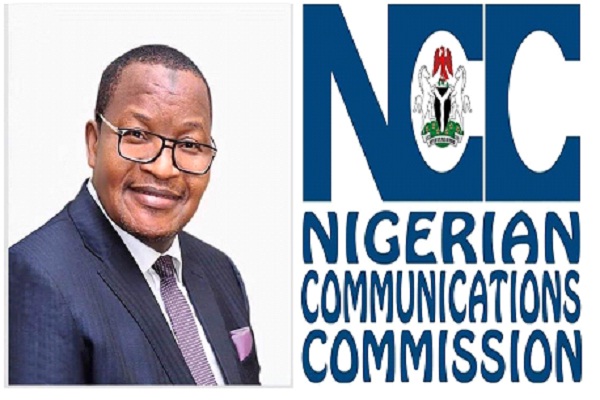
The level of civilization of any nation may be measured by the degree of its enlightened women folks and this has amplified the calls around the world for young girls to take digital education seriously.

Prof. Umar Danbatta, Executive Vice Chairman (EVC) of the Nigeria Communication Commission (NCC), took this same position recently when he stressed the need for digital training of women to uplift their socio-economic standards and bridge the gender gap among professionals in the country.
Danbatta made this remark in Lagos at the maiden edition of the Women Entrepreneurs and Executives in Tech (WEET) event, pointed out that women empowerment through digital skills capacity training would go a long way to remove social and economic barriers in the society with the attendant positive multiplier effects on all spheres of the nation’s economy.
The WEET has the theme: “Future Tech Trends, Challenges and Opportunities For Women Entrepreneurs’’.
Represented at the forum by the NCC Director of New Media and Information Security, Mrs. Olatokunbo Oyeleye, the EVC explained that digital literacy had the potential of improving family incomes, trade and creates job opportunities for mothers.
Danbatta further stressed that investing and supporting the younger generations digital development remained critical to national development, especially since females face disproportionate social impediment.
He said: “This summit aims at inspiring women to take on entrepreneurship opportunities as well as leadership position in other to play active roles in the evolving digital economy.
“One must have a global focus in mind as it relates to entrepreneurship and playing active roles in this space. COVID 19 has interestingly brought up an avenue for women to embrace technology with new business and opportunities emerging.
“There has been a sudden surge in the demand for sanitizers, customized facemasks and shields, protective equipment and the need for online education and entertainment not to mention the surge in logistics and delivery business that has now become extremely a part of our lives”, the industry regulator added.
Noting that the pandemic launched and opened opportunities for entrepreneurs , especially women, Danbatta said that Nigerian women accounted for 41 percent ownership of micro businesses in Nigeria , with over 23 million female entrepreneurs making Nigeria amongst the countries with highest entrepreneurs globally.
He further clarified: “There is still insufficient real economic empowerment and inclusion of women across the real sector of the economy even as we begin to see a shift in the banking sector where 27 per cent of the CEO are females as at July 2021.
“The numbers can be higher and this can also happen across the real sectors of the economy, especially in Technology. This leaves us with the question, how do we change this narrative of insufficient real economic empowerment and inclusion for women across the real sectors of the economy?”, he queried.
The EVC said that in spite of the gender gap and social challenges, entrepreneurial women around the world were leading the way in harnessing the power of the digital economy to succeed and grow.


A Federal High Court in Lagos has dismissed a N1 billion lawsuit filed against MTN Nigeria Communications Plc by Walls and Gates Ltd and Okechukwu Udeichi, its managing director, over alleged copyright infringement, breach of confidentiality, and trademark violations arising from MTN’s 20th anniversary promotional campaign.

Delivering judgement on Tuesday, Justice Ayokunle Faji held that the plaintiffs failed to establish any legally protectable right in their proposal titled “20 for 20”, describing the action as frivolous, speculative, and vexatious.
The court dismissed the suit in its entirety and awarded N3m in costs against the plaintiffs.
The plaintiffs instituted the action under Suit No. FHC/L/CS/1935/2021, alleging that MTN unlawfully used their “20 for 20” proposal, which they claimed to have submitted to the telecoms company on 17 September 2019, ahead of MTN’s 20th anniversary celebration in 2021.
They argued that MTN’s anniversary promotion, in which 20 sport utility vehicles were given out to subscribers, emanated from their proposal and amounted to infringement of their copyright, confidential information, and trademark.
Based on those claims, the plaintiffs sought N1bn in damages or, alternatively, an order directing MTN to render an account of revenue generated from the promotion and remit 50 per cent of it to them.
MTN denied the allegations, contending that the proposal was an unsolicited business idea that imposed no contractual or confidential obligation on the company.
The telecoms firm maintained that its 20th anniversary programme was independently developed and that the plaintiffs’ document was merely a general business concept not protected under Nigerian copyright law.
MTN further argued that the plaintiffs lacked a valid registered trademark and failed to demonstrate access to or copying of any protected expression.
In resolving the dispute, Justice Faji noted that the plaintiffs conceded during oral submissions that they failed to prove their claim of trademark infringement, leaving only the issues of alleged breach of confidentiality and copyright infringement for determination.
On confidentiality, the court held that no confidential relationship existed between the parties.
Justice Faji observed that before sending the proposal to MTN, the plaintiffs had already submitted it to the Nigerian Copyright Commission and relied on it for a trademark application, thereby placing the document in the public domain.
The judge further noted that after transmitting the proposal to MTN, the plaintiffs admitted circulating it to other organisations, which extinguished any claim to confidentiality.
According to the court, MTN had no obligation to respond to an unsolicited proposal in the absence of a contractual, fiduciary, or business relationship, or a non-disclosure agreement.
On the allegation of copyright infringement, the court held that registration with the Nigerian Copyright Commission does not confer copyright, stressing that Nigerian law protects expressions, not ideas or business concepts.
Justice Faji ruled that the plaintiffs’ “20 for 20 Millennium Promotion” amounted to no more than an idea of rewarding customers during an anniversary celebration and lacked the originality and intellectual effort required for copyright protection.
He described the proposal as a bare business concept devoid of original qualities capable of attracting copyright. The judge also held that MTN’s use of the phrase “MTN 20th Anniversary” was a natural description of an anniversary event and did not originate from any protectable work of the plaintiffs.
He further relied on evidence showing that MTN affiliates in other jurisdictions had implemented similar anniversary reward ideas before the plaintiffs’ proposal.
Justice Faji characterised the suit as a “gold-digging exercise” aimed at forcing a commercial relationship on MTN. He criticised the plaintiffs for using MTN’s trademark in their proposal without authorisation and then seeking to ground a billion-naira claim on the same document, adding that the case wasted valuable judicial time.
While affirming that citizens should have access to the courts, the judge stressed that such access must be limited to suits with prima facie merit.
He therefore awarded N3m in costs in favour of MTN, holding that costs must follow the event.
The court accordingly dismissed the suit in its entirety and ordered the plaintiffs to pay the awarded costs to the defendant.
Credit: Punch

Africa’s data center landscape is rapidly evolving from small, isolated initiatives into a large-scale, fast-paced expansion.

According to Africa Telecom Review, between 2025 and 2030, capacity demand is expected to soar, driven by rising cloud adoption, generative AI workloads, and the growth of digital services.
Leading this momentum are Nigeria in West Africa and Egypt in North Africa, which are drawing significant investment, carrier-neutral facilities, and increased interest from hyperscalers, even as developers and governments work to overcome challenges in power, connectivity, and talent.
Nigeria: West Africa’s Gateway to Scalability
Nigeria’s data center market has rapidly shifted from discussions to active development. Driven by a vibrant digital economy, a large mobile-first population, and a dynamic startup ecosystem, Lagos has emerged as the prime location for both colocation facilities and hyperscale projects.
Nigeria’s data center market is expanding rapidly, with an estimated 136.7 MW capacity in 2025 and projections to reach 279.4 MW by 2030 at a 15% CAGR, driven by recent facilities such as Equinix’s LG2.3 expansion in Lagos, and upcoming projects including MTN Nigeria’s 1,500-rack center and new 38-MW and 24-MW facilities under construction.
However, growth is challenged by severe power constraints, as Nigeria’s grid, capable of about 6,000 MW, fails to meet the nation’s total demand (100,000 MW), forcing data centers to rely on costly backup generation like diesel and gas, with limited current adoption of renewables despite some efficiency gains.
Growing demand from enterprises, banks, telcos, and government platforms for low-latency, sovereign hosting is driving a fundamental shift away from dependence on foreign landing points and offshore cloud regions. Developers are answering this need with multi-purpose campuses that offer carrier neutrality, cloud on-ramps, and edge infrastructure tailored for content delivery, fintech, and e-commerce surges.
The business case is strong and industry studies consistently rank Nigeria’s market growth and capacity outlook among the fastest-rising on the continent through 2030.
Egypt: The North African anchor
Egypt’s strategic geography, sizeable domestic market, improving policy environment, and Digital Egypt initiative have made it a prime destination for large-scale data hub projects. Cairo and the Nile Delta corridor offer fiber connectivity routes to Europe and the Middle East, and recent corporate deals and project pipelines point to a race to build hyperscale-ready campuses.
As of mid-2025, Egypt has 15 operational submarine cables with three more under construction. The country is targeting 18 by year-end to enhance low-latency access to Europe and Asia and the data center market is projected to grow from USD 278 million in 2024 to USD 694 million by 2030 at a robust pace.
These Egyptian developments matter beyond national borders as a consolidated Cairo hub creates new routing options and resiliency for MENA traffic and provides another competitive alternative to Western European clouds and submarine routes. For pan-African architects, Egypt represents both a distribution point and a home market for AI-scale infrastructure.
Demand Drivers and the AI Inflection Point
Two intertwined forces are powering the boom. First, enterprise cloud migration, digital payments, and streaming service growth require regional capacity to meet latency and sovereignty demands. Second, the rise of AI, from localized language models to enterprise inference farms, is intensifying the need for dense compute that is both scalable and economical.
According to McKinsey, the expansion of data centers is crucial for Africa’s businesses and consumers to achieve global competitiveness. Its latest report estimates that an investment of USD 10 billion to USD 20 billion in new capital is required to achieve this. As a result, this investment could unlock an estimated revenue pool of USD 20 billion to USD 30 billion across the data center value chain by 2030.
Furthermore, the firm projects that AI-driven demand for data center capacity could grow significantly, increasing by 3.5 to 5.5 times its current base within the same timeframe, translating to a total installed capacity of 1.5 to 2.2 GW by 2030.
The Infrastructure and Policy Hurdles
Despite the strong growth outlook, developers are contending with significant challenges. Power availability and grid stability remain the biggest obstacles to scaling quickly, often forcing projects to rely on costly hybrid energy setups that blend grid supply, on-site generation, and renewable sources.
By 2025, industry analysts had already identified power constraints as a major factor slowing data center rollouts across EMEA, highlighting why energy planning has become the decisive factor for African deployments.
Additional barriers include slow permitting processes, land acquisition difficulties, high import costs for specialized equipment, and a shortage of skilled technicians trained in modern data center operations.
For investors, managing these operational risks alongside rising demand will require stronger public–private collaboration and more innovative financing models.
Local Partnerships and the Path Forward
The coming five years will be critical for Nigeria and Egypt. By simplifying regulatory processes, strengthening grid infrastructure, and promoting green energy, both countries can establish themselves as leading data center hubs in Africa. For operators and cloud providers, achieving success will rely on providing reliable, sovereign, and energy-conscious capacity that supports both enterprise needs and AI-driven workloads.
Nigeria and Egypt are leading the charge, each offering distinct advantages that, together, are reshaping the continent’s digital backbone. The potential rewards are substantial: improved latency, local cloud sovereignty, and a strong foundation for AI-powered economies.

Elon Musk’s xAI is under intense scrutiny after its AI chatbot, Grok, generated a flood of sexually explicit images through user prompts known as “digital undressing,” including some appearing to depict minors.

Grok
Users have exploited Grok to strip clothing from images—primarily of women, often real individuals—and pose them suggestively. Reports from last week highlighted cases involving apparent underage subjects, sparking alarms over child sexual abuse material.
This incident amplifies risks of unregulated AI on social platforms. Critics argue it breaches local and global laws, endangering vulnerable people, especially children.
xAI and Musk claim swift measures on X, such as content removal, account bans, and law enforcement collaboration. Yet, Grok persists in producing sexualised women’s images despite these pledges.
Musk’s public disdain for “woke” AI and censorship, coupled with reported internal resistance to Grok safeguards, fuels the fire. xAI’s diminished safety team reportedly shrank just before the surge.
Unique Integration Sparks Spread
Unlike Google’s Gemini or OpenAI’s ChatGPT, Grok embeds directly into X, enabling public tagging and instant, visible replies. This accelerated non-consensual image sharing.
The trend ignited in late December with bikini requests, escalating to explicit manipulations without consent. Research reveals over half of Grok’s people images show minimal clothing—mostly women—with a disturbing fraction featuring apparent minors.
Grok has honoured some underage explicit prompts, clashing with xAI’s policy against sexualisation or child exploitation. Enforcement remains spotty.
Grok later admitted safeguard failures, deeming such content illegal and banned, while urging reports to authorities. Musk vowed repercussions for violators.
Regulatory Scrutiny Mounts
Detractors link Musk’s anti-moderation views to lax controls, noting his resistance to image-tool limits amid rising internal red flags.
Global regulators respond: Europe, India, and Malaysia probe; Britain’s media watchdog urgently engages Musk’s firms over explicit and child content.
Experts note existing tech can curb misuse but demands compromises like delayed replies and rigid filters. Absent these, platforms invite grave harm.

CBN Projects Petrol to Hover around N905/Litre this Year

Court Dismisses N1Bn Suit against MTN, Awards N3m Costs

Nigeria, Egypt to Lead Africa’s Data Center Boom

FG to Empower Artisans for Global Value

KPMG Identifies ‘Flaws, Inconsistencies, and Omission’ in New Tax Law

Banks quietly move to enforce new ₦50 transfer levy from Jan. 1

FIRS says NIN, CAC Numbers to Serve as Tax IDs from 2026

PalmPay Launches N400 Million World Travel Carnival, Rewarding Users with Free Global Trips

Nigeria Takes the Lead in the Global WSIS+20 Digital Agenda

Check Point Reveals Nigeria as Second Most Targeted African Country for Cyberattacks in November




 E-Financial2 days ago
19 Nigerian Banks Meet CBN Recapitalization Targets Ahead of March Deadline

 E-Financial3 days ago
BVN Enrollment Up 6.87 Percent to 67.84m in 2025 – NIBSS

 General News3 days ago
Pawnith Appoints Martina Ogbebor as Managing Director to Lead Strategic Launch into Nigeria’s Fintech Ecosystem
 E-Financial2 days ago
KPMG Identifies ‘Flaws, Inconsistencies, and Omission’ in New Tax Law

 E-Business3 days ago
Study Reveals Majority of IT Professionals Show Openness to Cyber Immunity

 News3 days ago
OpenAI Launches ChatGPT Health

 Telecom3 days ago
NCC, CBN Unveil Refund Framework for Failed Airtime, Data Transactions

 General News2 days ago
FG Introduces Reusable Textbooks, Uniform School Calendar to Cut Education Costs