

E-Business
Dell Launches New Era of PCs with 5G, AI & Premium Design


Dell Technologies has unveiled new products and software across its premium Latitude, XPS and displays portfolios to help people innovate, collaborate and accomplish more in the next decade. Featuring artificial intelligence (AI), 5G and innovative design, the latest Dell Technologies’ PCs and displays make work and play more seamless, intelligent and enjoyable.
“The PC industry has never been more vibrant with built-in AI, 5G and the best design we’ve ever seen, all to help make our lives easier and more fulfilled,” said Sam Burd, president of Dell Client Solutions Group.
“What’s exciting to me is that, with all of the cool news we’ll see come out of CES next week, the PC plays a central role in helping people innovate, influence and achieve more.”
“PC users have become increasingly savvy about the devices they choose for work and play, gravitating toward more premium products that emphasize good design, strong performance and intuitive technologies,” said Tom Mainelli, group vice president, Devices and Consumer, IDC.
“Our research shows an increasing percentage of new employees are choosing jobs based on the devices employers offer, and both IT buyers and consumers are interested in PCs with next-generation display, connectivity and battery technologies.”
Professionals can use their precious time on the work that matters most with the Latitude 9510, the most intelligent 15-inch business PC featuring built-in AI.
Dell introduced the Latitude 9000 series, designed with the finest details in mind to be smaller and thinner than ever before, with a larger display and a superior experience.
The new Latitude 9510 delivers what business users seek: the longest battery life of any 15-inch business PC with a target of up to 30 hours, 5G-ready design, powerful audio features and intelligent solutions that increase productivity.
The Latitude 9510 is the world’s smallest and lightest commercial 15-inch PC, easily fitting into a small work bag. Starting at only 3.2 pounds, professionals can travel light without carrying the extra weight of battery chargers, adapters or speakerphone pucks needed for a work day.
The large screen size, along with Intel® Wi-Fi 6 (Gig+) and 5G mobile broadband capabilities, allow executives to be more productive wherever they need. The design incorporates 5G antennas into the speakers to retain the InfinityEdge display, while carbon blade fans and dual heat pipes offer a quiet and cool-to-the-touch experience. Launching with up to the latest 10th Gen Intel® Core i7 processors, the vPro ready Latitude 9510 features a machined-aluminum finish with diamond cut edges for professionals that want performance with style.
As the world’s most intelligent 15-inch business PC, the Latitude 9510 leads the commercial PC industry with the first built-in and automated AI-based optimization technology. The new Dell Optimizer software works behind the scenes to help reduce lags, delays and frustration:
- Get to work faster with ExpressResponse: Based on user preferences and machine learning with Intel® Adaptix Technology, it launches frequently used applications faster, switches quickly between applications and improves overall application performance to boost productivity.
- Improve battery life utilization with ExpressCharge: AI and machine learning improves battery life utilization based on an employee’s battery charge patterns and typical power usage. When critically low on battery, the Latitude 9510 will subtly adjust settings to preserve resources, like dimming the screen. It will also choose the best charging policy, like ExpressCharge Boost, which provides up to a 35% charge in 20 minutes to get running in a crunch.
- Log in simply and securely with ExpressSign-in: This senses a user’s presence, enabling faster log-in and enhanced security with Dell’s PC proximity sensor enabled by Intel® Context Sensing Technology and Windows Hello.
- Ditch the speakerphone with Intelligent Audio: The top-firing speakers, powerful amp and four noise-cancelling microphones provide life-like immersive collaboration, while Intelligent Audio allows users to hear and be heard better on conference calls, helping eliminate echoes and background noise, wherever they are.
Latitudes, like all Dell trusted devices, are the industry’s most secure commercial PCs, so companies can be confident their endpoints are secure both below and above the operating system.
With Dell Technologies Unified Workspace, new Latitude owners are productive on day-one. This approach for end-user computing gives workers a frustration-free, ready-to-work experience while empowering IT with automated, open and intelligent management solutions that helps them easily deploy, secure, manage and support all devices within their organization.
XPS 13: First-ever four sided, virtually borderless InfinityEdge display
Dell has introduced the new XPS 13, redesigned to achieve the most premium and superior computing experience with the finest materials, smaller and thinner profile and a larger display. Elegantly crafted with machined aluminum, carbon fiber, woven glass fiber and hardened Corning Gorilla Glass, the XPS 13 has a flawless finish in a durable, lightweight design.
For users that want maximum screen space, Dell is delivering its latest engineering feat — narrow bezels on every side, reducing the XPS 13’s InfinityEdge borders and creating a smaller and thinner form factor than all other XPS predecessors.
With a larger 16:10 display that spans from all four edges, the new 25% brighter XPS InfinityEdge display offers more screen space to multitask throughout the day and catch all the details of the latest binge-worthy show. And holding true to what XPS fans love most, this new design delivers a 13.4-inch display in an 11-inch form factor — fitting neatly on an airplane tray.
The XPS 13 offers 10th Gen Intel® Core™ processors and long battery life for the travelers, small business owners and creatives that need power and performance on the go. A larger touchpad, edge-to-edge keyboard, and one-handed opening strike the perfect balance between aesthetics and functionality.
The new XPS packaging includes more sustainable materials and eliminates foam, making it easier for customers to recycle. Available options include the traditional XPS 13 with Windows 10 or the Developer Edition featuring Ubuntu 18.04LTS.
Stay connected and entertained with Dell Cinema Guide and Dell Mobile Connect
For binge-watchers, Dell Technologies launched Dell Cinema Guide, a one-stop-shop for searching streaming entertainment.
Windows users can download the app; quickly and easily find television shows and movies across more than 200 streaming services within one simple content guide; and enjoy it all with the amazing color, sound and streaming of Dell Cinema.
Since its 2018 launch, Dell Mobile Connect has helped more than one million users avoid splitting attention between their PC and smartphone.
This spring Dell Mobile Connect will expand its wireless transfer and app mirroring capabilities beyond Android phones and bring these functions to iOS phone users. XPS, Inspiron, Vostro, Alienware and G Series users with iOS phones will be able to directly access their favorite mobile apps, from rideshare to social media, and take advantage of drag-and-drop file transfer and content mirroring straight from their Dell PC.
Dell’s top-of-the-line monitors: See everything and do anything
Dell monitors have been No. 1 worldwide for the past six years meeting the varying needs of business users to gaming enthusiasts. Users can collaborate effectively with the new Dell 86 4K Interactive Touch Monitor that is digitizing yesterday’s whiteboard. The UltraSharp 43 4K USB-C Monitor allows users to view content from up to four connected PCs simultaneously to maximize productivity.
The new UltraSharp 27 4K USB-C Monitor with VESA DisplayHDRTM 400 offers wide color coverage for accurate color reproduction. Built for speed with incredible 99% sRGB color coverage, the new Alienware 25 Gaming Monitor features fast IPS technology that offers rich colors, a 240Hz refresh rate and a blazingly fast 1 millisecond gray-to-gray response time, all in native FHD resolution. It also features AMD Radeon FreeSync technology and is NVIDIA G-SYNC® Compatible. Read more about the new Dell displays



A jury in Los Angeles has found technology companies, Meta and Google liable for contributing to a young woman’s social media addiction, in a case being described as a landmark ruling.

The 20-year-old woman, identified only as Kaley, argued that she became addicted to Google’s YouTube and Meta’s Instagram from an early age due to their attention-driven design features.
According to her testimony, she began using YouTube at the age of six after downloading the app on her iPod Touch to watch videos about lip gloss and online games.
Kaley told the court that she joined Instagram at nine, bypassing parental restrictions put in place by her mother, and spent extended periods on social media.
The trial, which lasted about a month, with arguments and evidence from both sides.
Jurors also heard testimony from Mark Zuckerberg, chief executive, Meta and Adam Mosseri, Instagram head.
However, Neal Mohan, YouTube chief executive, did not testify.
The jury found that the companies were negligent in the design of their platforms and failed to adequately warn users about potential harms. Meta and Google were ordered to pay the woman $3 million in damages.
Jurors also recommended additional punitive damages, including $900,000 against YouTube and $2.1 million against Meta, according to company spokespersons.
The jury apportioned 70 per cent of the responsibility to Meta and 30 per cent to YouTube.
Kaley was present in the courtroom when the verdict was delivered, alongside parents of other teenagers who say they were harmed by social media use. Both companies said they plan to appeal the decision.
“We respectfully disagree with the verdict and will appeal. Teen mental health is profoundly complex and cannot be linked to a single app. We will continue to defend ourselves vigorously as every case is different, and we remain confident in our record of protecting teens online”, a Meta spokesperson said.
José Castañeda, Google spokesperson, said the case misunderstands YouTube, which is a responsibly built streaming platform, not a social media site.
Nigeria and Finland have signed a Memorandum of Understanding (MoU) on digitalisation and innovation, prioritising stronger cybersecurity cooperation amid a surge in cyberattacks targeting Nigerian institutions.

The agreement was formalised in Abuja on Monday between Dr Bosun Tijani, Nigeria’s minister of communications, innovation and digital economy, and Jarno Syrjälä, Finland’s under-secretary of state for international trade.
The MoU focuses on cooperation in digital governance, technology infrastructure, and cybersecurity to drive economic growth and improve public services, says a statement issued on Monday by Isime Esene, special assistant to the minister.
The agreement is a significant step in strengthening bilateral relations and advancing Nigeria’s digital economy agenda, says Tijani.
He notes the MoU builds on engagements in Helsinki in February, which centred on Nigeria’s Data Exchange Platform and Finnish participation in Project BRIDGE (Building Resilient Infrastructure for Digital Growth and Empowerment).
The talks also involved key Finnish finance institutions, including Finnvera and Finnfund.
The partnership is expected to unlock new opportunities for innovation and investment, positioning digital technology as a catalyst for shared prosperity, says Tijani.
Finland is committed to supporting the development of resilient, secure, and human-centric digital systems in Nigeria, says Syrjälä. He adds that digitalisation should enhance public trust and empower citizens, noting that Nigeria remains a strategic partner for Finland in Africa.
The agreement complements Finland’s lead role in a €23 million Team Europe Initiative aimed at strengthening Nigeria’s digital public services.
This programme is implemented by Finland’s development agency, HAUS, in collaboration with Estonia’s ESTDEV, and supports the 3 Million Technical Talent (3MTT) programme.
The deal comes as Nigerian organisations record the highest number of cyberattacks in Africa. In January 2026, organisations experienced an average of 4 701 attacks per week, a 12% year-on-year increase, according to Check Point Research.
In response, authorities are developing the 2026 National Cybersecurity Policy and Strategy update.
Expected later this year, the framework will mandate minimum cybersecurity investment requirements for organisations operating critical national information infrastructure, notes the ministry.

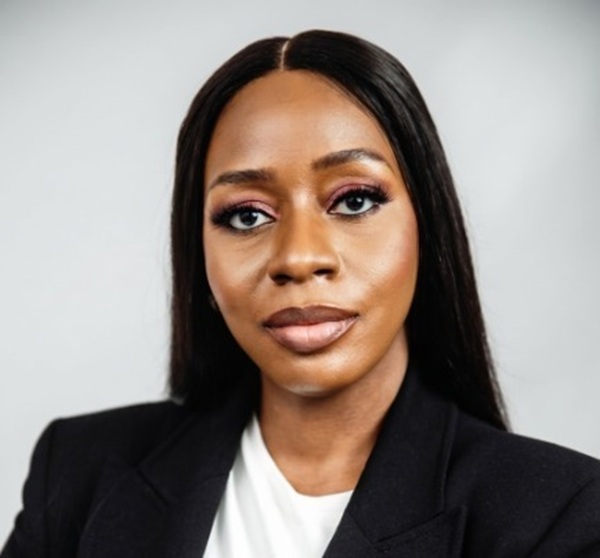
By Chinwe Iwobi, Head of Wealth Management, FairMoney Microfinance Bank
In Nigeria, women are the backbone of our economy. Data from the National Bureau of Statistics shows that women own approximately 40% of small and medium-sized enterprises across the country (NBS Country Data Overview 2023). Yet despite their outsized contribution to GDP, women-led businesses continue to face systemic barriers to the capital and financial infrastructure needed to scale.

Chinwe Iwobi
The cost of that gap is not abstract. When these entrepreneurs are held back, the ripple effect runs deep, from household stability to the education of the next generation. But the narrative is shifting. Nigerian women are proving, consistently, that they are not just resilient; they are sophisticated, high-earning innovators building businesses that deserve serious financial strategy.
Here are five foundational strategies every women-led business should be deploying to build lasting, generational wealth.
1. Separate Business and Personal Finances Without Exception
Mixing personal funds with business cash is one of the most common and most damaging financial habits I see among growing entrepreneurs. It obscures your true profit margins, makes tax planning nearly impossible and, critically, disqualifies you from accessing formal credit when you need it most.
The discipline of separation is not just administrative. It is the first signal you send to the financial system that your business is serious. Open a dedicated business account, maintain clean transaction records, and treat your business finances with the same rigour you would expect from any enterprise operating at scale. Clarity on your numbers is the foundation on which every other strategy here depends.
2. Build Both an Emergency Fund and an Opportunity Fund
Most financial advice stops at the emergency fund, which is three to six months of operating expenses set aside for lean periods. That is necessary, but insufficient. The entrepreneurs I have watched grow most aggressively also maintain what I call an opportunity fund: accessible liquidity specifically reserved to move fast when a prime supplier deal, an expansion location, or a bulk inventory discount appears.
In an unpredictable market like Nigeria’s, the businesses that scale are rarely the ones with the best products alone. They are the ones with the financial readiness to act decisively. Products like FairMoney’s FairSave are designed precisely for this, keeping your funds accessible while earning competitive daily interest so your idle cash is working even when you are not. Build both buffers, and build them before you think you need them.
3. Invest Profits Back into Revenue-Generating Assets
Surplus cash sitting in a current account is a slow leak. Inflation erodes it and opportunity costs compound quietly. The discipline here is to consistently channel profits back into assets that grow your revenue capacity, whether that is new equipment, improved technology, better inventory systems, or staff training.
For capital you do not need immediately, consider locking it into a fixed-term savings product that offers higher interest returns. The psychological benefit is as important as the financial one: ring-fencing that capital removes it from day-to-day spending temptation and ensures it is preserved and grown for a defined purpose. Discipline in capital allocation separates businesses that plateau from those that compound.
4. Diversify Your Revenue Streams Intentionally
Single-stream businesses are inherently fragile. If your sole revenue source is disrupted by market shifts, a supply chain breakdown, or a change in consumer behaviour, your entire operation is exposed. Resilience is built by design, not by accident.
If you are in retail, consider adding a service-based arm. If you are service-led, explore whether digital products or training offerings could create passive income alongside your core work. Beyond product diversification, consider how you accept payments. Building a verified, diverse transaction history through formal payment channels also quietly strengthens your credit profile, an asset that pays dividends when you approach lenders for growth financing. FairMoney’s Business POS infrastructure, for instance, allows entrepreneurs to expand their payment reach while simultaneously building that financial track record.
5. Invest Beyond the Business
This is the strategy most women entrepreneurs delay for too long, and it is the one I feel most strongly about. Relying entirely on your business for your net worth is a high-risk position, no matter how well that business is performing. Businesses face cycles; personal wealth should not.
As your business stabilises, begin systematically moving a portion of your profits into personal investment vehicles such as long-term savings accounts, money market funds, or other instruments that sit entirely outside the business cycle. Automate it if you can, so the decision is made once and executed consistently. The goal is to build a personal financial foundation that remains intact regardless of what your business goes through in any given quarter. True wealth is not what your business is worth on paper. It is what you own independently of it.
The Bigger Picture
For female entrepreneurs in Nigeria, wealth-building is not simply a personal ambition; it is an economic argument. When women-led businesses scale, communities stabilise, households invest in education, and local economies deepen. The strategies above are not complicated, but they require consistency and the right financial infrastructure to execute well.
The tools exist. The opportunity is real. What remains is the decision to treat your business, and your personal wealth, with the long-term seriousness both deserve.

NCC to Curb SIM Fraud, Strengthen Digital Security with New Platform

NBC Boss Urges Content Ceators to Participate in DSO

Kidnappers Now Use Banks to Collect Ransoms — Expert

CBN Says Bank Customers Won’t Lose Deposits because of Recapitalisation

Jury Finds Meta, Google Liable for Woman’s Social Media Addiction

Kaspersky Discovers New Phishing Campaign Exploiting Google Tasks Notifications to Steal Corporate Credentials

esentry 2025 Report Shows Healthcare, Financial Services and Telecoms as Staging Grounds for Increased Cyberattacks in Africa

Spotify’s Loud & Clear Report Reveals Over ₦60Bn Revenue for Nigerian Artists in 2025

MTN Nigeria Posts Record N1.70 Trillion Pre‑Tax Profit, Declares N20 Dividend for 2025

China Threatens to Shut Nigeria’s Satellite Over $11.44m Unpaid Debt




 E-Financial2 days ago
CBN Directs IMTOs to Open Naira Settlement Accounts

 Telecom2 days ago
Nigerians Lose N12.5Bn to AI-Driven Scams- PwC

 General News2 days ago
Court Remands Hacker for Allegedly Stealing N3.09Bn from FCMB

 Telecom2 days ago
Airtel Africa, Starlink Mobile Data and Messaging Testing Take off in Kenya

 E-Financial2 days ago
DLM Capital Group’s AAA-Rated Sovereign Bond-Backed Composite Notes (“SBCNS”) Strengthens Investor Confidence with Successful First Principal & Interest Payment

 E-Business2 days ago
AU Sees AI Adoption Evolving to Boost Economic Growth in Africa

 News2 days ago
Kaspersky, AFRIPOL Conduct Joint Cybersecurity Training for African law Enforcement

 Telecom2 days ago
GATEWAY Programme Opens Doors for 340,000 Nigerian Youths to Tap into $1.85trn Global Gig Economy