

E-Business
Dell Unifying Fragmented Security Market

Dell has unveiled product integrations and innovation within its security portfolio that provide organizations with exceptional protection, and turn security into a business enabler.
Network security, identity and access management and governance, mobile security, endpoint security, and services are today’s organizations’ most critical needs as they fight to keep their networks and data secure, maintain compliance and drive business goals.
For those reasons, Dell said in a press statement released on Wednesday, it now offers identity and access management-as-a-service (IAMaaS), new integrated products such as the Dell Change Auditor for Cloud Storage with Dell Data Protection | Cloud Edition, and is the first to publicly demonstrate 120 Gbps of deep packet inspection (DPI) next-generation firewall (NGFW) architecture.
These solution enhancements help change the culture of compliance within organizations, strengthen the overall security posture to enable easier adoption of technologies like cloud and mobile, and increase business agility, allowing customers to become more efficient and competitive in the marketplace.
The IT security market is highly fragmented, with dozens of “best-of-breed” solutions addressing narrow aspects of security.

Often, companies end up with either a patchwork collection of security products from multiple vendors that have gaping holes between them, or monolithic security frameworks that are inflexible and extremely expensive to administer.
These frameworks operate separately from the business objectives, and still leave gaping holes that must be addressed with yet another security solution from yet another vendor.
Comprehensive portfolio of security solutions built to protect, comply and enable the business
Dell’s approach to security is based on simplicity, efficiency and connectivity that tie together the splintered aspects of IT security into one, modular and integrated solution capable of sharing insights and control across the organization.
It also makes security simpler, so that business users can manage the rules and policies, and end users can easily comply. Dell delivers on this promise with the following new and updated offerings announced on Wednesday include:
Identity and Access Management-as-a-Service: Most IAMaaS offerings are aimed at narrow use cases with an emphasis on the uniqueness of SaaS rather than solving actual, critical IAM pain points.
Dell’s robust One Identity-as-a-Service solution, however, includes not only access control, but also provisioning and governance, making all three tenets of IAM available in SaaS format to companies that prefer to outsource rather than expend resources, staff or budget to deploy an on-premises IAM solution.
Integrations between products across the Dell Security portfolio now include: Dell Data Protection | Cloud Edition (DDP | CE), and Change Auditor for Cloud Storage gives you real-time protection, auditing, and alerting of data uploaded, modified and downloaded from popular cloud storage sites – with zero impact to end users.
Customers can enforce greater encryption capability and IT control for organizations that need to broadly share sensitive data across the organization through Dropbox, Box, and OneDrive.
New Dell Software Suite works seamlessly with Dell clients or across heterogeneous environments to simplify client security, management and delivery.
This solution incorporates Dell Secure Mobile Access to facilitate mobile worker productivity, while protecting organizations from threats by enforcing access control policies that ensure only trusted users, devices and authorized apps are granted VPN access.
Dell’s new password reset feature, soon to be included on all Dell Commercial Client systems, allows end users to reset their own PC password without having to contact IT.
End users simply use the Security Tools Mobile App from their supported smartphone to generate a one-time password. This password securely enables access to their PC credential manager, which empowers them to reset their own passwords, making end users more productive and lowering IT spend for customers.
120 Gbps of deep packet inspection next-generation firewall scalable architecture: The proliferation of mobile devices, use of cloud-based applications, and emergence of big data has caused traffic volumes to rise to unprecedented levels, driving demand for greater bandwidth.
This means that the network security layer also must be highly extensible to support the largest of data centers’ bandwidth consumptions with near zero-downtime, at the lowest possible total cost of ownership (TCO).
Onsite at Dell World, Dell will give the industry’s first demonstration of 120 Gbps DPI NGFWs for carriers and ISPs, a next-generation firewall scalable architecture that enables organizations to scale beyond 120 Gbps DPI performance and gain network simplicity, highest security efficacy and resiliency to solve their most complex and demanding data center operations — all at a low cost.
Matt Medeiros, senior vice president and general manager, Dell Security said, “Even though organizations today spend more than ever before to protect their systems and comply with internal and regulatory requirements, something is always falling through the cracks. With the ever-growing threat landscape continuing to put businesses at risk, companies just can’t afford for that to happen. Dell understands what it takes to protect organizations while allowing IT security to be an innovation driver, rather than an obstacle, so we continue to innovate and integrate our solutions to fill gaps in security and enable organizations to focus on driving their business goals, confident that they’re protected and risk is mitigated.”
On his part, Hemen Vimadal, CEO – Simeio Solutions said, “We recognize Dell’s leadership when it comes to delivering a comprehensive IAM solution, and we are pleased to partner with an industry leader to offer a full-featured Identity as a Service solution to organizations that typically struggle to address IAM needs. The Simeio Business-Ready IAM Cloud delivered via the industry’s first and only Identity Intelligence Center, provides our clients with a higher level of security and reliability.”



National Information Technology Development Agency (NITDA) has introduced so-called Nigeria’s Certified Cloud Register, regulatory framework developed under the agency’s National Sovereign Cloud Initiative to determine which cloud providers are authorized to handle sensitive data, such as banking records.

In effect, from October, NITDA requires banks, fintech companies and other regulated organisations to source cloud infrastructure providers from a national register of certified firms approved to host sensitive financial and government data.
The Certified Cloud Register, is expected to strengthen data sovereignty, improve regulatory oversight and support the implementation of the Central Bank of Nigeria’s (CBN) data localisation policy, which takes effect on January 1, 2027.
Under the framework, banks, fintechs, government institutions and other regulated entities will be able to verify whether cloud service providers, data centre operators, managed service providers and Artificial Intelligence (AI) infrastructure companies have met NITDA’s certification requirements before entrusting them with critical digital workloads.
The initiative is expected to provide regulated institutions with a standardised process for selecting cloud infrastructure providers that satisfy Nigeria’s technical, security and regulatory requirements.
According to NITDA, the framework establishes “a common national standard, an independent assessment process and a public register of approved providers that banks, fintechs and government institutions can rely on when selecting cloud infrastructure partners.”
The register is expected to become a key compliance tool ahead of the CBN’s directive, which requires all payment transaction data generated within Nigeria to be stored and processed locally, effective from January 1, 2027.
The policy applies to deposit money banks, microfinance banks, mobile money operators, payment service providers, switching companies and other financial institutions.
The certification regime is also expected to reshape Nigeria’s cloud computing ecosystem, making regulatory approval a major requirement for cloud providers seeking to handle sensitive data for regulated industries.
Figures cited by NITDA showed that Nigeria’s 10 largest banks spent about N177.91 billion on information technology in the first quarter of 2026, representing a 31 per cent increase over the corresponding period last year.
A sizeable portion of the investment currently supports cloud infrastructure hosted outside Nigeria, a trend the new certification framework is expected to address by encouraging greater utilisation of compliant local infrastructure.
NITDA said the certification programme will apply the same technical and regulatory standards to indigenous cloud providers and international hyperscale operators, creating a level playing field for all companies seeking to provide cloud services to regulated sectors.
The agency also disclosed that more than 85 per cent of Nigerian businesses currently rely on cloud services, with the majority using infrastructure hosted outside the country.
It said the new framework is aimed at improving confidence in Nigeria’s digital infrastructure while promoting local capacity and enhancing oversight of critical national data.
Speaking on the objective of the initiative, Kashifu Inuwa Abdullahi, director-general of NITDA, said the programme is designed to strengthen Nigeria’s position in the global digital economy rather than exclude foreign technology companies.
According to him, the initiative is intended “to redefine the terms under which Nigeria participates in the global digital economy rather than isolate the country from international technology providers.”
The Certified Cloud Register forms part of broader efforts by the Federal Government to deepen digital trust, strengthen cybersecurity and ensure that critical financial and public sector data are managed in line with Nigeria’s evolving data governance and sovereignty objectives.


At the recent Cyber Security Weekend 2026 conference, Kaspersky shared the findings from its survey titled “Cybersecurity in the workplace: Employee knowledge and behaviour” which was conducted among employees from the Middle East, Turkiye and Africa (META) region.

The study highlights that everyday IT habits, including decluttering computers and reducing digital fatigue, can have a direct and often underestimated impact on an organisation’s cyber resilience.
The Kaspersky survey points to a growing challenge of digital fatigue in the workplace. 13.5% of employees surveyed in the META region confirmed that they made IT-related mistakes due to a lack of cybersecurity knowledge – a figure that shows the critical importance of continuous cybersecurity training and awareness programmes.
Among other reasons behind IT mistakes, respondents cited being in a hurry (30%), oversight (14%), being tired or stressed (12.9%) and having too many notifications (10%). The constant barrage of alerts, messages, and on-screen clutter is becoming an acute problem that can lead to costly IT errors, overlooked social engineering attacks, and even to cyber breaches.
The survey also examined employees’ digital workspace habits. An overwhelming 44.5% of respondents in the META region reported having between 10 and 20 icons on their desktop, while 30% admitted to having even more – with half to a full screen covered in them.
Meanwhile, 33% of respondents also keep more than 10 tabs open in their browser at any given time. Excessive icons and open tabs do more than distract attention and fuel procrastination – they can slow device performance and, in the case of unused applications, quietly collect data.
Interestingly, most employees regularly disinfect their keyboards and phone surfaces (21.5% have adopted this habit since the COVID pandemic). However, digital cleanliness has not kept pace: 55% of respondents remove needless files once a month or more often; the rest perform digital clean-ups far less frequently – once a quarter, or even once a year.
Managing digital noise is key to staying alert: only essential notifications should remain active, especially during periods of deep focus on critical project deliverables. Regular breaks are just as vital for maintaining both well-being and cyber vigilance.
According to the survey, 78% of respondents spend their work breaks eating or drinking, while 58% chat with friends and colleagues. However, stretching and physical exercise is a more effective way to relieve stress and recharge focus – a habit adopted by only 14% of employees.
“It is important to recognise that digital fatigue is a real and growing stress factor: the constant stream of notifications, cluttered screens, and information overload gradually erode focus and make employees far more susceptible to mistakes and social engineering attacks. Simplifying your digital environment is not just a productivity tip, it is a cybersecurity measure”, says Brandon Muller, senior security consultant for the META region at Kaspersky.

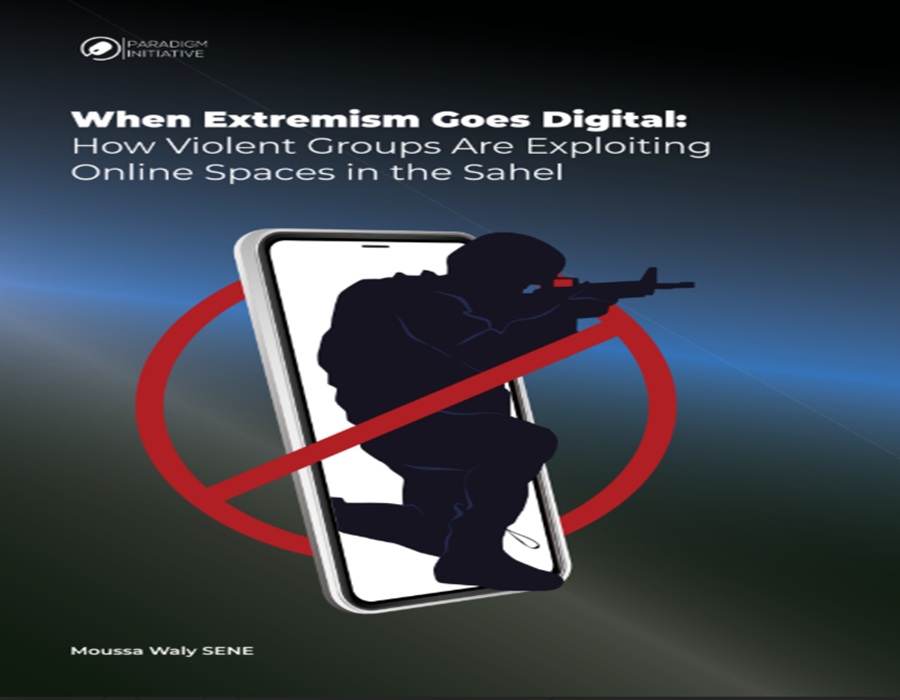
Pan-African digital rights organisation Paradigm Initiative (PIN) has warned that violent extremist groups are increasingly exploiting digital platforms to recruit, radicalise and manipulate young people across the Sahel region.

The organisation raised the concern in a new policy brief titled “Digital Frontlines: Countering Online Radicalisation and Violent Extremist Narratives in the Sahel.”
According to the publication, extremist groups are shifting from traditional recruitment methods to digital platforms, including social media, encrypted messaging applications, short-form video platforms and online financial incentives, to target vulnerable populations.
PIN noted that unemployed youths and people facing insecurity and limited economic opportunities are particularly susceptible to online recruitment campaigns.
The organisation said that although governments have intensified efforts to combat violent extremism, responses to the digital dimension of the threat have failed to keep pace with rapidly evolving online tactics.
It argued that addressing online radicalisation requires more than surveillance and restrictive measures, recommending investments in digital literacy, stronger community resilience, improved early-warning systems and credible counter-narratives.
PIN also urged governments to work closely with technology companies and civil society organisations to disrupt extremist recruitment while protecting citizens’ digital rights.
The report further highlighted the growing convergence between organised crime and violent extremist groups, noting that online propaganda increasingly promises financial rewards, belonging and purpose to vulnerable young people.
According to the organisation, this trend underscores the need for policymakers to prioritise prevention alongside conventional security responses.
Speaking on the findings, Moussa Waly SENE, Programmes Officer for Francophone Africa at Paradigm Initiative, described the digital space as a new frontline in the fight against violent extremism.
“As more young Africans come online, stakeholders must ensure that digital platforms remain spaces for opportunity, innovation and civic participation, not recruitment grounds for violent extremist groups. Protecting digital rights and protecting vulnerable communities should be mutually reinforcing objectives,” he said.
Among its recommendations, the policy brief called for stronger regional cooperation to tackle cross-border online extremist networks, rights-respecting content moderation and greater accountability by digital platforms.
It also advocated expanded digital literacy programmes to strengthen resilience against online manipulation and community-led initiatives that empower young people to identify and reject extremist narratives.
The organisation further urged policymakers to develop security measures that balance national security objectives with the protection of privacy, freedom of expression and access to information.

World Bank Debars United Aviation Services, Owner over Fraudulent Activities

NITDA Introduces Cloud Certification Boost Data Localisation Compliance

Enugu State Approves Land for ITF’s Digital Fabrication Centre

BOI Opens N250Bn Bond Offer to Fund Businesses

Guinness Rewards Consumers with ₦17 Million in First Week of ‘Open for More’ Promo Draw

From Scarcity to Scale: What Africa Can Learn from India’s Agricultural Transformation

EFCC Busts NIS Visa Overstay Racket, Uncovers N700m in an Account

Fact-Check: Elon Musk’s “Tesla Pi Phone” is Internet Rumor

NBC Tasks Broadcasting Stations over 2028 DSO Global Deadline

Police Busts Syndicate Who Allegedly Stole N3Bn from Financial Institution



 General News2 days ago
Guinness Rewards Consumers with ₦17 Million in First Week of ‘Open for More’ Promo Draw

 News2 days ago
Glovo Pioneers AI Quick-Commerce

 News3 days ago
Fleeing Southeast Asia Scam Syndicates Find New Homes in Nigeria, Kenya- Report

 Telecom3 days ago
MTN Paid 600Bn in Taxes in H1 2026 – Kadri, MTN CFO

 Telecom3 days ago
NCC Asks Telcos to Make Budgetary Provisions for Cybersecurity

 News3 days ago
DSS Arraigns Eze for Allegedly Hacking, Stealing N800m from SunTrust Bank

 Telecom3 days ago
Glo Leads Internet Growth Figures in Nigeria for May

 News3 days ago
Liquid Intelligent Uses Light Beam Technology to Bridge Lagos Fibre Gaps