

E-Business
Deloitte Report Points Technology, Others Disrupting SSA Power Trends

Deloitte a global brand under which tens of thousands of dedicated professionals in independent firms throughout the world collaborate to provide audit, consulting, financial advisory, risk management, tax and related services, recently released summary of the consolidated point of view of its power leaders across Africa, backed by research.
The inaugural annual Sub-Saharan Africa power trends report to the market took a snapshot view of several Sub-Saharan African (SSA) markets and share some of the developments specifically relating to the trends that Deloitte sees as emerging ‘disruptors’ in the SSA power sector, presenting new opportunities for power companies in today’s challenging economic climate.
Speaking on the report, Shamal Sivasanker, Africa Infrastructure & Power leader Deloitte, said the report identified that low levels of infrastructure and power supply are a deterrent for many wanting to invest across various sectors in Africa.
According to Sivasanker “Despite a significant oil price drop in recent months signalling renewed headwinds in the global economy, the SSA economy is forecast to grow at a combined rate of 5% over the next few years. To support this level of growth, large investments into infrastructure and sustainable power supply need to be made”.
He said that the development of large capital projects needed to support the growth of the African economy and attract the required investment relies on robust planning, reliable funding, resilient operating structures and skills development.
“In light of the main challenges facing the SSA power industry, such as inadequate generation capacity, poor transmission infrastructure, unskilled or low numbers in the skilled workforce, poor maintenance of existing power stations, as well as poor metering and billing systems resulting in unreliable supply, countries will need to innovate to achieve financially viable growth in the sector.
“These challenges, coupled with a changing landscape in terms of technologies and the costs thereof, are giving rise to a number of ‘disruptors’ in the sector, inspiring a shift away from traditional generation practices and mixes, modes of business, methods of operations and systems, funding channels and models, as well as the landscape of players and stakeholders, towards the application of new and innovative technologies and dynamics in Africa’s power infrastructure,” Sivasanker explained.
Mapping Disruptors in SSA’s Power Sector
Deloitte said in the report that “Unreliable, insufficient and costly power generation and distribution across the African continent has arguably been the Achilles heel to higher and more inclusive growth and socio-economic development of the region. Infrastructure stock levels have impeded rather than facilitated growth and development. This is changing rapidly, as, in order for Sub-Saharan Africa (SSA) to develop and industrialise in a viable manner, a revolution in the power and related infrastructure sector is inevitable”.
The research identifies a number of emerging ‘disruptors’ already visible and will continue to disturb power landscapes in the region, including existing models of business, methods and systems of operations, as well as the blend of players in the region’s power and electricity subsectors.
Although the change that is underway is a gradual one, stakeholders in the sector are cautioned not to fall subject to a ‘boiling frog syndrome’ − although incremental, this change will result in a signifi cant shift in Africa’s power sector, which requires adaptation strategies.
Some of these emerging disruptors can be summarised to include the following:
Disruptor 1: African Economic Growth, Transformation And Rising Demand
The report acknowledged that SSA is one of the fastest-growing regions, averaging 6% growth over the past 15 years.
With continued high growth rates expected for the region, in excess of 5% over the years to 2019, reducing the current power infrastructure shortcomings will be crucial in supporting the next chapter of Africa’s growth model − one that pursues economic diversification and industrial development.
This is in order to make a dent in unemployment, poverty levels and rising inequality amidst a population that is expected to more than double to 2.7 billion people by 2050.
Disruptor 2: A Shifting Energy Mix Gives Rise To New Capital And Players
Thus, SSA’s changing energy mix trend is in part driven by the fact that the region’s energy woes have been underpinned by the reliance on a single source of electricity production. This overreliance is waning and energy generation sources are diversifying.
While power generation from coal will still account for an important share of the energy mix in the foreseeable future, SSA countries are reducing their dependence on coal and oil-based energy sources.
The report contains that countries are diversifying into more sustainable solutions including non-hydro renewables and natural gas, as the fast-dropping cost of these technologies makes them increasingly more viable.
By 2022, non-hydro renewables are expected to increase their share in the energy mix by a factor of five from 2011 values. With 90% of the continent’s hydropower potential still unexploited, hydro-generation is expected to double in output, and increase its contribution in the energy mix from one-fifth to one-quarter by 2022.
Another solution to SSA’s energy security challenges is decentralised renewable energy capacity in the form of off-grid and mini-grid solutions, particularly for remote and rural communities who have lagged access to electricity, given costly grid expansion to less densely populated areas.
Disruptor 3: Changing Role And Type Of Customers
The refocused energy generation mix in SSA also includes a changing structural makeup of players and stakeholders that will complement traditional utilities in producing electricity. The role of consumers is changing.
Deloitte found that consumers are increasingly complementing the role of producers through self-generation, co-generation and new generation structures.
Despite the high urban growth rate in SSA of 3.6%, double the world average in 2014, the type of consumer is also changing, increasingly including more remote and rural consumers with localised requirements and funding abilities.
New industries are emerging, such as ‘consumer-established’ industries ranging from small-scale cottage food processing to commercial businesses in manufacturing and private power generation, amongst others.
Furthermore, through cleaner technologies for off-grid or mini-grid solutions, consumers have and will be shifting away from uneconomical and environmentally unfriendly energy options in the SSA region.
Disruptor 4: Renewable Technologies
The economics of and business case for renewable technologies is evolving. For example, the lower cost structures of more reliable, affordable and greener solutions, underpinned by increasingly energy-efficient, sustainability focused and climate-conscious trends globally
Disruptor 5: Changing Market Structures And Dynamics
A shift from currently centralised monopolies to unbundled structures and more decentralised power generation systems and models is becoming evident and intensifying.
Structural reforms through vertical unbundling, which is the process of ‘unpacking’ integrated utilities into separate generation, transmission and distribution companies, have been the preferred option for countries including Ghana, Kenya, Namibia, South Africa, Uganda and Zimbabwe. Other notable reform options ‘disrupting’ the power sector in the region include management contracts, commercialisation, IPPs, and electricity regulatory and legislative amendments.
These reforms have had the most signifi cant impact on renewable energy and energy effi ciency in the region. In Nigeria, for example, regulators have moved towards cost-refl ective tariffs, thereby providing sustainable returns for market participants.
Transparent bidding processes and tariff incentives have also been aimed at boosting private sector involvement in the power sector in Nigeria. Other successful private sector projects have included Ghana’s Takoradi II project; Kenya’s Iberafrica, Orpower4, Tsavo and Westmont Power projects; and Nigeria’s AES Barge and Okpai projects. Compared to the rest of the world, however, SSA’s reform process is by far the slowest.
Disruptor 6: Smarter Grids And Systems, Smarter Utilities
Linked to the changing market structures and dynamics are smarter energy systems supporting better energy management and pricing structures, which are changing the relationship between producers and consumers, particularly given new applications of technologies.
Smart grids − electricity supply networks that use digital communications technology to analyse, detect and react to local changes – are increasingly being incorporated into African power utilities’ action plans, including countries such as Kenya, Nigeria and South Africa, amongst others.
In addition to other power utility management objectives across the SSA region, optimising asset utilisation and operational efficiency will be one of the major benefits of smart grid solutions.
On revenue management, most countries in SSA have adopted numerous payment methods for electricity, ranging from the old-school walk-in cash transactions to mobile and Internet payments.
In South Africa for instance, the introduction of pre-funded metering will improve the revenue management system in the country’s power sector. This is also the case in areas where pilot off-grid renewable energy is being implemented, the Deloitte report contains and available at www2.deloitte.com.



A jury in Los Angeles has found technology companies, Meta and Google liable for contributing to a young woman’s social media addiction, in a case being described as a landmark ruling.

The 20-year-old woman, identified only as Kaley, argued that she became addicted to Google’s YouTube and Meta’s Instagram from an early age due to their attention-driven design features.
According to her testimony, she began using YouTube at the age of six after downloading the app on her iPod Touch to watch videos about lip gloss and online games.
Kaley told the court that she joined Instagram at nine, bypassing parental restrictions put in place by her mother, and spent extended periods on social media.
The trial, which lasted about a month, with arguments and evidence from both sides.
Jurors also heard testimony from Mark Zuckerberg, chief executive, Meta and Adam Mosseri, Instagram head.
However, Neal Mohan, YouTube chief executive, did not testify.
The jury found that the companies were negligent in the design of their platforms and failed to adequately warn users about potential harms. Meta and Google were ordered to pay the woman $3 million in damages.
Jurors also recommended additional punitive damages, including $900,000 against YouTube and $2.1 million against Meta, according to company spokespersons.
The jury apportioned 70 per cent of the responsibility to Meta and 30 per cent to YouTube.
Kaley was present in the courtroom when the verdict was delivered, alongside parents of other teenagers who say they were harmed by social media use. Both companies said they plan to appeal the decision.
“We respectfully disagree with the verdict and will appeal. Teen mental health is profoundly complex and cannot be linked to a single app. We will continue to defend ourselves vigorously as every case is different, and we remain confident in our record of protecting teens online”, a Meta spokesperson said.
José Castañeda, Google spokesperson, said the case misunderstands YouTube, which is a responsibly built streaming platform, not a social media site.


Nigeria and Finland have signed a Memorandum of Understanding (MoU) on digitalisation and innovation, prioritising stronger cybersecurity cooperation amid a surge in cyberattacks targeting Nigerian institutions.

The agreement was formalised in Abuja on Monday between Dr Bosun Tijani, Nigeria’s minister of communications, innovation and digital economy, and Jarno Syrjälä, Finland’s under-secretary of state for international trade.
The MoU focuses on cooperation in digital governance, technology infrastructure, and cybersecurity to drive economic growth and improve public services, says a statement issued on Monday by Isime Esene, special assistant to the minister.
The agreement is a significant step in strengthening bilateral relations and advancing Nigeria’s digital economy agenda, says Tijani.
He notes the MoU builds on engagements in Helsinki in February, which centred on Nigeria’s Data Exchange Platform and Finnish participation in Project BRIDGE (Building Resilient Infrastructure for Digital Growth and Empowerment).
The talks also involved key Finnish finance institutions, including Finnvera and Finnfund.
The partnership is expected to unlock new opportunities for innovation and investment, positioning digital technology as a catalyst for shared prosperity, says Tijani.
Finland is committed to supporting the development of resilient, secure, and human-centric digital systems in Nigeria, says Syrjälä. He adds that digitalisation should enhance public trust and empower citizens, noting that Nigeria remains a strategic partner for Finland in Africa.
The agreement complements Finland’s lead role in a €23 million Team Europe Initiative aimed at strengthening Nigeria’s digital public services.
This programme is implemented by Finland’s development agency, HAUS, in collaboration with Estonia’s ESTDEV, and supports the 3 Million Technical Talent (3MTT) programme.
The deal comes as Nigerian organisations record the highest number of cyberattacks in Africa. In January 2026, organisations experienced an average of 4 701 attacks per week, a 12% year-on-year increase, according to Check Point Research.
In response, authorities are developing the 2026 National Cybersecurity Policy and Strategy update.
Expected later this year, the framework will mandate minimum cybersecurity investment requirements for organisations operating critical national information infrastructure, notes the ministry.

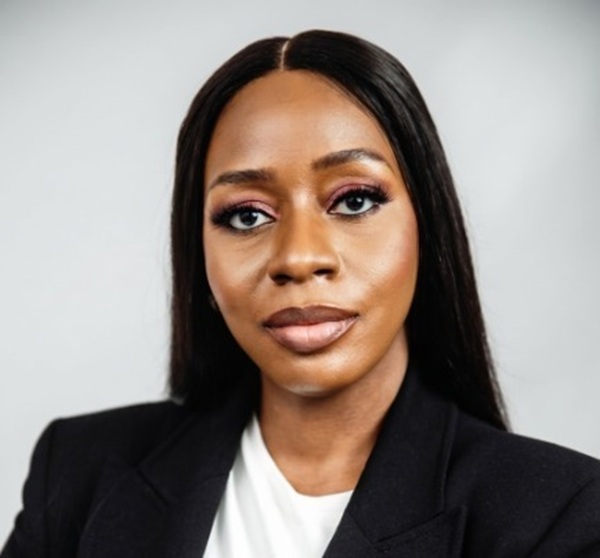
By Chinwe Iwobi, Head of Wealth Management, FairMoney Microfinance Bank
In Nigeria, women are the backbone of our economy. Data from the National Bureau of Statistics shows that women own approximately 40% of small and medium-sized enterprises across the country (NBS Country Data Overview 2023). Yet despite their outsized contribution to GDP, women-led businesses continue to face systemic barriers to the capital and financial infrastructure needed to scale.

Chinwe Iwobi
The cost of that gap is not abstract. When these entrepreneurs are held back, the ripple effect runs deep, from household stability to the education of the next generation. But the narrative is shifting. Nigerian women are proving, consistently, that they are not just resilient; they are sophisticated, high-earning innovators building businesses that deserve serious financial strategy.
Here are five foundational strategies every women-led business should be deploying to build lasting, generational wealth.
1. Separate Business and Personal Finances Without Exception
Mixing personal funds with business cash is one of the most common and most damaging financial habits I see among growing entrepreneurs. It obscures your true profit margins, makes tax planning nearly impossible and, critically, disqualifies you from accessing formal credit when you need it most.
The discipline of separation is not just administrative. It is the first signal you send to the financial system that your business is serious. Open a dedicated business account, maintain clean transaction records, and treat your business finances with the same rigour you would expect from any enterprise operating at scale. Clarity on your numbers is the foundation on which every other strategy here depends.
2. Build Both an Emergency Fund and an Opportunity Fund
Most financial advice stops at the emergency fund, which is three to six months of operating expenses set aside for lean periods. That is necessary, but insufficient. The entrepreneurs I have watched grow most aggressively also maintain what I call an opportunity fund: accessible liquidity specifically reserved to move fast when a prime supplier deal, an expansion location, or a bulk inventory discount appears.
In an unpredictable market like Nigeria’s, the businesses that scale are rarely the ones with the best products alone. They are the ones with the financial readiness to act decisively. Products like FairMoney’s FairSave are designed precisely for this, keeping your funds accessible while earning competitive daily interest so your idle cash is working even when you are not. Build both buffers, and build them before you think you need them.
3. Invest Profits Back into Revenue-Generating Assets
Surplus cash sitting in a current account is a slow leak. Inflation erodes it and opportunity costs compound quietly. The discipline here is to consistently channel profits back into assets that grow your revenue capacity, whether that is new equipment, improved technology, better inventory systems, or staff training.
For capital you do not need immediately, consider locking it into a fixed-term savings product that offers higher interest returns. The psychological benefit is as important as the financial one: ring-fencing that capital removes it from day-to-day spending temptation and ensures it is preserved and grown for a defined purpose. Discipline in capital allocation separates businesses that plateau from those that compound.
4. Diversify Your Revenue Streams Intentionally
Single-stream businesses are inherently fragile. If your sole revenue source is disrupted by market shifts, a supply chain breakdown, or a change in consumer behaviour, your entire operation is exposed. Resilience is built by design, not by accident.
If you are in retail, consider adding a service-based arm. If you are service-led, explore whether digital products or training offerings could create passive income alongside your core work. Beyond product diversification, consider how you accept payments. Building a verified, diverse transaction history through formal payment channels also quietly strengthens your credit profile, an asset that pays dividends when you approach lenders for growth financing. FairMoney’s Business POS infrastructure, for instance, allows entrepreneurs to expand their payment reach while simultaneously building that financial track record.
5. Invest Beyond the Business
This is the strategy most women entrepreneurs delay for too long, and it is the one I feel most strongly about. Relying entirely on your business for your net worth is a high-risk position, no matter how well that business is performing. Businesses face cycles; personal wealth should not.
As your business stabilises, begin systematically moving a portion of your profits into personal investment vehicles such as long-term savings accounts, money market funds, or other instruments that sit entirely outside the business cycle. Automate it if you can, so the decision is made once and executed consistently. The goal is to build a personal financial foundation that remains intact regardless of what your business goes through in any given quarter. True wealth is not what your business is worth on paper. It is what you own independently of it.
The Bigger Picture
For female entrepreneurs in Nigeria, wealth-building is not simply a personal ambition; it is an economic argument. When women-led businesses scale, communities stabilise, households invest in education, and local economies deepen. The strategies above are not complicated, but they require consistency and the right financial infrastructure to execute well.
The tools exist. The opportunity is real. What remains is the decision to treat your business, and your personal wealth, with the long-term seriousness both deserve.

NCC to Curb SIM Fraud, Strengthen Digital Security with New Platform

NBC Boss Urges Content Ceators to Participate in DSO

Kidnappers Now Use Banks to Collect Ransoms — Expert

CBN Says Bank Customers Won’t Lose Deposits because of Recapitalisation

Jury Finds Meta, Google Liable for Woman’s Social Media Addiction

Kaspersky Discovers New Phishing Campaign Exploiting Google Tasks Notifications to Steal Corporate Credentials

esentry 2025 Report Shows Healthcare, Financial Services and Telecoms as Staging Grounds for Increased Cyberattacks in Africa

Spotify’s Loud & Clear Report Reveals Over ₦60Bn Revenue for Nigerian Artists in 2025

MTN Nigeria Posts Record N1.70 Trillion Pre‑Tax Profit, Declares N20 Dividend for 2025

China Threatens to Shut Nigeria’s Satellite Over $11.44m Unpaid Debt




 E-Financial2 days ago
CBN Directs IMTOs to Open Naira Settlement Accounts

 Telecom2 days ago
Nigerians Lose N12.5Bn to AI-Driven Scams- PwC

 General News2 days ago
Court Remands Hacker for Allegedly Stealing N3.09Bn from FCMB

 Telecom2 days ago
Airtel Africa, Starlink Mobile Data and Messaging Testing Take off in Kenya

 E-Financial2 days ago
DLM Capital Group’s AAA-Rated Sovereign Bond-Backed Composite Notes (“SBCNS”) Strengthens Investor Confidence with Successful First Principal & Interest Payment

 E-Business2 days ago
AU Sees AI Adoption Evolving to Boost Economic Growth in Africa

 Telecom2 days ago
GATEWAY Programme Opens Doors for 340,000 Nigerian Youths to Tap into $1.85trn Global Gig Economy

 News2 days ago
Kaspersky, AFRIPOL Conduct Joint Cybersecurity Training for African law Enforcement