

News
DG NITDA Urges Foreign Investors to Tap into Nigeria’s Digital Future

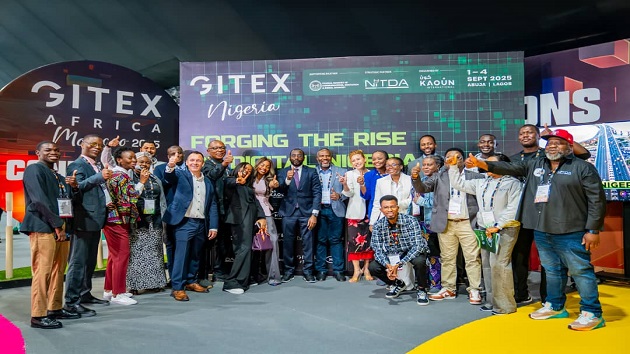
In a spirited and visionary appeal, the Director General of the National Information Technology Development Agency (NITDA), Kashifu Inuwa CCIE, has issued a compelling invitation to global investors to explore Nigeria’s burgeoning digital economy, describing it as a land of opportunity powered by a youthful, tech-savvy, and highly innovative population.

The DG made this known when he engaged with global key players in the IT sector, including startups and investors during a GITEX Breakfast meeting at the GITEX Africa 2025 which is currently being held in Marrakech, Morocco.
Speaking ahead of GITEX Nigeria 2025, a major technology and investment conference set to take place from September 1 to 4 in Abuja and Lagos, Inuwa painted a vibrant picture of Nigeria’s digital landscape where according to him, innovation meets opportunity, and where government commitment aligns with grassroots entrepreneurial drive.
“Nigeria is a country with a large, youthful, innovative, creative, and highly competent workforce, where startups and scale-ups can continuously thrive, and where entrepreneurial spirit and technological advancement shape and create the landscape,” he stated.
He emphasised that Nigeria, with over 70% of its population under the age of 25, holds one of the youngest populations globally, positioning it as a talent hub for the Fourth Industrial Revolution.
The NITDA boss further noted that the government’s vision aims to elevate Nigeria into an emerging global digital economy through comprehensive reforms, infrastructure investment, and an aggressive digital literacy agenda.
“The president is also bullish about building our digital infrastructure and wants to establish our digital sovereignty, providing a platform for our citizens to develop digital offerings that Nigeria can take to the world,” he said.
While outlining initiatives aimed at embedding digital skills across the formal education system and enhancing national digital capabilities, he noted that the nation is not just teaching young people to consume technology but empowering them to create it.
Recognising the importance of digital sovereignty, Inuwa added “We are also promoting cloud adoption because you cannot succeed today with on-prem infrastructure, but you need to be on the cloud, and you need to have agility.”
Underscoring the significance of Nigeria and Africa’s digital native population and boundless talent, Inuwa mentioned that the continent should not just participate in the Fourth Industrial Revolution but should lead.
He disclosed that the GITEX Nigeria conference is set to be a milestone moment with Abuja which is the nation’s policy capital, hosting discussions on investor-friendly reforms and policy frameworks, and Lagos, the home to Africa’s most vibrant startup ecosystem, showcasing the energy, innovation, and investment potentials.
“We have the talent and we have the digital native population and we are nurturing an innovative and entrepreneurial ecosystem because we need to challenge the status quo, we need to use technology to disrupt the way we do things and we need to create a collective intelligence where people work with technology to make lives better and that is the Nigeria we are creating,” he concluded.
In his remark, the sales director of ZOHO, Mr Vijayaragavan Venugopal stated that Zoho has been predominantly focusing on the African market for the last 7 years and has witnessed tremendous growth in the African market, with Nigeria leading at the forefront.
“We are happy that we are going to be there in Nigeria along with GITEX and the event will not only empower the Nigeria market but the whole of Africa and it is going to be an opportunity to gather amongst each other, talk about tech, and grow together in the entire African market,” he said.
While giving her remark, the CEO of Alami Capital, Olu Olufemi White, highlighted the importance of investing in startups that center people in their solutions and challenged traditional investment approaches that ignore the human element.
Expressing her commitment to transforming communities through thoughtful and strategic innovation, she emphasised the need for impactful, innovative, and scalable ventures while however, noting that technology can only thrive with reliable energy and sustainable finance.
Appealing to everyone for active participation at the forthcoming GITEX Nigeria while making reference to the market activity from Google, Cisco, and Flutterwave, White said “You can start to see what happens when you support us. Please don’t wait till we become big and the rest of the world begins to tell our stories, we want you to tell it for us and we want to walk and work hand in hand with you to build the nation of our dreams.”


Quickteller successfully hosted the maiden edition of InsomniaQ recently in Lagos, delivering a 12-hour non-stop celebration of African music, culture, and creativity.

A statement from the firm on Sunday stated that the event attracted a diverse audience of music lovers, culture enthusiasts, and festive diaspora returnees, marking a strong debut for what organisers described as a potential signature December event.
InsomniaQ featured a dynamic mix of live performances and DJ sets, showcasing Africa’s rich musical diversity and creative depth. From soulful sounds to high-energy performances, the festival offered a thoughtfully curated journey designed to follow the natural rhythm of its audience’s circadian cycle, sustaining energy, connection, and excitement throughout the night.
Beyond the performances, InsomniaQ emerged as a platform for shared cultural expression, creating space for celebration, discovery, and community. The experience reinforced Lagos’ position as the heartbeat of Africa’s December entertainment season and highlighted the growing appetite for premium, culturally grounded experiences.
Commenting on the success of the event, the Executive Vice President, Group Marketing and Communications, Interswitch Group, Cherry Eromosele, described InsomniaQ as an organic extension of Quickteller’s place in everyday moments of connection, culture, and celebration.
“InsomniaQ was created as a space to celebrate African creativity in its full expression, the music, the energy, and the people who make our culture so powerful.
“Seeing that vision come to life, with thousands of people connecting through sound, movement, and shared experience, has been truly rewarding. This debut edition reinforces our belief in creating platforms that bring people together and spotlights the richness of African talent in meaningful ways,” Eromosele said.
The success of InsomniaQ, according to the organisers, reflects a broader commitment within the Interswitch ecosystem to support experiences that extend beyond transactions into everyday life. By championing platforms that blend culture, innovation, and community, Interswitch continues to shape how people connect, celebrate, and experience Africa’s evolving creative economy.
With its strong debut, InsomniaQ has set the tone for future editions and established itself as a new fixture in Africa’s December calendar, celebrating culture, driving connection, and creating memorable experiences.
News
How Moniepoint’s Founders, Tosin Eniolorunda and Felix Ike are Redefining African Tech and Finance

In an era where global tech giants dominate headlines, two Nigerian entrepreneurs are quietly revolutionizing financial services across Africa, proving that world-class innovation can emerge from homegrown talent and local institutions.

Tosin Eniolorunda and Felix Ike, co-founders of Moniepoint Inc, have built one of Africa’s fastest-growing fintech companies, not despite their exclusively Nigerian education, but in many ways, because of it.
Their journey from the lecture halls of Obafemi Awolowo University and the University of Lagos to the TIME100 Most Influential Companies list stands as a powerful testament to the caliber of talent nurtured within Nigerian universities and the transformative potential of locally-rooted vision.
Tosin Eniolorunda’s path exemplifies how Nigerian educational institutions can cultivate entrepreneurial excellence. After earning his degree in Mechanical Engineering from Obafemi Awolowo University, he didn’t follow the well-trodden path abroad but instead chose to build solutions for Nigerian challenges within Nigeria itself. This decision proved prescient.
Understanding the unique financial ecosystem and infrastructure gaps firsthand from the work at TeamApt Ltd where they were building from majority of the country’s banks, Tosin pioneered several industry firsts: introducing instant POS transfers to Nigeria, launching the country’s first virtual account services, and constructing a vertically integrated payments processing switch with full switching and processing licenses.
These feats and technological achievements must be viewed from the prism that these were deeply contextual innovations born from intimate knowledge of local needs, the kind of understanding that comes from being educated and embedded in the communities one serves.
Felix Ike’s contribution complements this vision with technical brilliance equally rooted in Nigerian educational excellence. Graduating with first-class honors in Computer Science from the University of Lagos, Felix brought to Moniepoint the kind of engineering rigor required to build mission-critical financial infrastructure.
As Chief Technology Officer, he has architected systems that are not just functional but scalable, resilient, and secure enough to serve over 10 million businesses and individuals across Nigeria and Africa. His work demonstrates that Nigerian universities are producing software engineering leaders capable of building world-class technology that can compete on the global stage with technology that processes millions of transactions daily and underpins the financial dreams of an entire continent.
Since its founding in 2015, Moniepoint has evolved into Africa’s largest distributor of financial services in Nigeria, with presence across all 774 local government areas. The company’s all-in-one financial ecosystem offering seamless payments, banking, credit, and business management solutions reflects a sophisticated understanding of what African businesses and individuals actually need to thrive.
The accolades have followed: recognition by TIME as one of the 100 Most Influential Companies in 2025, listing among CNBC’s top UK fintech firms, and ranking in the Financial Times’ Africa’s Fastest-Growing Companies for three consecutive years.
The Moniepoint story as an indigenously rooted but globally compliant player challenges prevailing narratives about where innovation must originate and what credentials are necessary for building transformative companies. Tosin and Felix’s success illustrates that Nigerian universities, when their graduates are empowered with vision, opportunity, and determination, can produce founders who don’t just participate in the global economy but reshape it.


Federal Inland Revenue Service (FIRS) has announced that the National Identification Number (NIN) issued by the National Identity Management Commission (NIMC) will automatically serve as the Tax Identification Number (Tax ID) for all Nigerian citizens, while registered businesses will use their Corporate Affairs Commission (CAC) registration numbers.

FIRS
The disclosure was made during a public awareness campaign on the new tax laws posted on X (formerly Twitter) on Monday.
According to the Service, the Nigeria Tax Administration Act (NTAA), which comes into force in January 2026, mandates the use of Tax IDs for certain financial and commercial transactions, including bank account ownership.
FIRS explained that the measure is part of efforts to unify all previously issued Tax Identification Numbers (TINs) by both the federal and state revenue services into a single identifier.
“For individuals, your NIN automatically serves as your Tax ID, while for registered companies, your CAC RC number is used. You do not need a physical card; the Tax ID is a unique number linked directly to your identity,” the Service stated.
The agency noted that the requirement has been in place since the Finance Act of 2019 but has now been strengthened under the NTAA to ensure compliance and ease of administration.
Officials emphasized that the reform would simplify tax processes, reduce duplication, and improve transparency in Nigeria’s tax system.
The Service added that the integration of NIN and CAC numbers into the tax framework would also enhance data accuracy, curb tax evasion, and streamline the monitoring of taxable activities across the country.
Tax experts have described the development as a significant step toward modernizing Nigeria’s revenue administration, noting that it aligns with global best practices where national identity systems are linked to tax compliance.
The FIRS urged Nigerians to ensure that their NINs and CAC registration details are up-to-date, stressing that the identifiers would be required for transactions such as property purchases, contract awards, and access to certain financial services once the NTAA takes effect

Nigeria’s N58.18trn Budget and Rising Cost of Deficit Governance

Nnaemeka Ani – The Architect of ‘Code and Courage’

MTN Nigeria Appreciates Partners, Customers at Lagos Prestige Experience

InsomniaQ Spotlights African Creativity in Lagos

T2 Backs Youth Excellence as NCBC Wins Bosun Tijani Foundation Basketball Tournament

Nigeria Records Highest Weekly Cyberattacks in Africa — Report

Cyber Tsunami Hits Nigeria as Breaches Surge 1,047%, esentry Q3 Report Reveals

Financial Sector Faced AI, Blockchain and Organised Crime Threats in 2025 – Report

Minister Claims Bandits Exploit Poor Network, Bounce Calls Off Multiple Towers

Report Reveals Half of 2025’s Compromised Passwords were Already Leaked




 News3 days ago
How Moniepoint’s Founders, Tosin Eniolorunda and Felix Ike are Redefining African Tech and Finance

 Telecom1 day ago
Google Finally Allows Users to Change Gmail Address, Keeps Data and Services Intact
 General News1 day ago
T2 Backs Youth Excellence as NCBC Wins Bosun Tijani Foundation Basketball Tournament
 News1 day ago
InsomniaQ Spotlights African Creativity in Lagos
 E-Financial9 hours ago
Nigeria’s N58.18trn Budget and Rising Cost of Deficit Governance
 Telecom9 hours ago
Nnaemeka Ani – The Architect of ‘Code and Courage’
 Telecom9 hours ago
MTN Nigeria Appreciates Partners, Customers at Lagos Prestige Experience