

E-Business
DG NITDA Urges Japan Government to Leverage Nigeria’s Youthful Poplation

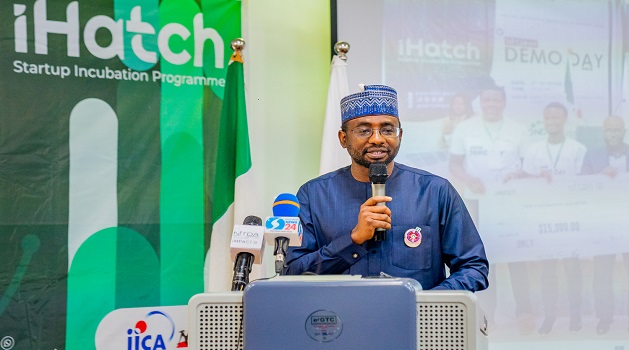
As part of the current administration of President Bola Tinubu’s commitment towards creating meaningful opportunities for Nigerian youths, the Director General Of the National Information Technology Development Agency (NITDA), Kashifu Inuwa CCIE has called on the government of Japan to leverage on the youthful population through strategic talent partnership that will nurture and build a workforce that can be exported.

The DG made the call at the Ihatch startup incubation programme 2nd cohort demo day and 3rd cohort opening ceremony organised by the subsidiary of the agency, Office for Nigerian Digital Innovation (ONDI), in partnership with Japan International Corporation Agency (JICA) in Abuja.
Inuwa noted that the ihatch 5-month free intensive incubation programme executed by the ONDI and hosted within the National Centre for Artificial Intelligence and Robotics (NCAIR) is designed to help Nigerian tech entrepreneurs refine their business ideas through a series of coaching, lectures, and booth camps to develop scalable and adaptable business models that willfocus on youth, innovation, entrepreneurship, and technology.
He added that the incubation programme will be held simultaneously in Abuja, Lagos, Port Harcourt, Gombe, and Kano and JICA has agreed to extend the Fourth Cohort across each of the 36 States and the FCT. This is to enable wider reach and to stimulate the startup ecosystems across the States.
The DG stated that not fewer than 1,218 applications were received for the Second Cohort and the number was pruned down to 8 startups, comprising 16 persons, a Founder and Co-Founder for each startup, after undergoing levels of rigorous selection process conducted by a panel of judges, comprising experts in diverse areas of technology and innovative entrepreneurship.

He explained that the selection process assessed the startups’ ideas based on the criteria of profitability, scalability, social impact, idea technique, competitive advantage, experience, and a clearly defined future roadmap.
Inuwa further revealed that a total of 11,183 applications were received from across the 6 geopolitical zones for the Third Cohort. This culminated in the selection of the top 8 startups, comprising 16 founders in total that will participate in the Third Cohort that was launched.
He added that 16 startups that participated in the first and second cohorts of the iHatch incubation programme have moved on to achieve remarkable success in the areas of job creation, funding, participation in events, and valuable partnerships which have created a combined total of 179 direct jobs in the span of agriculture, health, education, and e-commerce sectors.
The DG further asserted that apart from the total grant of US$45,000 (US$15,000 each) for Proof of Concept (POC) to the top 3 startups in the first cohort, some of the startups have raised some funding through other sources.
Xolani Health (a health tech startup from the first cohort) secured a grant worth US$155,000, BetaLife (a health tech startup from the first cohort) secured an angel investment of US$60,000, Gifty (an e-commerce startup from the second cohort) got a grant of USD$8,000 while two other startups from the first and second cohorts respectively, raised a combined total grant of US$6,000.
Inuwa affirmed the agency’s commitment to working with relevant stakeholders and partners towards the successful implementation of the Nigeria Startup Act (NSA) which will accelerate innovation and provide much-needed jobs for our teeming youths. Leaving nothing to chance in our resolve to nurture the entrepreneurial spirit in our youth to catalyze the Nigerian digital economy to the next level.
The Honourable Minister, Federal Ministry of Industry, Trade and Investment, Doris Nkiruka Uzoka-Anite, represented by National Coordinator, National Talent Export Programme, Dr Femi Adeluyi, applauded NITDA for the various initiatives and programs put in place for the advancement of the tech ecosystem in the country.
Anite noted that the NITDA DG at the Digital Nigeria International Conference 2023 edition harped on the need for Nigeria to become the talent destination of the world where countries will come to seek a workforce that will work with them towards achieving their goals and objectives.
She added that “technology is a pivotal tool in all aspects of life which cannot be overemphasized and the green transition scoreboard global total has reached about $7.13 trillion for export and about $6.6 trillion for importation, the important aspect is that 54% of these activities is digitally edible and prepares people to be effective and efficient in the different sector of the economy is laudable”.
The Minister also appreciated JICA for its relentless efforts toward the advancement of the tech ecosystem in the area of automobile, development, training, scholarships, interventions and a lot more which has impacted the citizens directly or indirectly.
The Ambassador of Japan to Nigeria, Matsunaga Kazuyoshi, represented by Yuzurio Susumu Chief of Nigeria Office in his remarks stated that Nigeria is the most popular country in Africa and the heart hub of entrepreneurship activities aimed towards the advancement of the country.
He added, “With all the challenges faced by insecurity, and limited infrastructures in the country, Nigerian startups are demonstrating remarkable creativity and resilience in developing solutions that other critical social issues in areas such as education, transportation, healthcare and finance”.
He added that the present administration has identified the transformation potential of startups and digitization making it a key factor in diversifying the Nigerian economy from its dependence on oil.
The Ambassador pointed out that startups are seen as a catalyst for business transformation, bringing fresh ideas, innovative technologies and new employment opportunities. Japan has the longest history of technological innovation and entrepreneurship has a significant role in supporting the Nigerian system.
Among those who attended were representatives from both the private and public and the top three (3) startups emerged with cash prices to Fundus AI 1st postion $15,000.00, Reno 2nd postion with $12,000.00 and Ilim Tutors 3rd postion $10,000.00 respectively.


E-Business
82% of Organizations Concerned about AI Risks Even as Adoption Accelerates – Survey Reveals

At its recent Cyber Security Weekend for the Middle East, Turkiye and Africa (META) region Kaspersky shared the results of a global study conducted by its internal research center which surveyed 1,800 IT and cybersecurity decision-makers and specialists from organisations across 18 countries and multiple industries.

The report shows that the pace of AI integration across organisations is rapid, despite associated risks. The company’s experts stressed that while AI adoption delivers clear efficiency gains, it must be accompanied by robust cybersecurity solutions, well-defined internal procedures, and comprehensive employee education programmes.
The report highlights a clear organisational preference for AI-enhanced technology: 68% of respondents said they would recommend a solution with AI features built in, while a mere 5% indicated they would prefer to avoid AI-enabled tools. This overwhelming endorsement underscores how deeply AI has embedded itself as a value driver across the modern enterprise.
AI has become a mainstream productivity tool spanning many business functions. The global survey findings confirm that employees across departments are already relying on AI tools for a wide range of everyday tasks, including: data analysis & visualisation (54%), project management (49%), search for information (47%), department-specific tasks (46%), text generation and editing (41%).
While organisations recognise the tangible benefits AI tools bring – including improved process efficiency and enhanced quality of deliverables – they also see the associated dangers. 82% of respondents voiced concerns about the risks AI poses to their organisation. These concerns are grounded in real-world experience.
Among the 87% of organisations worldwide that faced a cyber incident in the past year, 13% reported that they had experienced threats stemming specifically from AI-related vulnerabilities.
Notably, 74% of respondents believe that these risks can be effectively mitigated through employees’ responsible behaviour — pointing to the critical importance of security awareness and training in the AI era.
“The speed at which organisations are embracing AI is remarkable, but it must be matched with an equally strong commitment to security. We are already seeing a growing range of threats directly tied to AI adoption – whether it’s malware camouflaged as popular AI tools, vulnerabilities introduced through unsecure vibecoding, or leaked access credentials to corporate AI platforms and malicious skills by AI agents.
Managing these risks requires a holistic approach: the right technology, well-defined procedures, and a security-aware workforce,” comments Brandon Muller, senior security consultant for the META region at Kaspersky.
E-Business
How Temu Helped a Madagascan Vanilla Family Business Sell Direct to Consumers Across Europe


Malagasy Vanilla has transformed its decades-old wholesale business by embracing direct-to-consumer sales through Temu, enabling the family-run company to reach customers in 14 European markets while significantly reducing logistics costs.

For years, premium Madagascan vanilla supplier Malagasy Vanilla sold exclusively to restaurants, bakeries and wholesalers because the cost of shipping a single pack to individual customers often equalled the value of the product itself. That changed after the company joined Temu’s Local Seller Program in November 2025.
The Belgian-based business, which sources high-quality vanilla from Madagascar, has leveraged Temu’s logistics network to cut domestic shipping costs by nearly half through a partnership with Belgian postal operator Bnode. The move has enabled the company to enter the retail market for the first time and quadruple its sales within four months.
According to Belinda Rabenandrasana, co-Chief Executive Officer of Malagasy Vanilla, Temu has opened up an entirely new customer segment for the company.
“Temu opened a new avenue for us,” she said. “We were finally able to explore selling to individuals.”
The platform now contributes between five and 10 per cent of the company’s overall revenue.
Expansion into 14 European Markets
Malagasy Vanilla is among businesses participating in Temu’s Local Seller Program, launched in Europe in 2024 to help local merchants expand beyond their domestic markets.
Through partnerships with more than 150 logistics providers across Europe—including Bnode in Belgium, La Poste in France and DHL Group in Germany—Temu offers sellers access to affordable shipping and delivery infrastructure without requiring major investment in logistics.
After successfully establishing direct-to-consumer sales in Belgium, Malagasy Vanilla expanded into 14 European countries, including Germany, France, Spain and Poland.
Rabenandrasana said the logistics support, competitive shipping rates and seller assistance provided by Temu made the expansion possible.
“Without Temu and its partnership with Bnode, it would have been very difficult for a small business like ours to start selling directly to consumers,” she said.
She added that Temu also assists sellers in managing regulatory requirements such as the European Union’s Extended Producer Responsibility (EPR) compliance, making cross-border operations easier for small businesses.
Three Generations of Vanilla Expertise
Malagasy Vanilla traces its roots to three generations of the Rabenandrasana family in Madagascar’s vanilla industry.
Belinda’s grandfather began trading vanilla locally, while her father expanded operations across Madagascar. She launched the company’s international business in 2017, supplying premium Madagascan vanilla to European restaurants, pastry shops and food wholesalers before establishing operations in Belgium in 2023.
The company partners with growers and producer associations in Madagascar, where between 20 and 40 workers oversee the six- to 10-month curing process that transforms green vanilla pods into premium black vanilla.
Operations in Belgium focus on packaging, quality assurance and distribution.
Customer Reviews Drive Growth
Under its Lavani brand, Malagasy Vanilla sells gourmet-grade whole vanilla pods targeted at both professional chefs and home baking enthusiasts.
Rather than relying heavily on paid advertising, the company has benefited from Temu’s product discovery tools and customer reviews, helping the niche brand gain visibility organically.
According to Rabenandrasana, strong customer feedback has played a significant role in increasing traffic and boosting sales.
The brand currently maintains a customer review rating exceeding 99 per cent on the platform.
Future Plans
Looking ahead, Malagasy Vanilla plans to expand its European footprint further by establishing a warehouse in France and increasing sales across the continent.
The company is also developing new products, including vanilla extract and vanilla sugar, while planning to open a physical retail and production facility in Belgium later this year.
In addition, it intends to launch a social-impact initiative aimed at supporting vanilla-growing communities in Madagascar.
Reflecting on the company’s evolution, Rabenandrasana said the business continues to build on her family’s legacy.
“My grandfather worked locally, my father expanded nationally, and now we are building internationally,” she said.

Stakeholders in Nigeria’s digital economy have urged the Federal Government to review its partnership with global recruitment platform Hello.cv under the 3 Million Technical Talent (3MTT) programme, citing concerns over data security, digital sovereignty and the country’s “Nigeria First” policy.

3MTT
The concerns follow the Federal Ministry of Communications, Innovation and Digital Economy’s announcement on May 6 of a 10 million-dollar partnership with Hello.cv aimed at increasing the global visibility of Nigerian technology professionals.
Under the initiative, 20,000 selected 3MTT fellows will receive a global professional profile package, including an Artificial Intelligence (AI)-powered job search agent, a professional curriculum vitae (CV) writer and a personal .cv domain, valued at 500 dollars per participant.
While stakeholders acknowledged the programme’s potential to improve global employment opportunities for Nigerian tech talent, they expressed concerns about the implications of hosting participants’ digital identities and data on a foreign domain.
Chief Executive Officer of Cyberchain and Global Digital Economy Strategist, Engr. Jude Ozinegbe, said the arrangement raised important questions about data ownership and jurisdiction.
According to him, registering domains under an entity outside Nigeria gives that entity a degree of control over activities associated with the domain.
“When you register your domain under a different entity outside your jurisdiction, that entity will have access to whatever is happening within that domain.
“In the long run, the Nigeria Data Protection Commission (NDPC) may have to examine the agreement and assess the security implications of such domain ownership,” he said.
Ozinegbe urged the NDPC to review the security protocols employed by Hello.cv to ensure compliance with Nigeria’s data protection regulations.
Also speaking, Ugonma Egwuatu of ECAM Global Services, an information and communications technology and data protection firm, said the security of data belonging to 20,000 fellows should be of significant interest to regulators.
She noted that while the ministry had the authority to determine how the programme was implemented, there was a need for greater transparency regarding the handling of participants’ personal information.
“The NDPC requires its registered Data Protection Compliance Organisations (DPCOs) to subscribe to the .ng domain.
“If a government ministry permits trainees to operate on a foreign domain, then the commission should examine the arrangement because we are dealing with the data of 20,000 Nigerians,” she said.
Egwuatu also called for clarity on how data generated through the platform would be processed, stored and protected.
“There should be explanations regarding the backend. What are they doing with the data of people who visit these sites? Why use a foreign domain instead of the .ng domain? These are legitimate questions that deserve answers,” she said.
She added that government should ensure appropriate third-party agreements and safeguards were in place before implementing such initiatives.
On his part, Chief Executive Officer of DNS Africa, Dr. Adebunmi Adeola Akinbo, said the objectives of the programme could still have been achieved while leveraging Nigeria’s country code top-level domain.
According to him, Hello.cv could have registered a hello.cv.ng or hellocv.ng domain in collaboration with the Nigeria Internet Registration Association (NiRA).
“The .ng domain can conveniently accommodate such a platform. If Hello.cv intends to onboard millions of Nigerians, it can work with NiRA to create a local domain structure.
“That way, the investment remains within Nigeria, strengthens the digital economy and supports local internet infrastructure,” he said.
Akinbo argued that excluding the .ng domain from the initiative undermined Nigeria’s digital identity and sovereignty.
“As good as the programme may sound, leaving the .ng domain outside this engagement and taking Nigerian data outside the country’s digital jurisdiction is not the best approach,” he said.
Also commenting, Founder and Chief Executive Officer of Precise Financial Systems Ltd., Yele Okeremi, stressed the importance of ensuring that investments in Nigeria’s digital economy create long-term domestic value.
According to him, building a sustainable technology ecosystem requires more than developing skilled professionals.
“Investment, particularly in technology and the knowledge economy, is not just about having smart people.
“It is also about who owns the infrastructure and who ultimately benefits from the value created. Nigeria must ensure it retains as much of that value as possible,” he said.
Similarly, Chief Executive Officer of the Internet Exchange Point of Nigeria (IXPN), Muhammed Rudman, described the use of foreign domains for a government-sponsored initiative as inconsistent with efforts to promote Nigeria’s digital economy.
“I don’t know where this idea came from, but it is unpatriotic for Nigerian companies funded by Nigerian resources to adopt .cv domains instead of .ng.
“Global companies such as Google register country-specific domains like google.ng when operating locally. Registering 20,000 additional .ng domains would improve Nigeria’s online visibility and strengthen the local internet ecosystem,” he said.
Rudman urged the Federal Government to support indigenous digital infrastructure by encouraging the use of the .ng domain.
The 3 Million Technical Talent (3MTT) programme is a flagship initiative of the Federal Ministry of Communications, Innovation and Digital Economy aimed at equipping Nigerians with globally relevant digital skills.
The programme provides free training in areas including software development, artificial intelligence, cloud computing, cybersecurity, data analytics, machine learning, animation, DevOps and user interface/user experience design through a hybrid learning model.
Stakeholders maintained that while the partnership with Hello.cv could expand international employment opportunities for Nigerian technology professionals, greater attention should be paid to safeguarding the country’s digital assets, promoting local internet infrastructure and ensuring compliance with Nigeria’s data protection framework.

Police Uncover Fake Diplomatic Number Plate Syndicate in Abuja

Davido Shares Past Suicidal Thoughts, Drops Oriadé Album

Gavi Okays $500m for Vaccines, PHCs in Nigeria

82% of Organizations Concerned about AI Risks Even as Adoption Accelerates – Survey Reveals

The Journey to Financial Freedom: Priscilla, a PalmPay Agent Now Owns a Store

NRC, Ponzi Scheme Collapses Resulting Loss of Billions of Naira

EFCC Busts NIS Visa Overstay Racket, Uncovers N700m in an Account

From Scarcity to Scale: What Africa Can Learn from India’s Agricultural Transformation

Tokenization, Blockchain Technology will Transform Financial Institutions – IMF

BON Establishes Six Ad Hoc Committees to Modernize Broadcasting




 E-Financial3 days ago
Access Bank Debunks Shutdown Report, Vows Action against Perpetrators

 E-Business3 days ago
Kaspersky Uncovers Cyber Threats Defining the First Half of 2026 in Nigeria, Others

 General News3 days ago
MENXTT TECH NG Offers Affordable Dell Laptops with Flexible Payment Plans

 Telecom3 days ago
ATU Summit Ends in Abuja with Landmark Declaration to Eradicate Continental Digital Divide

 Telecom3 days ago
Hon. Minister Dr. Kingsley T. Udeh and ASUS To Unveil First of a Kind Flagship Store in West Africa

 E-Financial3 days ago
$40Bn Net Reserves, Record Wealth, Relentless Poverty: Who Is Nigeria’s Economy Serving Today?

 General News3 days ago
EFCC Arraigns 4 over Alleged $5.3m Fraud Scheme

 E-Business2 days ago
How Temu Helped a Madagascan Vanilla Family Business Sell Direct to Consumers Across Europe