

Telecom
Digital Economy Offers Potentials for Data Centres – Durvasula

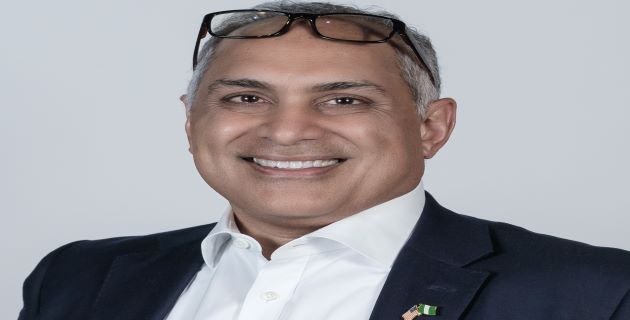
Tesh Durvasula was recently appointed chief executive officer of Africa Data Centre. In a chat with chike onwuegbuchi, he explained the potentials of ADC’s new facility located in Lagos.

What is the potential of the business in Lagos where there are more than 5 data centres?
Firstly, I’d like to say that there’s tremendous growth in the need for digital tools and services across the world. Africa is no different, and its citizens, like all others around the world, want to enjoy the same benefits that participating in a digital economy offer.
However, to provide these services you need infrastructure such as fibre optics and data centres, and cassava technologies centres around bringing these services and more to Africa. Africa’s population is a young one, and they estimate that over the next 10 years, the largest number of the population will be in the 18 to 35 range.
While other nations and continents such as Europe and North America, have an ageing population. Our population is only getting younger, and they want to do things differently. They all have smartphones, which is like having a supercomputer in their pocket, and they are excited and eager to participate in this new economy.

There’s no doubt that Nigeria is leading this charge, and I am sure that we are underestimating the capacity we need. Africa is going to be a place where digital infrastructure will continue to expand, across Africa.
Reports estimate that we need 1000MW and 700 facilities to meet Africa’s growing demands and bring the rest of the continent to a level place in terms of capacity and density, but if history has taught us anything in this industry, and I’ve been in this industry for 25 plus years, is that our ability to underestimate the demand side of this equation has been unbelievable. I believe we are underestimating Africa’s demand, much like we underestimated in in Europe and Asia. We are not worried about business in Lagos at all.
Challenge of power and Data centre business that requires 24/7 power supply.
Electrical supply is a global problem at the moment. We’re leading up to a year in North America, you’re waiting up to two years in parts of Europe, and those trying to get power in the north of London right now, could be waiting till 2025.
Nigeria is not unique in this situation. The electrical supply and the demands on our electrical grids as a planet, have continued to increase, and people are working hard to meet this demand as more investment comes into Africa, and into local cities, municipalities and jurisdictions for for operating companies.
You’re going to see that, and we have a new renewable energy platform platform called Distributed Power Technologies or DPT, which is part of the Cassava Group, and Africa Data Centres taking advantage of our relationship with DPT to help us meet that need. DPT developing a 10MWp solar PV power plant for our new Lagos data centre.
We aim to work closely with them, to ensure that our clients are guaranteed the most reliable data centre services.
In fact, we believe that advancements in storage technology will play a crucial role in emerging commercial and industrial markets, and this will lessen the intermittency of renewables, and at the same time, will provide redundancy during blackouts.
DPT is also working alongside Tesla to utilise its Megapack battery storage technology which will be deployed at off-site solar farms and will store the excess power that is generated during the day, greatly increasing the availability of dispatchable energy.
These will also be installed within our data centres, where storage is becoming a practical solution to carry sites when blackouts occur.
Target for locating your facility in Lagos
No, as with all our data centre investments in key areas on the continent, our new 10MW facility in Lagos will serve a hub for the entire West-Africa region.
What makes your facility different from others
At Africa Data Centres, we pride ourselves on being is the largest network of 100% interconnected, carrier- and cloud-neutral data centre facilities on the continent.
What also sets us apart is our commitment to lowering our carbon footprint, and as a company that promotes sustainability, we cannot emphasise enough that there will be no question of sacrificing the environment to carry out our ambitious digitisation plans.
This is a trade-off Africa Data Centres is simply not even prepared to contemplate. Our strategy goes far beyond boosting out bottom line, for us, it is all about empowering and uplifting Africa’s citizens, protecting the environment, and uplifting the economy. We are not just here for the money, we are here to provide jobs, and help Africa achieve its digital ambitions.
Competing with global brands and organisations’ interest
Although hyperscale providers such as AWS, Azure and Google have global cloud services built upon an extensive network of self-built data centres, they do not have Africa-based facilities, creating latency and sovereignty issues and hampering the growth of their cloud offerings in the region.
Nigeria is one of the Africa Data Centres key markets on the continent, because Nigerians are eager for digitisation, as organisations of every type and size in Africa accelerate their digital transformation journeys in the aftermath of the COVID-19 pandemic.
As part of the recently launched Cassava Technologies group, Africa Data Centres plays a critical role when it comes to providing this very digital infrastructure that is needed to support the mass adoption of digital services for consumers and business in the region.
What 10mw Data Centre facility means
Our new 10MW Lagos facility was built by us in response to the soaring demand Africa Data Centres has seen from hyper-scalers, key cloud operators as well as multi-national enterprises that already employ our services and have shown a sharp interest in being a part of bringing digitisation at scale to the West Africa region.
Megawatts of MW are used to measure the output of a power plant, or the amount of electricity required by an entire city. One megawatt is equal to 1,000 kilowatts, or 1,000,000 watts. Power is the key element that brings a data centre facility to life and it is what keeps customers’ IT infrastructure up and running even in the event of a disruption.
Power is the most critical element of any data centre. In the data centre sector, megawatts are reserved for wholesale colocation providers that require enough power for thousands of servers, customers and their and related IT hardware.
About Tesh the new Chief Executive Officer of Africa Data Centres
In my new role as Chief Executive Officer of Africa Data Centres, I will be charged with driving growth, innovation and strategy of Cassava Technologies’ data centres to meet Africa’s rapidly growing demand for data and digital infrastructure.
I am an experienced technology and real estate industry executive with a proven, 25-year track record of successful leadership and value generation in the digital infrastructure sector.
I hope to lead the Africa Data Centres team as we rapidly expand our footprint of hyper scale data centres throughout Africa with a plan to add an additional ten data centres in the top ten economic centres in Africa. Before joining Africa Data Centres, I served in a variety of executive roles at CyrusOne, culminating in his appointment as the Chief Executive Officer of the company.
And, before that, I served as president of Europe operations for CyrusOne, overseeing CyrusOne’s expansion into England, Ireland, France and Germany, helping grow CONE into one of the largest publicly traded REIT’s in the US.
I believe the potential to grow digital infrastructure is bigger in Africa than anywhere else across the globe and this will present a number of opportunities for economic transformation. I am extremely pleased to have joined Africa Data Centres and Cassava Technologies, particularly now as Africa has become one of the fastest-growing data usage regions in the world. I feel we are well poised to make an invaluable contribution to Africa’s rapidly developing digital ecosystem.



Nigerian Communications Commission (NCC) has directed telecommunications operators to make dedicated budgetary provisions for cybersecurity as part of efforts to strengthen the resilience of Nigeria’s communications infrastructure against the growing wave of cyber threats.

The directive forms part of the Commission’s Cyber Resilience Framework for the Nigerian Communications Sector (CRF-NCS), which introduces new governance, risk management and operational requirements aimed at safeguarding the country’s critical telecommunications infrastructure from increasingly sophisticated cyberattacks.
Under the framework, all licensed telecom operators are expected to establish formal cybersecurity governance structures, dedicate adequate financial resources to cyber resilience programmes, and integrate cybersecurity into their enterprise-wide risk management processes.
The Commission said operators must ensure cybersecurity investments are no longer treated as optional operational expenses but as strategic business priorities necessary to protect network infrastructure, customer information and the country’s digital economy.
According to the NCC, licensees are expected to allocate sufficient budgets to support cyber risk assessments, security technologies, staff training, incident response capabilities, continuous monitoring and compliance with regulatory requirements.
The framework also requires operators to designate senior executives responsible for cybersecurity oversight.
At the same time, boards of directors are expected to provide strategic direction and ensure adequate funding for cyber resilience initiatives.
Speaking on the need for a stronger cybersecurity regime during the unveiling of the framework, Abraham Oshadami, executive commissioner, Technical Services, NCC, said, “Given the increasing digitalisation of services, the rapid growth of data exchange, and the sophisticated nature of modern cyber threats, the need for a robust, adaptive and inclusive cybersecurity framework has become more urgent.”
He added, “Both state and non-state actors are targeting essential sectors—including ours—through coordinated cyber and physical attacks. These attacks frequently target control systems and data integrity, underscoring the critical risks posed to operational technology (OT), especially in our sector.”
“As cyber threats evolve, they endanger not only system performance but also human safety, amplifying the severity and consequences of disruptions to vital communications infrastructure. Cybersecurity now encompasses human safety and must address the real risk to people’s lives when a system is attacked or compromised.”
The Commission further stated that operators are required to develop comprehensive cybersecurity implementation plans, conduct periodic risk assessments, establish business continuity and disaster recovery procedures, and regularly test their cyber defence capabilities.
In addition, the framework makes cyber incident reporting compulsory. Licensees must inform the NCC’s CSIRT of any major cybersecurity breach within four hours of discovery, and provide a thorough post-incident analysis after mitigation is complete.

Digital solution provider, Globacom has recorded the highest Internet subscriber growth among Nigeria’s major telecom companies for the month of May.

Data from the Nigerian Communications Commission, NCC, Nigeria’s total Internet users increased to 157 million in May, up from 154.3 million in April. That is a growth of 2.67 million users in one month.
Globacom led the market by adding about 1.2 million new Internet subscribers. This means Glo was responsible for almost half of all new Internet users in May.
The company’s subscriber base grew from 15.5 million in April to 16.8 million in May. Airtel came second with 1.07 million new users, moving from 54.8 million to 55.8 million. MTN added 382,894 users to reach 83.5 million.
T2 Mobile, formerly 9mobile, recorded no growth for the second month in a row. Its subscriber base remained at 802,534. This is despite its roaming agreement with MTN, which was approved almost a year ago to help T2 customers use MTN’s network in areas with poor coverage.
Industry experts say Glo’s strong growth is due to its ongoing network upgrade. Since last year, the company has been building new base stations, expanding its fibre network, and adding thousands of new 4G sites across cities and rural areas.
The upgrades have improved voice and data quality for customers, while Globacom remain committed to providing better network experience and affordable Internet services to more Nigerians.

MTN Nigeria’s half-year 2026 performance reflects more than revenue growth, highlighting the wider economic activity generated through tax payments, infrastructure investment and shareholder returns.

Kadri, MTN CFO
Beyond its financial results, the telecommunications operator said it continues to channel substantial resources into expanding network infrastructure, meeting statutory obligations and delivering value across its stakeholder ecosystem.
The company disclosed that it paid more than ₦600 billion in taxes, customs duties, regulatory levies and other statutory obligations over the past year.
It also invested over ₦1.6 trillion in capital expenditure since January 2025 to expand network capacity and improve service quality, while declaring an interim dividend of ₦26 per share for shareholders.
Speaking on Arise News’ Global Business Report, MTN Nigeria’s Chief Financial Officer, Modupe Kadri, explained that the company’s earnings are shared across several stakeholders before returns reach investors. “For every one naira of revenue, about 24 kobo becomes profit.
“The government receives over ₦600 billion through taxes and levies, operating costs account for a significant portion of our revenue, and every participant within the ecosystem benefits from the value we create,” he said.
According to the Nigerian Communications Commission (NCC), telecommunications remains one of the largest contributors to Nigeria’s Gross Domestic Product, supporting digital financial services, education, healthcare, commerce and public services. Continued investment by operators has also been identified as critical to expanding broadband access and improving digital inclusion across the country.
Kadri noted that shareholder returns remain an important part of MTN’s capital allocation strategy, but stressed that they represent only one aspect of the company’s broader economic contribution.
“Even when we declare dividends, the government still receives withholding tax, while we continue investing heavily in our network because sustaining quality service requires ongoing capital commitment,” he said.

Fleeing Southeast Asia Scam Syndicates Find New Homes in Nigeria, Kenya- Report

DSS Arraigns Eze for Allegedly Hacking, Stealing N800m from SunTrust Bank

SEC Unveils Probate/Unclaimed Monies Clinic to Help Families Recover Inherited Investments

We have Multiple Layers of Protection for 281m Accounts in Nigeria – NDIC

NCC Asks Telcos to Make Budgetary Provisions for Cybersecurity

From Scarcity to Scale: What Africa Can Learn from India’s Agricultural Transformation

EFCC Busts NIS Visa Overstay Racket, Uncovers N700m in an Account

BON Establishes Six Ad Hoc Committees to Modernize Broadcasting

How EFCC Turned Recovered Loot Into School Supplies for Thousands of Nigerian Students

BVN Enrollments Hit 69.55m- NIBSS




 E-Business3 days ago
Kaspersky Reveals a New Malicious Framework Targeting Cryptocurrency Users with the Use of OkoSpyware

 E-Business3 days ago
CMS T&M Launches TMO Rides to Enable a Faster & Cashless Transport Experience for CMS – Ajah Passengers

 E-Business3 days ago
Nigeria Tightens Data Privacy Compliance as FG Issues Directive to MDAs

 E-Business3 days ago
Firm to recruit over 100 professionals to boost NRS e-Invoicing compliance

 Telecom3 days ago
FG Commences 90,000km Fibre Optic Rollout within Weeks

 E-Financial2 days ago
Access Holdings Deepens Sustainable Finance Impact, Expanding Green Assets to ₦92.14 Billion

 Telecom3 days ago
Dimension Data to Channel Funds to Support Nigerian Fibre Expansion

 E-Financial3 days ago
Zenith Bank Confirms Cyberattack, Says Hackers Accessed Limited Customer Data