

E-Financial
Driving Nigeria’s Economy to G10 Status


Nigeria’s economy has all it takes to rank amongst the world’s top 10 economies. Driving the polity effectively towards that goal is the urgent task of the country’s present political and economic managers.
Nigeria’s 2015 general elections have been won and lost. The nationwide focus on politics for almost a year has however been detrimental to the economy and the financial markets.
Despite being poised for fast growth, Africa’s largest economy is currently crawling on all fours.
Key economic and financial indicators are down year-on-year and year-to-date. Ditto for corporate earnings.
The most significant being a 1.5% loss in GDP growth and speculative devaluation and volatility of the national currency, the Naira, which has lost at least 20% value against most benchmark currencies.
The year-end outlook is also not bright. Most investors and corporate players are coasting and seem to have accepted 2015 as a lost year from a productivity standpoint.
Politics in Nigeria as clearly proven by recent events is driven by political cum personal interests. This is always at variance with the national economic interests.
The cumulative cost of perceived political instability, record low crude oil prices, and dipping confidence in economic and financial markets is estimated to be anywhere between US$25-30bn. Who is counting?
Certainly not the political class. They have not come to terms with the fact that a new budget cycle has commenced, and it’s clear that the only tangible approach the new government can take, is to start the process of amending the existing budget and delivering a brand new 2016 budget that reflects contemporary economic realities.
After hinting that the Central Bank of Nigeria’s currency controls were making Nigeria’s bond market transactions too complex to meet its rules, JP Morgan, the United States-based lender, has now moved to expel Nigeria from its Emerging Market Bond Index (EMBI) by the end of September 2015, as a result of the illiquidity and lack of transparency in our foreign exchange market.
This exit will hurt Nigeria’s financial and economic ratings, putting the nation’s $31bn external reserves under threat of further massive sell-offs of Nigerian assets by foreign portfolio investors.
The cost of borrowing will increase; access to the international financial markets for both sovereign and corporates will also become limited. More importantly, this exit will stem the inflow of portfolio investments which peaked at US$20.5Billion in 2013, that otherwise could help stabilize the Naira and balance of payments.
JP Morgan’s EMBI with around $210bn in assets under management is the most widely used and comprehensive emerging market sovereign debt benchmark. Nigeria was added in the index in 2012 when liquidity was improving, making it the second African country after South Africa to be included.
To state the obvious, the lack of articulation on policy and economic direction by the new government is not helping matters and is unsettling the financial markets.
Time is money. And in the fast emerging global fiscal order, lost time and opportunities may never really be regained.
The next challenge the Nigerian government faces is the validation and structured financing plan for the current fiscal deficit, estimated at =N=6.5Trillion.
The government’s actions on the fuel subsidy could significantly increase this figure. With the restructuring and swap of state government commercial bank loans into Treasury Bonds, the new government has increased the domestic debt profile by =N=1Trillion overnight.
Unfortunately state governments have not been compelled to execute conditional covenants, such as adhering to the tenants of the Fiscal Responsibility Act, which stipulates provisions for fiscal discipline.
With a US$49bn domestic debt and US$10.8bn external debt overhang, Nigeria is now committing 23% of its fiscal revenues to servicing debt.
With the levels of projected fiscal deficit, we might exceed the revenue-to-debt service best practice benchmark of 25% by year end. The alignment of fiscal and monetary policy which the economy befitted from over the last five years, seems to have been lost over the last several months.
The apex financial institution and industry regulator, the CBN, seems to have lost its independence and the intellectual fecundity central banks are renowned for.
With an outflow of new policy pronouncements almost every week, the Bank has struggled to articulate a well thought out strategy for managing the Naira.
This misalignment of fiscal and monetary policy has started to impact the macroeconomic indicators as inflation creeps up into double digits. Unemployment also stands at a high 35%.
The effects of quantitative easing are manifesting on the Naira exchange rates as interest rates remain artificially high at 25%. This, despite the excess supply of the currency in circulation with M2 at =N=19Trillion, 25% or =N=4.75Trillion denominated in US dollars deposit.
Our commercial banks have also exacerbated the situation: about 50% of their loan books are denominated in US dollars.
These artificially high rates, and the distortion it causes are not sustainable in the long run. Western nations over the last eight years have maintained rates at below 1% clearly aimed to spur economic recovery.
Nigeria’s financial intermediation rates at 25% cannot support productive investment and development; it will also stunt economic growth. Major reforms are therefore required in the banking system to support single digit rates.
Banks also have to better deploy technology to reduce and manage costs. Their productivity and efficiency levels will consequently improve leading to a more competitive financial services sector
.
Beyond the macro economy, we need to do a critical reappraisal of our trade and investment policies, we need to ensure they are properly integrated into the global value added system.
The domestic gains and success we have had in the cement sector with import substitution and backward integration has primarily been driven by an individual and unfortunately not yet replicated nor institutionalized in other critical sectors such as agriculture, another potential engine room of Africa’s political economy considering its huge social development and value chain effect.
Drastic attention also needs to be paid to Customs and Excise reform and management to ensure proper implementation of Trade Policy, Industrial Development and Investment. The corruption menace of duty waivers, duty evasion, smuggling and weak import documentation also continues to affect the Naira, clearly disrupting and discouraging industrial development, investment and expansion.
Nigeria has been defined as a corrupt country with weak institutions, poor governance, and a compromised judiciary with consistently low scores in the ease of doing business and competitiveness rankings. Despite or in spite of all these quirks, the Nigerian economy with a GDP of US$535Billion is the largest in Africa with a global G20 ranking.
Until recent times, the Nigerian economy sustained a 7% annual growth rate, ranking it amongst the top three fastest growing economies globally.
Our substandard physical and social infrastructure needs to be upgraded; we need to make Power, Healthcare and Education sectors key focus priorities. Addressing the infrastructure deficit, corruption, good governance and the rule of law will no doubt propel Nigeria to realize its potential and capacity as a G10 economy.
Indeed, despite the absence of a cabinet, the euphoria the new government has generated, including its ongoing efforts to clean up the Augean stable is highly commendable. Restoring sanity into the polity was never going to be an easy undertaking. President Buhari’s recent working visit to Washington DC, USA left a good a good impression in the minds of our international business and diplomatic allies. They remain convinced that the president is on the altruistic path.
His top level meetings, appearances and the opinion pieces in the critical and pro-Western US media were obviously left a good impression. This was an African leader who seemed genuinely sincere, and genuinely concerned about Nigeria’s place in the global economy.
Going forward, the President and his ministerial team (even before he finally unveils them) must constantly balance the dual priorities of institutionalizing probity and economic management. Curbing high level graft must be accorded equal weighting as curbing hyper-inflation.
The Nigerian environment despite all its shortcomings and shenanigans is clearly a potential G10 economy. A recent Economist article highlights the “opportunity that knocks” with the new government in place, having endorsed President Buhari before the election. A 2013 article in the same publication cautions that Nigeria, “Africa’s giant is waking up but still looks unsteady on its feet like a heavy weight boxer who has gone too many rounds.”
The same publication has in the past enquired if “anyone has seen a giant” and warns further that the awaking giant eventually might fall flat on its face.
The Nigerian economy is a purposeful and powerful contraption akin to a Formula One racing machine. Unfortunately, the economy has in the past, been driven by a leadership and a political elite class behaving very much like a “Danfo Driver” in the driving seats of a Formula One racing machine.
In the final analysis, the Nigerian President needs to demonstrate policy leadership and must not be shy on the issues of the economy. To achieve G10 targets, we need the right drivers with strong leadership thinking and backing.
The President invariably has been elected on a change platform. However, events in the legislative arm of governance give serious cause for concern. There are critical laws that need to be unbundled and a lot more bills that needs passage to move our economy forward. A pandemic scenario where division, derision and political acrimony continuously stem passage of critical bills is detrimental to economic progress.
It is fitting, at a time like this, for one to seek counsel from the indefatigable Machiavelli whose reflections on the subject of change, captured in his classic tome, “The Prince” speak to the Nigerian situation:
“And let it be noted that there is no more delicate matter to take in hand, nor more dangerous to conduct, nor more doubtful in its success, than to set up as a leader in the introduction of changes. For he who innovates will have for his enemies all those who are well off under the existing order of things, and only the lukewarm supporters in those who might be better off under the new. This lukewarm temper arises partly from the fear of adversaries who have the laws on their side and partly from the incredulity of mankind, who will never admit the merit of anything new, until they have seen it proved by the event”.
#
Adebajo, an investment banker & economist is the CEO of The CFG Advisory.



Providus Bank Limited has dispelled media reports over its compliance with regulatory capital requirements, confirming that it has successfully met and exceeded the recapitalisation threshold set by the Central Bank of Nigeria (CBN).

In a statement, the bank clarified that under the CBN’s recapitalisation framework, regional commercial banks are mandated to maintain a minimum capital base of N50 billion, stating unequivocally that it achieved this benchmark as far back as January 2025 and has since strengthened its financial standing.
According to the bank, its current paid-up capital stands at N65 billion, significantly above the regulatory minimum, underscoring its resilience and commitment to sound financial management.
The bank noted that this strong capital position places it in good stead to support its growth strategy and continue delivering value to customers and stakeholders.
Providus Bank emphasied that any suggestion implying non-compliance with the CBN’s recapitalisation requirement was inaccurate and does not reflect its current regulatory status.
The bank reiterated its dedication to maintaining robust governance standards and aligning with all prudential guidelines set by the apex regulator.
It explained: Providus Bank Limited notes recent media reports regarding the recapitalisation status of certain banks and considers it important to provide factual clarification as it relates to the Bank. Under the CBN recapitalisation framework, regional commercial banks are required to maintain a minimum capital base of N50 billion.
“Providus Bank confirms that it had met its capital requirement since January 2025 and currently has a capital base of N65 billiom which is in excess of its capital requirement.
Accordingly, any suggestion that Providus Bank has not met the applicable recapitalisation threshold is not consistent with its current regulatory standing.”
The Olayemi Cardoso-led Central Bank of Nigeria (CBN) had, on March 28, 2024, announced a two-year bank recapitalisation exercise which commenced on April 1, 2024.
The 24-month timeline for compliance ends on March 31, 2026. The upward capital revision is expected to ensure that Nigerian banks have the capacity to take on bigger risks and stay afloat amid both domestic and external shocks.
Specifically, the recapitalisation exercise requires a minimum capital of N500 billion, N200 billion, and N50 billion for commercial banks with international, national, and regional licences, respectively.

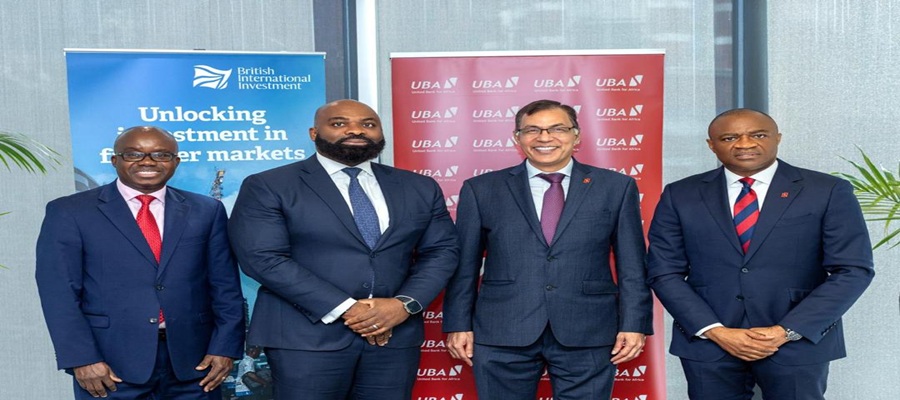
United Bank for Africa (UK) Limited (“UBA UK”) and British International Investment plc (“BII”), the UK’s development finance institution and impact investor, today announced that they have signed a letter of intent to develop trade finance collaboration opportunities. The proposed initiative aims to expand access to trade and working capital facilities for businesses operating across Africa.

L-r: West Africa Director and Head of Office Africa Coverage, BII West Africa, Benson Adenuga; Managing Director and Head of Africa, BII, Chris Chijiutomi; Lok Mishra, Chief Executive Officer, UBA UK, Loknath Mishra; Group Managing Director, United Bank for Africa (Plc) during the signing of letter of intent to develop trade finance collaboration opportunities.
Access to trade finance remains one of the most significant structural constraints on African trade. Businesses – particularly small and medium-sized enterprises – are frequently unable to secure letters of credit, guarantees, and supply chain finance on commercially viable terms, limiting their capacity to export and import competitively. This trade finance gap is estimated by the African Development Bank to be over USD 80 billion annually.
To help close this gap, UBA UK, the London subsidiary of UBA Group, Africa’s Global Bank, will leverage its deep relationships across the Group’s 20-country African network to originate and structure trade finance transactions. While BII, with a mandate to support productive, sustainable, and inclusive growth across Africa, can support transactions that might otherwise fall outside conventional commercial appetite.
Lok Mishra, Chief Executive Officer, UBA UK, said: “The signing of this letter with BII represents a landmark moment for UBA UK and for the UBA Group’s global ambitions. As the Group’s hub for Trade Operations, UBA UK is uniquely positioned to connect African businesses with the international financial system.
“Working alongside BII, we can extend that capability further — mobilising capital where it matters most and helping to close the trade finance gap that holds back so much African potential.”
Chris Chijiuitomi, Managing Director and Head of Africa, said: “British International Investment is committed to catalysing private sector growth across Africa, and trade finance is a critical enabler of that growth.
“We welcome the opportunity to collaborate with UBA Group, whose pan-African network and deep institutional relationships can help advance our ambition to expand access to trade and working capital finance, particularly in frontier markets.”
The announcement builds on growing momentum around intra-African trade facilitated by the African Continental Free Trade Area (AfCFTA), which entered into force in 2021 and represents one of the world’s most ignificant trade integration initiatives.
Both institutions have identified the operationalisation of AfCFTA as a priority catalyst for a trade finance facility, with UBA UK’s network across major AfCFTA economies offering a basis for supporting businesses navigating the emerging continental market.
This also complements the UK Government’s broader engagement with African economic development, including commitments made at the UK-Africa Investment Summit, and reinforces the City of London’s role as a leading international finance centre for Africa-focused capital mobilisation.
Future cooperation remains subject to further assessment, due diligence and the completion of internal approvals by both parties.


Central Bank of Nigeria (CBN) has introduced stricter rules guiding the use and management of the Bank Verification Number (BVN) as part of efforts to reduce fraudulent transactions within the financial system.The revised framework, which takes effect from May 1, includes tighter controls on BVN enrolment, data access and customer information updates.

The apex bank said the measures are aimed at strengthening identity management, improving fraud monitoring and safeguarding the integrity of banking transactions.
Under the new guidelines, BVN enrolment is now restricted to individuals aged 18 and above, while customers will only be allowed to change the phone number linked to their BVN once.
The restriction is designed to curb identity manipulation often exploited by fraudsters through repeated updates of personal information.
The CBN also directed financial institutions to maintain a temporary watchlist for BVNs linked to suspicious transactions.
Affected BVNs may be flagged for up to 24 hours, during which customers are expected to verify or clarify flagged transactions before further action is taken.
In addition, access to BVN data has been tightened, with the apex bank retaining exclusive control over the database while granting access only to licensed financial institutions under defined conditions.
The move, according to the CBN, is expected to enhance data security and support a more resilient financial system as BVN enrolment continues to grow.

Court Jails ‘Colonel’, ‘Major’ of Global Money-Laundering Ring

Court Bans Kenyan Telcos from Recycling SIM Cards

Providus Bank Fully Meets CBN Capital Requirement, Sets Record Straight

African Tech Start-ups to Receive $46m of Speedinvest Africa Fund

U.S. Charges Three in $2.5 Billion Plot to Smuggle Nvidia AI Chips to China

Kaspersky Discovers New Phishing Campaign Exploiting Google Tasks Notifications to Steal Corporate Credentials

esentry 2025 Report Shows Healthcare, Financial Services and Telecoms as Staging Grounds for Increased Cyberattacks in Africa

AfDB, UNDP Launch $10Bn AI Initiative for Africa

Mutual Benefits Assurance Settles ₦5.9bn Claims in January 2026

MultiChoice Suspends Yearly DStv Price Hike as Canal+ Pushes Growth




 E-Financial3 days ago
Kuda MFB Increases Kuda for Her Business Grants to ₦10 Million

 Telecom3 days ago
Vitel Wireless Lures Subscribers with “Data that Never Expires” Campaign

 News3 days ago
NSIA Sign MoU with UK’s Asset Green Ltd to Develop $496M Integrated Dairy Livestock Production Platform in Nigeria

 News3 days ago
BoI, MTN Foundation Launch N1Bn Fund for Women Entrepreneurs

 General News3 days ago
One SA Bank Equals Nigeria’s Entire Banking Sector – Why Recapitalisation Is Critical for Global Competitiveness

 E-Financial2 days ago
CBN Introduces Stricter BVN Rules to Curb Fraudulent Transactions

 E-Financial2 days ago
Binance is Missing from Ghana’s Crypto Sandbox

 Broadcasting3 days ago
Nigeria tops global rankings for USDT, USDC ownership